


Strainers Kitchen
In the context of industrial food processing and large-scale commercial hospitality, the term "strainers kitchen" refers to a critical category of fluid and solid separation components. Unlike consumer-grade utensils, industrial-grade strainers and baskets are engineered to withstand continuous operation, high temperatures, and rigorous chemical cleaning protocols. These components serve as the primary line of defense for downstream equipment, ensuring product purity and protecting pumps, valves, and heat exchangers from damage caused by oversized particulates.
For engineers and procurement teams in the food and beverage sector, selecting the correct filtration hardware requires a deep understanding of material science, fluid dynamics, and sanitary standards. This guide explores the technical foundations of industrial strainers, the specific requirements of food-grade environments, and the selection criteria necessary for optimizing production efficiency.
Engineering Foundations of Industrial Kitchen Strainers
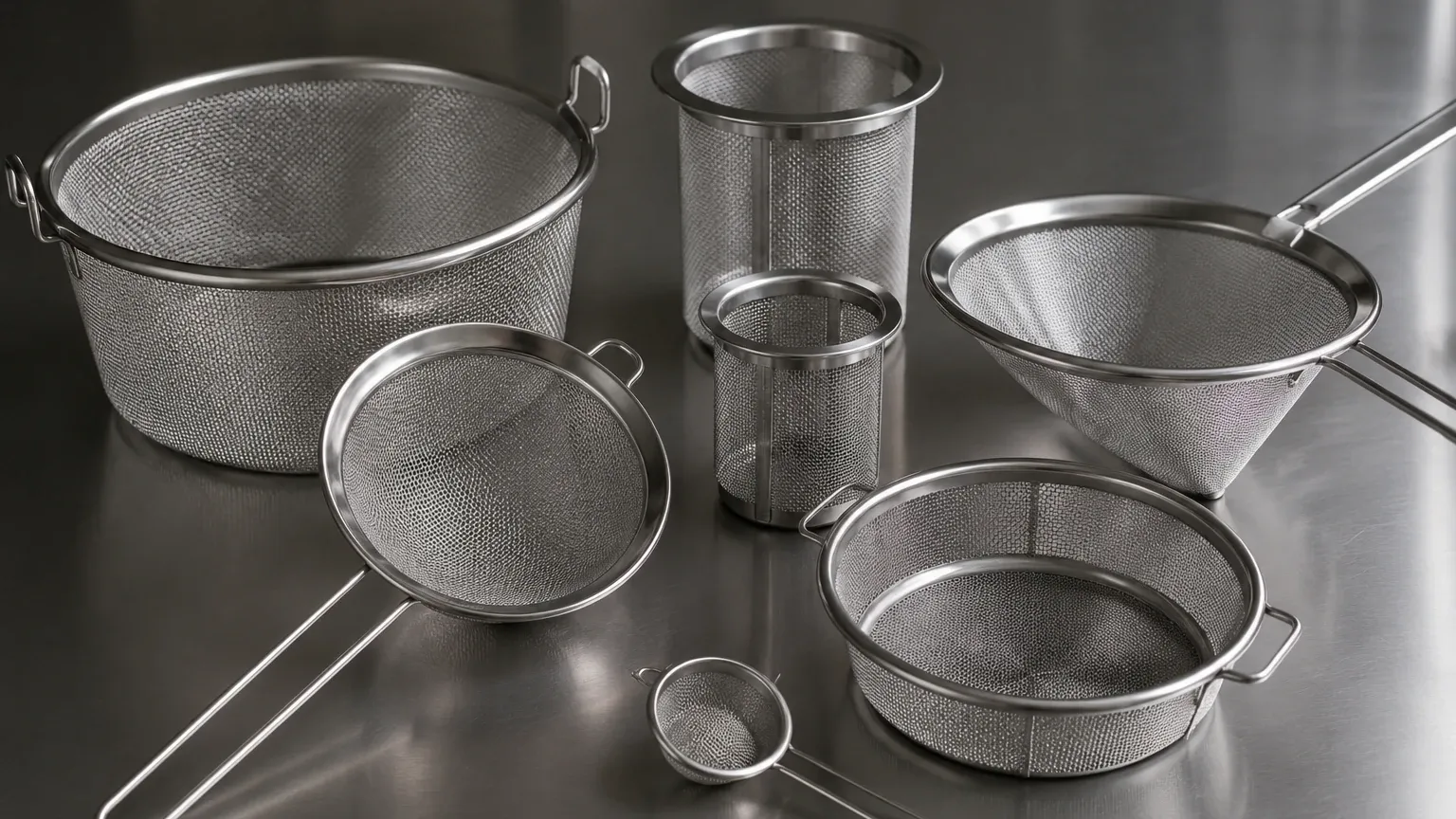
The performance of Strainers & Baskets in a commercial or industrial setting is dictated by their structural design and the materials used in their construction. Because these components often come into direct contact with consumable products, the choice of material is not merely a matter of durability but also of regulatory compliance.
Material Selection: SS304 vs. SS316
Stainless steel is the industry standard due to its corrosion resistance and ease of sterilization.
* Grade 304 Stainless Steel: This is the most common material for general kitchen applications. It offers excellent resistance to water and many food chemicals. It is suitable for vegetable washing, grain separation, and general debris removal.
* Grade 316 Stainless Steel: For environments involving high salt concentrations, acidic sauces, or aggressive cleaning chemicals (such as nitric acid or caustic soda), SS316 is preferred. The addition of molybdenum enhances its resistance to pitting and crevice corrosion, ensuring a longer service life in demanding food processing lines.
Mesh and Perforation Types
Industrial strainers typically utilize one of two media types: perforated metal or woven wire mesh. Perforated metal provides high structural integrity and is ideal for removing larger solids or acting as a support cage for finer mesh. Woven wire mesh, on the other hand, allows for much finer filtration ratings, often measured in microns, which is essential for clarifying liquids or capturing small seeds and spices.
Applications in Commercial and Industrial Food Processing
When discussing strainers kitchen applications in a B2B context, the scope extends far beyond simple manual straining. These components are integrated into automated systems where reliability is paramount.
Frying Oil Filtration
In large-scale snack food production or industrial kitchens, frying oil must be continuously filtered to remove carbonized food particles. If left in the oil, these particles degrade oil quality, affect flavor, and can lead to equipment failure. High-temperature resistant baskets made of reinforced stainless steel mesh are required to handle the thermal stress of boiling oil while maintaining filtration precision.
Vegetable and Fruit Washing Lines
Industrial washing systems use recirculated water to clean produce. Strainers are placed in the return lines to capture soil, leaves, and stems. These baskets must be designed for high flow rates and easy removal to prevent downtime during the cleaning cycle. Conical or "witch's hat" strainers are often used here to provide a larger surface area, reducing the frequency of manual cleaning.
Brewing and Beverage Production
In the brewing industry, strainers are used during the mashing and lautering processes to separate spent grains from the wort. These baskets require precise slot widths or mesh openings to ensure a clear liquid output without clogging. The structural design must also account for the weight of the wet solids, which can be significant in large-batch operations.
Key Technical Specifications for Selection
Selecting the right component for a strainers kitchen setup involves more than just matching pipe sizes. Engineers must evaluate several technical parameters to ensure the strainer does not become a bottleneck in the production line.
Micron Rating and Open Area
The micron rating defines the size of particles the strainer will retain. However, a finer mesh also increases resistance to flow. Engineers must balance the required filtration accuracy with the "percentage of open area." A higher open area reduces the pressure drop across the strainer, which lowers the energy requirements for pumps and extends the time between cleaning cycles.
Flow Velocity and Pressure Drop
As fluid passes through a strainer, a natural drop in pressure occurs (delta P). If the pressure drop is too high, it can cause cavitation in pumps or even rupture the filter mesh. In industrial kitchen environments, it is standard practice to design systems where the clean pressure drop does not exceed 2-3 PSI. Monitoring the pressure differential is the primary method for determining when a basket needs to be cleaned or replaced.
Connection Types
For ease of integration into existing piping, strainers are available with various connection styles:
* Flanged Connections: Ideal for high-pressure systems and permanent installations.
* NPT/Threaded: Common in smaller, modular kitchen equipment.
* Tri-Clamp (Sanitary): The gold standard for food and beverage applications, allowing for tool-free disassembly and ensuring there are no "dead zones" where bacteria can grow.
Maintenance and Hygiene Standards
In the food industry, the cleanability of a strainer is just as important as its filtration performance. Components used in strainers kitchen environments must adhere to strict hygienic design principles.
FDA and 3-A Compliance
All metallic components should be finished to a specific surface roughness (Ra). A smoother surface prevents proteins and bacteria from adhering to the metal. For most food-grade applications, a finish of 32 Ra or better is required. Furthermore, the welds must be ground smooth and free of pits or crevices, a process often referred to as sanitary welding.
Cleaning Protocols: CIP and COP
* Clean-in-Place (CIP): Some industrial strainers are designed to be cleaned without removal from the piping system. This usually involves back-flushing with cleaning agents. The internal basket must be robust enough to withstand the reverse pressure of the CIP cycle.
* Clean-out-of-Place (COP): In many kitchen applications, baskets are manually removed. Design features like ergonomic handles, lightweight construction, and quick-release housings are essential for operator safety and efficiency.
Customization and OEM Solutions
Standard off-the-shelf strainers often fail to meet the unique constraints of specialized food processing equipment. This is where custom manufacturing becomes essential. Manufacturers like Kaifil specialize in developing bespoke Strainers & Baskets that fit specific spatial footprints or handle unique material loads.
Engineering Considerations for Custom Designs
When requesting a custom strainer, engineers should provide the following data:
1. Fluid Characteristics: Viscosity, temperature, and chemical composition.
2. Contaminant Profile: The nature of the solids (hard, soft, fibrous) and the expected loading rate.
3. Space Constraints: Height and width limitations within the machine housing.
4. Structural Requirements: Whether the basket needs internal reinforcement or external support cages for high-pressure applications.
Customization also extends to the handle and flange designs, ensuring that the component integrates seamlessly into the OEM's equipment without requiring modifications to the existing infrastructure.
Total Cost of Ownership and Selection Logic
While the initial purchase price of a strainer is a factor, the total cost of ownership (TCO) is a more accurate metric for B2B decision-making. A low-cost strainer that requires frequent replacement or causes significant pressure drops will ultimately be more expensive than a high-quality, precision-engineered component.
Factors Influencing TCO
* Durability: High-quality welds and thicker gauge wire mesh reduce the frequency of fatigue failures.
* Cleaning Efficiency: A well-designed basket that releases solids easily reduces labor costs and downtime.
* Equipment Protection: By effectively removing particulates, a high-performance strainer extends the life of expensive downstream components like homogenizers and filling nozzles.
Before finalizing a purchase, technical teams should confirm the compatibility of the gasket materials (such as EPDM, Viton, or PTFE) with both the food product and the cleaning chemicals used in the facility.
Conclusion
The role of strainers kitchen components in industrial and commercial settings is vital for maintaining product quality and operational continuity. By focusing on material integrity, precise engineering specifications, and hygienic design, facilities can ensure their filtration systems perform reliably under the most demanding conditions. Whether you are replacing a single basket or designing a complete processing line, understanding these technical nuances is the key to a successful filtration strategy.
