

Strainers Kitchen Sink
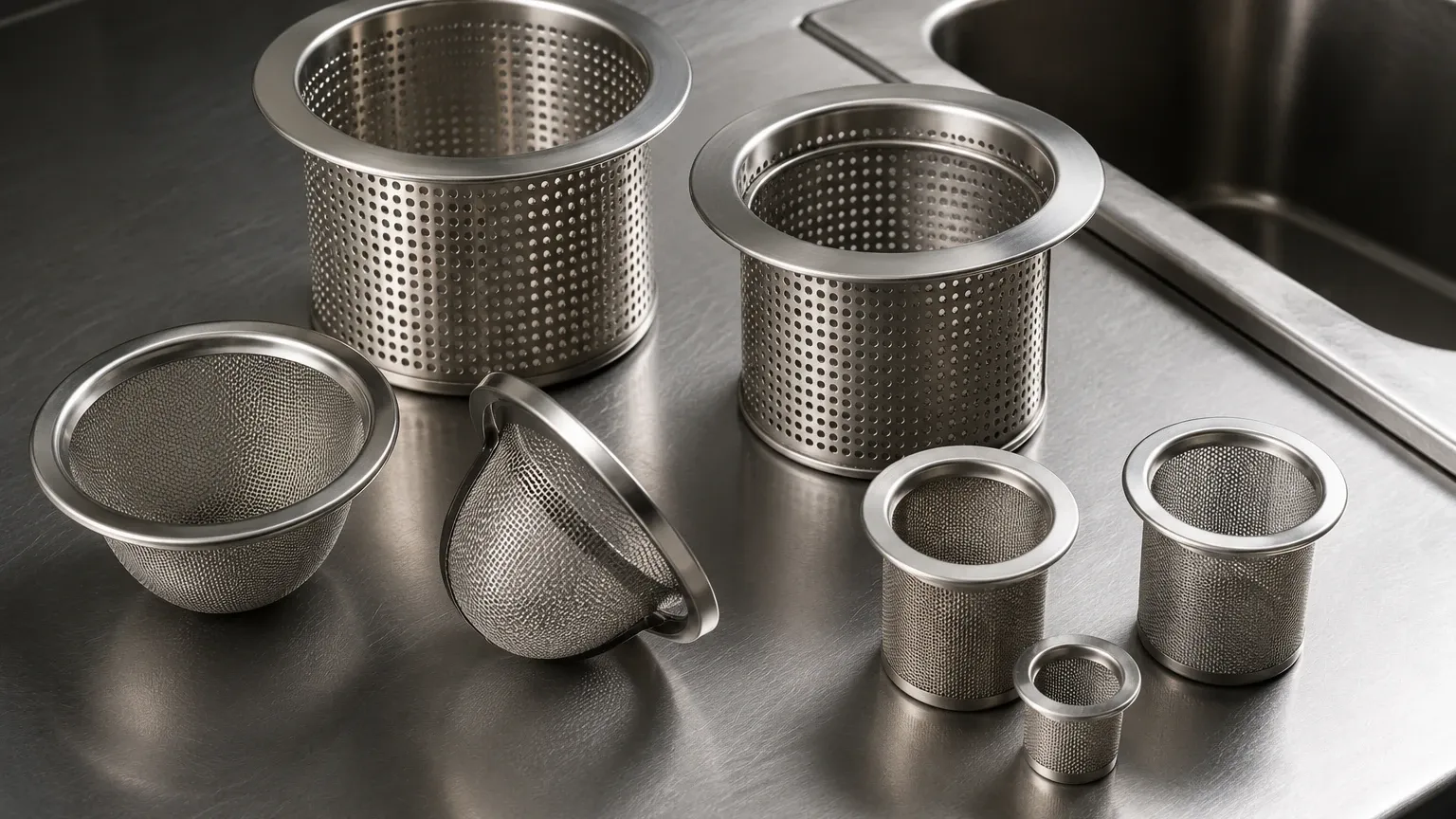
In industrial and commercial plumbing systems, the term "strainers kitchen sink" refers to more than just a simple drain plug. For engineers, facility managers, and OEM equipment manufacturers, these components represent the first line of defense in fluid handling systems. Whether integrated into a commercial food processing line, a large-scale industrial kitchen, or a specialized chemical wash station, high-performance Strainers & Baskets are essential for protecting downstream piping, pumps, and treatment equipment from solid contaminants.
Selecting the right filtration component requires a deep understanding of material science, fluid dynamics, and mechanical design. Unlike consumer-grade hardware, industrial-grade strainers must withstand high flow rates, corrosive cleaning agents, and constant mechanical stress. This guide explores the technical considerations necessary for specifying and purchasing professional-grade straining solutions.
Understanding the Engineering Behind Industrial Strainers and Baskets
The primary function of a strainer is the mechanical removal of solids from a liquid stream. In commercial and industrial environments, the efficiency of this process is dictated by the geometry of the basket and the precision of the filtering media. A standard strainer for a commercial kitchen sink or industrial wash basin must balance two competing factors: filtration fineness and flow capacity.
Industrial strainers typically utilize a basket-style design, which provides a significantly larger surface area than flat strainers. This increased surface area is critical because it allows for greater debris loading before a significant pressure drop occurs. For engineers, calculating the "Open Area Ratio" (OAR) is a vital step. The OAR is the ratio of the total open area of the mesh or perforations to the internal cross-sectional area of the inlet pipe. A high OAR—typically 4:1 or higher in industrial applications—ensures that the system can operate for extended periods without requiring manual cleaning.
Material Selection for High-Performance Filtration
Material integrity is the most significant differentiator between professional filtration components and standard retail products. In environments where "strainers kitchen sink" applications involve food acids, high temperatures, or harsh sanitizing chemicals, stainless steel is the industry standard.
Stainless Steel 304 vs. 316
Most industrial baskets are manufactured from either Grade 304 or Grade 316 stainless steel.
* SS304: Offers excellent strength and general corrosion resistance. It is suitable for most standard commercial kitchen applications and general industrial water treatment.
* SS316: Contains molybdenum, which provides superior resistance to chlorides and pitting. This is the preferred material for pharmaceutical processing, high-salinity environments, and food processing lines involving acidic ingredients (such as citrus or vinegar).
Beyond the alloy type, the construction method matters. Professional-grade baskets often feature reinforced rims and heavy-duty handles to withstand the rigors of frequent removal and high-pressure cleaning. At Kaifil, the focus is on providing durable, precision-engineered components that maintain structural integrity under the demanding conditions of industrial fluid management.
Key Performance Metrics: Flow Rate and Pressure Drop
When specifying strainers for industrial or commercial use, engineers must account for the pressure drop (ΔP) across the filter element. As debris accumulates in the basket, the available open area decreases, causing the pressure drop to increase. If the pressure drop becomes too high, it can lead to pump cavitation, reduced flow rates, and potential damage to the system.
To optimize performance, the following technical factors must be evaluated:
1. Viscosity of the Fluid: Heavier fluids require larger mesh openings to maintain flow, whereas water-like fluids can pass through finer media with less resistance.
2. Particle Size Distribution: The mesh size must be selected based on the smallest particle that needs to be removed. However, over-specifying (choosing a mesh that is too fine) will lead to rapid clogging and increased maintenance costs.
3. Maximum Allowable Pressure Drop: The system design must define the threshold at which the strainer basket must be cleaned. In many industrial setups, differential pressure gauges are installed to monitor this in real-time.
Comparing Standard and Custom Strainer Designs
While off-the-shelf solutions exist for many applications, custom-engineered strainers are often required for specialized industrial equipment. Customization allows for the optimization of the basket dimensions to fit unique housing geometries or to meet specific filtration requirements that standard products cannot address.
Customization options include:
* Variable Mesh Linings: Combining a high-strength perforated metal outer basket with a fine wire mesh inner lining. This provides both structural support and high-precision filtration.
* Specialized Coatings: For specific chemical applications, stainless steel components can be electropolished or coated to enhance surface smoothness and prevent bacterial growth—a critical requirement in food and beverage sectors.
* Unique Geometric Configurations: Designing baskets with tapered bottoms, offset handles, or flanged edges to integrate seamlessly into proprietary OEM machinery.
By working with a specialized manufacturer like Kaifil, procurement teams can ensure that their filtration components are tailored to the exact specifications of their application, reducing the risk of bypass or mechanical failure.
Industrial Applications in Commercial Food Processing
In the context of the food and beverage industry, the requirements for "strainers kitchen sink" components are strictly governed by hygiene and safety standards. These strainers are not merely for waste management; they are often part of a larger process designed to recover solids or protect expensive downstream treatment systems.
In large-scale vegetable washing lines or meat processing facilities, strainers must handle high volumes of organic matter. The design must allow for rapid removal and cleaning to minimize downtime. Furthermore, the internal surfaces must be free of crevices where bacteria could proliferate. This is why smooth-welded stainless steel construction is mandatory in these environments.
Engineering teams in these sectors look for filtration solutions that offer:
* Ease of Sanitization: Compatibility with Clean-in-Place (CIP) systems or high-temperature autoclaving.
* Durability: Resistance to the abrasive nature of some food solids and the corrosive nature of industrial detergents.
* Reliability: Consistent performance to ensure that production lines remain operational without unexpected interruptions caused by filtration failure.
Maintenance Strategies for Longevity and Efficiency
The total cost of ownership (TCO) for industrial strainers is heavily influenced by maintenance requirements. A well-designed strainer system should be easy to service, reducing labor costs and preventing system damage.
Regular Inspection and Cleaning
Failure to clean a strainer basket can lead to "blinding," where the mesh is completely covered by debris. This can result in the basket collapsing under pressure or the bypass of unfiltered fluid if the seals fail. Implementing a scheduled maintenance rotation, or utilizing duplex strainer systems (which allow for cleaning without stopping the flow), is recommended for critical operations.
Replacement Cycles
While high-quality stainless steel strainers are designed for longevity, the mesh linings are wear items. Over time, mechanical cleaning and the impact of high-velocity particles can cause fatigue in the wire mesh. Engineers should maintain a stock of replacement baskets or liners to ensure that filtration efficiency is not compromised by damaged media.
Customization and OEM Support
For manufacturers of industrial equipment, partnering with a reliable OEM supplier for filtration components ensures that replacement parts are always available and built to the original specifications. This is particularly important for maintaining the performance standards of specialized machinery used in water treatment, hydraulic systems, and chemical processing.
Conclusion: Selecting the Right Partner for Filtration Solutions
Whether you are designing a new commercial facility or upgrading an existing industrial process, the selection of strainers and baskets is a technical decision that impacts the reliability of the entire system. Understanding the nuances of material grades, flow dynamics, and structural design allows engineers to move beyond generic "strainers kitchen sink" options toward high-performance, industrial-grade solutions.
Kaifil specializes in the manufacture of custom stainless steel filtration products, providing the technical expertise and manufacturing precision required for demanding B2B applications. By focusing on quality materials and engineered designs, Kaifil helps global customers achieve efficient, durable, and cost-effective filtration performance across a wide range of industries.
