


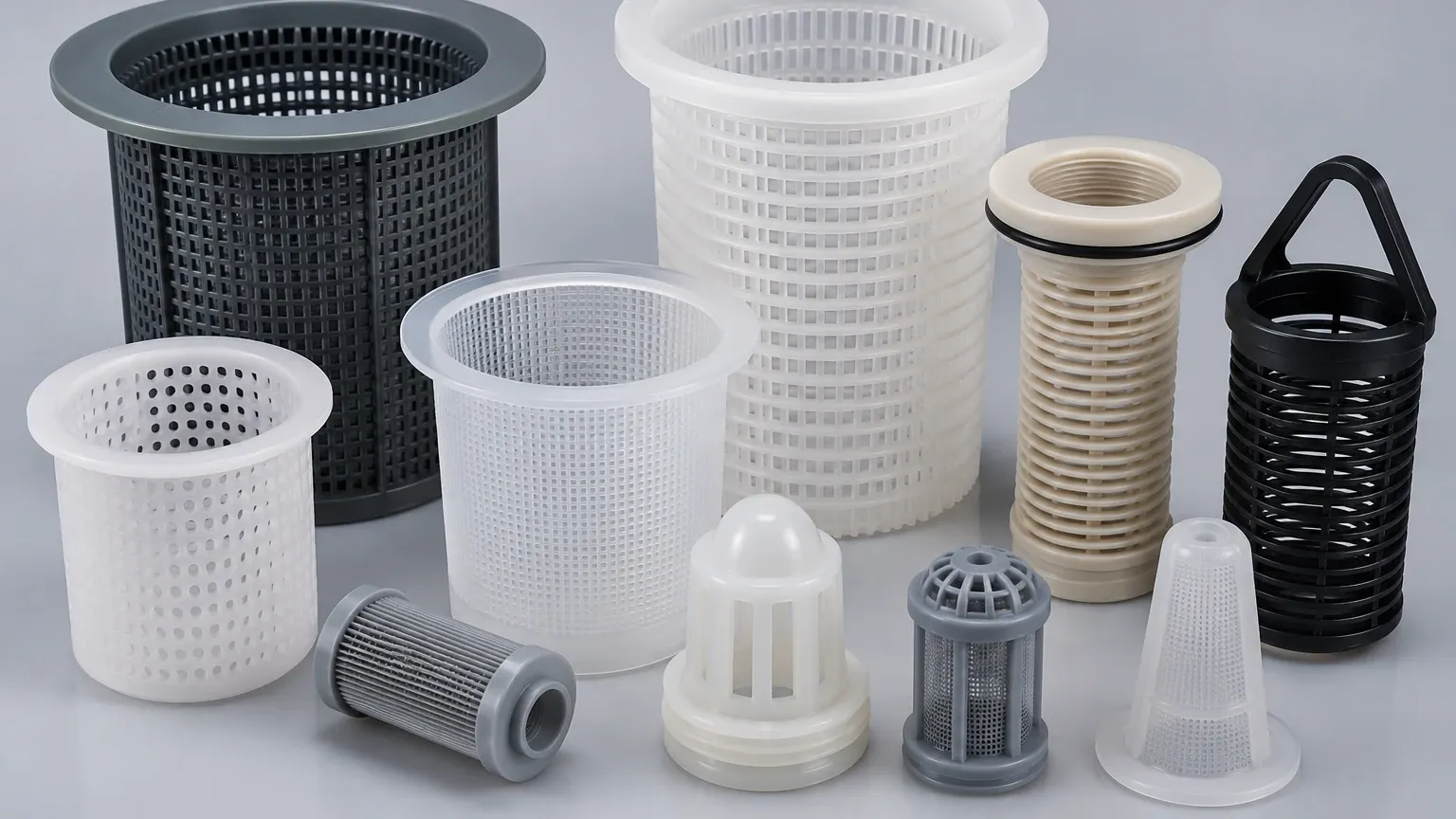
Strainers Plastic
In industrial fluid handling systems, the selection of filtration components is a critical engineering decision that impacts system longevity, product purity, and operational safety. While stainless steel is often the default choice for high-pressure and high-temperature environments, strainers plastic—constructed from polymers such as PVC, CPVC, Polypropylene (PP), and PVDF—serve as essential components in specific chemical and high-purity applications. Understanding the technical nuances, material limitations, and performance characteristics of these non-metallic strainers is vital for engineers and procurement teams tasked with optimizing fluid processing lines.
Industrial strainers are designed to remove large particles from a flowing liquid to protect downstream equipment like pumps, valves, and flow meters. When evaluating Strainers & Baskets, the choice between metallic and plastic housings often hinges on the chemical nature of the fluid, the operating temperature, and the required mechanical strength of the assembly.
Understanding Material Science in Non-Metallic Filtration
The term "plastic" covers a broad spectrum of thermoplastic materials, each with distinct chemical resistance profiles and mechanical properties. In industrial filtration, four primary materials dominate the market for plastic strainers:
1. PVC (Polyvinyl Chloride): The most common material for general-purpose water treatment and mild chemical applications. It is cost-effective and easy to install but has a limited temperature range, typically losing structural integrity above 140°F (60°C).
2. CPVC (Chlorinated Polyvinyl Chloride): An evolution of PVC that offers higher temperature resistance, often rated up to 200°F (93°C). It is frequently used in hot corrosive liquid applications where standard PVC would fail.
3. Polypropylene (PP): Known for its excellent chemical resistance to a wide range of acids and bases. PP is lightweight and offers good fatigue resistance, making it suitable for chemical processing and laboratory environments.
4. PVDF (Polyvinylidene Fluoride): A high-performance fluoropolymer used in the most demanding high-purity and highly corrosive environments. PVDF strainers are resistant to UV radiation, ozone, and aggressive acids like hydrofluoric acid, often found in semiconductor and pharmaceutical manufacturing.
Comparing Strainers Plastic vs. Stainless Steel Alternatives
For many engineering teams, the primary conflict in selection is deciding between a plastic strainer and a stainless steel variant. As a manufacturer specialized in custom stainless steel filtration, Kaifil recognizes that while plastic offers unique benefits, stainless steel remains the benchmark for durability and high-pressure performance.
Chemical Compatibility
Plastic strainers are often selected for their inherent resistance to corrosion. Unlike metals, which may suffer from pitting or galvanic corrosion when exposed to certain salts or acids, polymers are chemically inert to many aggressive reagents. However, plastics are susceptible to "stress cracking" or chemical degradation when exposed to specific solvents or oils that would not affect stainless steel.
Pressure and Temperature Limits
This is where the distinction becomes most apparent. Stainless steel strainers can handle pressures exceeding 1,000 PSI and temperatures well above 500°F. In contrast, strainers plastic typically see a sharp decline in pressure rating as temperature increases. For example, a PVC strainer rated for 150 PSI at 73°F may only be rated for 30 PSI at 130°F. Engineers must consult pressure-temperature derating charts before finalizing a specification.
Mechanical Integrity and Longevity
Stainless steel provides superior impact resistance and structural rigidity. In environments where "water hammer" (pressure surges) or external mechanical stress is a risk, plastic components are more likely to suffer catastrophic failure. For critical infrastructure, the robustness of Strainers & Baskets made from 304 or 316L stainless steel often justifies the higher initial investment through reduced downtime and replacement costs.
Technical Specifications: Pressure, Temperature, and Flow
When specifying a plastic strainer, engineers must look beyond the basic pipe size. The following technical parameters are fundamental to a successful installation:
* Flow Coefficient (Cv): This value represents the flow rate in gallons per minute (GPM) that will result in a 1 PSI pressure drop across the strainer. Plastic strainers often have thicker walls than their metal counterparts to compensate for lower material strength, which can sometimes restrict the internal flow path and lower the Cv.
* Seal Compatibility: The housing material is only one part of the equation. The O-rings or gaskets (typically EPDM or FKM/Viton) must also be compatible with the process fluid. A failure in the seal is the most common cause of leaks in plastic strainer assemblies.
* End Connections: Plastic strainers are available with socket (solvent weld), threaded, or flanged connections. For industrial B2B applications, flanged connections are preferred as they allow for easier removal during maintenance cycles without cutting the piping system.
Engineering Considerations for Basket Design and Mesh Selection
The heart of any strainer is the internal basket. Even in a plastic housing, the basket or screen may be made of plastic mesh or stainless steel mesh, depending on the required filtration accuracy.
Perforation vs. Mesh
Plastic baskets are usually manufactured with molded perforations. These are excellent for removing large debris but are limited in how fine they can filter. If sub-millimeter filtration is required (e.g., 100 microns or finer), a stainless steel mesh liner is often integrated into the plastic basket. This hybrid approach combines the chemical resistance of the plastic housing with the precision of a metal filter element.
Open Area Ratio
The ratio of the total open area of the basket holes to the internal cross-sectional area of the inlet pipe is a key metric. A high open-area ratio (typically 4:1 or higher) ensures that the strainer can collect a significant amount of debris before the pressure drop becomes excessive. This extends the time between cleaning cycles, a critical factor in reducing labor costs for industrial facilities.
Operational Risks and Environmental Factors
Using strainers plastic in an industrial setting requires an understanding of environmental factors that do not typically affect metal filters:
* UV Degradation: Many plastics, particularly PVC and PP, can become brittle when exposed to direct sunlight over long periods. If the strainer is installed outdoors, UV-resistant coatings or shielding may be necessary.
* Thermal Expansion: Plastics have a much higher coefficient of thermal expansion than metals. In long piping runs, the expansion and contraction of the plastic can put significant stress on the strainer housing and its connections. Expansion loops or flexible couplings are often required to prevent cracking.
* Creep: Under constant pressure over long periods, plastic materials can undergo "creep," a slow deformation that can eventually lead to seal failure or housing distortion. This is particularly prevalent in high-temperature applications.
Application-Specific Selection for Industrial Systems
Different industries have varying requirements that dictate the use of plastic or metal strainers:
1. Aquaculture and Desalination: Saltwater is highly corrosive to many metals. In these environments, plastic strainers (specifically PVC and CPVC) are often the preferred choice for pre-filtration to prevent rust from entering the system.
2. Chemical Processing: For the transport of hydrochloric acid or bleach, plastic strainers are essential. However, for high-pressure organic solvent lines, stainless steel remains the safer choice due to the risk of plastic dissolution or fire hazards.
3. Food and Beverage: While some plastics are FDA-approved, stainless steel is generally preferred for its ease of sterilization and resistance to Clean-in-Place (CIP) chemicals and high-temperature steam.
4. Water Treatment: In municipal and industrial wastewater treatment, plastic strainers provide a cost-effective solution for low-pressure chemical dosing lines and filtration of non-potable water.
Maintenance Protocols and Lifecycle Management
To ensure the reliability of Strainers & Baskets, a proactive maintenance schedule is required. Unlike metal strainers, which can often be cleaned with aggressive mechanical brushing, plastic baskets require gentler handling to avoid scratching or weakening the polymer structure.
* Visual Inspection: Regularly check for signs of discoloration (indicating chemical attack) or "crazing" (tiny surface cracks indicating stress).
* Pressure Drop Monitoring: Installing pressure gauges upstream and downstream of the strainer is the most effective way to determine when the basket needs cleaning. A differential pressure of 5-10 PSI usually indicates that the basket is at capacity.
* Replacement Cycles: Plastic components have a finite lifespan in industrial environments. Engineers should establish a replacement schedule based on the material's fatigue limits and the severity of the operating conditions.
Conclusion: Making an Informed Choice
Selecting the right strainer involves balancing chemical compatibility, mechanical requirements, and total cost of ownership. While strainers plastic offer specific advantages in corrosive, low-pressure environments, they require careful engineering to account for temperature-related strength loss and environmental degradation. For applications involving high pressures, extreme temperatures, or where long-term structural integrity is paramount, stainless steel filtration solutions remain the industry standard.
At Kaifil, we provide precision-engineered stainless steel filtration components designed to meet the most demanding industrial requirements. Whether you are dealing with complex chemical processing or high-volume water treatment, choosing the right material for your Strainers & Baskets is the first step toward a reliable and efficient system. Engineers should always verify the specific chemical concentration, maximum surge pressure, and peak operating temperature before selecting a plastic or metal filtration solution.
