


Strainers Posts
In the complex landscape of industrial filtration, the efficiency of a system is often determined by the structural integrity of its internal components. While the filtration media—whether wire mesh, perforated plate, or wedge wire—performs the primary task of particle separation, the mechanical framework that supports this media is equally vital. Among these structural elements, strainers posts (often referred to as center posts or support columns) play a decisive role in ensuring that Strainers & Baskets can withstand the rigorous demands of high-pressure fluid processing without mechanical failure.
For engineers and procurement professionals in the chemical, pharmaceutical, and food processing sectors, understanding the engineering nuances of strainers posts is essential. These components are not merely passive structural members; they are precision-engineered parts that influence flow dynamics, seal integrity, and the overall lifecycle of the filtration unit. This article examines the technical requirements, material considerations, and engineering challenges associated with support posts in industrial straining systems.
The Structural Role of Posts in Industrial Strainers
The primary function of strainers posts is to provide a rigid backbone for the filter basket or element. In industrial applications, fluid is often forced through a strainer at high velocities and pressures. As the filter media captures debris, the differential pressure ($ΔP$) across the element increases. Without adequate internal support, this pressure can cause the basket to deform, collapse, or bypass the sealing surfaces.
Strainers posts are typically positioned centrally or strategically around the periphery of the basket to distribute mechanical loads. In larger duplex or simplex strainers, a central post often serves as the anchor point for the basket handle and the compression mechanism that holds the basket against the housing seat. By transferring the hydraulic force from the mesh to the more robust housing or a dedicated support plate, these posts prevent the "ballooning" effect that can lead to mesh fatigue and eventual rupture.
Furthermore, in high-viscosity applications—such as those found in the processing of resins, heavy oils, or food syrups—the mechanical stress on the strainer element is significantly higher. In these scenarios, the strainers posts must be engineered with a higher moment of inertia to resist bending moments. Kaifil’s manufacturing process focuses on ensuring that these support structures are welded with high-precision techniques to maintain vertical alignment, which is critical for the proper seating of the basket within the housing.
Engineering Considerations for Center Posts and Support Structures
When designing or specifying strainers posts, several engineering parameters must be evaluated to ensure system reliability. These include the post diameter, attachment method, and the interaction with the strainer’s lid or cover.
1. Load Distribution and Wall Thickness
The diameter and wall thickness of the post are calculated based on the maximum allowable differential pressure of the system. For instance, a strainer designed for a 150 psi system must have a support structure capable of withstanding that full pressure in the event of a total blockage. Engineers must account for the tensile and compressive strengths of the material, ensuring a safety factor that accommodates pressure surges or "water hammer" effects.
2. Precision Alignment and Sealing
A common point of failure in industrial strainers is the bypass of unfiltered fluid. This often occurs because the internal basket is not perfectly aligned with the inlet/outlet ports. Strainers posts often act as the guide for the basket. If the post is even slightly out of alignment, the basket may sit tilted, creating a gap in the seal. Precision machining of the post ends and the use of CNC-turned components ensure that the basket remains concentric to the housing, maintaining a tight metal-to-metal or o-ring seal.
3. Connection Methods
The method by which the post is attached to the basket base and the handle is a critical fatigue point. In high-vibration environments, such as those near reciprocating pumps, the joints are subject to cyclic loading. Kaifil utilizes advanced TIG (Tungsten Inert Gas) welding to provide clean, deep-penetration welds that minimize the risk of stress corrosion cracking at the heat-affected zones (HAZ).
Material Selection: Why Stainless Steel is the Standard
In the B2B industrial filtration market, material compatibility is non-negotiable. Strainers posts must be manufactured from materials that match or exceed the corrosion resistance of the filter media and the housing. Stainless steel is the industry standard due to its mechanical strength and chemical passivity.
* Grade 304/304L: Suitable for general industrial use, water treatment, and less aggressive chemical environments. It provides excellent structural support and is cost-effective for standard applications.
* Grade 316/316L: The preferred choice for the pharmaceutical, food and beverage, and marine industries. The addition of molybdenum provides superior resistance to chlorides and organic acids. In applications involving "strainers posts," using 316L (low carbon) is particularly important for components that require extensive welding, as it prevents carbide precipitation and subsequent intergranular corrosion.
* Exotic Alloys: For highly corrosive environments involving concentrated acids or high-temperature steam, posts may be fabricated from Duplex stainless steel or Hastelloy. These materials offer higher yield strength, allowing for thinner post designs that minimize flow obstruction while maintaining structural integrity.
Beyond chemical resistance, the surface finish of the posts is critical, especially in sanitary applications. For the food and pharmaceutical sectors, posts must be polished to a specific Ra (Roughness Average) value to prevent bacterial growth and ensure that the components can be effectively cleaned via CIP (Clean-in-Place) protocols.
Performance Impact: Flow Dynamics and Pressure Stability
One of the primary challenges in strainer design is balancing structural strength with hydraulic efficiency. Every internal component, including the strainers posts, represents an obstruction to the fluid flow. If a post is oversized, it can create unnecessary turbulence and increase the baseline pressure drop across the unit.
Engineers use fluid dynamics principles to optimize the shape and placement of support posts. A streamlined or cylindrical post profile is typically used to minimize the wake area behind the post. In high-flow systems, turbulence can lead to "flow-induced vibration," which can cause the strainer mesh to rub against the support structure, leading to premature wear. By optimizing the distance between the mesh and the strainers posts, and ensuring a smooth surface finish, manufacturers can reduce these deleterious effects.
Furthermore, the presence of a central post can actually assist in flow distribution. By breaking up the incoming fluid stream, a well-positioned post can help distribute the fluid more evenly across the entire surface area of the basket, rather than allowing a high-velocity "jet" to strike a single area of the mesh. This even distribution extends the life of the filter media and increases the dirt-holding capacity of the Strainers & Baskets.
Customization and OEM Integration for Specialized Applications
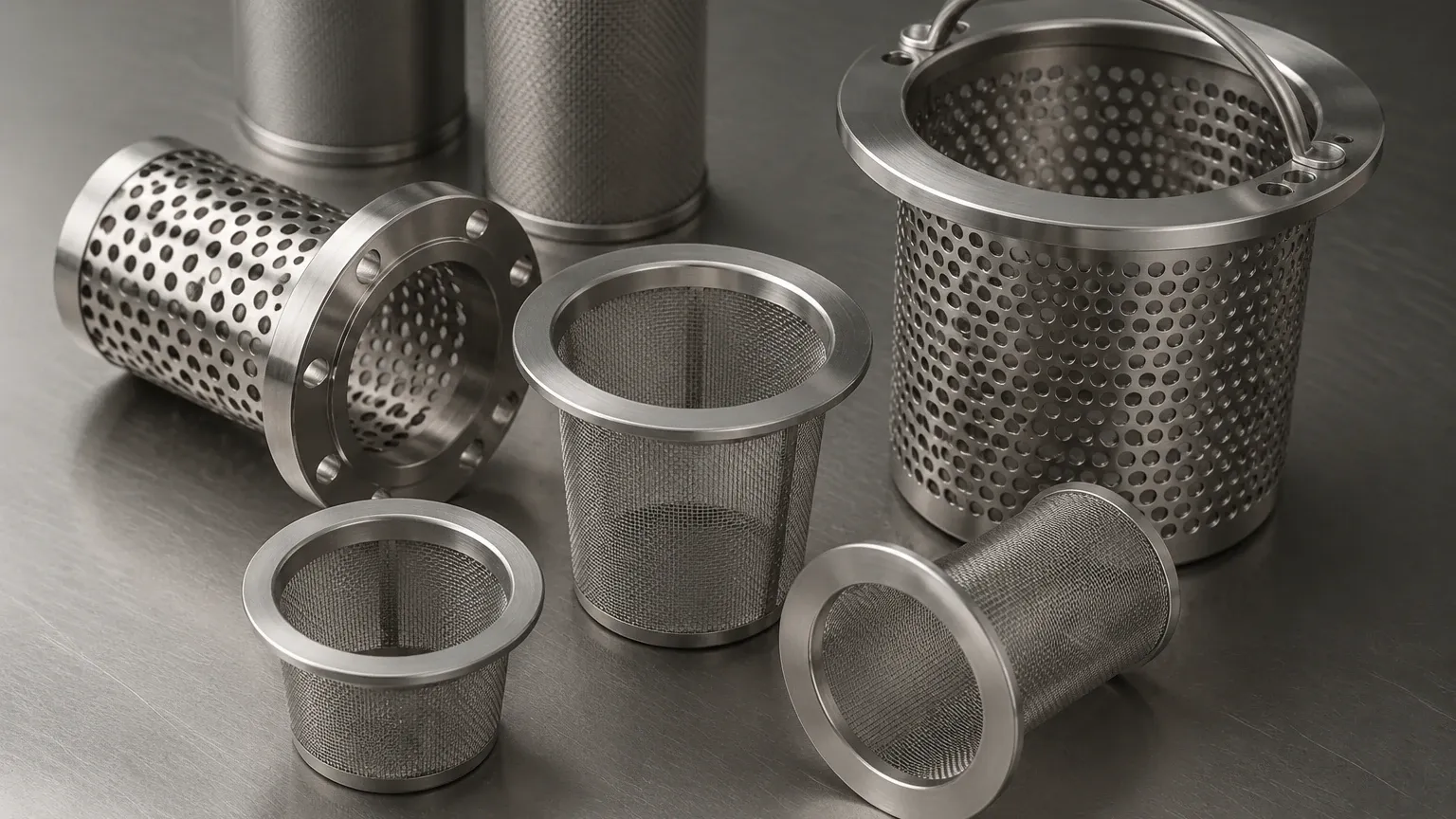
Industrial filtration requirements are rarely "one size fits all." Many systems require custom-engineered strainers posts to accommodate specific process conditions or legacy housing dimensions. As a specialized manufacturer, Kaifil provides OEM solutions that allow for the customization of every aspect of the strainer internal assembly.
Custom Lengths and Diameters
In retrofitting scenarios, where a new basket must fit into an existing housing, the length of the support post must be precise to within fractions of a millimeter. Custom diameters may also be required to interface with existing lid-closure mechanisms or to provide additional clearance for high-viscosity fluids.
Integrated Sensor Mounts
Modern "smart" filtration systems often require the integration of differential pressure sensors or temperature probes. Strainers posts can be designed as hollow conduits or equipped with specialized mounting brackets to house these instruments directly within the flow stream, providing more accurate real-time data than external housing-mounted sensors.
Multi-Post Configurations
For extra-large baskets used in water intake or large-scale chemical processing, a single center post may be insufficient. In these cases, a multi-post tripod or cage structure is used. These configurations provide maximum stability against lateral forces and are essential for strainers that handle high solids loading.
Maintenance and Replacement Cycles for Internal Components
While the housing of a strainer may last for decades, the internal components—including the basket and its support posts—are subject to wear and tear. Regular inspection of strainers posts is a critical part of industrial maintenance programs. Engineers should look for the following signs of degradation:
1. Erosion: In systems handling abrasive slurries, the high-velocity fluid can gradually erode the surface of the post, particularly near the inlet. If the diameter of the post is significantly reduced, its structural integrity is compromised.
2. Mechanical Fatigue: Constant pressure cycling can lead to hairline cracks at the weld points. These are often invisible to the naked eye but can be detected through dye penetrant testing during major overhauls.
3. Corrosion: Even stainless steel can succumb to localized pitting if the process chemistry changes or if the system is left stagnant with corrosive fluids for extended periods.
4. Deformation: If a strainer has experienced a high-pressure event (e.g., a pump malfunction), the posts should be checked for straightness. A bent post will prevent the basket from sealing correctly, leading to bypass.
When replacement is necessary, it is often more cost-effective to replace the entire basket assembly, including the integrated strainers posts, rather than attempting field repairs. This ensures that the structural integrity and alignment of the unit are restored to factory specifications.
Technical Confirmation Before Purchasing
Before finalizing a specification for industrial strainers or replacement baskets, technical teams should confirm several key data points with the manufacturer. This ensures that the strainers posts and overall assembly are fit for the intended service:
* Maximum Differential Pressure ($ΔP$): What is the collapse pressure rating of the basket and its support structure?
* Flow Rate and Velocity: Does the post design accommodate the required flow without causing excessive turbulence or vibration?
* Chemical Compatibility: Are the post material and the welding filler metal compatible with the process fluid and cleaning agents?
* Sealing Interface: How does the post interact with the housing cover to ensure a positive seal?
* Certifications: Does the component need to meet specific industry standards, such as ASME Section VIII, PED, or FDA/3A sanitary standards?
By addressing these questions, engineers can ensure they select a filtration solution that provides not only the required micron rating but also the mechanical durability needed for long-term industrial operation. Kaifil’s expertise in custom stainless steel fabrication ensures that every component, from the finest wire mesh to the robust strainers posts, is engineered for performance and reliability in demanding environments.
