


Strainers Walmart
In the procurement process for industrial components, the search for immediate solutions often leads to a comparison between retail availability and specialized engineering. While a search for "strainers walmart" might yield results suitable for residential kitchens or light-duty commercial food service, the requirements of heavy industrial filtration—such as chemical processing, pharmaceutical manufacturing, and high-pressure hydraulic systems—demand a significantly different set of technical specifications.
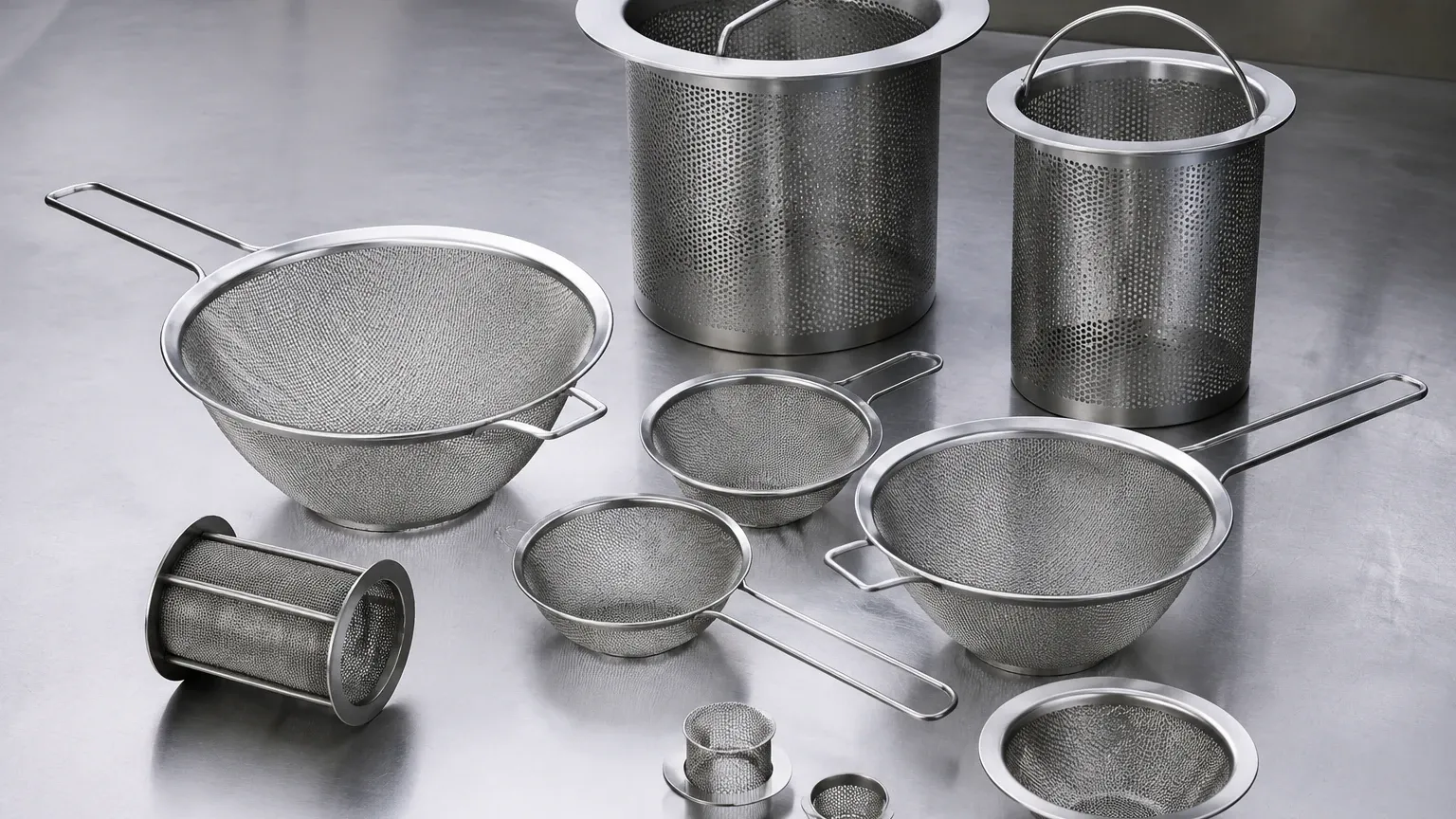
For engineers and maintenance managers, understanding the distinction between consumer-grade hardware and industrial-grade Strainers & Baskets is critical for ensuring system integrity, process efficiency, and long-term cost-effectiveness. This article examines the technical boundaries that separate retail options from professional filtration solutions and provides a framework for evaluating high-performance strainers.
The Technical Gap: Consumer vs. Industrial Filtration
The primary difference between products found through a search for strainers walmart and those manufactured by industrial specialists like Kaifil lies in material integrity and structural design. Consumer strainers are typically designed for atmospheric pressure and non-corrosive environments. In contrast, industrial strainers must operate under rigorous conditions.
Material Composition and Durability
Retail strainers often utilize lower-grade stainless steel (such as 200 series) or even chrome-plated plastics. These materials are prone to pitting, stress corrosion cracking, and structural failure when exposed to industrial chemicals or high temperatures. Industrial strainers are predominantly fabricated from 304 or 316L stainless steel. The "L" in 316L denotes low carbon content, which is essential for preventing carbide precipitation during welding, ensuring that the strainer remains corrosion-resistant at the weld points—a common failure area in cheaper alternatives.
Pressure and Temperature Ratings
A standard kitchen strainer is not rated for pressure. In industrial piping systems, strainers must withstand significant internal pressures, often exceeding 150 to 300 PSI, depending on the flange rating (e.g., ANSI Class 150 or 300). Furthermore, industrial processes involving steam or thermal oils require strainers that maintain their shape and filtration accuracy at temperatures exceeding 400°F (204°C), conditions that would cause a retail-grade product to warp or fail.
Engineering Specifications for Industrial Strainers & Baskets
When selecting filtration components for a B2B environment, engineers must look beyond the basic shape and focus on specific performance metrics. Industrial Strainers & Baskets are engineered with a focus on the "Open Area Ratio" and "Micron Rating."
Open Area Ratio (OAR)
The OAR is the relationship between the total area of the openings in the strainer and the cross-sectional area of the inlet pipe. A high-quality industrial basket strainer typically offers an OAR of 6:1 or higher. This ensures that even as the basket begins to collect debris, the pressure drop (Delta P) remains low, preventing pump cavitation and maintaining system flow. Retail-grade products rarely provide these calculations, leading to unexpected flow restrictions in industrial lines.
Micron and Mesh Precision
In industrial filtration, precision is measured in microns. A search for strainers walmart might provide "fine" or "coarse" mesh options, but industrial applications require specific mesh counts (e.g., 20 mesh to 400 mesh) or perforated metal with exact hole diameters. For example, in a hydraulic system, a strainer must capture particles as small as 10 microns to protect sensitive valves. Achieving this level of precision requires high-quality wire cloth that is securely bonded to a support structure, a feature absent in consumer-level hardware.
Customization vs. Off-the-Shelf: Meeting Specific Application Requirements
One of the most significant limitations of retail procurement is the lack of customization. Industrial processes are rarely "one size fits all." Custom manufacturing allows for the integration of specific features that are unavailable in the mass-market products found via strainers walmart searches.
Tailored Structural Reinforcements
For high-viscosity fluids or high-flow applications, the basket itself may require a heavy-duty reinforcement cage. This prevents the mesh from collapsing under the weight of the captured solids or the force of the fluid. Custom manufacturers like Kaifil can engineer these baskets with internal or external support rings and heavy-gauge perforated plate liners to ensure longevity under mechanical stress.
Specialized Gasket and Seal Compatibility
Industrial strainers must be compatible with the fluids they process. While a retail strainer might use a standard rubber gasket, industrial applications may require Viton, EPDM, PTFE, or Buna-N seals to handle aggressive chemicals or extreme temperatures. Using the wrong seal material can lead to leaks, contamination, and hazardous spills, highlighting the risk of using non-industrial components in a factory setting.
Performance Evaluation: Flow Rates and Pressure Drop Calculations
In an industrial facility, every component in the fluid path contributes to the overall efficiency of the system. Engineers must calculate the pressure drop across a strainer to ensure it does not exceed the pump's capacity.
Calculating Delta P
The pressure drop is influenced by fluid viscosity, specific gravity, flow rate, and the percentage of the strainer that is clogged. Professional manufacturers provide flow coefficient (Cv) values for their Strainers & Baskets, allowing engineers to model the system's performance before installation. Without these data points—which are never provided for retail products—maintenance teams are essentially guessing, which can lead to premature motor failure in pumps or inadequate filtration.
Effective Filtration Area (EFA)
The EFA determines how long a strainer can operate before it requires cleaning. Industrial baskets are designed to maximize this area within a compact footprint. By using pleated mesh or multi-layered wire cloth, manufacturers can significantly increase the EFA, extending the intervals between maintenance cycles and reducing downtime.
Total Cost of Ownership in Filtration Systems
While the initial price of a retail product might be lower, the Total Cost of Ownership (TCO) for industrial-grade Strainers & Baskets is almost always lower in the long run.
1. Reduced Downtime: An industrial strainer made from 316L stainless steel may last for years, whereas a lower-quality alternative might fail in weeks, leading to costly unscheduled shutdowns.
2. Ease of Maintenance: Industrial baskets are designed for quick removal and cleaning. Features like swing-bolt covers or quick-release handles allow technicians to service the unit in minutes.
3. Protection of Downstream Equipment: The primary role of a strainer is to protect expensive equipment like heat exchangers, spray nozzles, and flow meters. A failure in a low-quality strainer can result in catastrophic damage to these components, costing thousands of dollars in repairs.
Maintenance and Longevity of Industrial Filter Baskets
To maintain optimal performance, industrial strainers require a structured maintenance protocol. Unlike the disposable nature of many products found through strainers walmart, industrial baskets are designed to be cleaned and reused multiple times.
Cleaning Protocols
Depending on the application, cleaning may involve backwashing, ultrasonic cleaning, or chemical soaking. The high-quality welding and material selection in professional strainers ensure that they can withstand these cleaning processes without losing their structural integrity or filtration accuracy.
Monitoring and Replacement
Modern industrial systems often incorporate differential pressure gauges across the strainer housing. When the pressure drop reaches a predetermined level (e.g., 10-15 PSI), it signals the need for cleaning. By monitoring these levels, facilities can optimize their maintenance schedules and prevent bypass—a condition where fluid flows around the filter element due to excessive pressure, allowing contaminants into the clean side of the system.
Conclusion
When evaluating filtration options, it is essential to distinguish between the convenience of retail availability and the necessity of engineering excellence. While a search for "strainers walmart" may be useful for household needs, industrial applications require the precision, durability, and technical support offered by specialized manufacturers. By focusing on material grades, pressure ratings, and custom design capabilities, engineers can select Strainers & Baskets that provide reliable protection for their critical infrastructure and contribute to a more efficient production environment.
