


Tea Strainers for Cups
In the realm of precision filtration, even seemingly simple consumer products like tea strainers for cups require rigorous engineering and material science to perform effectively. For manufacturers and B2B procurement teams, selecting the right filtration component is not merely about aesthetics; it is about ensuring durability, food safety compliance, and consistent performance across thousands of cycles. As a specialized manufacturer of Strainers & Baskets, Kaifil approaches the production of these components with the same technical precision applied to industrial chemical or hydraulic filters.
This guide examines the engineering considerations, material requirements, and manufacturing processes involved in producing high-quality tea strainers for cups, providing technical professionals with the information needed to evaluate these components for commercial or OEM applications.
Understanding the Engineering Behind Precision Tea Strainers
At its core, a tea strainer is a specialized basket filter designed to separate solids (tea leaves) from a liquid medium (water) while allowing for maximum infusion. The efficiency of this process depends on several mechanical factors, including the mesh density, the open area percentage, and the structural integrity of the basket.
Filtration Accuracy and Mesh Selection
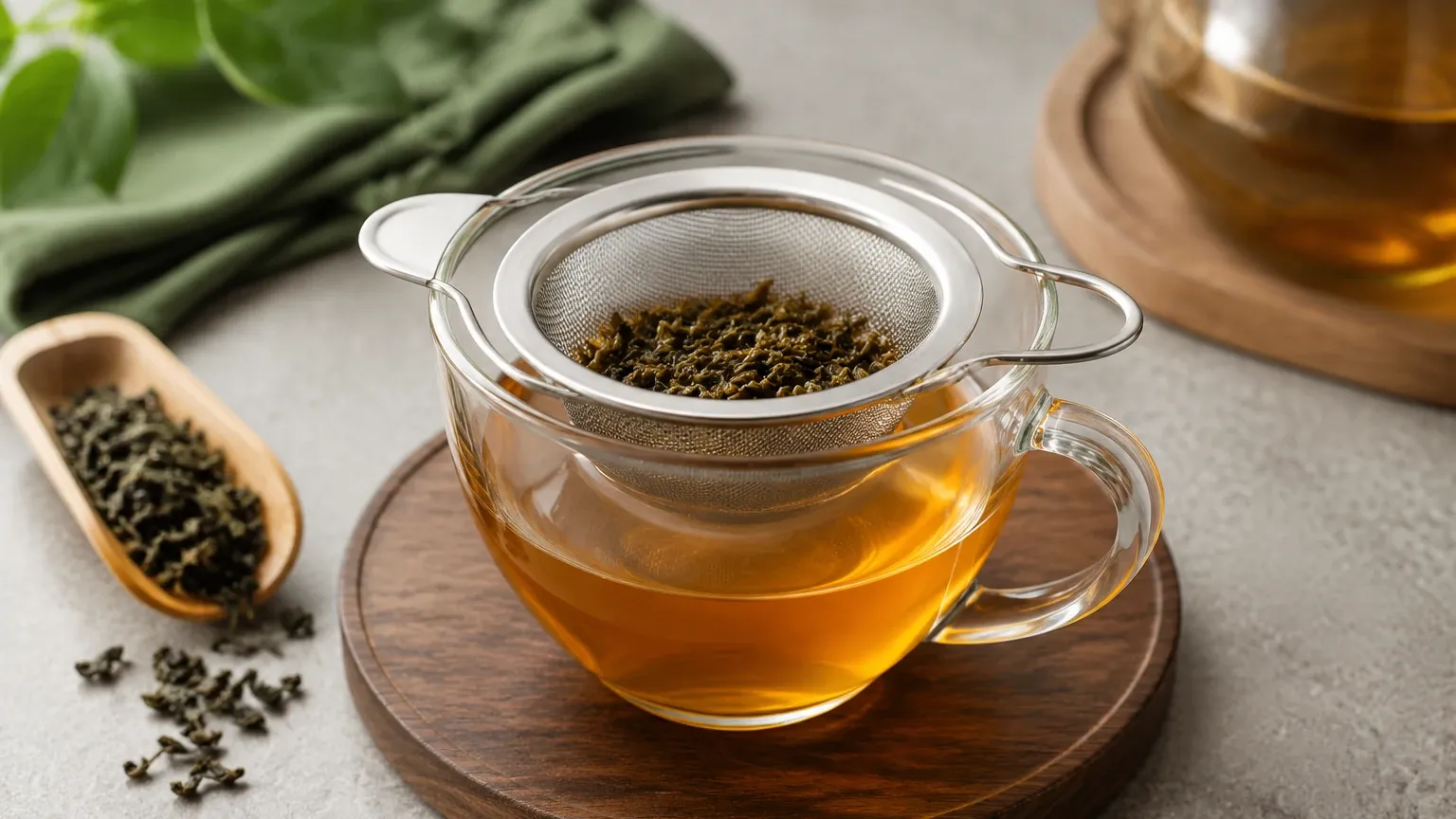
The most critical component of tea strainers for cups is the wire mesh. Unlike industrial coarse strainers, tea filtration requires a fine balance. If the mesh is too coarse, tea dust and fannings will pass through, resulting in a sediment-heavy beverage. If the mesh is too fine, surface tension and trapped air bubbles can impede the flow of water, leading to poor infusion and an uneven extraction.
Engineers typically specify mesh based on "mesh count" (the number of wires per linear inch) or micron rating. For high-quality tea strainers, a mesh count between 80 and 200 is common. Stainless steel woven wire mesh is preferred because it maintains its aperture size under thermal stress, ensuring that the filtration accuracy remains consistent throughout the product's lifespan.
The Role of Open Area
Open area refers to the percentage of the total mesh surface that is not obstructed by wire. A higher open area promotes better water circulation, which is essential for the "agitation" of tea leaves. In a B2B context, specifying the open area is vital for ensuring that the strainer does not restrict flow to the point of extending brewing times unnecessarily. Kaifil’s manufacturing process focuses on optimizing this ratio to provide structural strength without sacrificing infusion speed.
Material Selection: Why Stainless Steel Dominates Industrial Tea Filtration
When producing tea strainers for cups for the global market, material selection is dictated by two primary factors: corrosion resistance and food safety. While plastic or silicone alternatives exist, stainless steel remains the industry standard for professional and high-end consumer applications.
Stainless Steel Grades: 304 vs. 316
Most commercial tea strainers are manufactured from Grade 304 stainless steel. This alloy provides excellent resistance to the organic acids and tannins found in tea. It is durable, easy to clean, and maintains its finish over years of use.
For more demanding environments—such as high-salinity coastal regions or specialized laboratory applications—Grade 316 stainless steel may be specified. Grade 316 contains molybdenum, which significantly enhances resistance to pitting and crevice corrosion. In the context of tea strainers for cups, using 304 is usually sufficient for standard food-grade applications, providing a cost-effective yet high-performance solution.
Food Safety and Compliance
For B2B buyers, ensuring that materials meet international food contact standards (such as FDA or LFGB) is non-negotiable. Stainless steel is inherently non-toxic and does not leach chemicals into the liquid, even at boiling temperatures. Furthermore, the smooth surface of high-quality stainless steel wire mesh prevents the accumulation of bacteria, provided the strainer is cleaned correctly.
Design Parameters for Optimal Flow and Particle Retention
The geometry of tea strainers for cups significantly impacts their usability and filtration efficiency. When designing or sourcing these components, several physical parameters must be considered.
Basket Depth and Diameter
The volume of the strainer basket must allow for the tea leaves to expand fully. When dried tea leaves are hydrated, they can increase in volume by 300% to 500%. If the basket is too small, the leaves become packed together, preventing water from reaching the center of the mass. This results in a weak, under-extracted cup of tea. Engineering the basket depth to fit standard cup dimensions while maximizing internal volume is a key design challenge.
Rim and Handle Construction
The interface between the mesh and the support structure is a common point of failure. In professional-grade strainers, the mesh is often secured to a solid stainless steel rim using ultrasonic welding or precision spot welding. This eliminates sharp edges and prevents the mesh from fraying. Handles must be ergonomically designed to sit securely on the rim of a cup or teapot, often featuring a "dual-wing" design to accommodate various vessel diameters.
Micro-Perforated vs. Woven Mesh
There are two primary styles of metal tea strainers for cups: woven wire mesh and micro-perforated metal sheets.
1. Woven Wire Mesh: Offers the highest open area and best flow rates. It is ideal for fine teas but requires careful manufacturing to ensure the edges are sealed.
2. Micro-Perforated Metal: These are made by etching or punching holes into a thin sheet of stainless steel. While they are often easier to clean and very rigid, they typically have a lower open area than woven mesh, which can slow down the infusion process.
Kaifil provides both options within our Strainers & Baskets category, allowing clients to choose the technology that best fits their specific application.
Customization and OEM Capabilities for Bulk Production
For businesses looking to integrate tea strainers into their own product lines or hospitality operations, customization is essential. OEM manufacturing allows for the adjustment of every technical specification to meet a brand's unique requirements.
Dimensional Customization
Not all cups are created equal. OEM partners can specify custom diameters, depths, and handle lengths to ensure the strainer fits perfectly within a specific tea set or industrial brewing system. This level of precision is particularly important for automatic tea brewing machines where the strainer must interface with mechanical components.
Branding and Finish
Beyond functional specs, the aesthetic finish can be customized. While a polished "mirror" finish is standard, brushed or matte finishes are also available. Logos can be laser-etched onto the rim or handle, providing a permanent branding solution that does not compromise the food-grade integrity of the device.
Specialized Mesh Weaves
For unique filtration needs—such as filtering ultra-fine herbal powders—custom weave patterns can be employed. Twill weaves or Dutch weaves offer different particle retention characteristics compared to standard plain weaves. Engineers at Kaifil work with clients to determine the optimal weave for their specific tea or botanical product.
Maintenance and Durability in Commercial Environments
In a commercial setting, such as a busy café or a food processing facility, tea strainers for cups are subjected to heavy use and frequent cleaning. Understanding the maintenance requirements is essential for predicting the lifespan of the component.
Cleaning Protocols
Tannins, the polyphenols found in tea, are notorious for staining and creating a sticky residue on filtration surfaces. If left uncleaned, these residues can clog the fine apertures of the mesh. Stainless steel strainers are dishwasher safe and can withstand aggressive cleaning agents. For industrial-scale cleaning, ultrasonic baths are highly effective at removing deep-seated particles from the wire intersections.
Resistance to Mechanical Stress
Repeated handling and cleaning can cause lower-quality strainers to deform or the mesh to pull away from the frame. High-quality construction involves reinforced rims and high-tensile wire. When evaluating a supplier, it is important to check the weld strength and the gauge of the wire used in the mesh. A thicker wire diameter increases durability but reduces the open area, necessitating a technical trade-off that should be guided by the manufacturer.
Factors Influencing Total Cost of Ownership (TCO)
When purchasing tea strainers for cups at a B2B level, the initial unit price is only one part of the equation. The Total Cost of Ownership (TCO) includes the lifespan of the product, the cost of replacement, and the impact on the end-user experience.
1. Replacement Cycles: A cheap, poorly constructed strainer may need replacement every few months due to mesh failure or corrosion. A high-quality stainless steel strainer from a reputable manufacturer like Kaifil can last for years, significantly lowering the long-term cost.
2. Consistency of Performance: Inconsistent filtration can lead to customer dissatisfaction or product waste. Investing in precision-engineered components ensures that every cup of tea meets the desired quality standard.
3. Regulatory Risk: Using non-compliant materials can lead to legal issues and product recalls. Sourcing from a manufacturer that provides material certifications and adheres to strict quality control processes mitigates this risk.
Conclusion: Selecting the Right Partner for Filtration Solutions
Whether you are sourcing tea strainers for cups for a retail brand, a hospitality chain, or an industrial food service application, the technical details matter. From the grade of stainless steel to the specific mesh count and welding technique, every decision impacts the final performance and durability of the filter.
Kaifil combines decades of experience in industrial filtration with advanced manufacturing capabilities to deliver high-performance Strainers & Baskets. By focusing on engineering excellence and material integrity, we help our partners achieve efficient, durable, and cost-effective filtration solutions tailored to their specific needs. When selecting your next filtration component, consider the technical boundaries of the application and choose a partner who understands the science behind the mesh.
