


Urinal Strainers
In commercial and industrial facility management, the integrity of plumbing systems depends heavily on the performance of localized filtration components. Urinal strainers, while seemingly simple, serve as the primary defense mechanism against debris that can lead to costly pipe blockages and system downtime. For engineers and facility managers, selecting the appropriate strainer involves more than just finding a physical fit; it requires an understanding of material science, flow dynamics, and long-term maintenance cycles.
As a critical subset of the broader category of Strainers & Baskets, these components must withstand constant exposure to moisture, uric salts, and harsh chemical cleaning agents. This guide examines the technical specifications, material considerations, and engineering requirements necessary for selecting high-performance filtration solutions for commercial environments.
The Role of Precision Filtration in Commercial Plumbing Systems
The primary function of urinal strainers is to act as a physical barrier, preventing solids—such as paper products, hair, and miscellaneous debris—from entering the drainage system. In high-traffic environments like airports, stadiums, and industrial plants, the failure of a single strainer can lead to a localized flood, requiring emergency plumbing intervention and potentially causing damage to the surrounding infrastructure.
From an engineering perspective, a strainer is a passive filtration device. Its effectiveness is measured by its ability to balance two competing requirements: debris retention and flow rate. A mesh that is too fine will capture even small particles but may lead to slow drainage or "ponding" if the surface area becomes obstructed too quickly. Conversely, a mesh that is too coarse will allow larger debris to pass through, risking a clog further down the line in the P-trap or main waste stack.
Material Engineering: Why Stainless Steel is the Standard
Material selection is the most critical factor in determining the lifespan and hygiene of a strainer. While plastic and silicone alternatives exist, industrial and commercial applications almost exclusively demand stainless steel due to its mechanical properties and resistance to environmental stressors.
Corrosion Resistance
Stainless steel is preferred because of its inherent resistance to corrosion. Urinal environments are chemically complex; the combination of uric acid and the alkaline or acidic cleaners used by maintenance staff can quickly degrade inferior metals.
* Grade 304 Stainless Steel: This is the industry standard for most commercial applications. It offers excellent corrosion resistance and durability at a cost-effective price point.
* Grade 316 Stainless Steel: In environments where highly aggressive chemical cleaners are used or in coastal facilities where salt air is a factor, Grade 316 is recommended. The addition of molybdenum provides superior resistance to pitting and crevice corrosion.
Structural Integrity
Unlike plastic, which can become brittle over time or warp under the pressure of heavy cleaning equipment, stainless steel maintains its structural profile. This ensures that the strainer remains seated correctly within the drain assembly, preventing bypass—a common issue where debris slips around the edges of a deformed strainer.
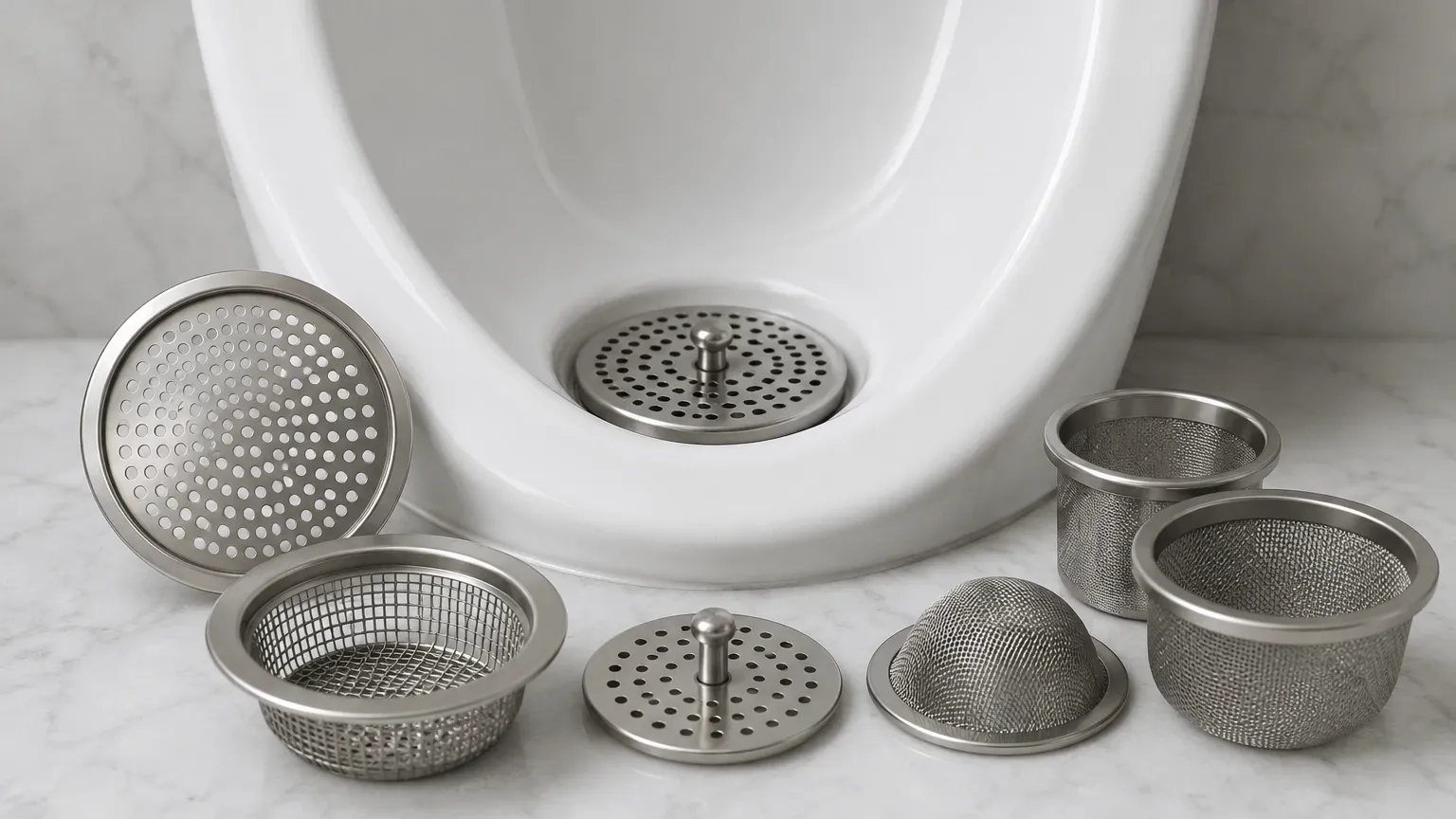
Design Variations: Perforated Metal vs. Wire Mesh
When specifying urinal strainers, engineers must choose between different manufacturing methods for the filtration media. Each has distinct advantages depending on the specific requirements of the facility.
Perforated Metal Strainers
Perforated metal strainers are created by punching holes into a solid sheet of stainless steel. These are known for their extreme durability and ease of cleaning. Because the surface is smooth and flat, it is difficult for organic matter to become entangled in the media. However, the open area (the ratio of holes to solid metal) is generally lower than that of wire mesh, which may impact flow rates in high-volume systems.
Wire Mesh Strainers
Wire mesh strainers consist of woven stainless steel wires. This design allows for a much higher percentage of open area, facilitating faster drainage. Mesh strainers are ideal for applications where fine filtration is required without sacrificing flow capacity. In custom industrial applications, multiple layers of mesh can be sintered together to provide both high-precision filtration and structural rigidity.
Basket vs. Flat Disc Designs
* Flat Discs: These are common in standard floor and urinal drains. They are easy to install and replace but have a limited surface area for debris collection.
* Basket Strainers: These feature a recessed "well" that increases the total surface area of the filtration media. This design allows the strainer to hold a larger volume of debris before the flow rate is significantly impacted, making them ideal for high-traffic areas where maintenance intervals may be longer.
Key Performance Indicators for Industrial Strainers & Baskets
When evaluating filtration components for a large-scale project, technical professionals should focus on several key performance indicators (KPIs) to ensure the selected product meets the operational demands of the site.
1. Effective Open Area (EOA): This is the total area of the holes or mesh openings through which liquid can pass. A higher EOA reduces the velocity of the fluid passing through the strainer, which minimizes the risk of "pulling" debris through the mesh and reduces the pressure drop across the component.
2. Micron Rating or Hole Diameter: This defines the size of the smallest particle the strainer is guaranteed to catch. For urinal applications, the goal is typically to catch macro-debris, so a hole diameter of 2mm to 5mm is standard.
3. Mechanical Load Capacity: In some industrial settings, strainers may be subject to physical impact during cleaning or maintenance. The gauge of the steel and the quality of the welds (such as TIG or spot welding) determine whether the component will retain its shape under stress.
Total Cost of Ownership: Metal vs. Disposable Solutions
A common mistake in procurement is focusing solely on the initial unit cost. While disposable plastic strainers or chemically-treated mats have a lower upfront price, their total cost of ownership (TCO) is significantly higher in a B2B context.
* Replacement Frequency: Plastic strainers often require replacement every 30 to 60 days as they degrade or become unsightly. A high-quality stainless steel strainer can last for years, if not the life of the fixture.
* Labor Costs: The labor required to constantly monitor and replace disposable units adds up. Stainless steel units only require standard cleaning during the regular janitorial cycle.
* Environmental Impact: For organizations with ESG (Environmental, Social, and Governance) targets, moving away from single-use plastics in facility maintenance is a measurable step toward waste reduction.
Customization and OEM Requirements for Large-Scale Facilities
Standard off-the-shelf strainers do not always meet the needs of specialized industrial equipment or unique architectural plumbing fixtures. This is where custom manufacturing becomes essential. For large-scale developments or specialized industrial equipment manufacturers, OEM (Original Equipment Manufacturer) solutions allow for the integration of filtration components that are perfectly matched to the system's specifications.
Customization options often include:
* Non-standard Dimensions: Tailoring the diameter and depth of the strainer to fit proprietary drain housings.
* Specialized Finishes: Electropolishing can be applied to stainless steel strainers to further enhance corrosion resistance and create a surface that is even easier to sanitize.
* Integrated Handles or Locking Mechanisms: In high-security environments (such as correctional facilities) or high-vibration industrial settings, strainers may need to be bolted down or feature specialized retrieval handles.
For those seeking specialized designs, exploring professional Strainers & Baskets options provides a baseline for understanding what is possible through custom engineering.
Maintenance Protocols and Replacement Cycles
Even the highest quality stainless steel strainer requires a structured maintenance protocol to ensure peak performance. Over time, mineral deposits (scale) can build up on the metal surface, effectively reducing the open area and slowing drainage.
Cleaning Best Practices
* Mechanical Cleaning: Use a non-metallic brush to remove debris. Metallic brushes can leave carbon steel particles on the surface of the stainless steel, which may lead to "tea staining" or localized rusting.
* Chemical Descaling: Periodic use of a mild descaling agent can remove calcium and uric acid buildup. It is important to ensure that the chemical is compatible with the specific grade of stainless steel (304 vs. 316).
* Inspection: During cleaning, maintenance staff should inspect the strainer for any signs of mechanical damage or bypass. If the edges of the strainer are no longer flush with the drain, the unit should be replaced to prevent debris from bypassing the filter.
When to Replace
While stainless steel is durable, it is not indestructible. Replacement is necessary if the mesh becomes torn, if there is significant pitting corrosion, or if the structural frame becomes warped. In most commercial settings, a high-quality stainless steel unit should be evaluated annually but may last five years or more depending on the environment.
Engineering the Future of Facility Filtration
As facility management becomes more data-driven, the focus on reliable, long-lasting components has intensified. The transition from disposable, low-quality parts to engineered stainless steel filtration solutions reflects a broader trend toward sustainability and operational efficiency. By selecting the right urinal strainers based on material grade, flow requirements, and structural design, engineers can significantly reduce the risk of plumbing failures and optimize the maintenance lifecycle of their facilities.
Whether you are managing a single commercial building or designing a complex industrial water treatment system, the principles of effective filtration remain the same: prioritize material quality, understand your flow requirements, and choose components designed for the rigors of the specific application environment.
