


Uses of Strainers
In industrial fluid handling and process engineering, the integrity of a system often depends on the removal of unwanted solids from liquid or gas streams. While the terms "filter" and "strainer" are frequently used interchangeably, they serve distinct roles in a technical context. Industrial strainers are typically used for the removal of larger particles—usually visible to the naked eye—to protect downstream equipment and ensure process stability.
Understanding the diverse uses of strainers is essential for engineers and procurement teams tasked with maintaining system efficiency and longevity. Whether in chemical processing, water treatment, or the food and beverage industry, selecting the right Strainers & Baskets is a critical engineering decision that impacts both operational uptime and total cost of ownership.
Protecting Critical Downstream Equipment
The most common and vital application of industrial strainers is the protection of expensive, high-precision downstream components. Systems involving pumps, valves, meters, and spray nozzles are highly sensitive to particulate contamination.
Pump Protection
Centrifugal and positive displacement pumps are susceptible to damage from debris. Even small metal shards, scale, or stones can cause catastrophic failure of impellers or mechanical seals. By installing a strainer on the suction side of the pump, operators prevent these solids from entering the pump casing. However, engineers must carefully calculate the pressure drop across the strainer to ensure the Net Positive Suction Head (NPSH) remains within the pump's required limits to avoid cavitation.
Valve and Meter Longevity
Control valves and flow meters often have tight tolerances and intricate internal parts. Particulates can cause abrasive wear on valve seats, leading to internal leakage (passing), or they can clog the small orifices of flow meters, resulting in inaccurate readings. Using strainers ensures that these components operate within their design specifications, reducing the frequency of calibration and repair.
Pre-Filtration in Multi-Stage Systems
In many industrial processes, filtration is a multi-stage endeavor. Fine filtration, which may involve expensive membrane filters or high-precision stainless steel filter cartridges, is highly effective but also prone to rapid clogging if exposed to high solids loading.
One of the strategic uses of strainers is to act as a pre-filter. By removing the bulk of the coarse debris (typically 50 microns and larger), strainers significantly extend the service life of more expensive secondary and tertiary filters. This tiered approach optimizes the filtration system's economics, as cleaning or replacing a stainless steel strainer basket is far more cost-effective than replacing fine-micron disposable or high-end pleated cartridges.
Material Recovery and Product Purity
In the chemical and pharmaceutical industries, strainers are not only used for protection but also for the recovery of valuable materials or the assurance of final product quality.
Catalyst Recovery
In many chemical reactions, expensive catalysts are used in solid form. Strainers are employed at the outlet of reactors to capture these catalysts, allowing them to be cleaned and reused rather than being lost in the product stream. This application requires strainers made from high-grade alloys, such as 316L stainless steel, to withstand corrosive environments and high temperatures.
Quality Assurance in Food and Beverage
In food and beverage production, strainers are used to remove unwanted solids—such as pulp from juices, seeds, or accidental contaminants—from the process line. These strainers must meet stringent sanitary standards, featuring smooth surface finishes (high Ra values) and designs that eliminate "dead zones" where bacteria could proliferate. The ability to easily remove and sanitize the basket is a primary requirement in these applications.
Diversified Industry Applications
The versatility of Strainers & Baskets allows them to be integrated into a wide array of industrial sectors, each with specific technical requirements.
Water Treatment and Cooling Towers
In cooling water systems, strainers remove scale, sand, and biological growth that can foul heat exchangers. Without effective straining, the thermal efficiency of the heat exchanger drops, leading to increased energy consumption and potential system overheating. Large-scale water intake systems also use strainers to prevent aquatic life and debris from entering municipal or industrial water supplies.
Oil and Gas Pipelines
Midstream and downstream oil and gas operations utilize strainers to remove pipe scale, weld slag, and sand from crude oil and refined products. This is particularly important during the commissioning phase of a new pipeline, where "start-up strainers" are used to catch construction debris before it reaches sensitive refinery equipment.
Hydraulic Systems
Hydraulic fluids must remain exceptionally clean to prevent the wear of high-pressure pistons and actuators. While fine filters are used for the main loop, strainers are often placed in the reservoir or the return line to catch large contaminants that may have entered the system during maintenance or through seal degradation.
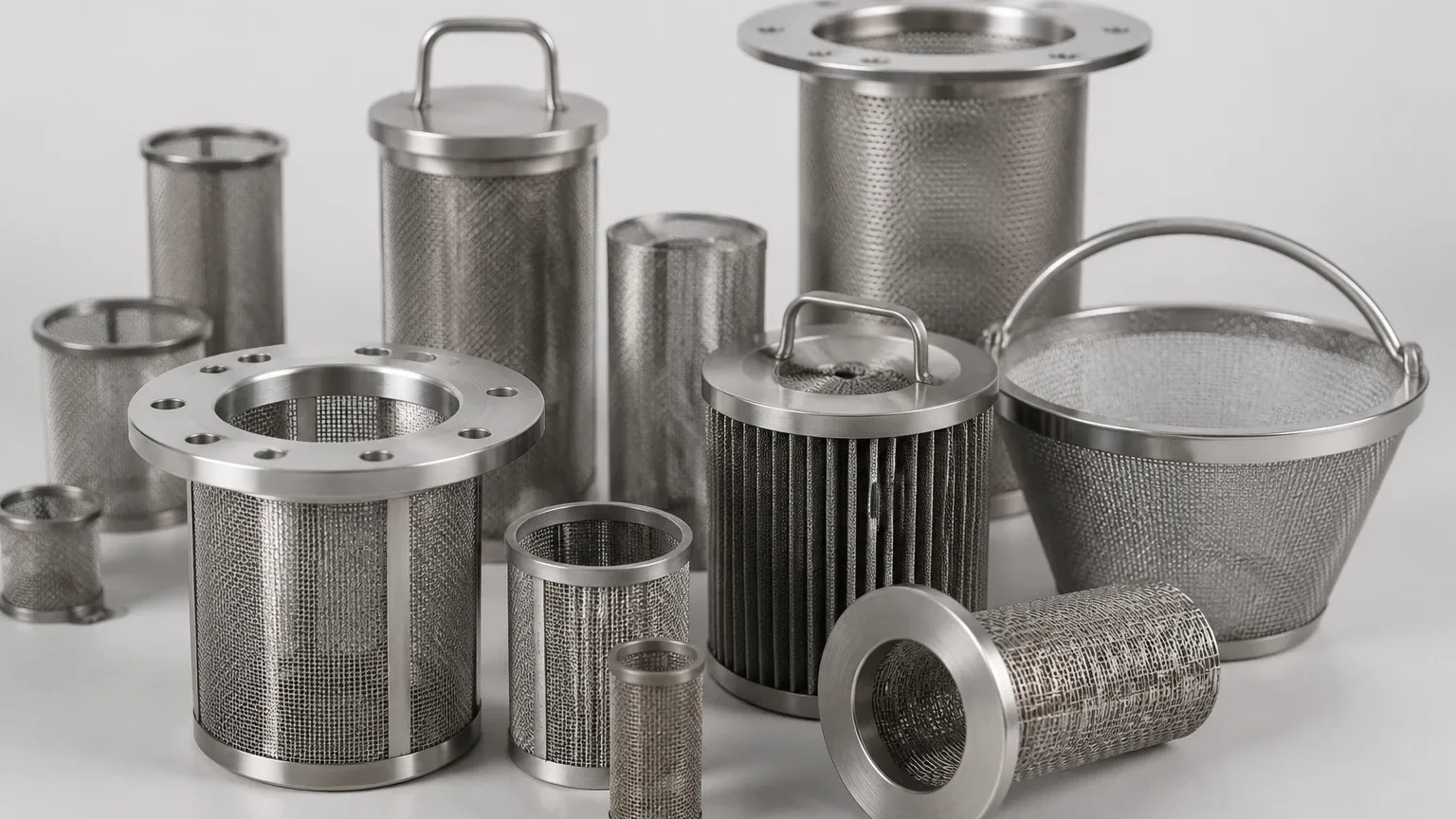
Engineering Considerations: Selecting the Right Configuration
To maximize the effectiveness of the uses of strainers, engineers must choose the correct configuration based on the flow rate, pressure, and the nature of the contaminants.
1. Y-Strainers: These are typically used for gases or in liquid systems with low concentrations of solids. Their compact design allows for installation in tight spaces, and they can be installed either horizontally or vertically. However, they generally have a smaller dirt-holding capacity than basket strainers.
2. Simplex Basket Strainers: These are used in liquid systems where the flow can be interrupted to clean the basket. They offer a larger surface area and lower pressure drop than Y-strainers, making them ideal for high-viscosity fluids or systems with higher solids loading.
3. Duplex Basket Strainers: For processes that require continuous operation, duplex strainers are essential. They consist of two separate strainer chambers connected by a diverting valve. When one basket becomes clogged, the flow is diverted to the second chamber, allowing the first basket to be cleaned without shutting down the system.
Technical Criteria for Procurement
When specifying strainers, B2B buyers and engineers should confirm several technical parameters to ensure the component is fit for purpose:
* Mesh vs. Micron Rating: It is vital to define the required filtration accuracy. Mesh count refers to the number of openings per linear inch, while micron rating defines the actual size of the particles that will be captured.
* Material Compatibility: The housing and the basket must be compatible with the process fluid. Stainless steel (304 or 316) is the industry standard for its corrosion resistance and durability, but specialized alloys may be required for highly aggressive chemicals.
* Pressure and Temperature Ratings: The strainer must be rated for the maximum operating pressure and temperature of the system, including potential surges.
* Open Area Ratio: This is the ratio of the total area of the holes in the basket to the cross-sectional area of the inlet pipe. A higher ratio (typically 4:1 or higher) results in a lower initial pressure drop and longer intervals between cleanings.
Customization and OEM Solutions
In many demanding industrial environments, standard off-the-shelf strainers may not meet specific spatial or performance requirements. This is where custom manufacturing becomes critical. Customization can involve unique flange connections, specialized basket reinforcements for high-pressure differentials, or the integration of magnetic inserts to capture fine ferrous particles that might otherwise pass through the mesh.
Manufacturers like Kaifil specialize in providing these tailored Strainers & Baskets, ensuring that the filtration solution is engineered specifically for the application's unique challenges. From selecting the appropriate wire mesh weave to designing robust basket structures, technical expertise in manufacturing ensures that the strainer performs reliably over its entire lifecycle.
Conclusion
The uses of strainers are fundamental to the safety, efficiency, and reliability of industrial fluid systems. By acting as the primary defense against particulate contamination, strainers protect high-value equipment, ensure product quality, and optimize the performance of downstream filtration stages. For engineers, the key to success lies in understanding the specific demands of their application—considering flow dynamics, material science, and maintenance requirements—to select the most effective straining solution. Investing in high-quality, precision-engineered stainless steel strainers is an investment in the long-term health of the entire industrial process.
