


Vintage Tea Strainers
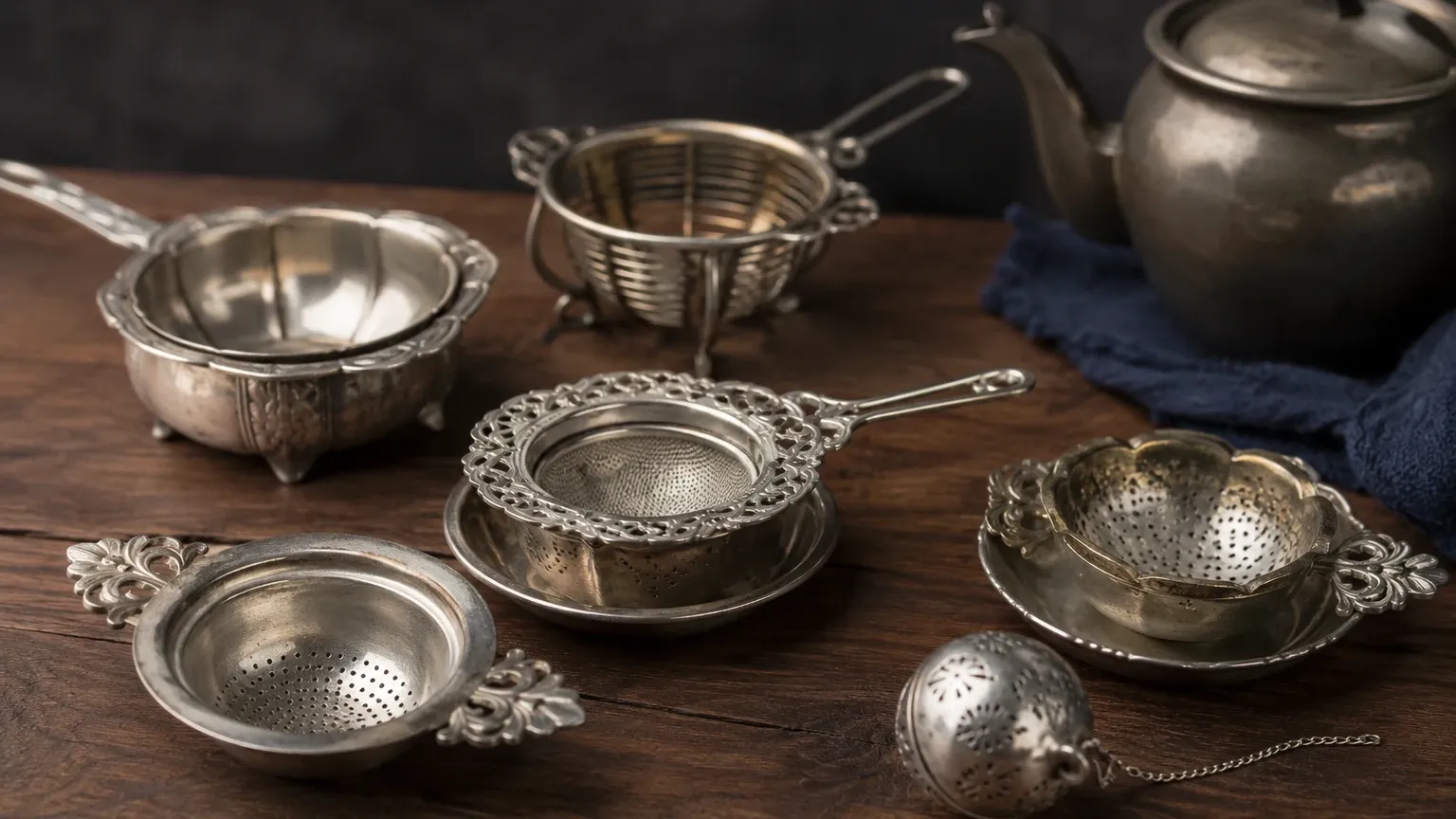
In the history of fluid dynamics and solid-liquid separation, vintage tea strainers represent an early and significant development in precision filtration. While often viewed today as decorative collectibles, these tools were the precursors to the high-performance industrial filtration systems used in modern manufacturing. For engineers and procurement specialists, understanding the evolution from these artisanal tools to modern Strainers & Baskets provides valuable insight into material science, filtration efficiency, and structural integrity.
Vintage tea strainers were engineered to solve a specific technical challenge: the removal of large particulate matter (tea leaves) from a liquid medium while maintaining a consistent flow rate. This fundamental principle remains at the core of industrial filtration, whether the application involves chemical processing, food and beverage production, or hydraulic systems.
The Engineering Heritage of Tea Filtration
The development of vintage tea strainers coincided with the industrial revolution’s advancements in metallurgy. Early designs were often hand-wrought, but as the demand for tea grew, so did the need for standardized filtration tools. These early strainers demonstrated the first widespread use of perforated metal and fine wire mesh for domestic and commercial liquid processing.
From a technical perspective, vintage tea strainers can be categorized by their mounting and flow-through designs. Over-the-cup strainers utilized a horizontal mesh or perforated plate supported by a handle or frame, while "mote spoons" and early basket-style strainers focused on immersion filtration. These designs laid the groundwork for modern basket strainers, which utilize a similar "well" structure to capture debris without immediately clogging the flow path.
In industrial contexts, the lessons learned from these early designs are still applicable. The "open area" ratio—the total area of the holes compared to the total area of the filter surface—was a critical consideration even in the 19th century. A strainer with insufficient open area would cause the liquid to overflow or "blind" (clog) too quickly, a problem that modern engineers still mitigate through the selection of specific mesh counts and weave types.
Material Selection: From Decorative Silver to Industrial Stainless Steel
One of the most significant differences between vintage tea strainers and modern industrial components is the material composition. Vintage strainers were commonly manufactured from sterling silver, silver-plated brass, pewter, or early aluminum. While these materials were chosen for their aesthetic appeal and relative resistance to the tannins in tea, they lack the mechanical properties required for rigorous industrial use.
Modern filtration demands materials that can withstand high pressures, extreme temperatures, and corrosive chemical environments. Today, stainless steel (specifically grades 304 and 316L) has replaced the softer metals of the past.
1. Corrosion Resistance: Unlike vintage silver, which requires frequent polishing to remove tarnish (oxidation), 316L stainless steel features a passive chromium oxide layer that prevents deep-seated corrosion in acidic or saline environments.
2. Structural Strength: Vintage strainers were prone to bending or warping under thermal stress. Modern industrial baskets are designed with reinforced frames and heavy-duty mesh to maintain their shape under the weight of captured solids and high-velocity flow.
3. Sanitation and Hygiene: Vintage materials like pewter often contained lead, which is strictly prohibited in modern food and beverage or pharmaceutical applications. Modern stainless steel components are engineered for easy cleaning and are compatible with Clean-In-Place (CIP) protocols.
Filtration Mechanics: Perforated Metal vs. Woven Wire Mesh
Vintage tea strainers typically employed one of two filtration methods: punched perforations or woven wire mesh. Analyzing these two methods reveals the engineering trade-offs between durability and precision.
Punched Perforations
Many vintage strainers featured decorative patterns of punched holes. While visually appealing, these designs often had a low percentage of open area, leading to restricted flow. In modern industrial strainers, perforated metal is used primarily as a support structure for finer mesh layers or for "coarse" filtration where the removal of large debris (typically 1mm or larger) is the primary goal. The modern advantage lies in CNC-controlled perforation, which ensures exact hole diameters and spacing, providing predictable flow characteristics that vintage manufacturing could not achieve.
Woven Wire Mesh
Fine-mesh vintage tea strainers used basic weaves that were susceptible to "wire shifting," where the gaps between wires would widen over time, compromising filtration accuracy. Modern industrial wire mesh, as utilized by manufacturers like Kaifil, employs advanced weaving techniques such as Plain Weave, Twilled Weave, or Dutch Weave. These structures provide much higher filtration accuracy, with the ability to capture particles down to the micron level while maintaining the structural stability needed for backwashing and high-pressure cycles.
Structural Design and Flow Dynamics
The geometry of a strainer significantly impacts its performance. Vintage tea strainers were often shallow, which limited their "dirt-holding capacity." Once the bottom of the strainer was covered with leaves, the flow would stop.
Modern industrial Strainers & Baskets solve this through deep-basket designs. By increasing the depth of the filtration element, engineers increase the surface area and the volume available for debris collection. This allows for longer run times between cleaning cycles, reducing downtime in industrial processes.
Furthermore, the flow dynamics in vintage designs were often turbulent. Modern filtration components are engineered to minimize pressure drop (Delta P). By optimizing the entry and exit angles of the fluid and ensuring a smooth internal surface finish, manufacturers can reduce the energy required to pump fluids through the filtration system. This is a critical consideration in B2B environments where energy efficiency directly impacts the total cost of ownership.
Evaluating Performance: Filtration Accuracy and Capacity
When transitioning from a historical understanding of filtration to modern procurement, engineers must confirm several performance metrics. Vintage tea strainers were rated purely by visual inspection, but modern components require rigorous specification.
* Micron Rating: This defines the size of the particles the strainer is designed to trap. While a tea strainer might have been effective at 500-1000 microns, industrial applications often require precision at 50, 20, or even 5 microns.
* Burst Pressure: Industrial baskets must be rated for the maximum pressure they will encounter. If a basket becomes fully clogged, it must be strong enough to withstand the full pump pressure without collapsing.
* Flow Rate (GPM/LPM): Engineers must calculate the required flow rate to ensure the strainer body and the internal basket are sized correctly. An undersized strainer will create a bottleneck in the production line.
In vintage designs, the "seal" between the strainer and the vessel was often loose. In industrial systems, the bypass of unfiltered liquid is unacceptable. Modern baskets use precision-machined flanges, O-rings, or gasket seals to ensure that 100% of the fluid passes through the filter media.
Modern Industrial Applications and Customization
While the vintage tea strainer was a standalone tool, modern filtration components are often part of a larger, integrated system. The ability to customize these components is where manufacturers like Kaifil provide the most value to industrial clients.
Customization options include:
* Multi-Layer Sintered Mesh: Combining multiple layers of wire mesh through a heat-treatment process to create a single, incredibly strong filtration element that offers both high permeability and high mechanical strength.
* Reinforced Support Baskets: For high-viscosity fluids or high-pressure applications, the filter mesh is often backed by a heavy-gauge perforated metal cylinder.
* Custom Dimensions: Unlike the fixed sizes of vintage items, industrial strainers can be fabricated to fit existing housing units, ensuring that legacy equipment can be upgraded with modern filtration technology.
Industries such as chemical processing rely on these custom solutions to protect expensive downstream equipment like pumps, valves, and spray nozzles from damage caused by particulate contamination. In the food and beverage sector, the durability and cleanability of stainless steel baskets ensure compliance with strict safety standards while maintaining the flavor profile of the product—a modern echo of the tea strainer’s original purpose.
Conclusion: The Path to Informed Selection
The journey from the vintage tea strainer to the modern industrial basket is a testament to the advancement of material science and precision engineering. While the basic objective—separating solids from liquids—remains the same, the requirements for accuracy, durability, and efficiency have increased exponentially.
For technical professionals and purchasing teams, selecting the right filtration component involves more than just matching a size. It requires a deep understanding of the fluid properties, the nature of the contaminants, and the operational environment. By focusing on high-quality materials, optimized flow designs, and precise manufacturing tolerances, modern Strainers & Baskets provide the reliability needed for demanding industrial applications.
When evaluating filtration needs, engineers should consider the total cost of ownership, including the ease of maintenance and the expected lifespan of the component. Just as a well-made vintage strainer could last for generations, a correctly specified and manufactured industrial filter basket is an investment in the long-term efficiency and safety of a production facility.
