


Wire Strainers
In industrial fluid handling systems, the integrity of downstream equipment—such as pumps, valves, flow meters, and spray nozzles—depends heavily on the removal of oversized particulate matter. Wire strainers serve as the primary mechanical barrier, capturing debris, scale, and foreign objects that could otherwise cause mechanical failure or process contamination. Unlike fine filtration systems designed for sub-micron particles, wire strainers are engineered for high-flow capacity and durability, acting as the "first line of defense" in piping systems.
Selecting the appropriate wire strainer requires a deep understanding of fluid dynamics, material science, and the specific mechanical demands of the application. For engineers and procurement teams, the challenge lies in balancing filtration efficiency with pressure drop and maintenance frequency.
Engineering Fundamentals of Wire Strainers
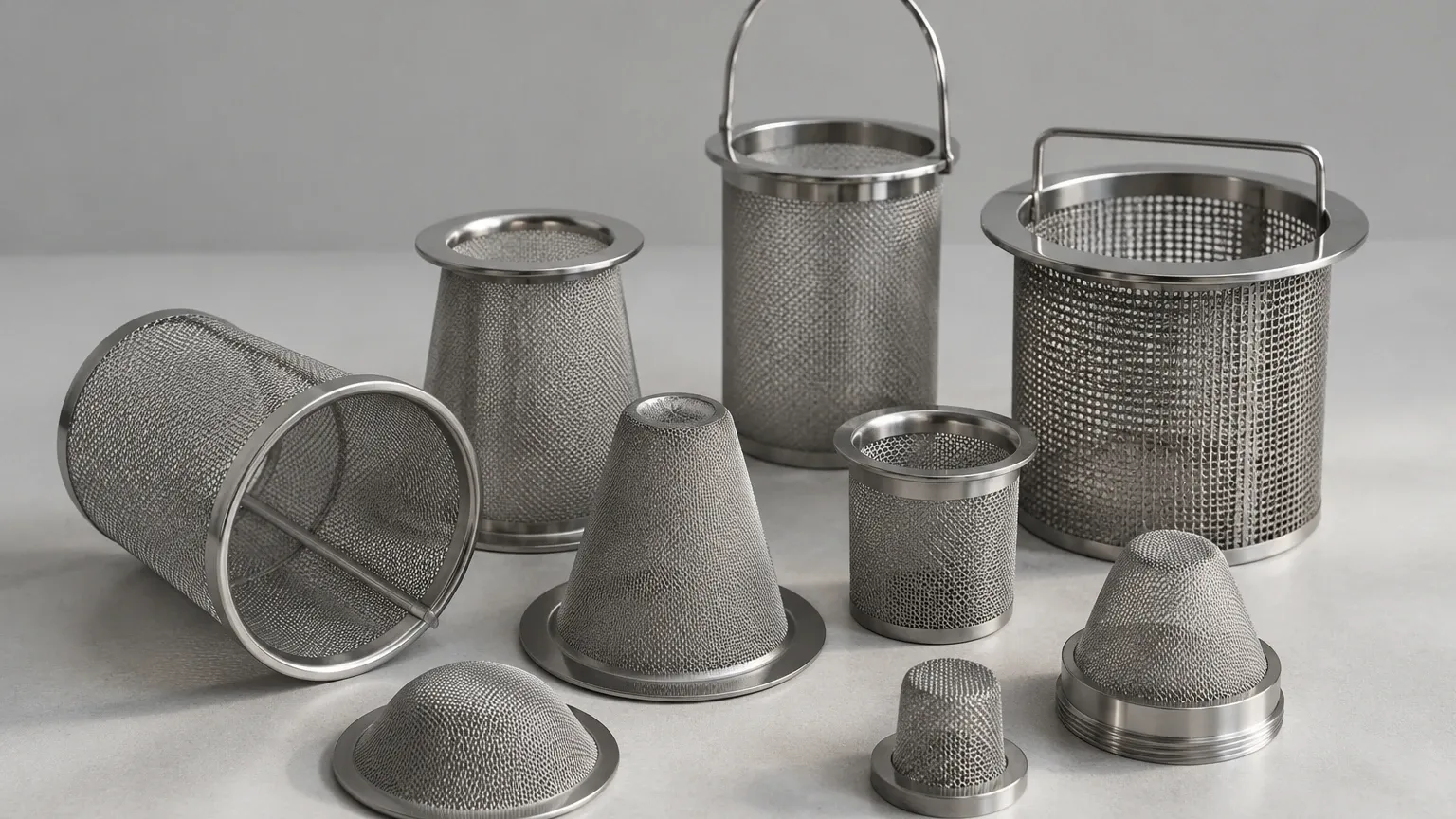
Wire strainers are typically constructed using woven wire mesh or perforated metal, often reinforced by a heavier support structure. The primary function is to intercept solids larger than the mesh opening while allowing the fluid to pass through with minimal resistance.
Material Selection and Chemical Compatibility
The choice of material is critical for ensuring the longevity of the strainer. Stainless steel is the industry standard due to its corrosion resistance and mechanical strength.
* Grade 304 Stainless Steel: Suitable for general-purpose applications, including water treatment and less aggressive chemical environments. It offers excellent strength and cost-effectiveness.
* Grade 316L Stainless Steel: Preferred for pharmaceutical, food and beverage, and marine applications. The addition of molybdenum provides enhanced resistance to chlorides and pitting corrosion, making it essential for high-purity or highly corrosive processes.
* Specialty Alloys: In extreme environments involving high temperatures or highly acidic fluids, alloys like Monel or Hastelloy may be utilized, though stainless steel remains the most versatile choice for the majority of industrial Strainers & Baskets.
Mesh vs. Perforation
Wire strainers can be categorized by their straining media. Perforated metal is generally used for coarser straining (typically 1/32" to 1/4" holes), providing high mechanical strength. Woven wire mesh is used for finer applications, capable of reaching much smaller aperture sizes. In many high-performance designs, a fine wire mesh is lined inside a perforated metal basket to combine the precision of the mesh with the structural rigidity of the perforated plate.
Key Design Parameters for Industrial Applications
When specifying wire strainers, engineers must look beyond simple pipe size. Several technical parameters dictate the performance and reliability of the component within a system.
The Open Area Ratio (OAR)
The Open Area Ratio is the relationship between the total area of the openings in the strainer media and the cross-sectional area of the inlet pipe. A common engineering standard is to maintain an OAR of at least 3:1 or 4:1. A higher OAR ensures that even as the strainer begins to collect debris, the pressure drop across the unit remains within acceptable limits, extending the time between cleaning cycles.
Pressure Drop (ΔP) Calculations
Every strainer introduces a degree of resistance to the flow. The initial "clean" pressure drop must be calculated to ensure the pump system can handle the load. Factors affecting ΔP include:
* Fluid viscosity and density.
* Flow velocity.
* Mesh size and wire diameter.
* Percentage of open area.
Excessive pressure drop can lead to cavitation in pumps or reduced flow rates that compromise process efficiency. Therefore, selecting a strainer with a larger surface area is often a more cost-effective long-term solution than choosing a smaller, cheaper unit that requires frequent cleaning.
Comparing Strainers & Baskets Configurations
The physical configuration of the strainer is dictated by the piping layout and the expected solids loading. Different designs offer various advantages regarding maintenance and flow path.
Y-Strainers
Y-strainers are characterized by their compact, "Y" shaped body. They are typically used in pressurized lines, either liquid or gas, where the amount of debris is relatively low. Their primary advantage is the ability to be installed in both horizontal and vertical positions. However, they generally have a smaller dirt-holding capacity compared to basket designs.
Basket Strainers (Simplex and Duplex)
For applications with higher solids loading, basket-style wire strainers are preferred.
* Simplex Baskets: These feature a top-loading design that allows for easy removal and cleaning of the basket. They are used in batch processes where the flow can be temporarily halted for maintenance.
* Duplex Baskets: These consist of two separate strainer chambers connected by a diversion valve. This allows one side to be cleaned while the other remains in operation, making them essential for continuous 24/7 industrial processes where downtime is not an option.
Temporary and Cone Strainers
Often referred to as "witch's hat" strainers, these are used during the startup phase of a new piping system to capture construction debris like welding slag and rags. They are typically removed once the system has been flushed and reached a steady state of operation.
Selection Criteria for Demanding Environments
In industries such as chemical processing or hydraulic systems, the operating environment places extreme stress on wire strainers. Engineers must confirm the following before final selection:
1. Maximum Operating Pressure: The strainer housing and the internal wire mesh must be rated for the maximum system pressure, including potential surges.
2. Temperature Extremes: Thermal expansion and contraction can affect the seals and the structural integrity of the mesh. Stainless steel is favored for its stability across a wide temperature range.
3. Particle Characteristics: Is the debris hard and abrasive, or soft and fibrous? Abrasive particles may require thicker wire diameters to resist erosion, while fibrous materials may require specific weave patterns to prevent "blinding" (clogging) of the mesh.
4. Flow Velocity: High-velocity flows can cause vibration in the wire mesh, leading to fatigue failure. Support cages or heavier gauge wire may be necessary to reinforce the straining element.
Installation and Maintenance Best Practices
The performance of wire strainers is heavily dependent on proper installation and a disciplined maintenance schedule.
Orientation and Flow Direction
Strainers are directional components. Installing a strainer in reverse can lead to the collapse of the wire mesh or the bypass of unfiltered fluid. Most industrial strainers feature a flow arrow cast or etched into the body. For Y-strainers in horizontal steam lines, the "leg" should be in the horizontal plane to prevent water pocketing, whereas in liquid lines, it should point downward to collect debris via gravity.
Monitoring Differential Pressure
The most effective way to manage maintenance is by installing differential pressure gauges across the strainer. A significant increase in ΔP indicates that the basket or mesh is becoming clogged. Standard practice suggests cleaning the strainer when the pressure drop reaches a predetermined limit (e.g., 5-10 psi above the clean drop), rather than waiting for a total flow blockage.
Cleaning Procedures
Stainless steel wire strainers are designed for reuse. Cleaning typically involves removing the basket and using a high-pressure water jet or ultrasonic cleaning to dislodge particles. It is vital to inspect the mesh for any signs of tearing or deformation during each cleaning cycle. Even a small breach in the wire mesh can allow damaging particles to pass through to sensitive equipment.
Customization and OEM Solutions
Standard off-the-shelf strainers do not always meet the specific requirements of complex industrial systems. Customization is often necessary to optimize performance. Professional manufacturers like Kaifil provide OEM services to tailor filtration components to exact specifications.
Customization options include:
* Bespoke Dimensions: Modifying the height, diameter, or flange connections to fit existing piping constraints.
* Reinforced Structures: Adding internal support frames or external cages for high-pressure or high-viscosity applications.
* Multi-Layer Mesh: Combining different mesh counts to achieve graduated filtration, which can increase the dirt-holding capacity and lifespan of the strainer.
* Specialized Coatings: Applying surface treatments to improve non-stick properties or further enhance chemical resistance.
By working closely with a manufacturer that understands both material science and industrial application needs, engineering teams can develop filtration solutions that reduce total cost of ownership through increased durability and reduced maintenance labor.
Total Cost of Ownership Considerations
When evaluating wire strainers, the initial purchase price is only one component of the total cost. A low-cost strainer that is undersized or made from inferior materials will lead to higher operational costs through:
* Increased Energy Consumption: Higher pressure drops require pumps to work harder, increasing electricity usage.
* Production Downtime: Frequent clogging or mechanical failure of the strainer can halt entire production lines.
* Downstream Damage: If a strainer fails or allows bypass, the cost of repairing a high-pressure pump or replacing a precision valve far exceeds the cost of a high-quality strainer.
Investing in precision-engineered stainless steel wire strainers ensures that the process remains efficient and that critical infrastructure is protected against the risks of particulate contamination. For engineers, the goal is to specify a solution that provides the necessary filtration accuracy while maximizing the interval between maintenance events, thereby optimizing the overall process reliability.
