


Xl Strainer
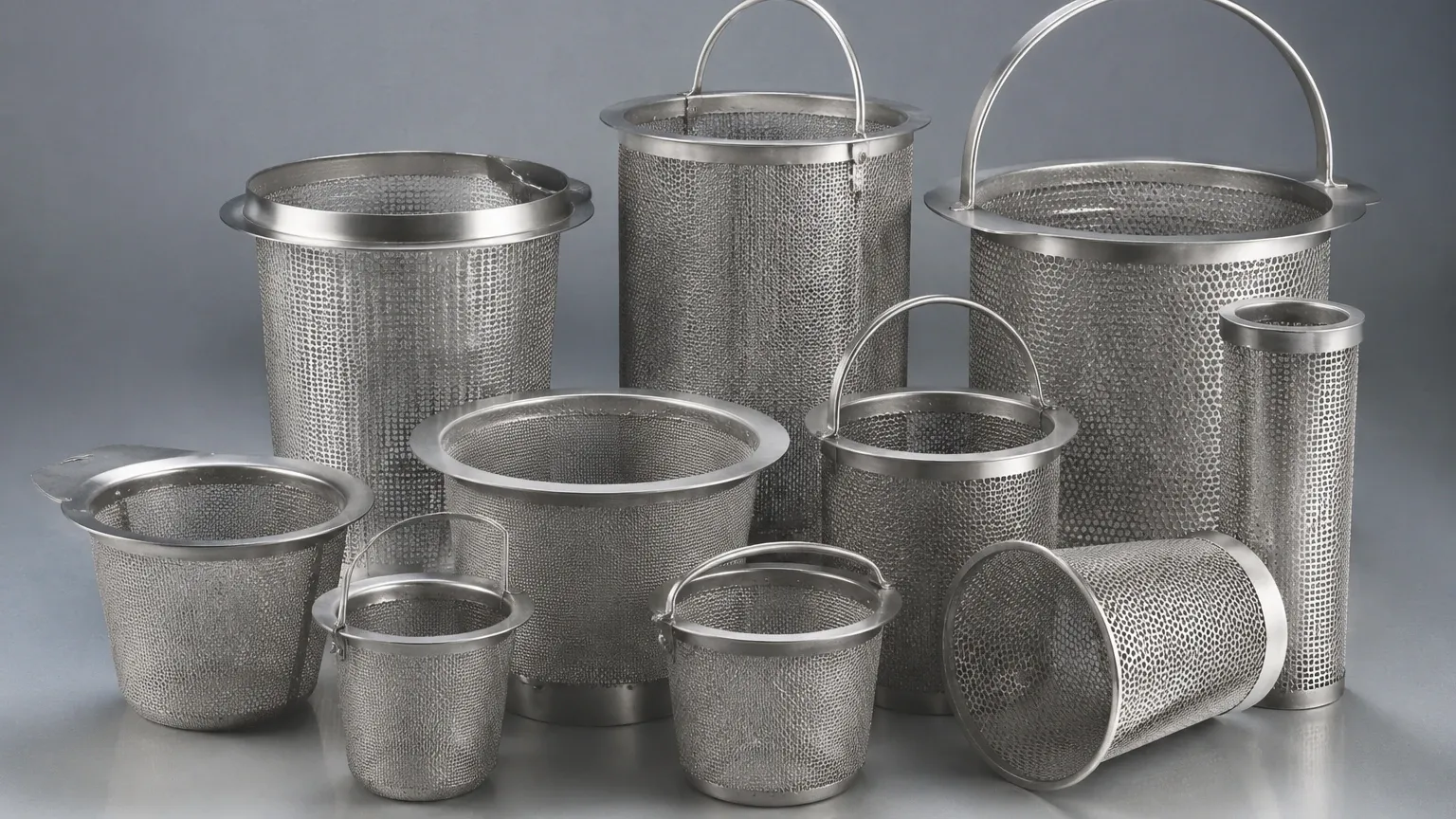
In industrial fluid handling, the efficiency of a system is often dictated by its ability to manage debris and particulate matter without compromising flow rates or requiring excessive downtime for maintenance. The xl strainer represents a specialized category of high-capacity filtration hardware designed to meet these demanding requirements. For engineers and procurement professionals in industries such as chemical processing, water treatment, and large-scale manufacturing, selecting the appropriate Strainers & Baskets is a critical decision that impacts the longevity of downstream equipment, including pumps, valves, and heat exchangers.
An xl strainer is defined not just by its physical dimensions, but by its increased dirt-holding capacity and its ability to maintain a low pressure drop across the filter element even under high-volume flow conditions. By utilizing a larger housing and an expanded internal basket surface area, these components allow for longer intervals between cleaning cycles, thereby optimizing the total cost of ownership in continuous process environments.
The Engineering Logic Behind High-Capacity Filtration
The primary function of any industrial strainer is the mechanical removal of solids from a liquid or gas stream. However, standard-sized strainers can become bottlenecks in high-velocity systems. The xl strainer addresses this by maximizing the "Open Area Ratio" (OAR). The OAR is the relationship between the total open area of the strainer basket and the cross-sectional area of the inlet pipe.
In high-performance industrial applications, an OAR of 6:1 or higher is often sought to ensure that even as the basket begins to collect debris, the fluid can still pass through with minimal resistance. When the surface area of the basket is significantly larger than the pipe diameter—a hallmark of the xl strainer design—the velocity of the fluid as it passes through the mesh is reduced. This lower velocity minimizes the risk of particles being forced through the mesh openings and reduces the abrasive wear on the basket material itself.
Material Selection and Durability
For an xl strainer to perform reliably in demanding environments, the choice of material is paramount. Stainless steel remains the industry standard due to its mechanical strength and resistance to a wide range of corrosive agents. Kaifil specializes in the fabrication of these components using high-grade alloys:
* SS304 Stainless Steel: Suitable for general industrial applications, water treatment, and less aggressive chemical environments. It provides excellent structural integrity and cost-effectiveness.
* SS316L Stainless Steel: The preferred choice for pharmaceutical, food and beverage, and highly corrosive chemical processes. The addition of molybdenum and a lower carbon content provides superior resistance to pitting and crevice corrosion, especially in chloride-rich environments.
Beyond the housing, the internal basket of an xl strainer must be engineered to withstand the differential pressure that builds up as the screen becomes loaded. This often involves the use of perforated metal backups for fine wire mesh linings, providing the necessary rigidity to prevent basket collapse or bypass during pressure surges.
Technical Specifications and Performance Metrics
When evaluating an xl strainer for a specific project, engineers must look beyond the nominal pipe size. Several technical parameters dictate the suitability of the unit for the intended application.
Filtration Accuracy and Micron Ratings
The filtration level required depends on the sensitivity of the downstream components. An xl strainer can be equipped with baskets ranging from coarse perforated screens (used for large debris removal) to fine wire mesh capable of capturing particles down to 5 microns.
1. Perforated Plate: Typically used as a primary stage or for protecting large-diameter pumps. Hole sizes usually range from 1/32" to 1/2".
2. Wire Mesh: For finer filtration, stainless steel wire mesh is layered over a perforated support. The mesh count (the number of openings per linear inch) determines the micron rating.
Pressure Ratings and Connection Types
Industrial systems operate under varying pressure regimes. An xl strainer must be rated to handle the maximum operating pressure of the system, including potential water hammer or thermal expansion spikes. Common connection types include:
* Flanged Connections (ANSI/ASME, DIN, JIS): Standard for large-bore piping, providing a secure, leak-proof seal and ease of removal for maintenance.
* Threaded Connections (NPT/BSP): Generally reserved for smaller-scale high-capacity units or auxiliary lines.
* Quick-Opening Covers: To facilitate rapid maintenance, many xl strainers feature bolted covers or swing-bolt closures, allowing operators to access the basket without specialized tools.
Applications of XL Strainers Across Industries
The versatility of high-capacity Strainers & Baskets makes them essential in several key sectors where fluid purity and system uptime are non-negotiable.
Chemical and Petrochemical Processing
In chemical plants, fluids often contain catalysts, undissolved solids, or scale from piping. An xl strainer is used to protect expensive flow meters and control valves. The large volume of the XL design is particularly beneficial here, as it can accommodate high solids loading without causing frequent process interruptions. The use of SS316L ensures that the strainer can handle aggressive solvents and acids without degrading.
Food and Beverage Production
Hygiene and cleanability are the priorities in food processing. XL strainers used in this sector are often designed with polished internal surfaces to prevent bacterial growth and facilitate Clean-in-Place (CIP) procedures. They are used to strain pulp from juices, remove large particles from syrups, or protect bottling lines from foreign objects.
Municipal and Industrial Water Treatment
Water intake systems from rivers or lakes require heavy-duty filtration to manage organic matter, sand, and stones. The xl strainer serves as a robust primary filter, capable of handling the high flow rates required for municipal supply or industrial cooling towers. Their durability ensures they can operate in outdoor or submerged environments for extended periods.
Optimization and Customization Options
No two industrial applications are identical, which is why customization is a core component of the xl strainer value proposition. Engineering teams often require specific modifications to integrate a strainer into an existing layout or to meet unique process conditions.
Custom Basket Configurations
While standard baskets are cylindrical, custom xl strainer designs may utilize pleated baskets to further increase the effective filtration area. Pleating can increase the surface area by 200% to 300% compared to a standard cylinder, which is ideal for systems with very high particulate concentrations but limited installation space.
Differential Pressure Monitoring
To take the guesswork out of maintenance, an xl strainer can be fitted with differential pressure (DP) gauges or transmitters. By measuring the pressure drop between the inlet and outlet, operators can determine exactly when the basket is full. Integrating these sensors into a central PLC (Programmable Logic Controller) allows for automated alerts, preventing the strainer from reaching a critical pressure drop that could damage the basket or starve downstream pumps.
Heating Jackets
For fluids that are highly viscous at room temperature (such as resins, heavy oils, or chocolate), an xl strainer can be equipped with a steam or thermal oil jacket. This ensures the fluid remains at the correct temperature to flow freely through the mesh, preventing clogging due to solidification.
Maintenance and Total Cost of Ownership
The initial purchase price of an xl strainer is only one part of the economic equation. The real value lies in the reduction of operational expenses (OPEX).
Reducing Downtime
Because an xl strainer has a larger holding capacity, it requires fewer cleaning interventions. In a 24/7 manufacturing environment, every hour of downtime for filter cleaning translates to lost production. By extending the time between cleanings from once per shift to once per week, a high-capacity strainer can pay for itself in labor savings and increased throughput within months.
Ease of Service
The design of the xl strainer often incorporates features to make servicing safer and faster. For instance, heavy-duty baskets may include lifting handles or even davit arms for the housing cover, as the weight of a large-scale strainer lid can be significant. Ensuring that the basket is easy to remove and wash reduces the risk of injury to maintenance personnel and ensures the unit is returned to service quickly.
Replacement Cycles
While the housing of a stainless steel xl strainer can last for decades, the internal baskets are considered wear parts. However, by selecting high-quality wire mesh and reinforced structures, the lifespan of these baskets can be significantly extended. Engineers should confirm the availability of replacement baskets and the ease of sourcing custom mesh sizes when selecting a manufacturer.
Conclusion: Selecting the Right Partner for Filtration Solutions
Choosing an xl strainer requires a deep understanding of fluid dynamics, material science, and the specific constraints of the industrial application. It is not merely about finding a large filter; it is about finding a solution that balances flow efficiency, filtration precision, and mechanical durability.
When specifying Strainers & Baskets, technical teams should verify that the manufacturer provides detailed documentation, including pressure drop curves, material certifications, and dimensional drawings. At Kaifil, the focus is on delivering precision-engineered stainless steel filtration components that meet the exact needs of global industrial clients. By prioritizing quality manufacturing and technical expertise, Kaifil ensures that every xl strainer provides reliable, long-term performance in the world’s most demanding environments.
