


Y Inline Strainers
In industrial fluid handling, the protection of sensitive downstream equipment is a primary engineering concern. Y inline strainers serve as a critical line of defense, utilizing a mechanical separation process to remove unwanted solids from liquid, gas, or steam lines. Named for their characteristic "Y" shape, these components are designed to house a filtration element—typically a perforated metal screen or wire mesh—within a diagonal cylinder. This configuration allows for the removal of debris without significantly interrupting the flow of the process medium.
For engineers and procurement teams, selecting the appropriate Strainers & Baskets involves more than simply matching pipe diameters. It requires a deep understanding of fluid dynamics, material compatibility, and the specific mechanical demands of the application. As a specialized manufacturer, Kaifil provides precision-engineered stainless steel filtration solutions that address these technical requirements across diverse industrial sectors.
The Mechanical Design and Functionality of Y Inline Strainers
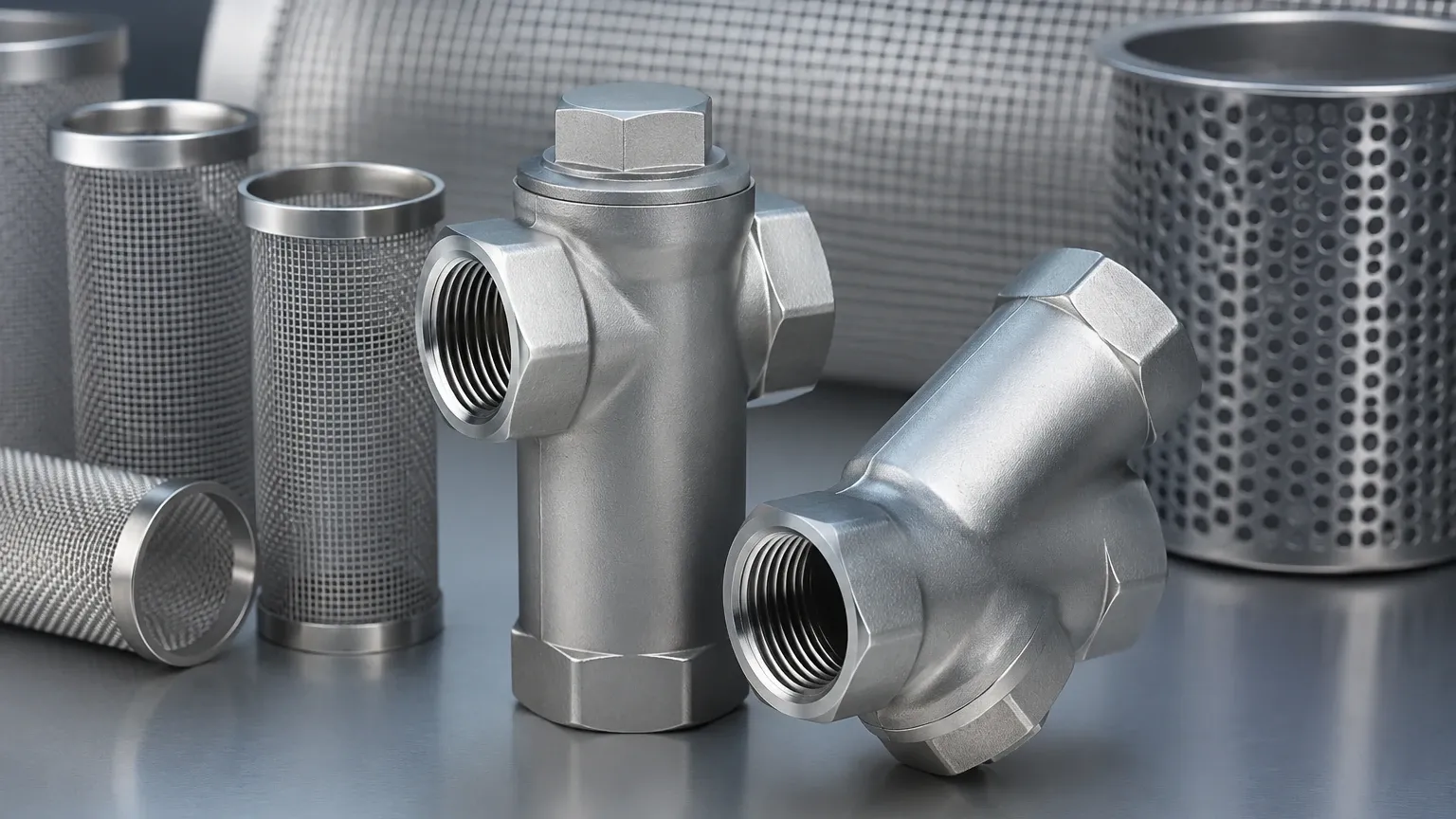
The fundamental advantage of y inline strainers lies in their compact geometry and versatility. The strainer body consists of a main flow path and a secondary leg that branches off at an angle. Inside this leg, a cylindrical filter element is seated. As fluid enters the strainer, it is forced through the mesh or perforated screen. Solids larger than the screen openings are trapped within the element, while the cleaned fluid continues through the outlet.
Orientation and Installation Versatility
One of the primary reasons engineers specify y inline strainers is their ability to be installed in both horizontal and vertical piping runs. In horizontal installations, the "leg" of the Y should point downward. This ensures that the collected debris is trapped in the pocket and does not fall back into the main pipe during maintenance. In vertical installations, the flow must be downward so that gravity assists in directing the particles into the strainer basket.
Blow-off Capability
Many industrial y inline strainers are equipped with a blow-off port at the end of the strainer leg. By installing a blow-off valve, operators can flush out accumulated debris without stopping the process flow or disassembling the unit. This feature is particularly valuable in continuous processing environments where downtime is costly.
Technical Specifications: Material Selection and Durability
The performance and lifespan of a strainer are heavily dependent on the materials used in its construction. In demanding industrial environments, stainless steel is the standard choice due to its mechanical strength and resistance to various forms of degradation.
Stainless Steel Grades
Kaifil specializes in custom stainless steel filtration components, typically utilizing Grade 304 or Grade 316L.
- Grade 304: Suitable for general industrial applications, offering good corrosion resistance and durability in water treatment and standard chemical environments.
- Grade 316L: Preferred for pharmaceutical, food and beverage, and highly corrosive chemical applications. The addition of molybdenum provides superior resistance to chloride-induced pitting and crevice corrosion.
The Filtration Media: Mesh vs. Perforation
The internal element of y inline strainers can be configured in several ways depending on the required filtration accuracy.
1. Perforated Screens: These are typically used for coarse filtration (straining). They consist of a metal sheet with punched holes, ranging from 1/32" to 1/2" or larger. They are ideal for removing large scale, weld beads, or pebbles.
2. Wire Mesh Liners: For finer filtration, a stainless steel wire mesh is often layered inside a perforated metal basket. This allows for the capture of much smaller particles, often measured in microns.
When specifying the media, engineers must balance the need for fine filtration with the risk of rapid pressure drop. A mesh that is too fine will clog quickly, necessitating frequent cleaning and potentially starving downstream pumps.
Engineering Considerations: Pressure Drop and Flow Capacity
Every component added to a piping system introduces a degree of flow resistance, known as pressure drop (ΔP). For y inline strainers, managing this resistance is vital to maintaining system efficiency.
The Cv Factor
The Flow Coefficient (Cv) represents the volume of water at 60°F that will flow through the strainer with a pressure drop of 1 psi. A higher Cv indicates lower resistance to flow. When selecting y inline strainers, engineers should calculate the expected pressure drop at the required flow rate using the manufacturer's Cv values.
Open Area Ratio
The efficiency of a strainer is often measured by its Open Area Ratio (OAR). This is the ratio of the total open area of the strainer screen to the internal cross-sectional area of the inlet pipe. A high OAR (typically 4:1 or higher) ensures that the strainer can accumulate a significant amount of debris before the pressure drop becomes critical. This extends the service interval and protects the structural integrity of the internal mesh.
Comparison: Y Strainers vs. Basket Strainers
While both types of Strainers & Baskets serve the same basic purpose, their applications differ based on the nature of the debris and the frequency of maintenance.
- Space Constraints: Y strainers have a smaller footprint and are lighter, making them ideal for tight spaces or applications where the strainer is supported by the piping itself.
- Pressure Ratings: Due to their cylindrical shape and robust construction, y inline strainers can often handle much higher operating pressures than traditional pot-style basket strainers.
- Debris Loading: Basket strainers generally have a larger dirt-holding capacity. If the fluid contains a high concentration of solids, a basket strainer may be more appropriate to avoid constant cleaning. However, for steam lines or fluids with low particle counts, the Y configuration is usually the superior choice.
- Steam Applications: Y strainers are the industry standard for steam service. Their design handles the high pressures and thermal expansion associated with steam lines more effectively than other configurations.
Customization and OEM Solutions in Industrial Filtration
Standard off-the-shelf strainers often fail to meet the specific requirements of specialized industrial processes. Customization is where manufacturers like Kaifil provide significant value. Engineering teams should consider the following customization options when procuring y inline strainers:
Custom Mesh Configurations
Depending on the viscosity of the fluid and the nature of the contaminants, a standard mesh may not suffice. Custom-layered wire mesh elements can provide graduated filtration, where a coarse outer mesh provides structural support for a fine inner mesh, optimizing both strength and filtration precision.
Connection Types
While threaded connections are common for smaller diameters, industrial systems often require flanged (ANSI, DIN, or JIS), socket-weld, or butt-weld connections to ensure leak-proof performance under high pressure or vibration. Sanitary tri-clamp fittings are also essential for food, beverage, and pharmaceutical applications to allow for rapid disassembly and cleaning.
Surface Treatments
For applications in the pharmaceutical or food industries, the internal and external surfaces of the strainer may require electropolishing. This process reduces surface roughness, preventing bacterial growth and making the component easier to sterilize.
Maintenance and Operational Best Practices
The total cost of ownership for y inline strainers is largely determined by maintenance efficiency. A neglected strainer can lead to collapsed screens, pump cavitation, or system-wide contamination.
Monitoring Differential Pressure
The most effective way to manage maintenance is by installing pressure gauges upstream and downstream of the strainer. A significant increase in differential pressure indicates that the screen is becoming clogged. Most industrial protocols recommend cleaning the strainer when the pressure drop reaches 5-10 psi above the clean-drop value.
Cleaning Procedures
When manual cleaning is required, the system must be depressurized. The blow-off plug or bolted cover is removed, and the screen is extracted. It is important to inspect the gaskets and seals during every cleaning cycle. Using stainless steel elements allows for aggressive cleaning methods, including ultrasonic baths or high-pressure washing, without damaging the filtration media.
Avoiding Screen Collapse
If a strainer is allowed to clog completely, the full system pressure will be exerted against the internal screen. If the differential pressure exceeds the burst strength of the mesh, the screen will collapse, sending both the collected debris and fragments of the metal mesh into the downstream equipment. Specifying reinforced baskets or high-strength stainless steel mesh from a reliable manufacturer is the best defense against this failure mode.
Industry-Specific Applications
Chemical and Petrochemical Processing
In these environments, y inline strainers protect flow meters and control valves from pipe scale and catalyst fines. The use of 316L stainless steel is critical here to withstand aggressive chemical reagents and high operating temperatures.
Food and Beverage Production
Sanitary y inline strainers are used to remove pulp, seeds, or incidental solids from liquid products. These units must adhere to strict hygiene standards, ensuring there are no "dead legs" where product can stagnate and spoil.
Hydraulic and Lube Oil Systems
Precision hydraulic components are sensitive to even microscopic particles. Y strainers equipped with fine wire mesh liners help maintain oil cleanliness, extending the life of pumps and actuators in heavy machinery.
Conclusion: Selecting the Right Partner for Filtration
Specifying y inline strainers requires a balance of mechanical engineering, material science, and operational foresight. By focusing on high-quality materials, precise mesh sizing, and robust construction, facilities can significantly reduce maintenance costs and protect their most valuable equipment.
As a dedicated manufacturer of stainless steel filtration components, Kaifil supports engineering teams by providing technical expertise and customized manufacturing capabilities. Whether the application involves high-pressure steam, corrosive chemicals, or sanitary food processing, selecting the right Strainers & Baskets is a foundational step in ensuring long-term system reliability. When evaluating your next filtration requirement, confirm the flow rates, chemical compatibility, and required micron ratings to ensure the selected y inline strainers are optimized for your specific industrial environment.
