


Y Type Strainers in Mumbai
In the industrial landscape of Mumbai, where chemical processing, pharmaceuticals, and heavy manufacturing form the backbone of the economy, the integrity of piping systems is paramount. One of the most critical components for protecting downstream equipment such as pumps, control valves, and meters is the Y-type strainer. As a specialized manufacturer of stainless steel filtration solutions, Kaifil understands that selecting the right y type strainers in mumbai requires a deep understanding of fluid dynamics, material science, and the specific environmental challenges posed by the region’s coastal climate.
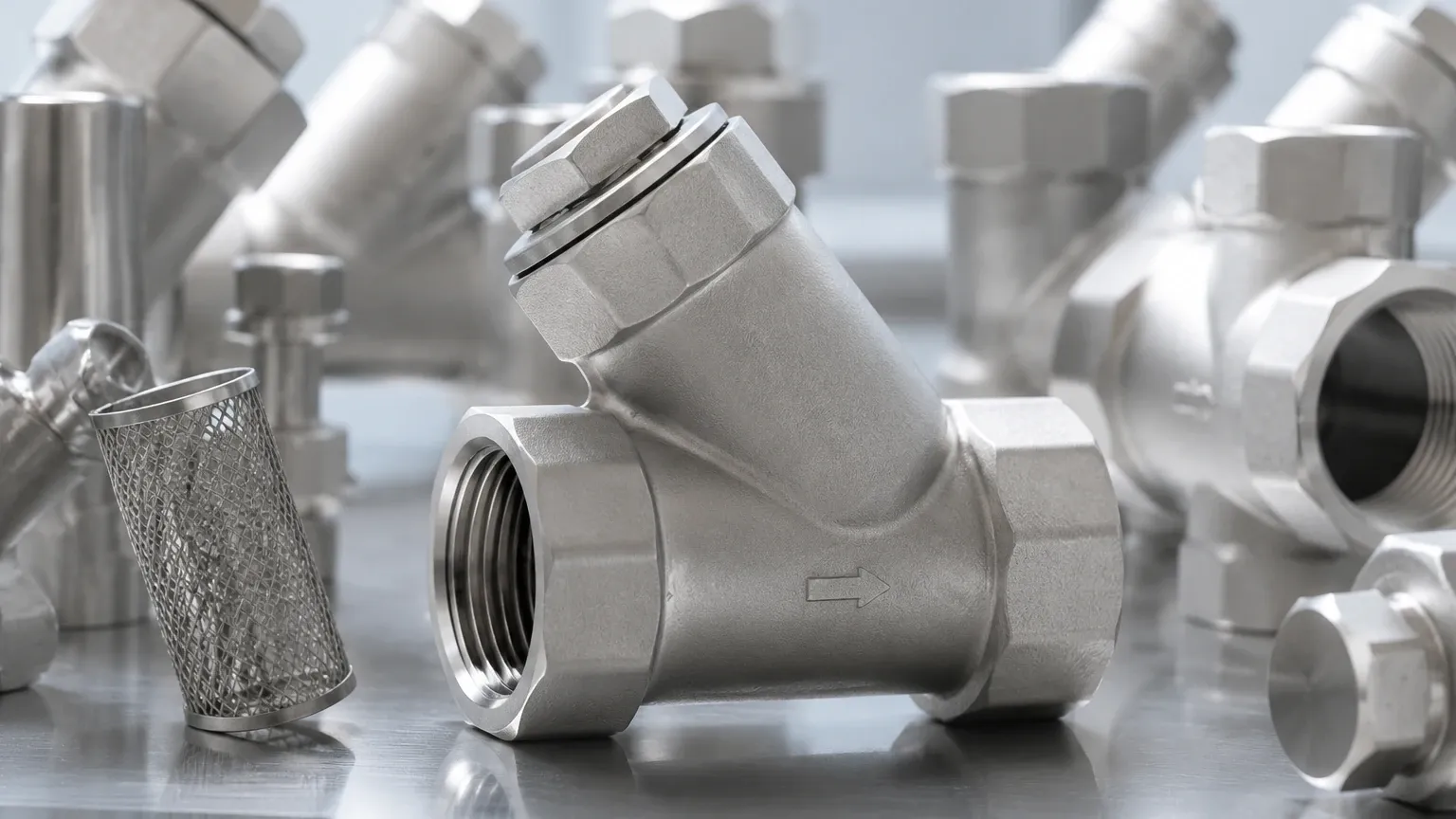
Y-type strainers are named for their geometric shape, which allows for a compact design and the ability to be installed in both horizontal and vertical piping runs. Their primary function is the mechanical removal of unwanted solids from liquid, gas, or steam lines by means of a wire mesh or perforated metal straining element. For engineers managing complex systems in Mumbai’s industrial zones, the choice of a strainer is not merely a commodity purchase but a critical engineering decision that impacts the total cost of ownership and system uptime.
Understanding the Functional Design of Y Type Strainers
The fundamental advantage of the Y-type strainer lies in its versatility. Unlike T-type or bucket strainers, the Y-design is optimized for high-pressure applications where the amount of material to be removed is relatively small. The straining leg connects to the main pipe at an angle, creating a "Y" shape that houses the filter element. This design allows for the collection of debris in a pocket that is out of the direct path of the high-velocity flow, reducing the risk of erosion on the mesh element.
When evaluating Strainers & Baskets for industrial use, engineers must consider the "open area ratio." This is the ratio of the total area of the holes in the screen to the cross-sectional area of the inlet pipe. A higher ratio typically results in a lower pressure drop and longer intervals between cleanings. In Mumbai’s fast-paced manufacturing environments, selecting a strainer with an optimized open area is essential to maintain flow rates without frequent manual intervention.
Material Selection for Mumbai’s Industrial Environments
Mumbai’s geographic location presents unique challenges for industrial hardware. The high humidity and saline air characteristic of a coastal city can accelerate atmospheric corrosion, while the specific fluids handled in local chemical and pharmaceutical plants may be highly corrosive or sensitive to contamination.
At Kaifil, we emphasize the use of high-grade stainless steel, specifically SS304, SS316, and SS316L, for the construction of strainer bodies and internal elements.
1. SS304: Suitable for general-purpose applications, including water treatment and food processing where moderate corrosion resistance is required.
2. SS316/316L: Essential for the chemical and pharmaceutical sectors in Mumbai. The addition of molybdenum provides superior resistance to chlorides and pitting, which is vital for equipment exposed to the coastal atmosphere or aggressive process chemicals.
3. Specialty Alloys: For highly specialized applications, such as those involving concentrated acids or high-temperature steam, custom alloys may be necessary to ensure the longevity of the filtration component.
Choosing the correct metallurgy ensures that the y type strainers in mumbai do not become a source of metallic contamination in the process stream, which is a critical requirement for FDA-regulated pharmaceutical production.
Technical Engineering Considerations: Pressure Drop and Flow Velocity
A common mistake in the procurement of industrial strainers is sizing the unit based solely on the pipe size. Professional engineering practice requires a more nuanced approach that accounts for the maximum allowable pressure drop (ΔP) across the strainer.
When a fluid passes through the mesh of a Y-type strainer, a certain amount of energy is lost due to friction and turbulence. As the strainer collects debris, the pressure drop increases. If the initial pressure drop is too high, it limits the amount of debris the strainer can hold before it must be cleaned, leading to excessive maintenance. Engineers must calculate the flow velocity to ensure it remains within the recommended limits—typically 5 to 10 feet per second for liquids—to prevent premature wear of the screen and the strainer body.
Furthermore, the orientation of the installation must be considered. While Y-type strainers can be installed vertically, they must be oriented such that the straining leg points downward. This ensures that the collected material stays within the pocket and does not fall back into the upstream piping when the flow stops. In the dense industrial layouts often found in Mumbai’s brownfield sites, the compact footprint of the Y-design is frequently the only viable solution for protecting sensitive equipment.
Customization Options for Specialized Industrial Applications
Standard off-the-shelf strainers often fail to meet the rigorous demands of specialized industrial processes. Kaifil specializes in custom-engineered Strainers & Baskets that are tailored to specific operational parameters. Customization options often include:
* Precision Mesh Liners: For applications requiring fine filtration, a coarse perforated metal basket can be lined with a fine stainless steel wire mesh. This provides the structural strength needed to withstand high pressure while achieving filtration down to 20 microns or less.
* Magnetic Inserts: In systems where iron or steel particles (fine scale) are a concern, magnetic rods can be installed within the strainer basket to capture sub-micron metallic debris that might otherwise pass through the mesh.
* Blow-off Connections: To simplify maintenance, the standard drain plug can be replaced with a blow-off valve. This allows the operator to flush the collected debris out of the strainer without shutting down the system or dismantling the unit.
* Custom Flange Standards: While ANSI/ASME flanges are common, many older plants in Mumbai may require DIN, JIS, or custom flange dimensions to integrate seamlessly into existing piping.
By working with a manufacturer that offers OEM capabilities, engineering teams can ensure that their y type strainers in mumbai are perfectly matched to their specific flow conditions and space constraints.
Maintenance and Operational Life Cycles in High-Demand Systems
The total cost of ownership of a filtration system is heavily influenced by its maintenance requirements. In the industrial corridors of Mumbai, where downtime can cost thousands of dollars per hour, the ease of servicing a Y-type strainer is a major consideration.
A robust maintenance protocol should include regular monitoring of the differential pressure. Once the pressure drop reaches a predetermined limit (usually 5-10 psi over the clean pressure drop), the strainer element should be removed and cleaned.
For stainless steel elements, cleaning methods vary depending on the nature of the contaminant. For loose particulate, high-pressure water or air is often sufficient. However, for sticky or organic residues common in the food and beverage or chemical industries, ultrasonic cleaning or chemical baths may be required to restore the original open area of the mesh. It is also essential to inspect the gaskets and seals during every maintenance cycle. Using high-quality materials like Viton or PTFE ensures a leak-proof seal even after multiple openings, which is critical for maintaining environmental safety standards in Mumbai's regulated industrial zones.
Evaluating Suppliers for Industrial Filtration Projects
When sourcing y type strainers in mumbai, procurement professionals and engineers should look beyond the initial price point. A reliable supplier should provide comprehensive technical documentation, including pressure drop curves, material test reports (MTRs), and dimensional drawings.
As a manufacturer focused on precision metal filtration, Kaifil provides the technical expertise necessary to support complex projects. Whether it is selecting the right mesh count for a hydraulic system or designing a high-capacity basket for a water treatment plant, the focus remains on durability and performance.
Key questions to ask a potential supplier include:
1. What is the burst pressure rating of the internal mesh element?
2. Can the strainer be supplied with NACE-compliant materials for sour gas applications?
3. What is the lead time for custom-fabricated units compared to standard models?
4. Is there support for calculating the required filtration area based on fluid viscosity?
By addressing these technical details early in the design or procurement phase, companies can avoid the common pitfalls of improper filtration, such as frequent clogging, equipment damage, and unplanned shutdowns.
Conclusion
Y-type strainers remain a foundational element of industrial fluid handling. In the diverse and demanding industrial environment of Mumbai, the performance of these components is vital for the protection of high-value assets and the consistency of production processes. By prioritizing high-grade materials, precise engineering specifications, and a clear maintenance strategy, engineers can ensure their systems operate at peak efficiency.
Kaifil continues to support global and local industries with high-performance Strainers & Baskets designed to withstand the most challenging conditions. From standard water lines to complex chemical reactors, our commitment to quality and customization ensures that every filtration solution we provide meets the exact needs of the application, providing reliability where it matters most.
