


Zinga Strainers
In the realm of hydraulic and industrial fluid management, Zinga strainers represent a standard for suction and return-line filtration. These components are critical for protecting downstream pumps and sensitive valves from large particulate contamination. For engineers and procurement specialists, understanding the technical nuances of these strainers—ranging from material compatibility to flow dynamics—is essential for maintaining system integrity and reducing long-term operational costs.
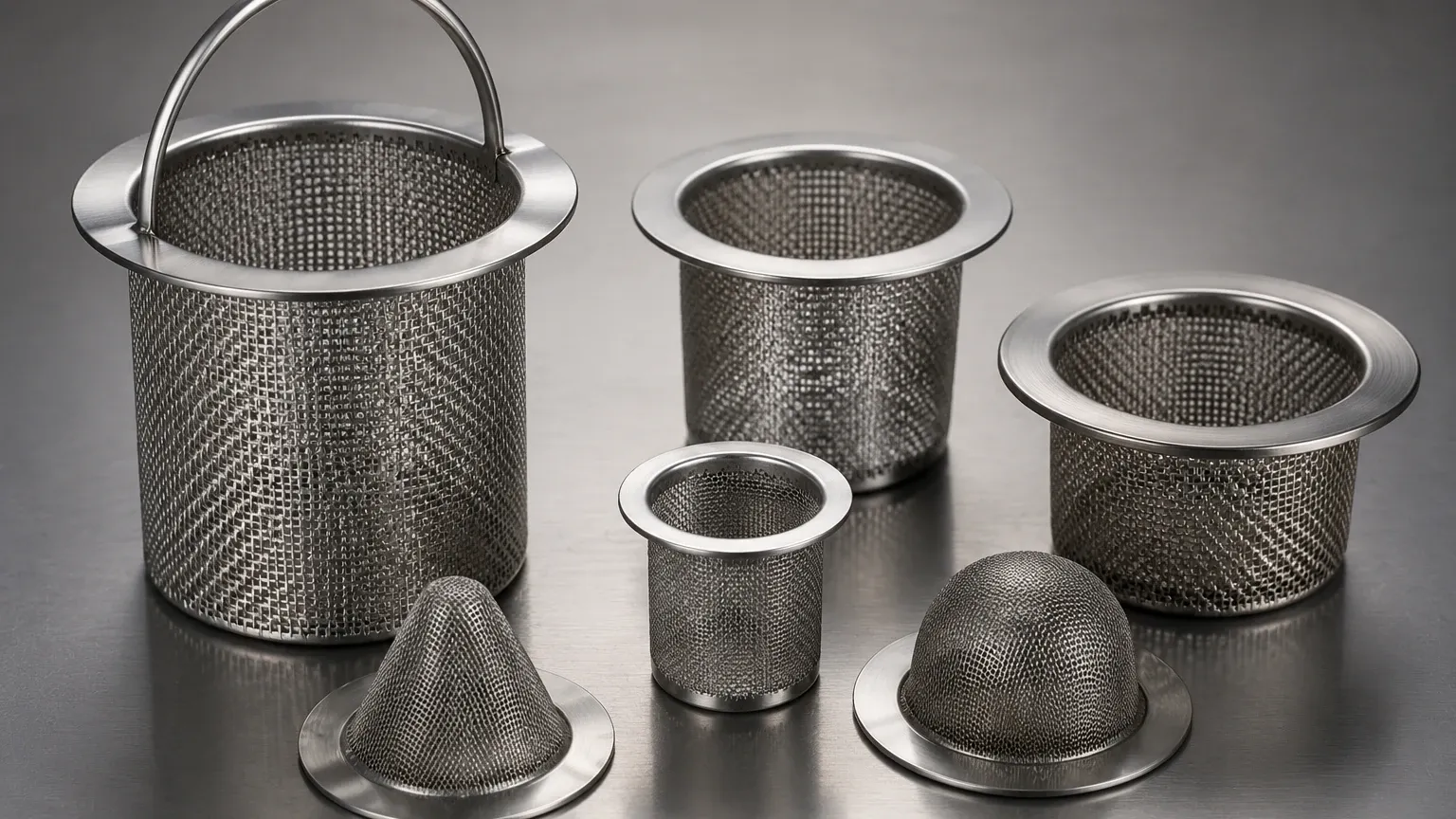
As a specialized manufacturer of stainless steel filtration solutions, Kaifil provides a broad range of Strainers & Baskets designed to meet or exceed the performance requirements of standard hydraulic components. This guide examines the engineering considerations, selection criteria, and maintenance protocols associated with Zinga-style strainers in industrial applications.
The Role of Suction Strainers in Hydraulic Circuits
Zinga strainers are most commonly utilized as suction strainers, often referred to as "sump strainers." They are submerged directly into the hydraulic reservoir and attached to the pump intake line. Their primary function is to prevent large debris—such as weld slag, pipe scale, or accidental contaminants—from entering the pump.
Unlike high-pressure filters that capture microscopic silt, a suction strainer is designed for high-flow, low-pressure drop (Delta P) performance. If a strainer is too restrictive, it can cause pump cavitation, a phenomenon where the vacuum at the pump inlet becomes so high that the fluid vaporizes, leading to catastrophic mechanical failure. Therefore, selecting the correct micron rating and flow capacity for zinga strainers is a critical engineering decision.
Technical Specifications and Material Selection
When evaluating strainers for industrial use, the material of the filter media and the housing determines the component's longevity and chemical resistance.
Wire Mesh Media
Most zinga strainers utilize stainless steel wire mesh. Stainless steel is preferred in industrial environments due to its durability and cleanability. Common configurations include:
* 304 Stainless Steel: Suitable for standard hydraulic oils and most water-based fluids.
* 316 Stainless Steel: Recommended for corrosive environments or specialized chemical processing where 304 may succumb to pitting or corrosion.
The mesh is typically supported by a perforated metal inner core to prevent collapse under high vacuum. In high-performance applications, the pleating of the wire mesh increases the available surface area, which lowers the velocity of the fluid passing through the media and extends the service interval.
Micron Ratings for Suction Applications
Suction strainers are generally rated in mesh sizes rather than absolute microns. Common ratings include 30, 60, 100, and 200 mesh. A 100-mesh strainer corresponds to approximately 149 microns. While finer filtration is generally better for system cleanliness, suction lines must remain relatively coarse to ensure the pump is never starved of fluid.
Engineering Selection Criteria: Flow and Pressure Drop
Selecting a strainer based solely on port size is a common mistake in system design. Engineers must calculate the required flow rate (GPM or LPM) against the fluid's viscosity at the lowest expected operating temperature.
The Clean Pressure Drop
Every strainer imposes a "clean pressure drop" on the system. For suction lines, this drop should ideally be kept below 0.5 PSI (1.0" Hg). As the strainer accumulates debris, this pressure drop increases. If the system does not include a bypass valve, the increased resistance can lead to pump damage.
Bypass Valves
Many zinga strainers are equipped with internal bypass valves, typically set at 3 PSI or 5 PSI. These valves allow fluid to bypass the strainer element if it becomes clogged, ensuring the pump continues to receive lubrication, albeit with unfiltered fluid. In critical systems, a bypass valve is a necessary fail-safe, though it should be coupled with a vacuum gauge or switch to alert operators of the condition.
Comparison: Stainless Steel vs. Disposable Media
While some low-cost strainers use paper or synthetic media, industrial-grade Strainers & Baskets almost exclusively utilize metal mesh. The advantages of stainless steel include:
1. Reusability: Stainless steel elements can be cleaned using ultrasonic baths or solvent washes, significantly reducing the total cost of ownership compared to disposable cartridges.
2. Structural Integrity: Metal mesh maintains its pore size and shape under fluctuating pressures, whereas synthetic media may distort or shed fibers into the fluid stream.
3. Temperature Resistance: Stainless steel can operate in high-temperature hydraulic circuits (exceeding 250°F) where adhesives or synthetic fibers in cheaper strainers might fail.
Installation and Maintenance Best Practices
Proper installation of zinga strainers is vital for preventing air leaks and ensuring efficient flow.
Mounting Considerations
Strainers should be mounted horizontally or vertically within the reservoir, ensuring they are fully submerged even at the lowest fluid levels to prevent air entrainment. It is also recommended to install the strainer at least 2 to 3 inches above the bottom of the tank to avoid drawing in settled sludge and heavy contaminants.
Maintenance Intervals
Because suction strainers are often hidden inside the reservoir, they are frequently overlooked during routine maintenance. A scheduled inspection should be performed every 1,000 to 2,000 operating hours, or whenever the vacuum gauge indicates an increase in inlet restriction.
When cleaning a stainless steel strainer:
* Inspect the mesh for tears or signs of fatigue.
* Check the integrity of the end caps and the adhesive bonding (if applicable).
* Ensure the bypass valve moves freely and seats correctly.
Custom OEM Solutions and Engineering Support
For many industrial applications, off-the-shelf zinga strainers may not meet specific dimensional or chemical requirements. This is where custom manufacturing becomes essential. Kaifil specializes in engineering bespoke filtration components that address unique challenges, such as non-standard thread sizes (NPT, SAE, or Metric), specialized magnetic inserts for capturing ferrous particles, or reinforced baskets for high-viscosity fluids.
When sourcing custom Strainers & Baskets, engineers should provide the following data points to the manufacturer:
* Fluid Type: Petroleum-based oil, water-glycol, phosphate ester, or specific chemicals.
* Operating Temperature: Minimum and maximum ranges.
* Flow Rate: Normal and peak flow requirements.
* Space Constraints: Maximum allowable diameter and length within the reservoir.
* Connection Type: Male or female threads, or flange mounts.
Addressing Common Risks in Strainer Procurement
One of the primary risks in procurement is the use of "equivalent" parts that do not meet the original engineering specifications. Low-quality imports may use thinner wire gauges or inferior alloys that can corrode or collapse.
To mitigate these risks, technical teams should verify the following before purchasing:
* Material Certification: Ensure the stainless steel grade is verified (e.g., 304 vs. 316).
* Mesh Integrity: The weave should be uniform without visible gaps or displacement.
* Bypass Calibration: If a bypass is included, it must be factory-tested to open at the specified pressure.
By focusing on these technical details, procurement departments can ensure that the zinga strainers they install provide reliable protection for their hydraulic assets, reducing downtime and preventing expensive pump replacements.
Conclusion
Zinga strainers are a fundamental component of hydraulic system health. Whether used in mobile equipment or stationary industrial power units, their ability to provide low-restriction, high-capacity filtration is paramount. By selecting the appropriate materials, calculating flow requirements accurately, and adhering to strict maintenance schedules, engineers can optimize system performance. For those requiring specialized designs or high-durability stainless steel options, exploring professional Strainers & Baskets offers a path toward more robust and cost-effective filtration solutions. Kaifil continues to support global industries by providing the technical expertise and manufacturing precision necessary for these demanding applications.
