


Strainer Zetkama
Industrial fluid systems rely on mechanical filtration to protect sensitive downstream components—such as pumps, control valves, and flow meters—from damage caused by debris, scale, and particulate matter. Among the established solutions in the European and global markets, the strainer Zetkama range represents a standard for reliability in pipeline protection. These components are essential in HVAC, chemical processing, and general industrial steam or water systems.
Understanding the technical nuances of a strainer Zetkama, from material composition to flow dynamics, is critical for engineers and procurement teams tasked with maintaining system integrity and minimizing downtime. This guide examines the engineering specifications, selection criteria, and maintenance requirements for these industrial filtration components.
Technical Architecture of Zetkama Strainers
Zetkama strainers are primarily designed as Y-type (oblique) or T-type (basket) configurations. The Y-strainer is the most common variant, characterized by its compact design and ability to be installed in both horizontal and vertical pipelines (provided the flow is downward in vertical orientations).
Material Composition and Pressure Ratings
The choice of housing material for a strainer Zetkama is dictated by the operating medium, temperature, and pressure. Common materials include:
* Grey Cast Iron (EN-GJL-250): Typically used for water and neutral fluids in low-to-medium pressure environments (PN6, PN10, PN16). It is a cost-effective solution for standard HVAC applications.
* Ductile Iron (EN-GJS-400-18-LT): Offers higher mechanical strength and impact resistance, suitable for steam and higher-pressure water systems (PN16, PN25).
* Cast Steel (GP240GH): Reserved for high-temperature and high-pressure applications, such as industrial steam lines and thermal oil systems, often rated up to PN40.
* Stainless Steel: Utilized in corrosive environments or applications requiring high purity, such as chemical processing or food and beverage production.
Internal Filtration Elements
The core of the strainer is the internal screen or basket. While the housing provides structural integrity, the filtration performance is entirely dependent on the mesh insert. Standard Zetkama inserts are manufactured from stainless steel (typically AISI 304 or 316) to prevent corrosion.
For engineers requiring specific filtration levels beyond standard factory settings, sourcing high-quality Strainers & Baskets is essential. The mesh size—ranging from coarse 1.0mm apertures to fine 0.25mm screens—must be selected based on the smallest particle size that could potentially damage downstream equipment.
Engineering Selection Criteria
Selecting a strainer Zetkama involves more than matching the pipe diameter. Engineers must evaluate several hydraulic and mechanical variables to ensure the component does not become a bottleneck or a point of failure.
Flow Coefficient (Kvs) and Pressure Drop
Every strainer introduces a pressure drop ($ΔP$) into the system. The Kvs value—representing the flow rate of water in m³/h at a pressure drop of 1 bar—is a critical metric provided in Zetkama technical datasheets. A lower Kvs indicates higher resistance.
When calculating the total head loss in a system, engineers must account for both the clean pressure drop and the anticipated pressure drop as the screen becomes partially clogged. If the $ΔP$ exceeds 0.5 to 1.0 bar, it usually indicates that the strainer requires cleaning or that the mesh size is too fine for the application's flow velocity.
Medium Compatibility
The chemical properties of the fluid determine the longevity of the strainer body and the internal screen. While water and steam are common, Zetkama strainers are also used for:
1. Thermal Oils: Requiring high-temperature resistant gaskets and cast steel bodies.
2. Glycol Solutions: Common in cooling systems, requiring compatibility with EPDM or NBR seals.
3. Industrial Gases: Requiring specific tightness tests and material certifications.
Installation and Orientation Guidelines
Proper installation of a strainer Zetkama is vital for its functionality and ease of maintenance. Incorrect orientation can lead to debris bypass or the accumulation of solids in the main pipeline rather than the collection chamber.
* Horizontal Pipelines: The "Y" branch or basket chamber should point downwards. This allows gravity to assist in trapping particles in the collection zone, preventing them from being swept back into the flow during shutdown.
* Vertical Pipelines: Installation is only recommended for downward flow. If installed in an upward flow configuration, debris will settle back toward the pump or valve when the flow stops, potentially causing a blockage.
* Space Requirements: Sufficient clearance must be maintained to allow for the removal of the cover and the extraction of the filter basket for cleaning.
Maintenance and Operational Longevity
A strainer is a "set and forget" component only until it clogs. Inadequate maintenance leads to increased pumping costs due to high pressure drops and, eventually, screen collapse if the differential pressure exceeds the screen's structural limits.
Cleaning Procedures
Most Zetkama Y-strainers (like the Type 821) feature a drain plug in the cover. For minor debris, a "blow-down" can be performed by installing a valve in place of the plug, allowing the system pressure to flush out accumulated solids. However, for a thorough cleaning, the system must be depressurized, the cover removed, and the basket manually cleaned with a soft brush or compressed air.
Identifying Wear and Failure Modes
During routine inspections, maintenance teams should look for:
* Mesh Erosion: High-velocity particles can thin the stainless steel wire over time, leading to holes.
* Gasket Degradation: Frequent opening of the cover requires the replacement of the sealing gasket (often graphite or EPDM) to prevent external leaks.
* Body Corrosion: In cast iron models, internal pitting can occur if the fluid chemistry is not properly managed (e.g., lack of oxygen scavengers in boiler feed water).
Customization and Specialized Filtration
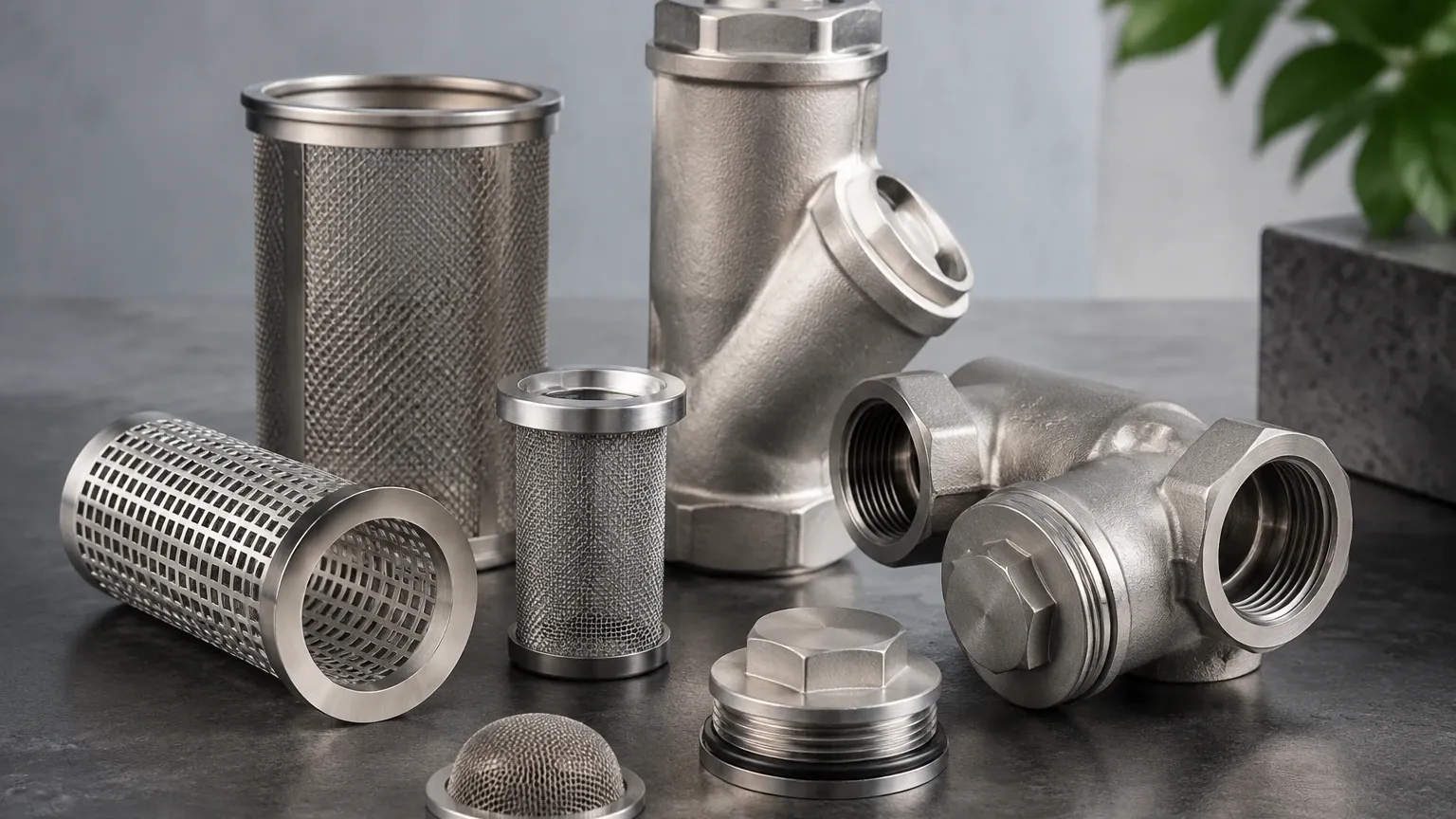
While standard Zetkama products meet a broad range of industrial needs, certain high-performance environments require customized internal components. The standard stainless steel mesh provided with many strainers may not offer the structural reinforcement needed for high-viscosity fluids or the precise micron rating required for pharmaceutical applications.
In these instances, manufacturers like Kaifil provide custom-engineered Strainers & Baskets that can be retrofitted into existing strainer bodies. Customization options include:
* Reinforced Baskets: Using perforated metal backings to support fine wire mesh against high differential pressures.
* Magnetic Inserts: Adding magnetic rods to the strainer basket to capture fine iron and steel particles that might pass through a standard mesh.
* Multi-Layer Sintered Mesh: For applications requiring filtration down to 5-10 microns without sacrificing flow capacity.
Total Cost of Ownership (TCO)
When evaluating a strainer Zetkama for a project, procurement should look beyond the initial purchase price. The TCO is influenced by:
1. Energy Consumption: A poorly sized strainer with a high pressure drop increases the power demand on system pumps.
2. Maintenance Labor: Models that are easier to open (e.g., those with quick-release covers or drain valves) reduce man-hours during shutdowns.
3. Component Protection: The cost of a strainer is negligible compared to the cost of repairing a high-pressure centrifugal pump or a digital flow meter damaged by a single piece of welding slag.
Conclusion for Engineers and Buyers
The strainer Zetkama remains a staple in industrial piping due to its robust construction and adherence to European engineering standards. Whether utilizing a standard Type 821 Y-strainer for a municipal heating circuit or a Type 823 for a high-pressure steam line, the fundamental principles of selection remain the same: match the material to the medium, size the mesh for the application, and ensure the Kvs value aligns with the system's hydraulic requirements.
For specialized applications where standard filtration is insufficient, integrating custom-manufactured Strainers & Baskets allows facilities to optimize their filtration performance without replacing existing valve infrastructure. By focusing on high-quality materials and precise engineering specifications, industrial operators can ensure long-term system reliability and minimal operational disruption.
