


Reverse Formed Wedge Wire Screen Basket
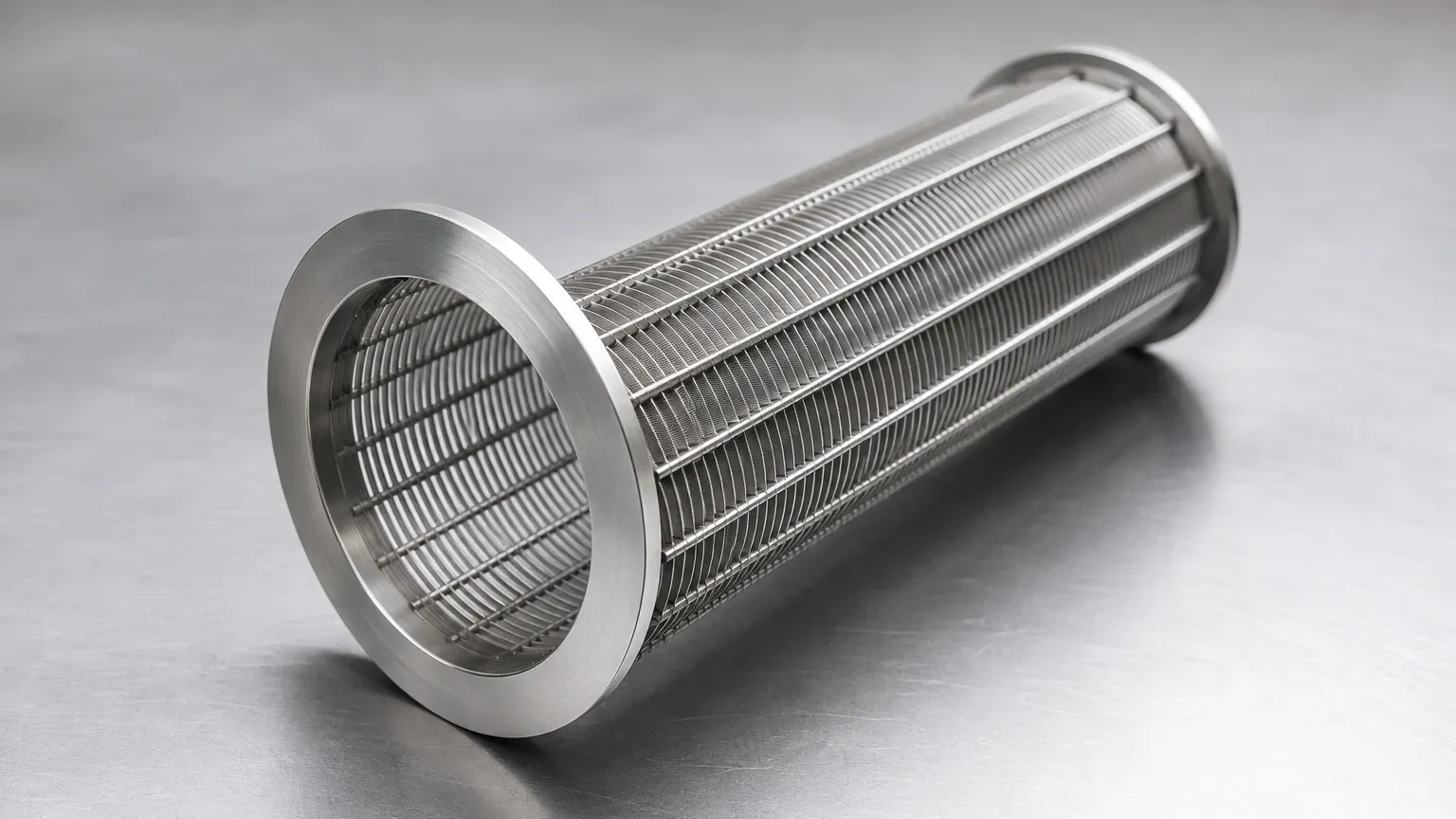
In the landscape of industrial separation and filtration, the structural configuration of a filter element determines its efficiency, longevity, and suitability for specific mechanical stresses. Among the most specialized components used in high-torque and high-flow environments is the reverse formed wedge wire screen basket. This engineering solution is distinct from standard wedge wire configurations due to its inverted construction, where the smooth filtration surface is positioned on the interior of the cylinder while the support rods are located on the exterior.
For engineers and procurement professionals, understanding the technical nuances of Wedge Wire Screens is essential for optimizing processes in sectors ranging from food and beverage to chemical processing and mineral extraction. This guide examines the design principles, performance advantages, and selection criteria for the reverse formed wedge wire screen basket.
The Fundamentals of Reverse Formed Construction
Wedge wire, also known as profile wire, is a precision-engineered metallic screen characterized by its V-shaped profile. In a standard wedge wire cylinder, the V-shaped wires are typically wrapped around support rods on the outside, creating a smooth surface on the exterior. However, many industrial applications—particularly those involving internal centrifugal force or internal mechanical scrapers—require the smooth surface to be on the inside.
A reverse formed wedge wire screen basket is manufactured by placing the profile wires on the internal circumference of the basket. The V-shape tapers outward, meaning the narrowest part of the slot is at the inner surface. This orientation is achieved through specialized resistance welding techniques where the profile wire and support rods are fused at every intersection point. The result is a robust, one-piece structure that maintains precise slot tolerances even under significant mechanical load.
Engineering Advantages of the Reverse Formed Design
The primary motivation for selecting a reverse formed configuration is the requirement for an unobstructed, smooth internal diameter. This design offers several critical engineering benefits:
1. Non-Clogging Characteristics
The V-shaped profile creates a two-point contact for any particle attempting to pass through the screen. Because the slot widens in the direction of the flow (from the inside out), any particle that passes the initial narrow opening will clear the rest of the screen without becoming wedged. This "self-cleaning" geometry is vital for maintaining consistent flow rates and reducing downtime associated with manual cleaning.
2. Structural Integrity for Centrifugal Loads
In centrifugal applications, the material being processed exerts immense outward pressure against the screen. In a reverse formed wedge wire screen basket, the support rods are positioned on the outside of the profile wires. This means the outward force of the slurry or solids pushes the profile wires directly against the support rods, utilizing the external framework to reinforce the screen’s circularity and prevent deformation.
3. Precision Slot Widths
Unlike woven wire mesh, which can shift or fray over time, wedge wire provides fixed slot openings. During the manufacturing of reverse formed baskets, the slot width is controlled with extreme precision, often down to 20 microns. This consistency ensures that the filtration cutoff remains stable throughout the service life of the component.
4. Compatibility with Internal Mechanical Cleaning
Applications that utilize internal augers, brushes, or scrapers require a perfectly smooth internal surface to prevent damage to the cleaning mechanism and the screen itself. The reverse formed construction ensures that the scraper blade moves across the flat face of the V-wires rather than catching on support rods or irregular weld points.
Key Applications in Heavy Industry
The unique geometry of the reverse formed wedge wire screen basket makes it the preferred choice for several demanding industrial processes.
Centrifuge and Decanter Systems
In the chemical and pharmaceutical industries, centrifuges are used to separate solids from liquids. The reverse formed basket acts as the primary separation barrier. As the basket spins at high RPMs, the liquid is forced through the slots while the solids are retained on the smooth internal surface, where they can be easily discharged or washed.
Food and Beverage Processing
In starch and sugar production, large volumes of fibrous material must be separated from process liquids. Reverse formed screens are used in pulp presses and centrifugal sifters because they can withstand the abrasive nature of the organic matter while providing a high percentage of open area for efficient throughput.
Water Intake and Treatment
Internal flow screens used in water intake systems often require reverse formed construction to allow for efficient backwashing. When the flow is reversed to clear debris, the widening slots of the wedge wire ensure that trapped organic matter is easily released into the waste stream.
Mining and Mineral Processing
Dewatering screens in the mining sector are subject to extreme abrasion. By using heavy-duty stainless steel alloys and reverse formed designs, operators can achieve a balance between fine particle retention and the mechanical strength required to support tons of mineral ore.
Material Selection and Corrosion Resistance
The performance of a reverse formed wedge wire screen basket is heavily dependent on the metallurgy of the wires and rods. Most industrial applications utilize stainless steel due to its balance of mechanical strength and chemical resistance.
* Grade 304/304L: The standard choice for general industrial applications where moderate corrosion resistance is required. It is widely used in food processing and standard water treatment.
* Grade 316/316L: Contains molybdenum, which provides superior resistance to chlorides and pitting. This is the preferred material for pharmaceutical, chemical, and marine environments.
* Duplex Stainless Steels: For highly abrasive or high-stress environments, Duplex alloys offer nearly double the yield strength of standard austenitic grades and exceptional resistance to stress corrosion cracking.
* Specialty Coatings: In some instances, baskets may be chrome-plated or electropolished to further reduce surface friction and enhance the release of sticky or cohesive materials.
Critical Factors for Filter Selection
When specifying a reverse formed wedge wire screen basket, engineers must evaluate several parameters to ensure the component meets the operational requirements of the system.
Slot Size and Open Area
The slot size (the gap between the V-wires) determines the filtration rating. However, there is a direct trade-off between slot size and "open area." A smaller slot size results in a lower percentage of open area, which increases the pressure drop across the screen. Engineers must calculate the required flow rate and allowable pressure drop to determine the optimal balance between filtration precision and throughput.
Support Rod Configuration
The spacing and shape of the external support rods determine the basket's ability to withstand radial and axial loads. In high-pressure applications, support rods may be placed closer together or manufactured from thicker gauge material to prevent the basket from collapsing or bursting.
Flow Direction and Velocity
While the reverse formed design is optimized for in-to-out flow, the velocity of the fluid must be managed. High-velocity flows can lead to erosion of the wire edges, eventually widening the slots and compromising filtration accuracy. Selecting the correct wire profile—varying in width and height—can help mitigate these effects.
Total Cost of Ownership and Maintenance
While the initial capital expenditure for a reverse formed wedge wire screen basket may be higher than for woven mesh or perforated plate alternatives, the total cost of ownership (TCO) is often significantly lower. The durability of the resistance-welded structure means fewer replacements and less downtime for repairs.
Maintenance requirements for these baskets are typically minimal. Because of the smooth internal surface and non-clogging slot geometry, cleaning can often be performed in-situ using CIP (Clean-in-Place) systems or automated backpulsing. When manual cleaning is necessary, the robust nature of the stainless steel allows for the use of high-pressure washers or mechanical brushes without the risk of tearing the filter media.
Conclusion: Selecting a Technical Partner
Designing an effective filtration system requires more than just selecting a part from a catalog. It involves a deep understanding of fluid dynamics, material science, and mechanical engineering. For complex components like the reverse formed wedge wire screen basket, working with a manufacturer that offers customized engineering support is essential.
At Kaifil, we specialize in providing high-performance Wedge Wire Screens tailored to specific industrial challenges. From initial material selection and slot width optimization to the final fabrication of custom flanges and fittings, our team ensures that every basket is engineered for maximum service life and filtration efficiency. By focusing on precision manufacturing and technical expertise, we help our global partners achieve reliable, cost-effective separation in their most demanding applications.
