


Wedge Wire Sieve Bend Screen
In industrial solid-liquid separation, the efficiency of a process often hinges on the ability to remove solids from a slurry with minimal energy consumption and downtime. The wedge wire sieve bend screen, also known as a DSM screen (Dutch States Mines), is a cross-flow gravity-fed separator that has become a standard in sectors ranging from mineral processing to food production. Unlike vibrating screens that require mechanical drives, the sieve bend utilizes gravity and the unique geometry of Wedge Wire Screens to achieve high-capacity filtration in a compact footprint.
Understanding the technical nuances of a wedge wire sieve bend screen is essential for engineers tasked with optimizing dewatering, sizing, or wastewater treatment systems. This guide explores the engineering principles, design variables, and selection criteria necessary for implementing these components effectively.
The Mechanics of Sieve Bend Filtration
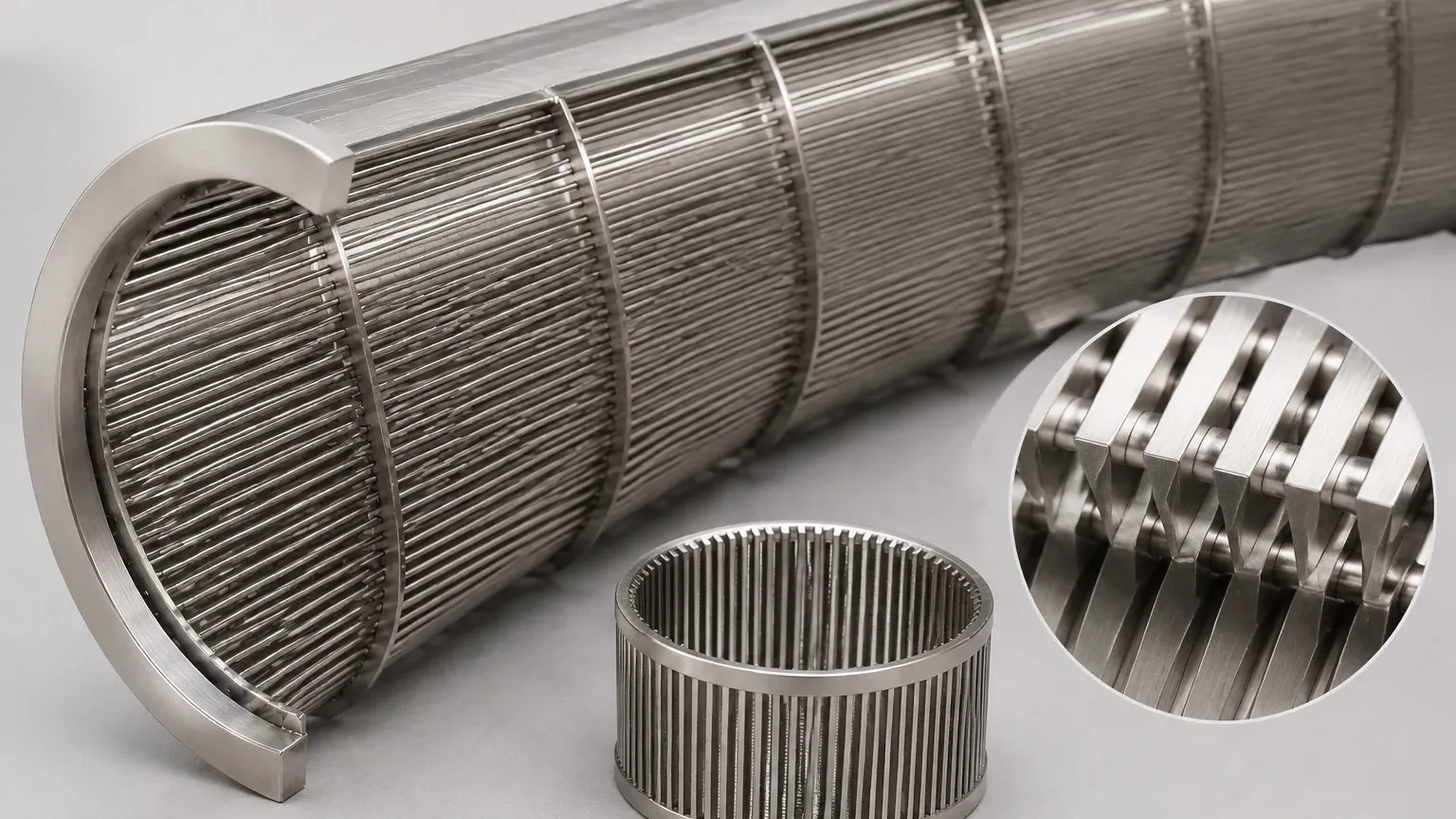
The operation of a wedge wire sieve bend screen is based on the principle of "slicing" the liquid layer from a moving slurry. The screen is curved into an arc, typically 45, 60, or 120 degrees, and positioned so that the profile wires are perpendicular to the flow of the material.
As the slurry is fed onto the top of the screen via a weir or feed box, it accelerates down the curved surface. The sharp leading edges of the V-shaped profile wires intercept the bottom layer of the fluid. This slicing action draws the liquid and undersized particles through the slots, while the oversized solids continue to travel across the face of the screen to the discharge point.
One of the most critical aspects of this process is that the separation size is typically about half of the actual slot width. For example, a sieve bend with a 1.0mm slot opening will often achieve a separation at approximately 0.5mm. This phenomenon allows for a larger open area and reduces the risk of blinding compared to traditional flat screens with smaller apertures.
Engineering and Design Specifications
When specifying a wedge wire sieve bend screen, several engineering variables must be balanced to match the specific requirements of the application. These include the profile wire geometry, support rod spacing, and the radius of the arc.
Profile Wire Selection
The "V" shape of the profile wire is the defining characteristic of wedge wire technology. The wire is wider on the surface and tapers inward. This design creates a divergent slot that widens toward the discharge side, ensuring that any particle capable of passing through the surface opening will fall through without becoming wedged. For sieve bends, the height and width of the profile wire affect the wear life and the efficiency of the slicing action. Heavier profiles are chosen for abrasive mineral slurries, while finer profiles are used for delicate food or pharmaceutical applications.
Slot Width and Tolerance
Precision in slot width is paramount. In high-accuracy filtration, even a minor deviation in the gap between wires can lead to inconsistent product quality or downstream equipment damage. Advanced manufacturing processes allow for tolerances as tight as ±0.05mm, ensuring that the sieve bend performs reliably under varying flow conditions.
Material Metallurgy
Most industrial sieve bends are manufactured from stainless steel, typically Grade 304 or 316L.
- Grade 304: Suitable for general industrial use, providing excellent strength and basic corrosion resistance.
- Grade 316L: Preferred for chemical processing, pharmaceutical, and food-grade applications where resistance to chlorides and organic acids is required.
- Duplex Steels: For highly abrasive or corrosive environments, such as seawater filtration or heavy mineral processing, specialized alloys may be utilized to extend the service life of the screen.
Key Advantages in Industrial Applications
The adoption of the wedge wire sieve bend screen across diverse industries is driven by its functional advantages over other filtration methods.
High Capacity and Efficiency
Because the sieve bend utilizes the velocity of the slurry and the slicing action of the wires, it can handle significantly higher flow rates per unit of surface area than a flat static screen. This makes it an ideal choice for high-volume processes like starch extraction or coal dewatering.
Non-Clogging Performance
The continuous slots and the V-shaped profile minimize the surface contact area for particles, which prevents blinding. Even with fibrous materials or irregularly shaped solids, the screen maintains a high open area throughout the production cycle.
Low Operational Costs
As a static device, the sieve bend has no moving parts. This eliminates the need for motors, gearboxes, or electrical connections, leading to lower energy costs and reduced maintenance requirements. The primary operational cost is the eventual replacement of the screen insert once the profile wires have worn down.
Selection Criteria for Engineers
Selecting the right wedge wire sieve bend screen requires a thorough analysis of the slurry and the desired output. Engineers should confirm several factors before finalizing a design:
1. Feed Rate and Concentration: The volume of slurry and the percentage of solids will determine the width of the screen. Overloading a screen can lead to "carry-over," where liquid and fines bypass the slots and exit with the oversized solids.
2. Particle Size Distribution: Knowing the d50 and d90 of the particles helps in selecting the appropriate slot width. As mentioned, the separation size is roughly half the slot width, but this can vary based on the velocity of the feed.
3. Abrasiveness of Solids: In mining or sand processing, the abrasive nature of the material will dictate the use of thicker profile wires to provide a sufficient "wear allowance."
4. Temperature and Chemical Compatibility: The selection of the stainless steel grade must account for the temperature of the slurry and the presence of any corrosive cleaning agents or process chemicals.
Installation and Maintenance Best Practices
To maximize the performance of a wedge wire sieve bend screen, proper installation and routine inspection are necessary.
Orientation and Feed Distribution
The screen must be installed so that the flow is perpendicular to the profile wires. Furthermore, the feed must be distributed evenly across the entire width of the screen. Uneven loading causes localized wear and reduces the effective filtration area, leading to premature failure and poor separation efficiency.
Reversing the Screen
One unique maintenance feature of many sieve bend designs is the ability to reverse the screen insert. Over time, the leading edges of the profile wires become rounded due to the impact and friction of the slurry, which reduces the slicing efficiency. By rotating the screen 180 degrees, the sharp trailing edges become the leading edges, effectively doubling the service life of the component before a full replacement is needed.
Cleaning Protocols
While wedge wire is inherently resistant to clogging, certain applications (such as those involving fats, proteins, or sticky polymers) may require periodic cleaning. High-pressure water washes or chemical CIP (Clean-In-Place) cycles are generally effective. Because stainless steel is robust, it can withstand the thermal and chemical stresses associated with these cleaning methods.
Customization and OEM Solutions
In many industrial environments, standard off-the-shelf screens may not meet specific spatial or performance requirements. Customization is a core component of successful filtration implementation. Manufacturers like Kaifil specialize in engineering bespoke Wedge Wire Screens tailored to unique housing dimensions, specific arc angles, and specialized mounting hardware.
OEM solutions often involve collaborating with equipment manufacturers to integrate sieve bend inserts into larger machine assemblies. This requires a high degree of precision in manufacturing to ensure that the replacement screens fit perfectly into existing frames, maintaining the integrity of the seal and the accuracy of the filtration process.
Conclusion: Total Cost of Ownership
When evaluating filtration options, engineers must look beyond the initial purchase price and consider the total cost of ownership (TCO). The wedge wire sieve bend screen offers a compelling TCO due to its lack of power consumption, minimal maintenance needs, and the ability to extend life through reversal.
By focusing on high-quality materials and precise manufacturing tolerances, facilities can ensure that their separation processes remain consistent and efficient. Whether it is recovering valuable starch in a food plant or removing grit in a municipal wastewater facility, the sieve bend remains a reliable, low-tech solution to high-tech filtration challenges. For those seeking to optimize their current systems, confirming the specific slurry characteristics and consulting with a manufacturer on custom profile configurations is the most effective path toward achieving peak performance.
