


Wedge Wire Screen Flat
In industrial filtration and separation, the efficiency of a process often hinges on the mechanical integrity and precision of the filter media. Among the various technologies available, the wedge wire screen flat panel stands out as a high-performance solution for solid-liquid and solid-gas separation. Characterized by its non-clogging surface and robust structural design, this component is essential in sectors ranging from food processing and malting to chemical engineering and water treatment.
Engineers and procurement professionals must understand the technical nuances of Wedge Wire Screens to ensure that the selected media can withstand operational pressures while maintaining precise filtration accuracy. This guide examines the engineering principles, material considerations, and application-specific criteria for wedge wire screen flat panels.
Engineering Fundamentals of Wedge Wire Technology
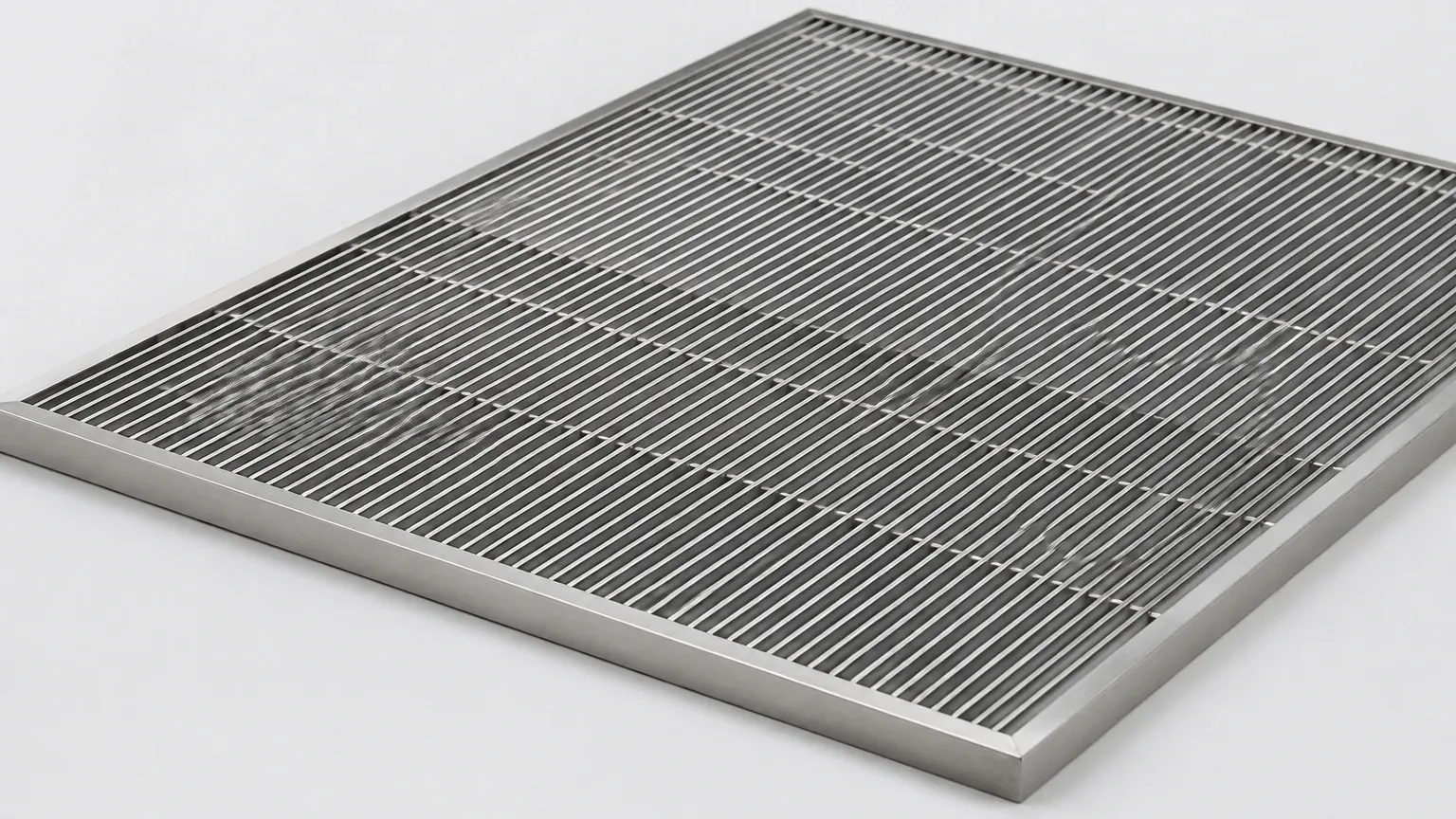
The primary advantage of a wedge wire screen flat panel lies in its unique geometry. Unlike woven wire mesh or perforated plates, wedge wire is constructed from V-shaped profile wires that are resistance-welded onto perpendicular support rods. This construction creates a continuous slot that widens inwardly.
The Non-Clogging Mechanism
One of the most significant challenges in industrial filtration is "blinding" or clogging, where particles become lodged within the filter openings. The V-shaped profile of the wedge wire addresses this by providing only two-point contact with any particle. Because the opening tapers outward (on the discharge side), any particle that passes through the initial slot width will easily clear the rest of the screen. This self-cleaning property is critical for continuous operations where downtime for manual cleaning is costly.
Structural Rigidity and Precision
The resistance welding process used in manufacturing ensures that every intersection between the profile wire and the support rod is fused. This creates a rigid, single-piece structure. For a wedge wire screen flat panel, this rigidity is vital for maintaining slot uniformity across large surface areas. Even under significant mechanical loads or high-pressure differentials, the slots remain consistent, ensuring that the filtration cutoff point does not shift during the production cycle.
Material Selection for Industrial Environments
Selecting the correct alloy for a wedge wire screen flat panel is not merely a matter of cost; it is a technical decision based on the chemical composition of the process fluid and the thermal conditions of the environment. As a specialist manufacturer, Kaifil utilizes high-grade stainless steel to ensure longevity and hygiene.
1. Stainless Steel 304: The standard choice for general industrial applications. It offers excellent strength and good corrosion resistance for non-acidic environments. It is frequently used in architectural applications and standard water filtration.
2. Stainless Steel 316/316L: Recommended for applications involving chlorides or acidic solutions. The addition of molybdenum enhances pitting resistance. The "L" (low carbon) variant is particularly important for welded structures to prevent carbide precipitation and ensure the integrity of the weld zones.
3. Duplex Stainless Steels: For extreme environments involving high stress and highly corrosive media, duplex alloys provide superior yield strength and resistance to stress corrosion cracking.
4. Specialty Alloys: In high-temperature or specialized chemical processing, alloys like Monel or Hastelloy may be required to prevent premature failure of the screen.
Key Technical Specifications for Engineers
When specifying a wedge wire screen flat panel, several variables must be calculated to optimize performance. Engineers should focus on the relationship between flow rate, pressure drop, and mechanical strength.
Calculating Effective Open Area
The open area of a screen determines its hydraulic capacity. For a wedge wire screen, the formula is straightforward:
Open Area % = [Slot Width / (Slot Width + Wire Width)] × 100
For example, a screen with a 0.5mm slot and a 1.5mm wire width has an open area of 25%. Increasing the open area improves flow and reduces pressure drop but may compromise the structural strength of the panel if the wire width is reduced too significantly. Balancing these factors is a core part of the design process.
Slot Width Tolerances
Filtration accuracy is defined by the slot width. In precision applications, such as pharmaceutical or fine chemical processing, tolerances must be strictly controlled. Standard industrial tolerances are often within ±0.05mm, but tighter specifications can be achieved through advanced manufacturing techniques. It is essential to confirm the required micron rating before finalizing the screen design.
Support Rod Configuration
The support rods provide the structural backbone of the flat panel. Their shape (round, rectangular, or teardrop) and spacing (pitch) determine the load-bearing capacity. For heavy-duty vibrating screens, support rods are spaced more closely to prevent the profile wires from flexing or vibrating independently, which could lead to fatigue failure.
Applications of Wedge Wire Screen Flat Panels
The versatility of the flat panel configuration allows it to be integrated into various industrial systems. Its flat surface is ideal for applications where mechanical scrapers or gravity-fed separation is used.
Food and Beverage Processing
In the malting industry, wedge wire screen flat panels serve as kiln floors and mash tun bottoms. The flat surface allows for the even distribution of air or liquid, while the high load-bearing capacity supports the weight of the grain bed. In sugar processing, these screens are used for dewatering and juice extraction, where the non-clogging nature prevents the buildup of sticky residues.
Water and Wastewater Treatment
Flat panels are often used as intake screens or floor drains in large-scale water treatment plants. They effectively remove debris while maintaining high flow rates. Because they are made of stainless steel, they resist the biological growth and corrosion common in aqueous environments.
Mineral and Aggregate Processing
In mining, the wedge wire screen flat panel is used on vibrating decks to size ores and dewater slurries. The durability of the stainless steel wire ensures that the screen can handle abrasive materials without rapid wear. For these applications, the "tilt" of the wire can sometimes be customized to enhance the "sieve effect" and improve separation efficiency.
Architectural and Decorative Uses
Beyond industrial filtration, the aesthetic appeal and durability of wedge wire have made it a favorite for architectural grates, ventilation covers, and drainage systems in high-traffic commercial areas. The flat panels provide a slip-resistant surface and a modern, industrial look while remaining highly functional.
Customization and Engineering Considerations
Every industrial process has unique demands, and a "one-size-fits-all" approach rarely yields optimal results. When ordering a wedge wire screen flat panel, several customization options should be discussed with the manufacturer.
Framing and Reinforcement
Flat panels are rarely used as standalone sheets. They usually require framing to be installed into a housing or onto a support structure. Framing options include:
* Flat Bar Frames: For easy bolting or welding into place.
* Angle Iron Frames: To provide additional perimeter rigidity.
* Hidden Reinforcements: Sub-structures welded to the underside of the support rods to handle extreme pressure differentials without obstructing the top filtration surface.
Surface Treatments
Depending on the application, surface finish can impact performance.
* Pickling and Passivation: Essential for all stainless steel screens to restore the chromium oxide layer after welding, ensuring maximum corrosion resistance.
* Electropolishing: Creates a microscopically smooth surface, which is vital in the food and pharmaceutical industries to prevent bacterial adhesion and make cleaning easier.
* Hard Chrome Plating: Used in highly abrasive environments to extend the wear life of the profile wires.
Flow Direction
While it may seem simple, the orientation of the V-wire relative to the flow is critical. In most flat panel applications, the flat side of the V-wire faces the incoming flow (flow-out-to-in logic in a flat context). However, in some specialized dewatering applications, the orientation may be reversed or tilted to achieve specific separation goals.
To explore the full range of customization and technical options, engineers should Review product options and application support to align the screen design with their specific operational parameters.
Maintenance and Operational Longevity
While wedge wire screens are designed for durability, their service life depends on proper maintenance and operational practices.
Cleaning Protocols
Although the V-wire profile minimizes clogging, fine particles or biological films can still accumulate over time. Mechanical cleaning with brushes or high-pressure water jets is effective due to the screen's robust nature. In chemical processing, Clean-in-Place (CIP) systems can be used, provided the cleaning agents are compatible with the stainless steel grade.
Monitoring Wear
In abrasive applications, the top of the V-wire will gradually wear down. As the wire height decreases, the slot width may slightly increase depending on the specific wire profile used. Regular inspections should include measuring the slot width at multiple points across the panel to ensure the filtration accuracy remains within the required tolerance.
Replacement Cycles
The total cost of ownership for a wedge wire screen flat panel is often lower than cheaper alternatives because of its long replacement cycle. While the initial investment is higher than woven mesh, the reduction in downtime and the ability to clean and reuse the screen multiple times provide significant long-term value.
Conclusion for Procurement and Engineering Teams
The selection of a wedge wire screen flat panel is a critical decision that affects the throughput, purity, and cost-efficiency of industrial processes. By focusing on the V-wire geometry, material grade, and structural reinforcements, engineers can specify a solution that meets the rigorous demands of their specific application.
Kaifil provides the technical expertise and manufacturing precision required to produce high-quality wedge wire solutions. Whether you are designing a new filtration system or replacing an existing screen, confirming the slot precision, load requirements, and material compatibility is the first step toward optimized performance. For detailed technical specifications and engineering assistance, consult with a professional manufacturer to ensure your filtration components are built to last.
