


Wedge Wire Screen Manufacturers Near Me
In the landscape of industrial filtration, the search for "wedge wire screen manufacturers near me" is often the first step for procurement managers and process engineers tasked with maintaining or upgrading critical systems. While geographical proximity offers undeniable logistical benefits, the selection of a wedge wire supplier must be grounded in technical competence, material integrity, and engineering precision. Wedge wire technology is not a commodity; it is a high-performance engineering solution that dictates the efficiency, safety, and longevity of industrial processes ranging from petrochemical refining to large-scale water treatment.
This article provides a comprehensive technical overview of wedge wire technology, evaluates the trade-offs between local and global sourcing, and outlines the critical criteria for selecting a manufacturing partner capable of delivering high-precision Wedge Wire Screens.
Understanding Wedge Wire Engineering and Manufacturing
Wedge wire, also referred to as profile wire, is a specialized metallic filtration medium known for its structural strength and non-clogging characteristics. Unlike traditional woven wire mesh, which relies on the interlacing of wires, wedge wire is manufactured through a sophisticated resistance welding process.
The V-Wire Geometry
The core of this technology lies in the V-shaped profile of the surface wire. This wire is welded onto longitudinal support rods at every intersection. The "V" shape creates a slot that is narrowest at the surface and widens inwardly. In a practical industrial application, this means that any particle capable of passing through the surface slot will easily pass through the rest of the screen without getting wedged or "blinded." This self-cleaning property is essential for continuous processes where downtime for manual cleaning is cost-prohibitive.
Precision Welding and Structural Integrity
Modern manufacturing of wedge wire requires CNC-controlled resistance welding equipment. The integrity of the screen depends on the consistency of these welds. If the welding temperature or pressure fluctuates during production, the resulting screen may have weak points that fail under hydraulic surges or mechanical vibrations. For engineers searching for "wedge wire screen manufacturers near me," it is vital to confirm that the supplier utilizes automated welding lines that can maintain strict slot tolerances across the entire surface area.
Material Selection and Chemical Compatibility
The performance of a wedge wire screen is heavily dependent on the metallurgy of the wires and support rods. Industrial environments are often characterized by corrosive fluids, high temperatures, and abrasive solids. Selecting the wrong material can lead to rapid degradation, pitting, or stress corrosion cracking.
Stainless Steel Grades
* Grade 304: The standard choice for general industrial applications where moderate corrosion resistance is required. It is commonly used in food and beverage processing and standard water filtration.
* Grade 316L: The "L" stands for low carbon, which improves weldability and resistance to intergranular corrosion. This grade is the industry standard for chemical processing and pharmaceutical applications due to its superior resistance to chlorides and acids.
* Duplex and Super Duplex: In highly aggressive environments, such as seawater intake or offshore oil and gas, Duplex stainless steels offer significantly higher yield strength and resistance to pitting compared to the 300-series steels.
* Specialty Alloys: For extreme temperatures or highly acidic environments, manufacturers may utilize Hastelloy, Monel, or Titanium.
When vetting "wedge wire screen manufacturers near me," engineers should demand material mill certificates to ensure that the alloy supplied matches the engineering specifications. High-quality manufacturers like Kaifil maintain strict traceability for all raw materials used in their customized filtration solutions.
Evaluating Wedge Wire Screen Manufacturers Near Me
While a local supplier may offer faster shipping, the technical requirements of the project should take precedence. A manufacturer’s proximity is irrelevant if they cannot meet the required slot tolerance or provide the necessary engineering documentation.
Slot Tolerance and Open Area
The filtration efficiency of a wedge wire screen is defined by its slot width and the percentage of open area. A manufacturer must be able to produce slots ranging from as small as 20 microns to several millimeters with high precision. Inconsistent slot widths lead to "bypass," where oversized contaminants enter the downstream process, potentially damaging sensitive equipment like high-pressure pumps or heat exchangers.
Technical Support and Design Consultation
An ideal manufacturing partner does more than just fulfill a purchase order; they act as an engineering resource. When evaluating suppliers, consider their ability to perform calculations related to:
* Flow Velocity: Ensuring the fluid velocity through the slots does not exceed limits that could cause erosion or excessive pressure drop.
* Collapse Strength: Calculating the maximum differential pressure the screen can withstand before structural failure.
* Hydrodynamic Efficiency: Optimizing the wire profile and support rod spacing to maximize throughput while maintaining structural rigidity.
Quality Assurance and Testing
Reliable manufacturers implement rigorous Quality Management Systems (QMS). For critical applications, you should inquire about non-destructive testing (NDT) capabilities, such as:
* Dye Penetrant Inspection: To detect surface-breaking defects in welds.
* Pressure Testing: To verify the structural integrity of the assembly under operating conditions.
* Positive Material Identification (PMI): To verify the chemical composition of the alloy before and after manufacturing.
Customization Options for Demanding Industrial Applications
One of the primary reasons engineers specify Wedge Wire Screens is the ability to customize the mechanical configuration to fit existing infrastructure. A manufacturer with deep OEM experience can adapt the screen to various formats:
Flow Directions: FOTI vs. FITO
* FOTI (Flow-Out-To-In): The V-wire is on the outside, and the support rods are on the inside. This is the most common configuration for well screens and intake filters.
* FITO (Flow-In-To-Out): The V-wire is on the inside, creating a smooth internal surface. This is often used in screw press separators or rotary drum filters where internal mechanical scrapers are used to remove solids.
Mechanical Reinforcements
In applications involving high torque or heavy solids loading, standard wedge wire may require additional reinforcement. This can include external cages, internal perforated pipes, or heavy-duty end flanges. A manufacturer specializing in custom solutions can integrate these components into a single, high-strength assembly.
Diverse Geometries
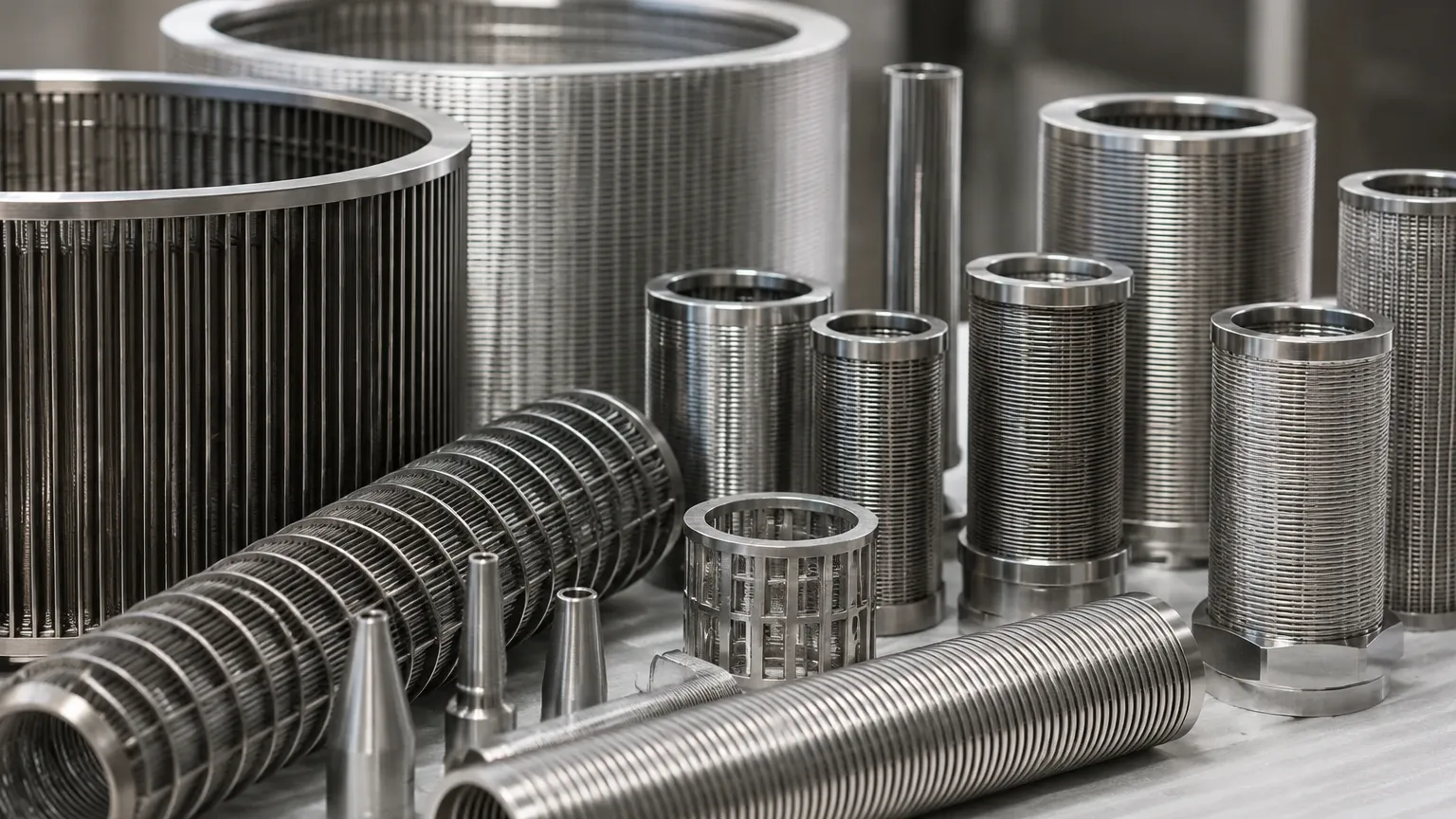
Wedge wire is not limited to cylindrical shapes. Manufacturers can produce:
* Flat Panels: Used in vibrating screens, floor drains, and architectural grilles.
* Sieve Bends: Curved screens used for dewatering and starch extraction.
* Conical Baskets: Used in centrifuges and specialized separation equipment.
The Economic Impact of High-Precision Filtration
The total cost of ownership (TCO) for a wedge wire screen involves much more than the initial purchase price. By selecting a high-quality manufacturer, companies can achieve significant long-term savings in several areas.
1. Reduced Energy Consumption
A screen with a higher percentage of open area and a smooth profile reduces the pressure drop across the filter. This allows pumps to operate at lower power settings, leading to substantial energy savings over the life of the equipment.
2. Extended Service Life
High-precision welding and superior material selection ensure that the screen can withstand repeated backwashing and mechanical cleaning cycles. A screen that lasts five years instead of two significantly reduces the capital expenditure and labor costs associated with replacement.
3. Minimized Downtime
In many industrial processes, the cost of an unplanned shutdown can reach thousands of dollars per hour. A wedge wire screen that resists clogging and structural failure ensures that the process remains online, protecting the facility's bottom line. When searching for "wedge wire screen manufacturers near me," consider whether the supplier’s quality standards are sufficient to prevent these costly interruptions.
Global Sourcing and Technical Support
In the modern B2B environment, the most effective manufacturers are those that combine global production capabilities with localized technical support. While you may be looking for "wedge wire screen manufacturers near me," the best solution often comes from a manufacturer like Kaifil, which leverages advanced manufacturing facilities to provide high-performance filtration components to a global clientele.
By focusing on engineering excellence, material traceability, and customized designs, Kaifil supports engineers and purchasing teams in achieving optimal filtration performance. Whether the application is in chemical processing, hydraulic systems, or water treatment, the priority remains the same: a durable, high-precision screen that meets the specific demands of the industrial environment.
Conclusion
Selecting a wedge wire manufacturer is a decision that impacts the fundamental efficiency of an industrial facility. While the search for "wedge wire screen manufacturers near me" highlights the importance of logistics, the technical specifications of the screen—such as slot tolerance, weld integrity, and material grade—are the true drivers of value.
By evaluating potential partners based on their engineering depth, quality control protocols, and ability to provide customized solutions, procurement professionals can ensure they receive a product that maximizes throughput and minimizes maintenance. High-quality wedge wire screens are an investment in process stability, and choosing the right manufacturer is the key to protecting that investment.
