


Wedge Wire Well Screen
In the field of industrial filtration and subsurface extraction, the selection of screening media directly impacts the efficiency, longevity, and operational costs of the entire system. Among the various technologies available, the wedge wire well screen has emerged as a critical component for applications requiring high mechanical strength, precise slot control, and superior resistance to clogging. As a specialized application of Wedge Wire Screens, these components are engineered to withstand the rigorous demands of water well, geothermal, and oil and gas extraction environments.
For engineers and procurement professionals, understanding the technical nuances of wedge wire construction is essential for optimizing well performance. Unlike traditional perforated pipes or mesh-wrapped screens, wedge wire utilizes a unique geometry that addresses the fundamental challenges of subsurface filtration: sand control, flow resistance, and structural integrity under hydrostatic pressure.
Engineering Principles of Wedge Wire Technology
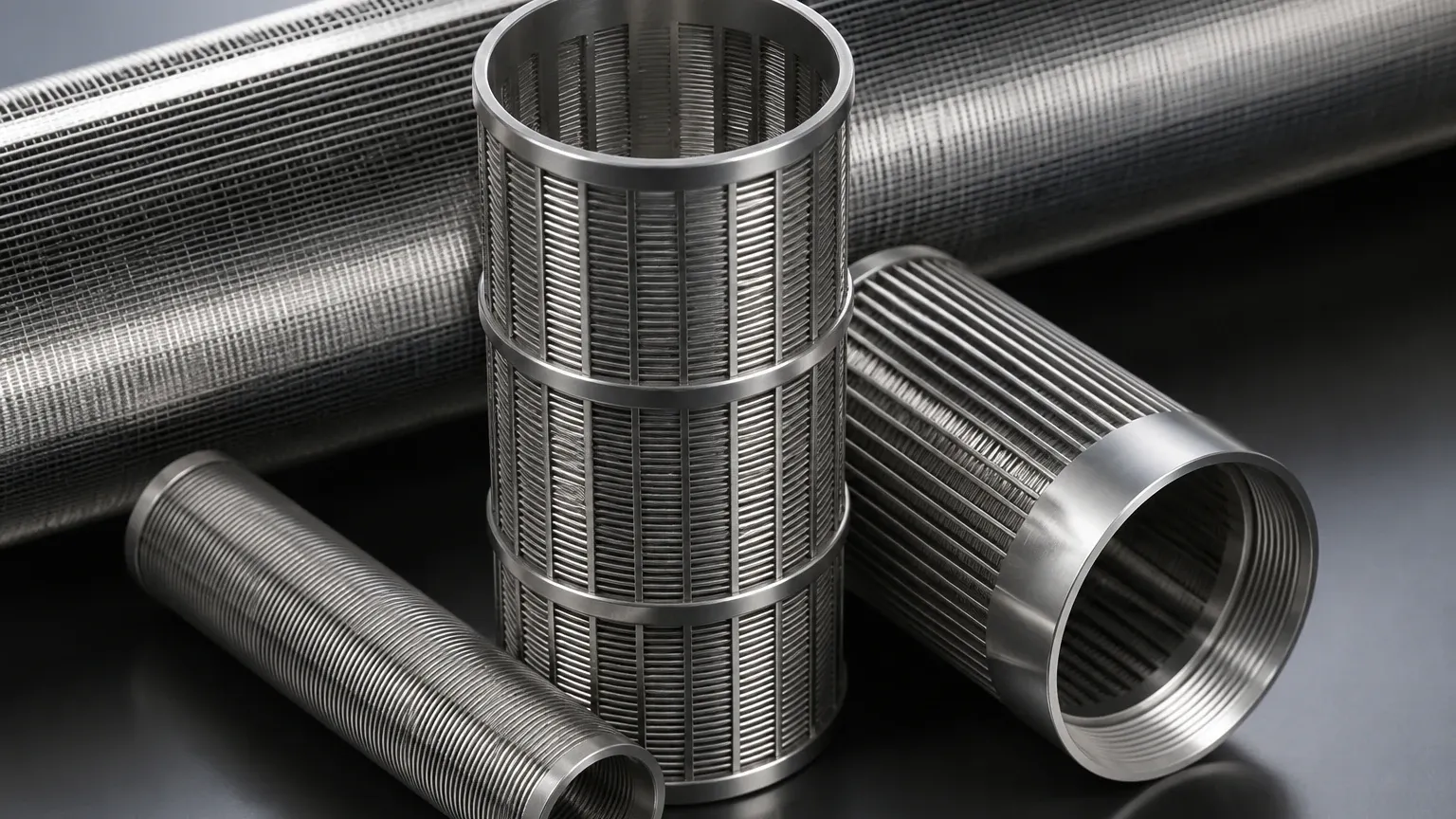
The fundamental advantage of a wedge wire well screen lies in its "V-shaped" profile wire. During manufacturing, a cold-rolled triangular wire is helically wrapped around an internal array of longitudinal support rods. Each intersection is resistance-welded, creating a rigid, one-piece structure.
This design creates a continuous slot that widens inwardly. From a fluid dynamics perspective, this geometry is vital. When fluid and particles pass through the screen, the V-shaped opening ensures that any particle small enough to enter the slot will pass through without becoming wedged. This "two-point contact" principle significantly reduces the risk of blinding and clogging compared to square mesh or round-hole perforations, where particles often become trapped within the thickness of the material.
Furthermore, the continuous slot design provides a significantly higher percentage of open area compared to traditional slotted pipes. A higher open area translates to lower entrance velocity for the fluid, which reduces friction loss and minimizes the drawdown of the well. For the end-user, this results in lower energy consumption for pumping and a reduced risk of incrustation or scale buildup at the screen interface.
Material Selection and Corrosion Resistance
Industrial wells are often located in environments characterized by corrosive groundwater, high salinity, or fluctuating pH levels. Consequently, material selection is a primary engineering consideration. Kaifil specializes in manufacturing these components from high-grade stainless steel to ensure long-term durability.
* AISI 304/304L Stainless Steel: The standard choice for most water well applications, offering excellent mechanical properties and sufficient corrosion resistance in neutral environments.
* AISI 316L Stainless Steel: Recommended for environments with higher chloride concentrations or more aggressive chemical profiles. The addition of molybdenum enhances resistance to pitting and crevice corrosion.
* Duplex Stainless Steels: For deep-sea applications or highly acidic geothermal wells, duplex grades provide superior yield strength and exceptional resistance to stress corrosion cracking.
Beyond chemical resistance, the choice of material affects the mechanical integrity of the screen. In deep-well applications, the screen must withstand significant collapse pressure from the surrounding formation and hydrostatic head. Engineering teams must calculate the required support rod density and wire gauge to ensure the screen maintains its circularity and slot accuracy throughout its service life.
Critical Design Parameters for Customization
A wedge wire well screen is rarely a "one-size-fits-all" product. To achieve optimal filtration, several parameters must be customized based on the geological data of the well site.
Slot Aperture Precision
The slot size (aperture) must be matched to the grain size distribution of the surrounding formation or the gravel pack. If the slot is too large, excessive sand infiltration will occur, leading to pump wear and well instability. If the slot is too small, flow will be unnecessarily restricted. Kaifil’s manufacturing process allows for slot tolerances as tight as ±0.05mm, ensuring that the design intent is met with high precision.
Support Rod Configuration
The support rods provide the longitudinal strength of the screen. Their shape (round, heavy-duty, or teardrop) and spacing determine the collapse strength. For high-pressure environments, increasing the number of support rods or using thicker rod profiles is necessary to prevent structural failure.
End Fittings and Integration
To facilitate installation, the screen sections must be joined securely. Common options include threaded couplings (NPT, API, or custom threads) or weld rings for field welding. The integrity of these joints is as important as the screen itself, as they must support the weight of the entire screen string during installation.
Performance Metrics: Flow Rate and Sand Control
The primary functional goal of a wedge wire well screen is to maximize water or hydrocarbon production while excluding formation solids. The effectiveness of sand control is measured by the clarity of the produced fluid and the stability of the wellbore.
Because the wedge wire design allows for a very high open area—often exceeding 40% depending on slot size—the velocity of the fluid entering the screen remains low. Low entrance velocity is critical because high-velocity flow can transport fine sands and silts that would otherwise remain stationary in the formation. By maintaining a laminar flow profile at the screen face, the wedge wire design preserves the natural filter cake formed by the formation material, further enhancing the filtration efficiency over time.
In industrial water treatment and cooling water intake systems, this high flow capacity allows for smaller screen footprints, reducing the overall size and cost of the intake structure while meeting the required volume demands.
Installation and Maintenance Considerations
While wedge wire screens are designed for durability, proper installation and maintenance are required to maximize their 20- to 30-year life expectancy. During installation, it is crucial to ensure the screen is centered within the borehole to allow for an even distribution of the gravel pack. An uneven gravel pack can lead to localized high-velocity zones, causing premature wear or "hot spots" on the screen.
One of the most significant advantages of stainless steel wedge wire is its compatibility with various well-development and cleaning techniques. Unlike plastic or carbon steel screens, stainless steel can withstand:
1. High-Pressure Jetting: Used to break up clay and drilling mud during well development.
2. Acid Treatment: Chemical cleaning to remove carbonate scales or iron bacteria deposits.
3. Surging and Backwashing: Mechanical methods to rearrange the gravel pack and restore flow rates.
Because the material is robust and the slots are non-clogging, these maintenance procedures are highly effective, often restoring a well’s specific capacity to near-original levels.
Evaluating Total Cost of Ownership (TCO)
When comparing a wedge wire well screen to alternative screening methods, purchasing teams must look beyond the initial capital expenditure. The Total Cost of Ownership (TCO) of a well is heavily influenced by energy costs and maintenance frequency.
* Energy Savings: A screen with a higher open area reduces the drawdown (the difference between the static and pumping water levels). Since the pump does not have to lift water from as great a depth, energy consumption is permanently reduced.
* Pump Longevity: Effective sand control prevents the erosion of pump impellers and seals. Replacing a high-capacity submersible pump is a significant expense that can be avoided through superior screening.
* Reduced Downtime: The self-cleaning nature of the V-wire profile means the well requires less frequent rehabilitation, ensuring a steady supply of water or product for industrial processes.
In the context of Wedge Wire Screens, the investment in precision-engineered stainless steel components pays for itself through operational reliability and extended service intervals.
Conclusion: Selecting a Manufacturing Partner
Designing an effective filtration system requires a balance between mechanical strength, hydraulic efficiency, and material science. As a professional manufacturer, Kaifil provides the technical expertise necessary to translate well-site data into high-performance filtration components. From selecting the appropriate stainless steel grade to calculating the optimal slot-to-rod ratio, Kaifil works closely with engineers to ensure that every wedge wire well screen is fit for its specific industrial application.
For those managing complex filtration projects, confirming the technical specifications—such as collapse pressure requirements, slot tolerances, and chemical compatibility—is the first step toward a successful installation. By focusing on precision manufacturing and durable materials, Kaifil helps global customers achieve efficient and cost-effective filtration performance in even the most demanding subsurface environments.
