


2 Mesh Filter
In industrial filtration and separation, selecting the correct mesh size is a fundamental engineering decision that impacts flow dynamics, equipment protection, and overall process efficiency. While much of the industry focuses on high-precision micro-filtration, coarse filtration components like the 2 mesh filter play a critical role in primary separation and the structural reinforcement of complex filter assemblies.
For engineers and procurement professionals, understanding the technical nuances of a 2 mesh specification—especially when integrated into Wire Mesh Filter Cylinders & Tubes—is essential for ensuring system reliability and preventing downstream damage. This guide examines the technical specifications, material considerations, and industrial applications of 2 mesh filtration solutions.
Understanding the 2 Mesh Specification
The term "mesh" in industrial wire cloth refers to the number of openings per linear inch, measured from the center of one wire to the center of the next. A 2 mesh filter contains exactly two openings per linear inch in both the warp and shute directions.
Technical Parameters and Calculations
Unlike finer meshes where the wire diameter is relatively thin, a 2 mesh screen typically utilizes heavier gauge wire to maintain structural integrity under high flow rates. The physical performance of the filter is defined by three primary variables:
1. Wire Diameter: This is the thickness of the individual wires used to weave the mesh. For a 2 mesh screen, common wire diameters range from 0.063 inches (1.6 mm) to 0.120 inches (3.05 mm).
2. Aperture (Opening Size): The clear distance between adjacent wires. This determines the maximum particle size that can pass through the filter. For example, if a 2 mesh screen uses a 0.063-inch wire, the aperture is calculated as: (1 inch / 2) – 0.063 inches = 0.437 inches (approximately 11.1 mm).
3. Percentage of Open Area: This value indicates the ratio of the area of the openings to the total area of the mesh. A high open area percentage results in lower pressure drops and higher flow capacities. A standard 2 mesh screen often provides an open area exceeding 70%, making it ideal for high-volume intake and scalping applications.
Material Selection for Industrial Environments
Because 2 mesh filters are often used in the first stage of filtration, they are frequently exposed to raw materials, turbulent fluids, and harsh environmental conditions. Material selection is therefore a primary engineering constraint.
Stainless Steel 304 vs. 316
Stainless steel is the industry standard for Wire Mesh Filter Cylinders & Tubes due to its mechanical strength and resistance to oxidation.
* Grade 304: The most common choice for general industrial applications. It offers excellent durability and cost-effectiveness for water treatment, food processing (non-acidic), and general debris recovery.
* Grade 316: Contains molybdenum, which provides superior resistance to chlorides and pitting corrosion. This is the preferred material for chemical processing, marine environments, and pharmaceutical applications where aggressive cleaning agents are used.
* Specialty Alloys: For extreme environments involving high temperatures or highly corrosive acids, alloys such as Monel, Inconel, or Hastelloy can be utilized, though these are typically reserved for specific OEM requirements.
Structural Design of Wire Mesh Filter Cylinders & Tubes
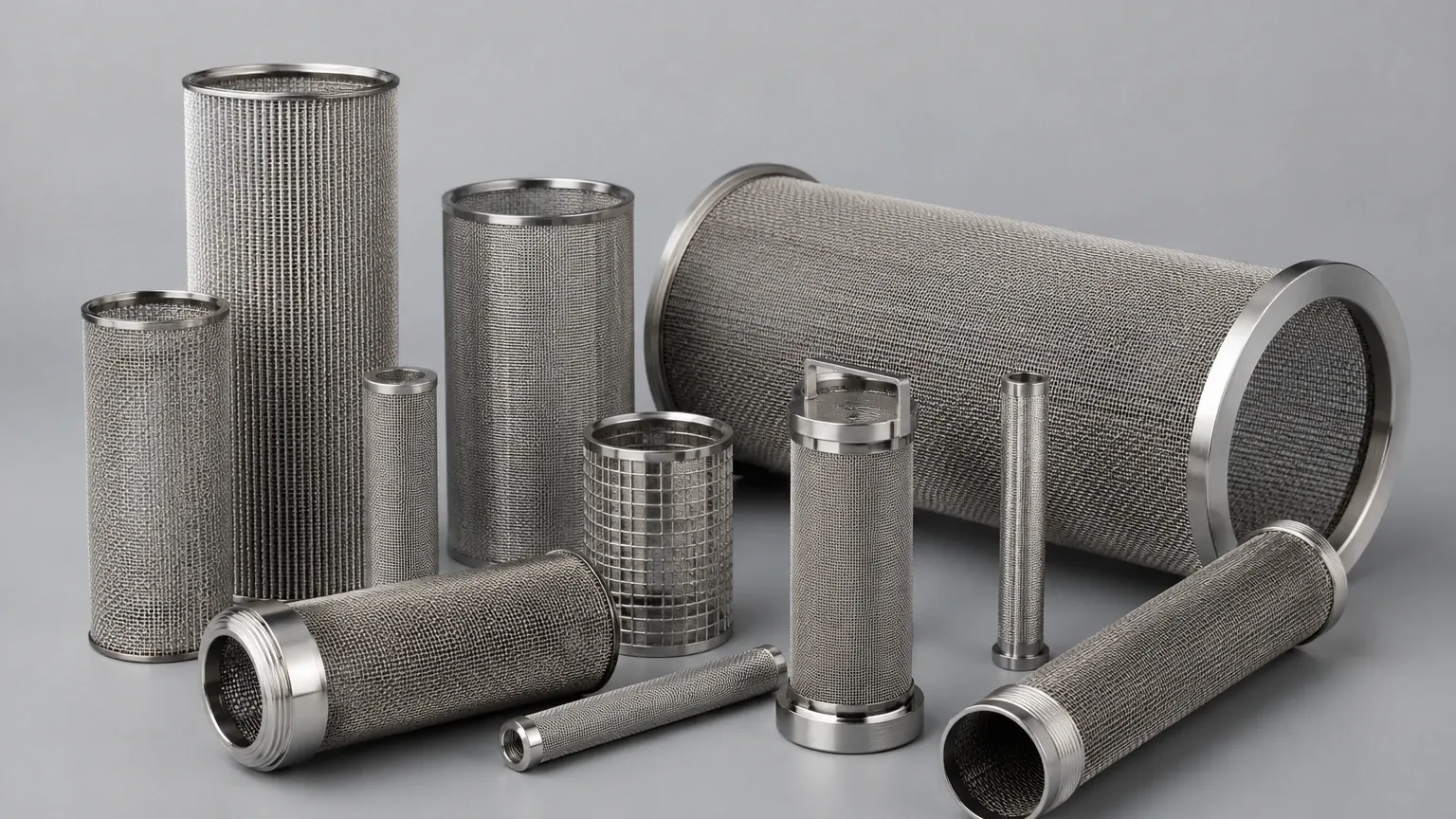
A 2 mesh filter is rarely used as a flat sheet in industrial settings. Instead, it is fabricated into geometric shapes designed to fit specific housing units or intake pipes. The most common forms are cylinders and tubes, which provide a high surface-area-to-footprint ratio.
Fabrication Techniques
When manufacturing Wire Mesh Filter Cylinders & Tubes, several engineering factors must be addressed to ensure the component does not fail under pressure:
* Seam Welding: For coarse 2 mesh, resistance spot welding or TIG (Tungsten Inert Gas) welding is used to join the mesh edges. A continuous longitudinal seam is essential for maintaining the cylindrical shape and preventing bypass of unfiltered material.
* Reinforcement Layers: In high-pressure hydraulic or gas systems, a 2 mesh screen often serves as a "support mesh" or "drainage layer." It provides the structural skeleton for a finer, more fragile inner mesh layer (such as 100 or 500 mesh). This multi-layer construction allows for fine filtration without the risk of the fine mesh collapsing.
* End Fittings and Flanges: To ensure a secure fit within a pipeline or vessel, filter tubes are often finished with custom flanges, threaded caps, or reinforced rings. These fittings are typically machined from solid stainless steel and welded to the mesh body.
Performance Metrics: Flow Rate and Pressure Drop
One of the primary advantages of a 2 mesh filter is its minimal impact on system pressure. In fluid dynamics, the pressure drop (ΔP) across a filter is a function of the fluid’s velocity, viscosity, and the filter's resistance coefficient.
Because the aperture of a 2 mesh screen is large (often exceeding 10mm), the resistance coefficient is extremely low. This makes it an ideal choice for:
* Pump Protection: Installing a 2 mesh cylinder on the suction side of a pump prevents large debris (rocks, wood, plastic waste) from entering and damaging the impeller, without causing cavitation due to restricted flow.
* Gravity-Fed Systems: In applications where pressure is limited, such as rainwater harvesting or agricultural runoff, the high open area of a 2 mesh screen ensures consistent flow even as the filter begins to capture debris.
Industrial Applications for Coarse Filtration
The utility of a 2 mesh filter spans across diverse sectors, wherever primary separation is required before secondary, finer processing occurs.
1. Water and Wastewater Treatment
In municipal and industrial water intake systems, 2 mesh screens act as the first line of defense. They remove large organic matter, trash, and aquatic life from raw water sources. These filters are often designed as large-diameter tubes that can be easily pulled for manual cleaning or integrated into automated backwash systems.
2. Food and Beverage Processing
In the initial stages of processing agricultural products—such as washing vegetables or processing bulk grains—2 mesh baskets and cylinders are used to separate the product from large stones, stems, or packaging waste. The use of food-grade 304 or 316 stainless steel ensures compliance with hygiene standards like FDA or EHEDG.
3. Chemical and Petrochemical Refineries
In refinery operations, coarse filters are used in straining heavy crude or protecting heat exchangers from scale and large particulate matter. The robust nature of the 2 mesh filter allows it to withstand the high temperatures and vibrational stresses common in these environments.
4. Support for Multi-Stage Filtration
As mentioned previously, 2 mesh is frequently used as a structural component in high-precision filter cartridges. By acting as an outer guard or an inner core, it protects delicate pleated media from mechanical damage during installation or backpulsing cycles.
Maintenance and Operational Longevity
From a total cost of ownership (TCO) perspective, 2 mesh filters are highly economical because they are almost always reusable. Unlike disposable paper or polymer filters, stainless steel wire mesh can be cleaned and returned to service multiple times.
Cleaning Protocols
* Manual Cleaning: Due to the large openings, debris is easily removed with high-pressure water hoses or stiff brushes.
* Ultrasonic Cleaning: For filters used in chemical or food applications where microscopic residue must be removed, ultrasonic baths can effectively clean the intersections of the wire weave.
* Chemical Cleaning: Stainless steel's resistance to caustic and acidic solutions allows for "Clean-in-Place" (CIP) cycles, reducing downtime by eliminating the need to disassemble the filter housing.
Inspection for Wear
Engineers should regularly inspect 2 mesh components for "wire thinning" caused by abrasive slurries or "weld decay" in corrosive environments. While 2 mesh is exceptionally durable, the high-velocity impact of large solids can eventually lead to mechanical fatigue at the weld points.
Key Considerations for International Buyers
When sourcing Wire Mesh Filter Cylinders & Tubes for global projects, technical clarity is the best way to avoid procurement errors. International buyers should confirm the following details with their manufacturer:
1. Exact Wire Gauge: Don't just specify "2 mesh." Define the wire diameter required for your pressure environment. A 0.063" wire and a 0.120" wire will behave very differently under load.
2. Tolerances: Specify the allowable variance in cylinder diameter and length to ensure compatibility with existing housings.
3. Certification: For regulated industries, request material test reports (MTRs) to verify the alloy composition (e.g., confirming 316L vs. 316).
4. Customization Requirements: Determine if the application requires specific end-cap configurations, such as NPT threads, quick-disconnect fittings, or specialized handles for easy removal.
Conclusion
The 2 mesh filter is a foundational component in the world of industrial engineering. Whether it is serving as a rugged intake screen in a wastewater plant or providing the structural backbone for a high-precision pharmaceutical filter, its performance is dictated by the quality of its weave and the precision of its fabrication.
By selecting the right material grade and structural configuration for Wire Mesh Filter Cylinders & Tubes, engineers can achieve a balance of high flow capacity, low maintenance, and long-term durability. When specified correctly, these coarse filtration solutions provide the essential protection required to keep complex industrial systems running smoothly and efficiently.
