


Mesh Wire Roll Price
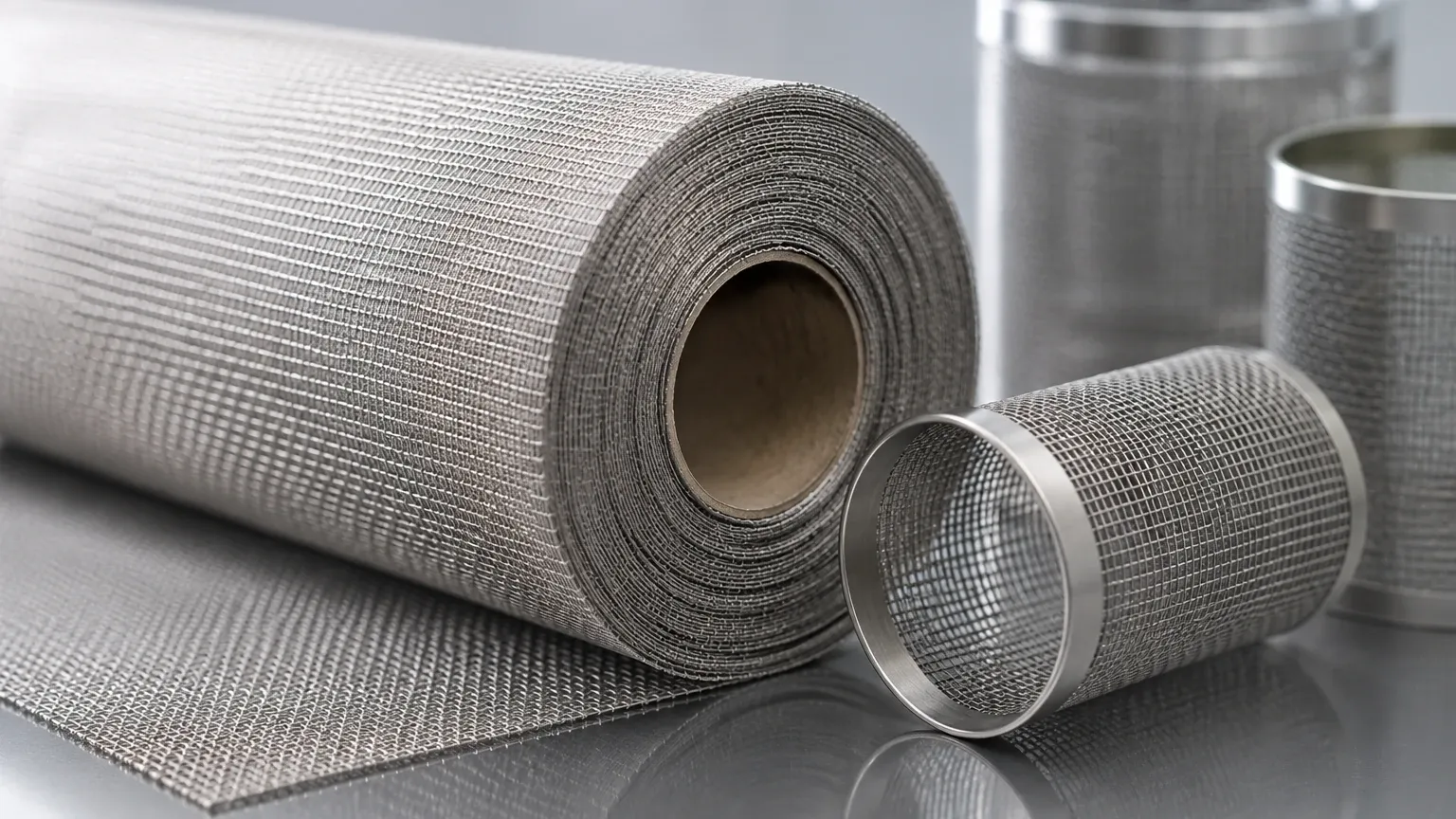
In the landscape of industrial filtration, selecting the appropriate raw materials is as critical as the final design of the filtration system itself. For procurement managers and mechanical engineers, understanding the nuances of mesh wire roll price is essential for budgeting and ensuring the long-term reliability of filtration components. While the raw mesh roll serves as the foundational material, its transformation into specialized Wire Mesh Filter Cylinders & Tubes involves a series of technical considerations that impact both performance and total cost of ownership.
This guide examines the factors influencing the market pricing of stainless steel wire mesh rolls, the engineering specifications that drive these costs, and how these materials are integrated into high-performance industrial filter components.
Understanding the Variables of Mesh Wire Roll Price
The pricing of stainless steel wire mesh is rarely static. It is influenced by a combination of global commodity trends, manufacturing complexity, and specific material grades. When evaluating a mesh wire roll price, several primary factors must be considered:
1. Material Grade and Alloy Composition
The choice of alloy is the most significant cost driver. Most industrial filtration applications utilize austenitic stainless steels:
* AISI 304: The standard grade, offering good corrosion resistance and affordability. It is suitable for general industrial use where extreme chemical exposure is not a factor.
* AISI 316L: Contains molybdenum, providing superior resistance to chlorides and pitting. This grade is mandatory in marine environments, pharmaceutical processing, and food production, typically commanding a 20-40% premium over 304.
* Exotic Alloys: For highly corrosive or high-temperature environments, materials like Monel, Inconel, or Hastelloy may be required. These materials significantly increase the roll price due to the cost of the raw ore and the difficulty of drawing these metals into fine wires.
2. Mesh Count and Wire Diameter
The "mesh count" refers to the number of openings per linear inch. As the mesh count increases (finer filtration), the wire diameter typically decreases. Fine meshes require more precision during the weaving process and more time on the loom, which increases the labor and machine overhead reflected in the price. Conversely, very coarse meshes with thick wires use more metal by weight, which ties the price closely to the current spot price of stainless steel.
3. Weave Type Complexity
The method by which the wires are interlaced affects both the mechanical strength and the price:
* Plain Weave: The most common and economical pattern, where wires cross over and under each other alternately.
* Twill Weave: Used for heavier wires or finer meshes that cannot be woven in a plain pattern. It allows for a more robust structure but requires more complex loom setups.
* Dutch Weave (Plain and Twill): These weaves utilize different wire diameters for the warp and shute directions, creating a dense, tortuous path for particles. Dutch weaves are essential for high-pressure applications and fine micron ratings, and they represent a higher price point due to their density and technical complexity.
Technical Specifications and Their Impact on Performance
For an engineer, the mesh wire roll price is only one part of the equation. The "value" of the mesh is determined by how well it meets the application's physical requirements.
Micron Rating vs. Mesh Count
It is vital to distinguish between mesh count and micron rating. Mesh count is a physical measurement of openings, while the micron rating defines the size of the particles the mesh will intercept. A 100-mesh screen made with thin wire will have a larger micron opening than a 100-mesh screen made with thick wire. Specifying the required micron rating alongside the mesh count ensures that the purchased roll will actually perform the intended separation task.
Percentage of Open Area
The open area determines the flow capacity and pressure drop across the filter. A higher open area reduces the initial pressure drop ($ΔP$), which can lower energy costs for pumps and compressors. However, increasing the open area often requires thinner wires, which may reduce the structural integrity of the mesh under high-pressure loads. Balancing these factors is key to selecting a mesh that is cost-effective over its entire service life.
Transitioning from Raw Material to Wire Mesh Filter Cylinders & Tubes
While purchasing a roll of mesh is the first step, most industrial applications require the material to be fabricated into specific geometries. The production of Wire Mesh Filter Cylinders & Tubes adds value through precision engineering and specialized joining techniques.
Fabrication Processes
To convert a mesh roll into a filter cylinder, the material must be precision-cut to size. For multi-layer filters, different mesh counts are often stacked and sometimes sintered together to combine fine filtration with high mechanical strength. The mesh is then rolled into a cylindrical shape. The longitudinal seam is the most critical point of the component; it must be welded—typically using TIG (Tungsten Inert Gas) or Plasma welding—to ensure a leak-proof bond that matches the parent material's strength and corrosion resistance.
Structural Support
In high-pressure hydraulic or chemical processing systems, a single layer of wire mesh may lack the hoop strength to resist collapsing. In these cases, the mesh is supported by a perforated metal core or an outer shroud. The cost of the final cylinder includes not only the mesh wire roll price but also the cost of these support structures and the labor-intensive assembly process.
Selection Criteria for Demanding Industrial Environments
When specifying filtration components, engineers must look beyond the initial purchase price and evaluate how the material will behave under operational stress.
Chemical Compatibility
In the chemical processing industry, the presence of acids, alkalis, or organic solvents can lead to rapid degradation of inferior alloys. Selecting a 316L or higher grade for your filter cylinders ensures that the mesh maintains its pore geometry over time. Corrosion not only leads to filter failure but can also contaminate the downstream product with metallic particulates.
Temperature Stability
Stainless steel filters are preferred in high-temperature applications where polymer-based filters would melt or lose structural integrity. However, continuous exposure to high heat can cause oxidation or embrittlement. Engineers must verify that the chosen mesh grade is rated for the maximum operating temperature of the process, including any potential temperature spikes during cleaning or system upsets.
Installation, Maintenance, and Lifecycle Considerations
A primary advantage of stainless steel wire mesh over disposable media is cleanability. This significantly impacts the total cost of ownership, even if the initial mesh wire roll price and fabrication costs are higher.
Cleaning Methods
* Backwashing: Reversing the flow to dislodge particles from the surface of the mesh.
* Ultrasonic Cleaning: Using high-frequency sound waves in a solvent bath to remove fine particulates trapped within the depth of the mesh.
* Chemical Cleaning: Using specialized surfactants or acids to dissolve organic or inorganic scaling.
The durability of the mesh allows for multiple cleaning cycles, provided the cleaning process does not exceed the mechanical limits of the wire. Over time, the cost per gallon of filtered fluid is often much lower with permanent stainless steel cylinders than with frequent replacements of disposable cartridges.
Replacement Cycles
Despite their durability, wire mesh filters are not infinite. Mechanical fatigue from pressure pulsations and gradual erosion from abrasive particles will eventually necessitate replacement. Monitoring the pressure differential across the filter is the most effective way to determine when a filter cylinder has reached the end of its functional life. If the $ΔP$ remains high even after cleaning, the mesh may be permanently blinded or deformed.
Procurement Strategies for Global Engineering Teams
When sourcing mesh wire rolls or finished filter components, international buyers should confirm several key points to ensure quality and price transparency:
1. Material Certification: Request Mill Test Reports (MTRs) to verify the chemical composition of the stainless steel. This ensures you are receiving the grade (e.g., 316L) you paid for.
2. Dimensional Accuracy: Confirm tolerances for the mesh count, wire diameter, and overall roll dimensions. For finished cylinders, confirm the tolerances for diameter and length to ensure a proper fit in the filter housing.
3. Quality Standards: Inquire if the manufacturer follows ISO 9001 quality management systems or specific filtration standards like ISO 16889 for multi-pass testing.
4. Packaging for Export: Mesh rolls and fine filter tubes are susceptible to damage during transit. Ensure that the supplier uses robust wooden crates or reinforced tubes to prevent deformation of the mesh during sea or air freight.
Conclusion: Strategic Decision-Making in Filtration
Navigating the complexities of mesh wire roll price requires a balance between metallurgical knowledge and an understanding of mechanical application needs. While it may be tempting to source the lowest-cost material, the risks of premature failure, product contamination, and increased downtime often outweigh the initial savings.
By focusing on high-quality materials and precision-engineered Wire Mesh Filter Cylinders & Tubes, industrial operators can achieve reliable, repeatable filtration performance. Whether you are filtering hydraulic fluids, processing food and beverages, or managing industrial wastewater, the right combination of mesh specification and fabrication quality is the foundation of an efficient filtration system. For technical teams, the goal is not just to buy a roll of wire mesh, but to invest in a filtration solution that protects downstream equipment and ensures the purity of the final product.
