


4 Inch Mesh Filter
In industrial filtration, selecting the correct component size and geometry is critical for maintaining system integrity and operational efficiency. The 4 inch mesh filter is a standard specification frequently utilized in medium-flow liquid and gas applications. Whether integrated into a pipeline strainer, a hydraulic system, or a chemical processing unit, this specific diameter offers a balance between surface area and space-saving design.
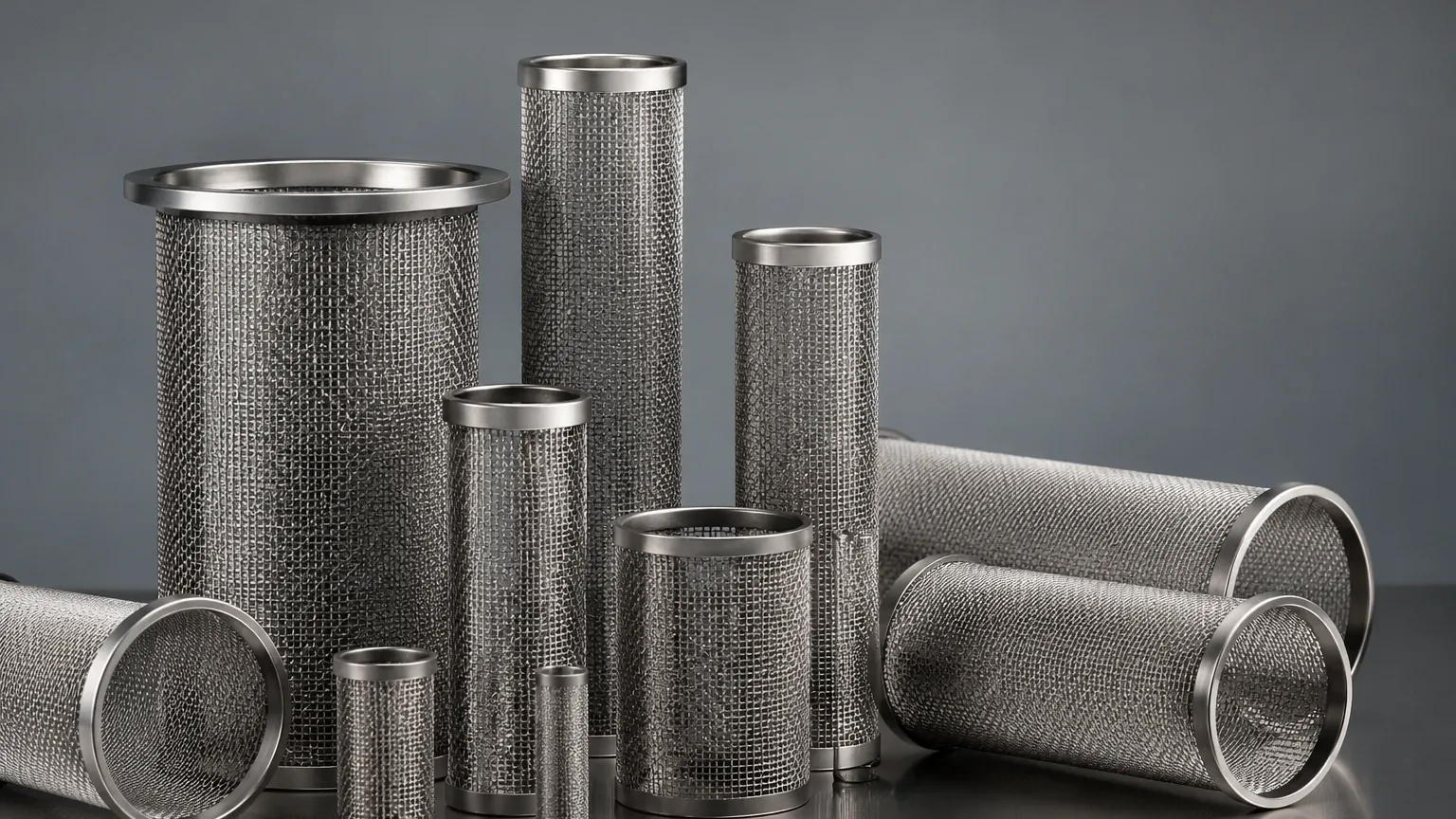
For engineers and procurement professionals, understanding the technical nuances of wire mesh construction, material properties, and structural configurations is essential. This guide examines the engineering principles behind these filters, focusing on the performance of Wire Mesh Filter Cylinders & Tubes and providing the data necessary for informed selection.
Technical Specifications and Weave Patterns
The performance of a 4 inch mesh filter is primarily dictated by the weave pattern of the stainless steel wire mesh. Unlike synthetic filters, metal mesh provides a rigid, heat-resistant, and chemically stable medium that can be manufactured to precise micron ratings.
Plain Weave vs. Twill Weave
Plain weave is the most common configuration, where each warp wire crosses alternately over and under each weft wire. This provides a square opening and is ideal for general filtration tasks where high flow rates are required. For finer filtration requirements, twill weave is often employed. In this pattern, the wires are woven such that each weft wire passes over and under two warp wires, allowing for a heavier wire diameter and increased strength for a given mesh count.
Dutch Weave for High-Pressure Applications
Dutch weave (including Plain Dutch and Twill Dutch) utilizes different diameters for warp and weft wires. This results in a much tighter, more complex structure that offers superior mechanical strength and finer filtration levels. In a 4-inch cylindrical format, Dutch weave mesh is often selected for high-pressure hydraulic systems where the filter must withstand significant differential pressure without deforming.
Structural Design: Wire Mesh Filter Cylinders & Tubes
When a mesh filter is shaped into a cylinder or tube, its structural integrity becomes a primary engineering consideration. Wire Mesh Filter Cylinders & Tubes must be designed to resist collapse under external pressure (inward flow) or bursting under internal pressure (outward flow).
Support Layers and Reinforcement
For a 4 inch mesh filter operating in high-viscosity or high-velocity environments, a single layer of mesh is rarely sufficient. Kaifil utilizes multi-layer sintering or mechanical support structures to enhance durability:
- Inner Core: A perforated metal tube or a heavy-duty wire cage provides the primary structural spine, preventing the mesh from collapsing.
- Outer Wrap: In some applications, an outer perforated layer protects the delicate fine mesh from mechanical damage during installation or backwashing.
- Sintered Mesh: By diffusion-bonding multiple layers of mesh together, engineers can create a filter medium that combines the fine filtration of a thin mesh with the mechanical strength of a thick plate.
Pleated vs. Cylindrical Designs
A standard cylindrical filter provides a fixed surface area based on its diameter and length. However, if the application requires a lower pressure drop or a higher dirt-holding capacity within the same 4-inch footprint, a pleated design is used. Pleating increases the effective filtration area by a factor of 3 to 10, significantly extending the service life between cleaning cycles.
Material Selection and Chemical Compatibility
Industrial environments often expose filtration components to corrosive fluids, extreme temperatures, and fluctuating pH levels. The material of the 4 inch mesh filter must be selected based on the specific chemical profile of the process fluid.
Stainless Steel 304 vs. 316L
- SS 304: Suitable for general industrial use, water filtration, and some food processing applications. It offers good corrosion resistance but may be susceptible to pitting in high-chloride environments.
- SS 316L: The "L" stands for low carbon, which improves weldability and resistance to intergranular corrosion. SS 316L contains molybdenum, making it the preferred choice for chemical processing, pharmaceutical manufacturing, and marine applications where exposure to acids or salts is common.
Specialty Alloys
In extreme cases involving highly aggressive chemicals or temperatures exceeding 500°C, specialty alloys like Monel, Inconel, or Hastelloy may be required. These materials ensure that the Wire Mesh Filter Cylinders & Tubes maintain their pore geometry and structural strength under conditions that would cause standard stainless steel to fail.
Performance Metrics: Flow Rate and Pressure Drop
For an engineer, the two most critical performance metrics are the flow rate (capacity) and the initial pressure drop (ΔP). A 4 inch mesh filter must be sized to ensure that the fluid velocity through the mesh does not exceed the manufacturer’s recommendations, as excessive velocity can lead to particle bypass or premature mesh fatigue.
Calculating Pressure Drop
The pressure drop across a wire mesh filter is influenced by:
1. Fluid Viscosity: Higher viscosity fluids require more force to pass through the mesh openings.
2. Mesh Open Area: This is the percentage of the total surface area that is not obstructed by wire. A higher open area results in a lower initial ΔP.
3. Contaminant Loading: As particles accumulate on the surface of the mesh, the effective open area decreases, causing the pressure drop to rise exponentially.
In a B2B procurement context, it is vital to specify the maximum allowable pressure drop for the system. This allows the manufacturer to recommend the optimal mesh type and determine if a pleated structure is necessary to meet the flow requirements within the 4-inch diameter constraint.
Installation and Maintenance Considerations
The longevity of a 4 inch mesh filter depends heavily on correct installation and a rigorous maintenance schedule. Unlike disposable polymer cartridges, stainless steel mesh filters are designed for long-term reuse through cleaning.
Sealing Mechanisms
To prevent fluid bypass, the filter must be securely sealed within its housing. Common end-cap configurations for Wire Mesh Filter Cylinders & Tubes include:
- DOE (Double Open End): Requires gaskets or O-rings at both ends.
- SOE (Single Open End): Often features a threaded connection or a bayonet-style fitting (e.g., 222 or 226 O-ring configurations) at one end and a closed cap at the other.
- Flanged Ends: Used for heavy-duty industrial pipelines where the filter is bolted directly into the flow path.
Cleaning and Regeneration
One of the primary advantages of stainless steel filtration is the ability to regenerate the filter medium. Cleaning methods include:
- Backwashing: Reversing the flow of fluid to dislodge particles from the mesh surface.
- Ultrasonic Cleaning: Using high-frequency sound waves in a cleaning solvent to remove fine particles trapped deep within the mesh pores.
- Chemical Cleaning: Using surfactants or acids to dissolve organic or mineral scaling, provided the chemical is compatible with the filter material.
Procurement Guide for International Buyers
When sourcing a 4 inch mesh filter for an industrial project, providing comprehensive technical data to the manufacturer reduces the risk of performance failure. International buyers should confirm the following parameters before finalizing an order:
1. Filtration Rating: Specify whether you require an "absolute" or "nominal" rating. Absolute ratings indicate the size of the largest particle that can pass through the mesh, while nominal ratings represent a percentage efficiency.
2. Operating Environment: Define the maximum operating temperature and pressure, including any potential pressure spikes or surges.
3. Fluid Characteristics: Provide the chemical composition, viscosity, and density of the fluid being filtered.
4. Dimensional Tolerances: For custom Wire Mesh Filter Cylinders & Tubes, precise measurements of the inner diameter (ID), outer diameter (OD), and total length are required to ensure compatibility with existing housings.
5. Compliance Standards: Determine if the application requires compliance with specific standards, such as FDA requirements for food and beverage or ISO standards for hydraulic fluid cleanliness.
Conclusion
The 4 inch mesh filter is a versatile and robust solution for demanding industrial filtration tasks. By selecting the appropriate weave pattern, material, and structural reinforcement, engineers can ensure reliable performance and a low total cost of ownership. Whether the application involves high-temperature steam, corrosive chemicals, or high-pressure oils, Wire Mesh Filter Cylinders & Tubes provide the precision and durability required for modern industrial processes. Working closely with a specialized manufacturer like Kaifil allows for the customization of these components to meet the exact technical demands of any specific system, ensuring optimal filtration efficiency and long-term mechanical stability.
