


4 Mesh Filter Screen
In industrial filtration, selecting the correct mesh size is a critical engineering decision that directly impacts flow efficiency, equipment protection, and maintenance frequency. A 4 mesh filter screen represents a specific category of coarse filtration media designed to capture large particulates while maintaining high flow rates with minimal pressure drop.
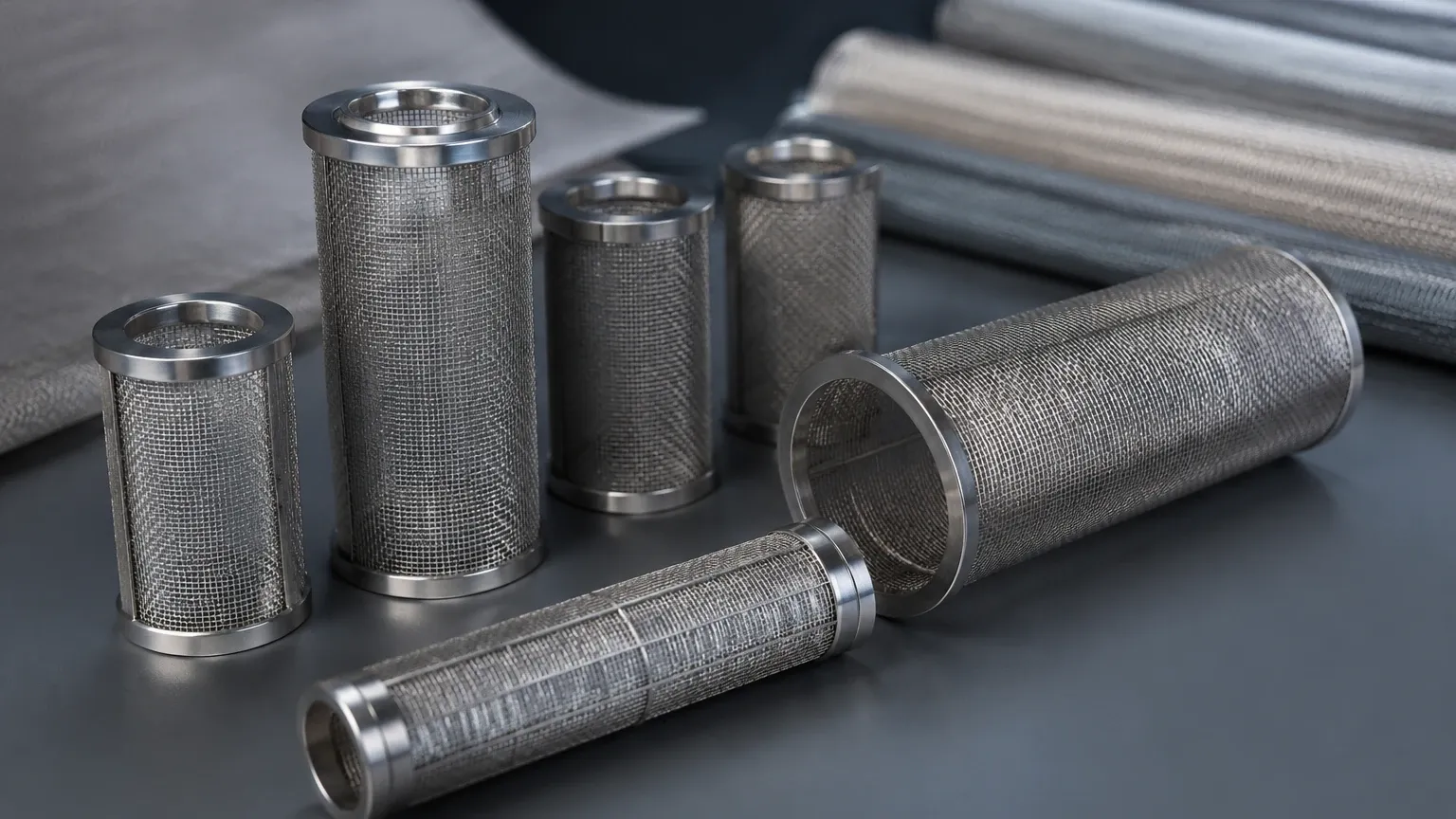
This guide provides a technical overview of 4 mesh specifications, material considerations, and the engineering principles involved when integrating these screens into Wire Mesh Filter Cylinders & Tubes for industrial applications.
Understanding 4 Mesh Specifications
The term "mesh" refers to the number of openings per linear inch of the screen. A 4 mesh screen, therefore, has four openings in every inch of the wire cloth. However, the mesh count alone does not fully define the filtration capability; the wire diameter is equally important as it determines the actual aperture (opening) size and the structural integrity of the filter.
Aperture and Open Area
For a standard industrial 4 mesh filter screen, the opening size typically ranges between 4.75mm and 5.5mm, depending on the wire gauge used.
* Aperture Calculation: (1 inch / Mesh Count) – Wire Diameter = Aperture.
* Open Area Percentage: This is the ratio of the total area of the openings to the total area of the screen. A 4 mesh screen generally offers a high open area (often exceeding 60% to 70%), which is essential for high-volume liquid or gas flow where resistance must be kept to a minimum.
Engineers must balance wire diameter against the required opening. A thicker wire increases the screen's durability and resistance to mechanical stress but reduces the open area and increases the pressure drop across the filter.
Material Selection and Environmental Compatibility
Industrial filtration environments often involve corrosive fluids, high temperatures, or strict sanitary requirements. Consequently, the choice of material for a 4 mesh screen is paramount to its service life.
Stainless Steel Alloys
Stainless steel is the industry standard for most 4 mesh applications due to its mechanical strength and corrosion resistance.
1. Grade 304: The most common grade, suitable for general industrial use, water filtration, and food processing where moderate corrosion resistance is required.
2. Grade 316/316L: Contains molybdenum, providing superior resistance to chlorides and pitting. This is the preferred choice for chemical processing, marine environments, and pharmaceutical applications.
3. High-Temperature Alloys: For specialized exhaust or furnace applications, alloys like Inconel or Monel may be used, though these are less common for standard 4 mesh coarse filtration.
Chemical and Thermal Resistance
When specifying a filter, engineers must evaluate the pH levels of the process fluid and the operating temperature. Stainless steel 316L is often favored in acidic environments, while the mechanical properties of the wire must be verified if the operating temperature exceeds 400°C (752°F), as thermal expansion can alter the tension and aperture consistency of the mesh.
Design Configurations: Wire Mesh Filter Cylinders & Tubes
While 4 mesh screens can be used as flat panels, they are frequently fabricated into more complex shapes to fit industrial housing. The most common configuration is Wire Mesh Filter Cylinders & Tubes, which provide a high surface-area-to-volume ratio.
Structural Reinforcement
Because 4 mesh is relatively coarse, the wire used is often thick enough to be self-supporting in low-pressure applications. However, in high-pressure hydraulic systems or high-velocity gas streams, the 4 mesh screen may serve as a support layer (backing) for a finer mesh, or it may require an internal perforated metal core to prevent collapsing under differential pressure.
Fabrication Techniques
To ensure the longevity of a filter cylinder, Kaifil utilizes advanced welding techniques:
* Resistance Welding: Provides a clean, strong seam without adding filler material, maintaining the chemical purity of the stainless steel.
* Plasma or TIG Welding: Used for heavy-duty tubes where deep penetration and high structural integrity are required at the end caps or flanges.
* Pleating: While less common for 4 mesh than for finer media, pleating can be used to increase the effective filtration area within a confined housing.
Selection Criteria for Industrial Applications
Choosing a 4 mesh filter screen involves more than just matching a particle size. Procurement and engineering teams should evaluate the following factors:
Particle Size Distribution
A 4 mesh screen is intended for coarse particles (approximately 5000 microns). It is typically used as a "trash strainer" or pre-filter. If the process fluid contains a high volume of particles just slightly smaller than the aperture, "blinding" or "pegging" can occur, where particles become wedged in the openings, rapidly increasing pressure drop.
Flow Rate and Pressure Drop (Delta P)
Because of the large openings, the initial pressure drop across a clean 4 mesh screen is very low. However, engineers must calculate the maximum allowable pressure drop before cleaning is required. In gravity-fed systems, even a small increase in resistance can significantly reduce flow.
Mechanical Loading
In applications like intake screens for pumps, the screen must withstand the impact of debris and the suction force of the pump. The wire diameter must be specified to resist deformation under these dynamic loads.
Installation and Maintenance Constraints
Proper installation is critical to prevent "bypass," where fluid flows around the filter rather than through it.
Sealing Mechanisms
Filter cylinders should be equipped with appropriate gaskets (EPDM, Viton, or PTFE) or precision-machined flanges to ensure a tight seal within the housing. For 4 mesh screens used in high-temperature settings, metal-to-metal seals or specialized graphite gaskets may be necessary.
Cleaning Protocols
One of the primary advantages of stainless steel 4 mesh is its cleanability. Common methods include:
* Backwashing: Reversing the flow to dislodge trapped particles.
* Manual Cleaning: Using high-pressure water or brushes. Because the mesh is coarse, it is less susceptible to damage during manual scrubbing than finer weaves.
* Ultrasonic Cleaning: Effective for removing stubborn scale or chemical deposits from the wire intersections.
Replacement Cycles
While stainless steel filters are durable, they are not infinite. Fatigue from pressure pulsations or thinning of the wire due to abrasive particles will eventually require replacement. Regular inspection for broken wires or seam separation is essential for maintaining system integrity.
Application Risks and Mitigation
Engineers should be aware of specific risks associated with coarse filtration:
1. Abrasive Wear: In mining or slurry applications, high-velocity abrasive particles can wear down the wire, increasing the aperture size over time. Using harder alloys or increasing wire diameter can mitigate this.
2. Galvanic Corrosion: If a stainless steel 4 mesh screen is installed in a carbon steel housing without proper insulation, galvanic corrosion can occur, leading to premature failure of the mesh.
3. Vibration Fatigue: In high-flow gas applications, the mesh may vibrate at specific frequencies. If not properly supported within the filter tube, this can lead to work-hardening and brittle fracture of the wires.
Buyer’s Checklist: Confirming Specifications
When sourcing a 4 mesh filter screen or custom Wire Mesh Filter Cylinders & Tubes, international buyers should confirm the following technical details with the manufacturer:
* Wire Gauge: Specify the exact wire diameter (e.g., 0.8mm, 1.0mm, 1.2mm) to ensure the aperture meets your requirements.
* Alloy Certification: Request Mill Test Reports (MTRs) to verify the grade of stainless steel.
* Dimensional Tolerances: Define the allowable variance in cylinder diameter, length, and perpendicularity.
* Edge Treatment: Specify whether edges should be bound, hemmed, or welded to prevent fraying and ensure safety during handling.
* Compliance: Ensure the materials meet relevant industry standards, such as FDA compliance for food contact or ASTM standards for industrial wire cloth.
Conclusion
The 4 mesh filter screen is a foundational component in industrial filtration, providing a robust solution for coarse separation and equipment protection. By understanding the relationship between mesh count, wire diameter, and material properties, engineers can optimize the performance of their filtration systems. Whether used as a standalone strainer or as a structural component in complex Wire Mesh Filter Cylinders & Tubes, the correct specification of 4 mesh media ensures operational efficiency and long-term reliability in demanding B2B environments.
