


6 Inch Mesh Filter
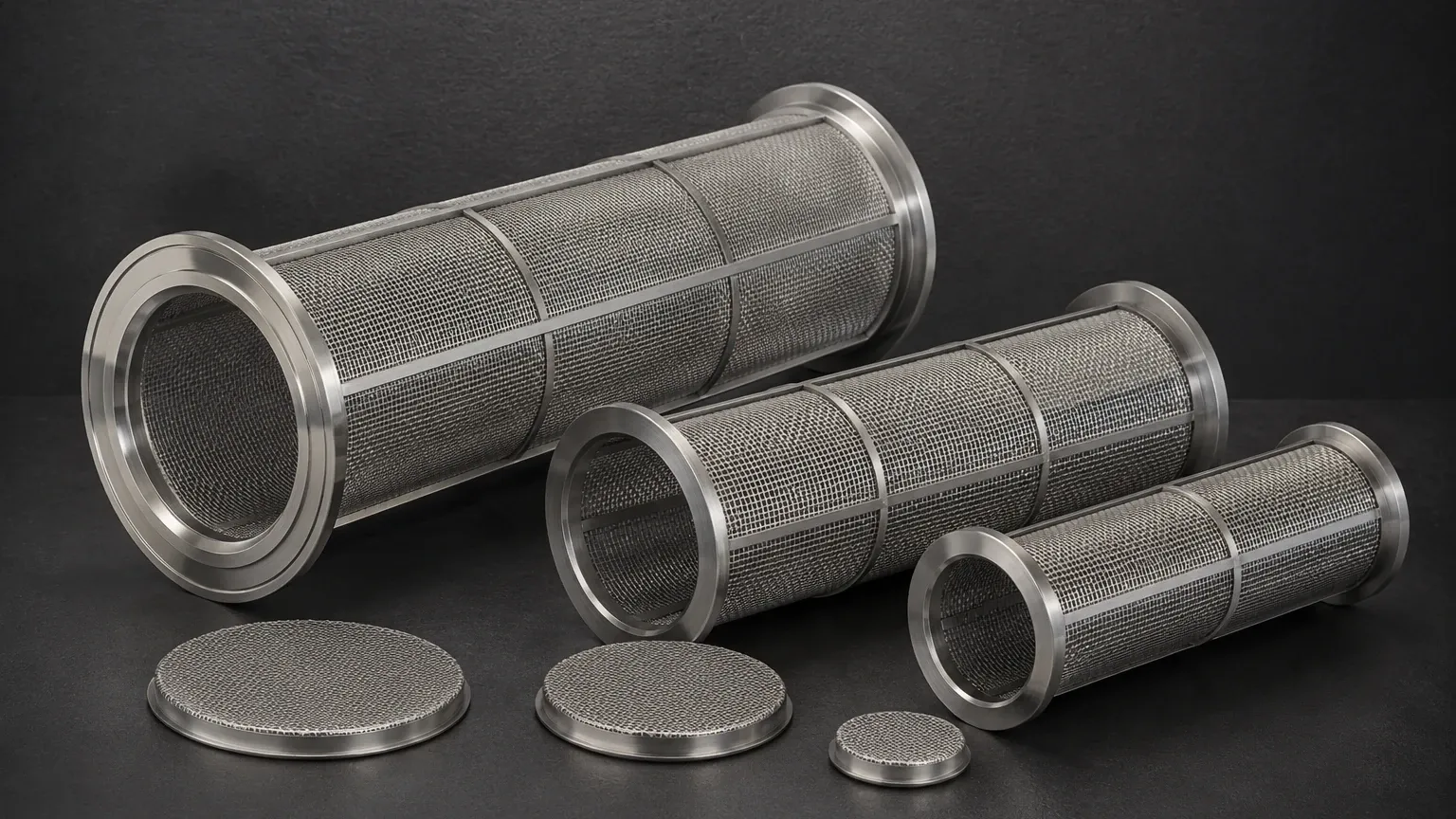
In industrial fluid processing, the selection of filtration components is a critical engineering decision that directly impacts system efficiency, pump longevity, and product purity. Among the various configurations available, the 6 inch mesh filter—typically referring to a 6-inch diameter cylindrical element—serves as a cornerstone for medium-to-high flow applications. These components are frequently deployed in the form of Wire Mesh Filter Cylinders & Tubes to provide robust, cleanable, and precise mechanical separation.
This guide examines the technical specifications, engineering considerations, and application risks associated with 6-inch wire mesh filtration elements, providing the factual data necessary for informed procurement and system design.
Structural Anatomy of Wire Mesh Filter Cylinders & Tubes
A 6 inch mesh filter is rarely a simple screen; it is a precision-engineered assembly designed to withstand differential pressures while maintaining a specific filtration rating. The structural integrity of these cylinders is achieved through a combination of layers and support mechanisms.
Single-Layer vs. Multi-Layer Construction
For low-pressure applications where minimal flow resistance is required, a single layer of stainless steel wire mesh may suffice. However, in most industrial environments, a multi-layer approach is preferred. This often involves a fine filtration mesh bonded to a coarser drainage mesh, which is then supported by a perforated metal core. The 6-inch diameter provides a significant surface area, but without internal support, the mesh can collapse under the weight of the fluid or the accumulation of debris.
The Role of the Perforated Core
In high-pressure hydraulic or chemical processing systems, the wire mesh is typically wrapped around or inserted into a perforated stainless steel tube. This core acts as the primary structural skeleton. For a 6 inch mesh filter, the thickness of the perforated core must be calculated based on the maximum expected differential pressure (ΔP). Common materials for these cores include 304 or 316L stainless steel, chosen for their weldability and corrosion resistance.
Material Selection and Chemical Compatibility
The performance of a 6 inch mesh filter is largely defined by the metallurgy of the wire used in its construction. Stainless steel is the industry standard due to its mechanical strength and resistance to oxidation.
* Grade 304 Stainless Steel: Suitable for general industrial applications, including water treatment and basic oil filtration. It offers good strength but may be susceptible to chloride-induced pitting in marine or highly acidic environments.
* Grade 316L Stainless Steel: The "L" denotes low carbon, which improves weldability and prevents sensitization. This grade is essential for the pharmaceutical, food and beverage, and chemical industries where resistance to corrosive cleaning agents and process fluids is mandatory.
* Specialty Alloys: For extreme environments involving high temperatures or highly aggressive chemicals, alloys such as Monel, Hastelloy, or Inconel may be utilized in the manufacture of Wire Mesh Filter Cylinders & Tubes.
When specifying a 6 inch mesh filter, engineers must confirm that the mesh, the support core, and the end caps (or flanges) are all compatible with the process fluid to prevent galvanic corrosion or material degradation.
Technical Specifications: Mesh Count vs. Micron Rating
One of the most common points of confusion in purchasing industrial filters is the relationship between mesh count and micron rating. For a 6 inch mesh filter, accuracy in these definitions is vital for achieving the desired filtration efficiency.
1. Mesh Count: This refers to the number of openings per linear inch. A higher mesh count indicates smaller openings. For example, a 100-mesh screen has 100 openings per inch.
2. Micron Rating: This measures the actual size of the particles that the filter can intercept. Because wire diameter varies, two different 100-mesh screens could have different micron ratings.
3. Weave Types:
* Plain Weave: The simplest pattern, where wires cross over and under each other. It offers the highest flow rates but lower mechanical strength.
* Twill Weave: Each shute wire passes successively over two and under two warp wires. This allows for heavier wire diameters and is common in high-pressure 6-inch cylinders.
* Dutch Weave: This weave uses different wire diameters in the warp and shute directions, creating a dense, tortuous path for particles. It is ideal for high-pressure filtration and fine micron ratings (down to 5-10 microns).
Engineering Considerations for 6-Inch Filter Integration
Integrating a 6 inch mesh filter into an existing or new system requires a thorough analysis of flow dynamics and mechanical constraints.
Flow Rate and Pressure Drop (ΔP)
The 6-inch diameter is a substantial size that allows for high volumetric flow rates. However, as the mesh traps contaminants, the open area decreases, leading to an increase in differential pressure. Engineers must calculate the "clean pressure drop" to ensure the pump system can handle the resistance. If the ΔP exceeds the structural limit of the Wire Mesh Filter Cylinders & Tubes, the filter may bypass or suffer permanent deformation.
End Cap Configurations
The method by which the 6 inch mesh filter is secured within the housing is critical for preventing bypass. Common configurations include:
* Double Open End (DOE): The cylinder is open at both ends and typically relies on flat gaskets for sealing.
* Single Open End (SOE): One end is capped (often with a handle or a bolt hole), and the other features a threaded connection or an O-ring groove (such as Code 7 or 222 fittings).
* Flanged Ends: For heavy-duty industrial applications, 6-inch filters may feature welded flanges that bolt directly into the piping or housing assembly.
Dirt-Holding Capacity
The larger surface area of a 6-inch element compared to 2-inch or 4-inch alternatives significantly extends the service interval. By increasing the diameter, the velocity of the fluid passing through the mesh is reduced, which can improve the efficiency of particle capture and reduce the depth of particle embedment, making the filter easier to clean.
Application Risks and Mitigation
While Wire Mesh Filter Cylinders & Tubes are exceptionally durable, certain application risks must be managed to ensure long-term reliability.
* Fatigue Failure: In systems with pulsating flows (e.g., downstream of a reciprocating pump), the mesh can experience vibration and mechanical fatigue. Specifying a reinforced 6 inch mesh filter with a heavier support core can mitigate this risk.
* Media Migration: In lower-quality filters, individual wires may break and enter the downstream flow. High-quality manufacturers use sintering or precision welding to ensure that the mesh remains intact even under high shear forces.
* Improper Cleaning: While stainless steel filters are washable, using inappropriate methods (such as high-pressure water on a fine, unsupported mesh) can distort the pore size. Ultrasonic cleaning or backflushing at controlled pressures are the recommended protocols.
Procurement Guide: What International Buyers Must Confirm
When sourcing a 6 inch mesh filter for industrial level measurement or fluid processing, providing vague specifications can lead to costly errors. International buyers should confirm the following data points with the manufacturer:
1. Exact Dimensions: Confirm the Outside Diameter (OD), Inside Diameter (ID), and total length. Even a 1mm deviation can prevent a proper seal in the housing.
2. Filtration Grade: Specify whether the micron rating is "nominal" (approximately 60-80% efficiency) or "absolute" (99% or higher efficiency).
3. Operating Environment: Provide the maximum operating temperature and the chemical composition of the fluid.
4. Pressure Requirements: State the maximum working pressure and the maximum allowable differential pressure before cleaning is required.
5. Compliance Standards: For food or pharmaceutical use, ensure the materials are FDA compliant or meet specific industry certifications (e.g., 3-A Sanitary Standards).
Maintenance and Total Cost of Ownership (TCO)
One of the primary advantages of utilizing stainless steel Wire Mesh Filter Cylinders & Tubes over disposable polymer filters is the significantly lower total cost of ownership. Although the initial capital expenditure for a 6 inch mesh filter is higher, the ability to clean and reuse the element hundreds of times eliminates the recurring cost of replacement cartridges and the associated disposal fees for contaminated media.
Cleaning Cycles
The frequency of cleaning depends on the solids loading of the process fluid. Many modern systems utilize differential pressure sensors to trigger an automated backwash cycle. For manual systems, a 6 inch mesh filter should be removed and cleaned once the ΔP reaches a predetermined threshold (typically 15-25 psi, depending on the mesh strength).
Inspection Protocols
During maintenance, the filter should be inspected for "blinding" (permanent clogging of pores) and mechanical wear. A simple bubble point test can be performed to verify that the filtration integrity has not been compromised by wire breakage or seam failure.
Conclusion
The 6 inch mesh filter is a versatile and essential component in the landscape of industrial filtration. By understanding the nuances of mesh weave, material compatibility, and structural support, engineers can select Wire Mesh Filter Cylinders & Tubes that provide reliable performance in the most demanding environments. Whether used for protecting high-value downstream equipment or ensuring the purity of a final product, a well-specified 6-inch stainless steel filter offers a balance of high flow capacity, durability, and long-term cost efficiency.
