


Understanding Mesh Filter Screen Sizes: An Engineering Guide to Industrial Filtration Selection
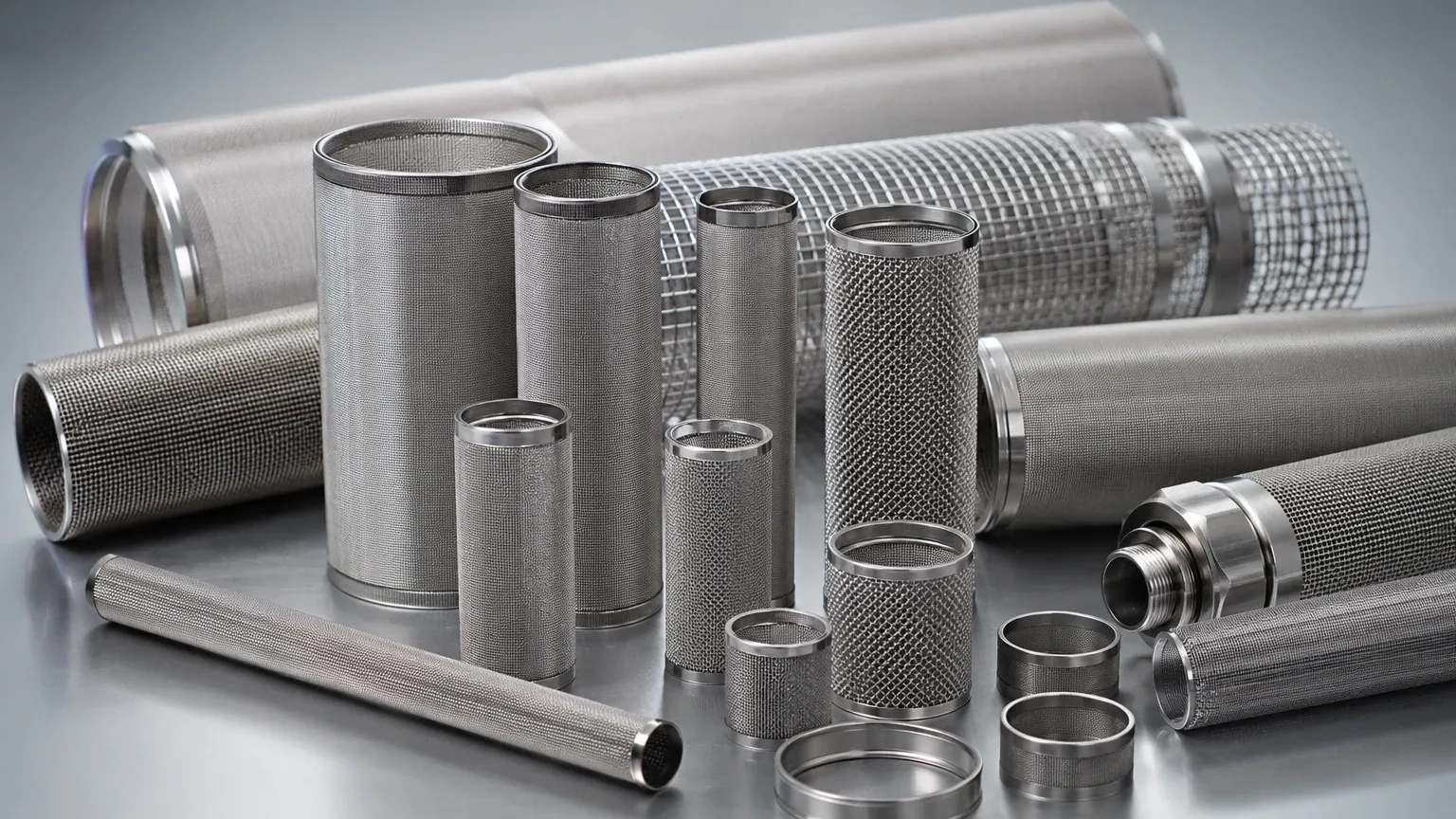
In industrial engineering, the efficiency of a filtration system is fundamentally dictated by the precision of its media. Selecting the correct mesh filter screen sizes is not merely a matter of choosing a fine or coarse grade; it involves a complex calculation of particle retention, flow dynamics, and structural integrity. For engineers and procurement teams sourcing components like Wire Mesh Filter Cylinders & Tubes, understanding the technical nuances of mesh specifications is critical to preventing equipment failure and optimizing process uptime.
This guide examines the technical definitions of mesh sizing, the relationship between wire diameter and open area, and the practical considerations for implementing these components in demanding B2B environments such as chemical processing, hydraulic systems, and food production.
The Technical Definition: Mesh vs. Micron
The term "mesh" refers to the number of openings per linear inch of the screen, measured from the center of one wire to the center of the next. As the mesh count increases, the size of the openings decreases, allowing for the capture of smaller particles. However, the mesh count alone does not provide a complete picture of filtration capability.
The Micron Rating
To achieve technical precision, engineers often convert mesh counts into microns (one-millionth of a meter). While mesh describes the density of the weave, the micron rating defines the actual aperture size—the physical space between the wires through which fluid or gas passes.
It is important to note that two screens with the same mesh count can have different micron ratings if they utilize different wire diameters. A thicker wire reduces the aperture size and the percentage of open area, which increases the structural strength but may restrict flow. Conversely, a thinner wire increases the open area but reduces the mechanical resistance of the screen against high-pressure differentials.
Engineering Considerations for Mesh Selection
When specifying mesh filter screen sizes for industrial applications, several performance variables must be balanced. A common mistake in filter procurement is selecting an excessively fine mesh, which can lead to premature clogging and unnecessary pressure drops.
1. Percentage of Open Area
The open area is the ratio of the total area of the holes to the total area of the screen. In high-flow applications, such as water treatment or large-scale chemical processing, a higher percentage of open area is preferred to minimize resistance. If the open area is too low, the pump or hydraulic system must work harder to push media through the filter, leading to increased energy consumption and potential system fatigue.
2. Flow Rate and Pressure Drop (Delta P)
Every filter introduces a pressure drop into the system. As particles accumulate on the surface of the wire mesh, this pressure drop increases. Engineers must calculate the "clean" pressure drop and determine the maximum allowable "dirty" pressure drop before the filter requires cleaning or replacement. Properly sized mesh ensures that the initial resistance is within the system's design limits.
3. Particle Geometry and Distribution
Industrial fluids rarely contain perfectly spherical particles. The "bridge effect" can occur when irregularly shaped particles span across the mesh openings, effectively reducing the mesh filter screen sizes and causing a faster-than-expected increase in pressure. Understanding the nature of the contaminant—whether it is crystalline, fibrous, or sludge-like—is essential for selecting a weave type (such as plain, twill, or Dutch weave) that can handle the specific load.
Material Integrity and Structural Design
In the production of Wire Mesh Filter Cylinders & Tubes, the choice of material is as significant as the mesh size. Stainless steel, specifically grades 304, 316, and 316L, is the industry standard due to its corrosion resistance and thermal stability.
Stainless Steel 304 vs. 316
* Grade 304: Suitable for general industrial use where moisture is present but corrosive chemicals are limited. It offers excellent mechanical strength for coarse to medium mesh sizes.
* Grade 316/316L: Contains molybdenum, providing superior resistance to chlorides and acids. This is the preferred material for pharmaceutical, marine, and chemical processing applications where mesh integrity must be maintained in aggressive environments.
Reinforcement and Support
For fine mesh applications (e.g., 200 mesh and above), the wire cloth is often thin and susceptible to deformation under pressure. In these instances, the mesh is typically sintered or supported by a perforated metal core or a coarser outer mesh. This multi-layer construction allows for fine filtration accuracy while maintaining the structural rigidity required for high-pressure hydraulic or gas filtration.
Application-Specific Mesh Requirements
Different industries have standardized expectations for mesh filter screen sizes based on the sensitivity of their downstream equipment.
Chemical and Petrochemical Processing
In these sectors, filters are used to protect valves, pumps, and nozzles from debris. Mesh sizes often range from 40 to 400 mesh. The primary concern is chemical compatibility and the ability of the mesh to withstand high temperatures without losing its tension or aperture precision.
Food and Beverage Industry
Filtration in food production requires compliance with hygienic standards. Mesh screens are used to remove pulp from juices, seeds from preserves, or particulates from syrup. Smooth surface finishes and the absence of "dead zones" where bacteria could grow are critical. Here, 316L stainless steel is almost always required to withstand Clean-in-Place (CIP) chemicals.
Hydraulic and Lubrication Systems
Hydraulic systems are highly sensitive to particulate contamination, which can cause internal abrasion in pumps and actuators. These systems often require very fine filtration, sometimes down to 5 or 10 microns, achieved through specialized Dutch weave mesh filter screen sizes that offer high depth-loading capacity.
Installation Constraints and Maintenance Cycles
Even the most precisely engineered filter will fail if installation and maintenance are overlooked. When integrating filter cylinders or tubes into a system, engineers must account for:
* Seal Integrity: The interface between the filter element and the housing must be leak-proof. Any bypass will allow unfiltered fluid to pass, rendering the mesh size irrelevant.
* Cleaning Protocols: Stainless steel mesh is often reusable. However, the cleaning method (ultrasonic, backwashing, or chemical cleaning) must be compatible with the mesh size. Extremely fine meshes can be damaged by high-pressure air or mechanical scrubbing.
* Replacement Cycles: Establishing a replacement schedule based on differential pressure readings is more effective than time-based replacement. This ensures that the filter is changed only when necessary, optimizing the total cost of ownership.
Procurement Checklist for International Buyers
When sourcing industrial filters from manufacturers like Kaifil, providing detailed specifications ensures that the final product meets the application's rigorous demands. Buyers should confirm the following data points before finalizing an order:
1. Mesh Count and Wire Diameter: Specify both to ensure the micron rating and open area are correct.
2. Weave Type: Indicate whether plain, twill, or Dutch weave is required for the specific pressure and particle retention needs.
3. Dimensional Tolerances: For Wire Mesh Filter Cylinders & Tubes, precise length, diameter, and concentricity are vital for proper fitment in filter housings.
4. Material Certification: Request mill test reports (MTRs) to verify the grade of stainless steel.
5. Operating Environment: Disclose the maximum operating temperature, pressure, and the chemical composition of the fluid being filtered.
Conclusion
Selecting the appropriate mesh filter screen sizes is a foundational step in industrial process design. By moving beyond simple mesh counts and considering the interplay of micron ratings, wire diameters, and material properties, engineers can ensure their filtration systems provide reliable performance. Whether the application involves protecting sensitive hydraulic components or ensuring the purity of a chemical batch, the precision of the wire mesh remains the primary defense against contamination. Working with an experienced manufacturer like Kaifil allows for the customization of these components to meet the exact technical boundaries of any industrial environment.
