


Metal Mesh Filter Material: An Engineering Guide to Selection and Application
In industrial filtration, the selection of the correct metal mesh filter material is a critical decision that impacts the efficiency, longevity, and safety of a processing system. Unlike disposable polymer filters, metal mesh components offer high mechanical strength, thermal stability, and the ability to be cleaned and reused. For engineers and procurement teams, understanding the technical nuances of these materials is essential for optimizing the performance of Wire Mesh Filter Cylinders & Tubes in demanding environments such as chemical processing, pharmaceuticals, and hydraulic systems.
This guide examines the engineering properties of various metal alloys used in filtration, the structural considerations of filter components, and the operational factors that determine the success of a filtration solution.
1. Engineering Properties of Metal Mesh Filter Material
The performance of any filtration system begins with the metallurgy of the mesh. The choice of metal mesh filter material determines the component's resistance to corrosion, its maximum operating temperature, and its structural integrity under high-pressure differentials.
Stainless Steel Grades
Stainless steel is the industry standard for most industrial filtration applications due to its versatility and cost-effectiveness.
* AISI 304/304L: This is the most common grade used for general industrial applications. It offers good corrosion resistance to many organic and inorganic chemicals. However, it is susceptible to chloride-induced pitting, making it less suitable for marine or high-salinity environments.
* AISI 316/316L: Containing molybdenum, 316L provides superior resistance to corrosion and pitting compared to 304. It is the preferred choice for the pharmaceutical and food and beverage industries, where hygiene and resistance to aggressive cleaning agents are paramount.
* 904L and Super Duplex: For extreme environments involving high concentrations of sulfuric acid or seawater, specialty grades like 904L or Duplex steels offer enhanced resistance to stress corrosion cracking.
High-Temperature Alloys
In applications such as hot gas filtration or molten polymer processing, standard stainless steels may lose their mechanical properties. In these instances, alloys such as Inconel, Monel, or Hastelloy are utilized. These materials maintain their tensile strength and oxidation resistance at temperatures exceeding 600°C (1112°F).
2. Structural Design: Wire Mesh Filter Cylinders & Tubes
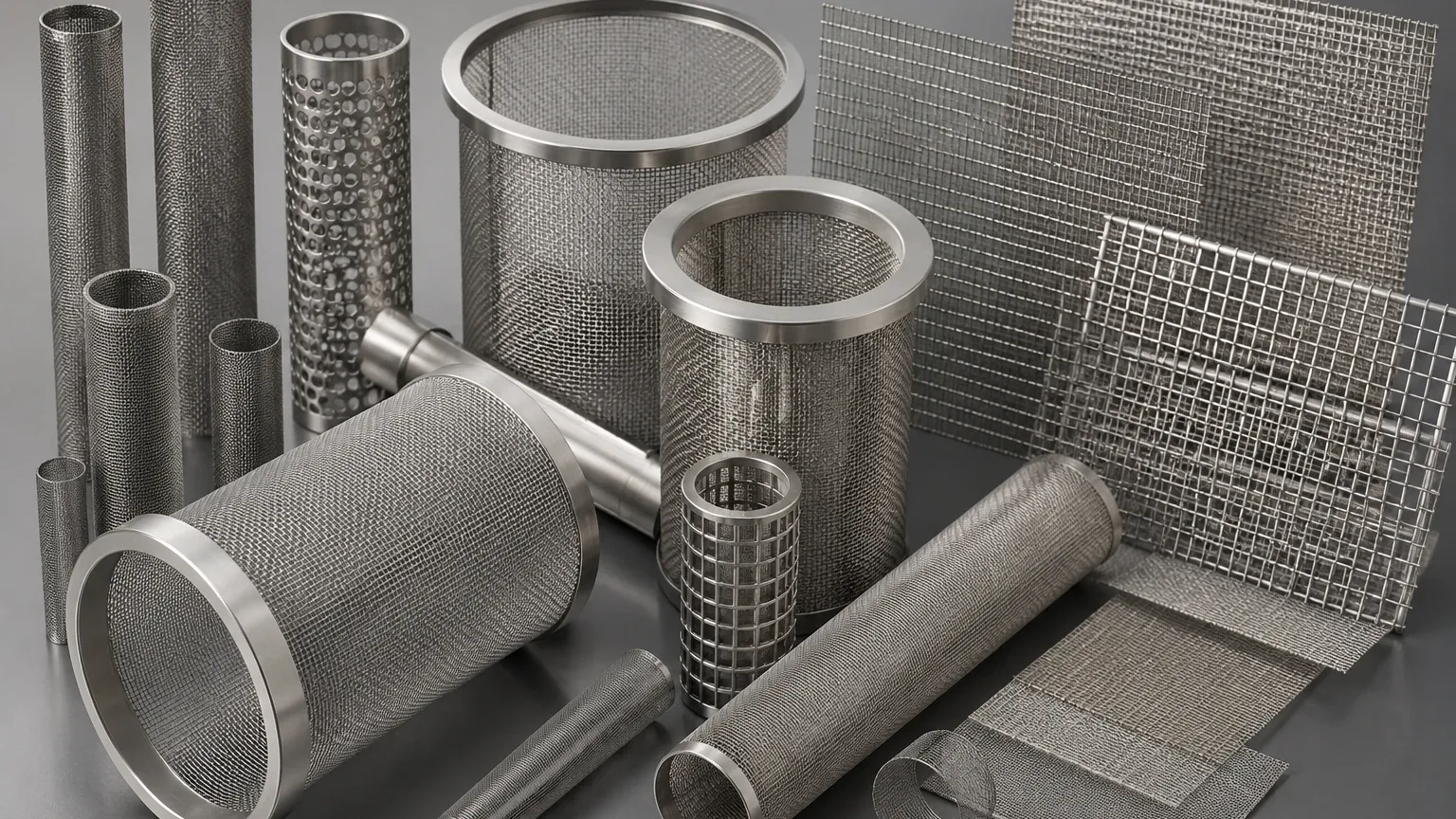
The physical configuration of the filter is as important as the material itself. Wire Mesh Filter Cylinders & Tubes are among the most common geometries used in industrial housings due to their ability to handle high flow rates and provide a large surface area relative to their footprint.
Single-Layer vs. Multi-Layer Construction
* Single-Layer Mesh: Suitable for low-pressure applications where the primary goal is coarse straining. These are easy to clean but may lack the rigidity required for high-pressure systems.
* Multi-Layer Sintered Mesh: This involves bonding multiple layers of wire mesh—often including a fine filtration layer, a drainage layer, and a support layer—using a heat-treatment process called sintering. Sintering creates a monolithic structure that prevents wire migration and significantly increases the pressure at which the filter will collapse.
Reinforcement and Support
For high-differential pressure applications, wire mesh cylinders are often reinforced with internal or external perforated metal cores. These cores provide the necessary mechanical support to prevent the mesh from deforming or bursting during pressure spikes or during the backwashing cycle.
3. Filtration Mechanisms and Micron Ratings
When selecting a metal mesh filter material, engineers must define the required filtration accuracy, often measured in microns (µm). The weave pattern of the mesh determines both the micron rating and the flow characteristics.
Common Weave Patterns
1. Plain Weave: The simplest pattern where wires cross over and under each other. It provides a high percentage of open area and low pressure drop, typically used for coarse filtration (above 50 microns).
2. Twill Weave: Each shute wire passes over and under two warp wires. This allows for thicker wires and a more robust mesh, suitable for heavier loads.
3. Dutch Weave (Plain and Twill): This weave uses different diameters for warp and shute wires, resulting in a dense, tight mesh with very small triangular openings. This is the standard for fine filtration, capable of reaching absolute ratings as low as 1 to 5 microns.
Absolute vs. Nominal Ratings
It is vital to distinguish between these two terms. A nominal rating indicates the ability of the filter to retain a majority of particles of a certain size. An absolute rating refers to the diameter of the largest spherical particle that can pass through the mesh under laboratory conditions. For critical pharmaceutical or hydraulic applications, absolute ratings are generally required to ensure system protection.
4. Technical Selection Criteria for Industrial Buyers
Selecting the right filtration component requires a comprehensive analysis of the operating environment. International buyers should confirm the following parameters before finalizing a specification:
Chemical Compatibility
The metal mesh filter material must be chemically inert to the fluid being processed. Engineers should consult corrosion resistance tables, specifically looking for the fluid's concentration and the operating temperature, as corrosion rates often accelerate at higher temperatures.
Flow Rate and Pressure Drop (ΔP)
The "clean pressure drop" is the initial resistance the filter offers to the fluid flow. A mesh with a high percentage of open area will have a lower ΔP but may offer less mechanical strength. Balancing the flow rate requirements with the desired filtration fineness is a key engineering trade-off.
Viscosity and Particle Loading
Highly viscous fluids, such as heavy oils or polymers, require larger surface areas or coarser mesh to prevent rapid blinding. Similarly, if the fluid has a high concentration of solids (high particle loading), a pleated design may be necessary to increase the available surface area and extend the time between cleaning cycles.
5. Installation Constraints and Application Risks
Even the highest quality Wire Mesh Filter Cylinders & Tubes can fail if improperly installed or applied.
Sealing and Bypass
The interface between the filter element and the housing is a common point of failure. If the seal (O-ring, gasket, or metal-to-metal contact) is not perfect, fluid will bypass the filter media, rendering the filtration process ineffective. Buyers must ensure that the end-cap design of the cylinder is compatible with their existing housing hardware.
Fatigue and Vibration
In systems with reciprocating pumps or rapid valve closures, the filter media can be subjected to cyclic loading. Over time, this can lead to metal fatigue and the eventual cracking of the mesh or the welded seams. Specifying reinforced support structures can mitigate this risk.
Risk of Media Migration
In lower-quality mesh products, individual wires may become detached and enter the downstream flow. This is particularly dangerous in food processing or pharmaceutical manufacturing. Utilizing sintered mesh or high-quality welded mesh from a reputable manufacturer like Kaifil ensures that the media remains intact throughout its service life.
6. Maintenance, Cleaning, and Total Cost of Ownership
One of the primary advantages of stainless steel filtration is the ability to regenerate the media. While the initial capital expenditure for a metal mesh filter is higher than for a disposable cartridge, the total cost of ownership (TCO) is often significantly lower due to the elimination of frequent replacement costs and disposal fees.
Cleaning Methods
* Backwashing: Reversing the flow of fluid through the filter to dislodge accumulated particles. This is often automated in continuous process systems.
* Ultrasonic Cleaning: Using high-frequency sound waves in a cleaning solvent to remove fine particles trapped deep within the mesh pores. This is highly effective for Dutch weave and sintered materials.
* Chemical Cleaning: Using acids, alkalis, or solvents to dissolve organic or inorganic scaling. The metal mesh filter material must be checked for compatibility with these cleaning agents.
Determining Replacement Cycles
A filter should be cleaned or replaced when the pressure drop across the media reaches a pre-defined limit (terminal pressure drop). Monitoring ΔP is the most reliable way to prevent filter collapse and ensure consistent product quality.
Conclusion
Successful industrial filtration relies on the precise alignment of material science and mechanical engineering. By carefully selecting the appropriate metal mesh filter material and specifying the correct structural configuration for Wire Mesh Filter Cylinders & Tubes, engineers can achieve reliable, long-term performance in even the most demanding environments.
Whether the application involves high-pressure hydraulics or the sterile processing of pharmaceuticals, the durability and cleanability of stainless steel filtration components provide a sustainable and cost-effective solution for modern industry. When sourcing these components, partnering with a manufacturer that understands these technical boundaries is essential for ensuring that the final product meets the specific rigors of the application.
