


Engineering Guide to Metal Mesh Grille Filters in Industrial Applications
In industrial fluid processing, the integrity of downstream equipment often depends on the reliability of primary filtration components. The metal mesh grille filter serves as a critical barrier, designed to remove particulate matter while maintaining structural stability under varying pressure conditions. These components, often categorized under the broader umbrella of Wire Mesh Filter Cylinders & Tubes, are engineered to provide precise filtration levels across chemical, pharmaceutical, and food processing sectors.
Selecting the appropriate filtration media requires a deep understanding of fluid dynamics, material science, and mechanical engineering. This guide examines the technical parameters, design considerations, and operational risks associated with metal mesh filtration to assist engineering and procurement teams in optimizing their filtration systems.
Understanding the Fundamentals of Metal Mesh Grille Filters
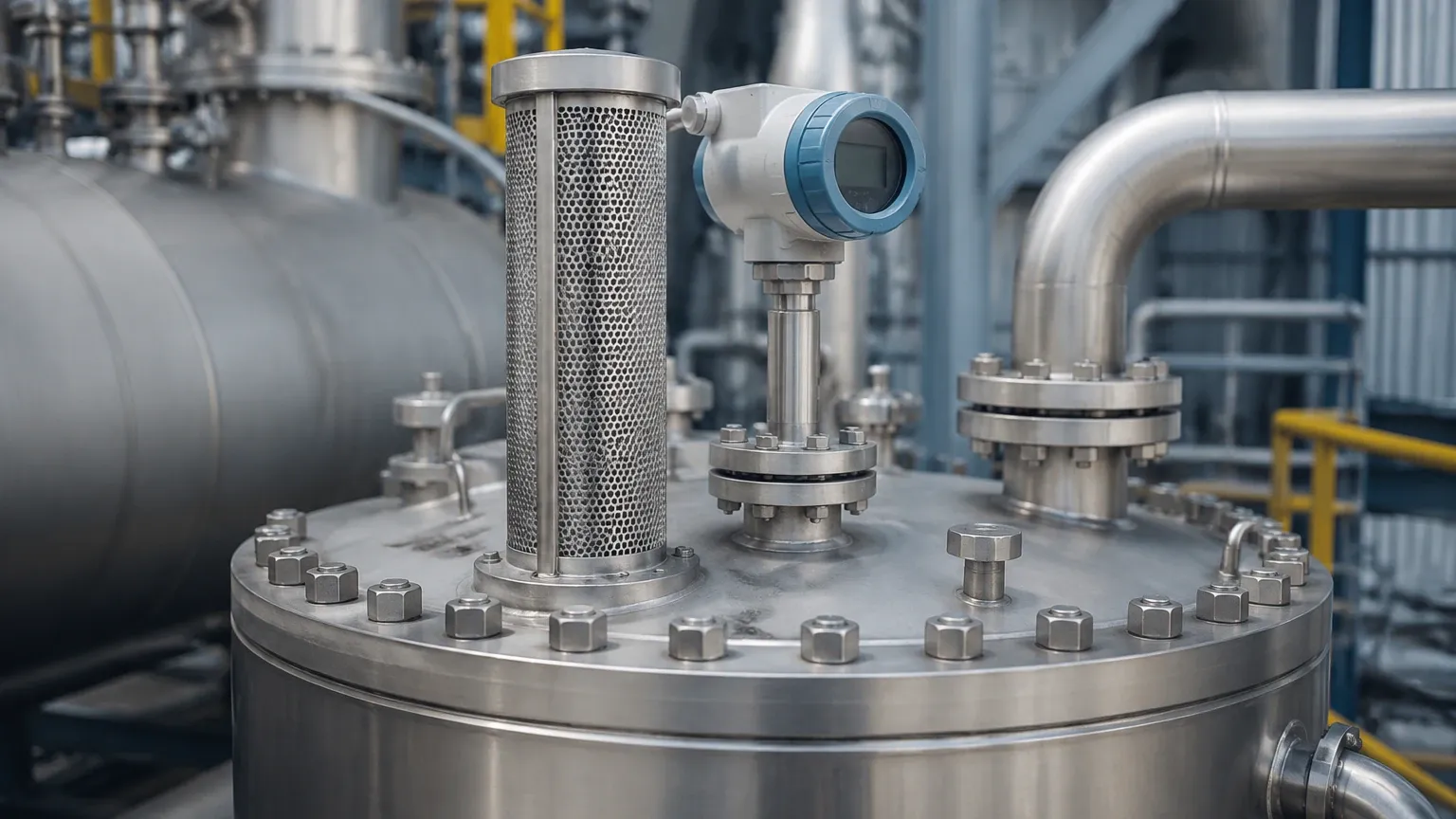
A metal mesh grille filter is a specialized filtration element constructed from woven wire cloth, often reinforced by a perforated metal core or an external cage. Unlike disposable polymer filters, these metal components offer high thermal resistance and mechanical strength, making them suitable for high-viscosity fluids and aggressive chemical environments.
The primary function of the grille structure is to provide a rigid framework for the fine wire mesh. In many industrial configurations, the "grille" refers to the coarser support layer that prevents the fine filtration mesh from collapsing or distorting under the force of the fluid flow. The filtration mechanism is predominantly surface-based, where particles larger than the mesh aperture are captured on the upstream side. This allows for easier cleaning and predictable performance compared to depth-style filters.
Key Engineering Specifications for Wire Mesh Filter Cylinders & Tubes
When specifying Wire Mesh Filter Cylinders & Tubes, engineers must balance filtration fineness with flow capacity. The performance of a metal mesh grille filter is defined by several critical metrics:
1. Mesh Count and Aperture Size
The mesh count refers to the number of wires per linear inch. A higher mesh count results in a smaller aperture (micron rating). For industrial applications, it is essential to distinguish between "nominal" and "absolute" micron ratings. In a precision-woven stainless steel mesh, the aperture size is highly consistent, providing a near-absolute rating that ensures reliable particle retention.
2. Wire Diameter and Open Area
The diameter of the wire used in the weave significantly impacts the filter's "open area"—the percentage of the total surface area that is unobstructed. A higher open area reduces the initial pressure drop across the filter but may compromise the mechanical strength of the mesh. Engineers must calculate the required flow rate and allowable pressure drop to determine the optimal balance between wire thickness and aperture size.
3. Material Selection (Alloy Grades)
Stainless steel is the standard material for most industrial filters due to its corrosion resistance.
* Type 304: Suitable for general industrial use, offering good resistance to atmospheric corrosion and many organic and inorganic chemicals.
* Type 316L: The preferred choice for pharmaceutical and marine applications. The addition of molybdenum provides superior resistance to pitting and crevice corrosion in chloride-rich environments.
* Specialty Alloys: For extreme conditions involving high-temperature oxidation or highly acidic media, alloys such as Inconel, Monel, or Hastelloy may be required.
Structural Design and Customization Options
Industrial filtration requirements are rarely "one size fits all." Customization of the metal mesh grille filter is often necessary to fit existing housing or to meet specific process demands.
Multi-Layer Sintered Mesh vs. Single Layer
For applications involving high pressure or frequent backwashing, single-layer mesh may lack the necessary durability. Sintered wire mesh—where multiple layers of mesh are bonded together through heat and pressure—creates a robust, integrated structure. This design combines a fine filtration layer with multiple support and drainage layers, significantly increasing the lifespan of the filter cylinder.
Support Structures and End Caps
The structural integrity of a filter tube is often reinforced by a perforated metal inner core. This core prevents the mesh from collapsing during high-pressure differential events. Furthermore, the selection of end caps (e.g., DOE – Double Open End, SOE – Single Open End with NPT or flange fittings) is vital for ensuring a leak-proof seal within the filter housing. Precision TIG (Tungsten Inert Gas) or plasma welding is typically employed to join the mesh to the end caps, ensuring that no bypass occurs at the connection points.
Installation Constraints and System Integration
Proper installation of a metal mesh grille filter is as important as the filter’s design itself. Even the highest quality filter will fail if bypass occurs due to improper sealing or misalignment.
Sealing Mechanisms
Engineers must specify the appropriate gasket or O-ring material based on chemical compatibility and operating temperature. Common materials include Viton (FKM), EPDM, and PTFE. In high-temperature applications where elastomers might fail, metal-to-metal seals or specialized graphite gaskets are utilized.
Flow Direction
Most cylindrical filters are designed for "out-to-in" or "in-to-out" flow. An "out-to-in" flow pattern utilizes the exterior surface area for filtration, which is generally larger, while the internal perforated core provides the necessary collapse strength. Reversing the flow without a designed external support cage can lead to the mesh bursting outward.
Maintenance, Cleaning, and Replacement Cycles
One of the primary advantages of stainless steel filtration is the ability to clean and reuse the elements. However, the cleaning process must be carefully managed to avoid damaging the delicate wire mesh.
Cleaning Methodologies
* Backwashing: Reversing the flow of clean fluid through the filter to dislodge accumulated debris. This is effective for surface-loading mesh filters.
* Ultrasonic Cleaning: Using high-frequency sound waves in a cleaning solvent to remove fine particles embedded within the mesh pores. This is highly effective for complex, multi-layer sintered structures.
* Chemical Cleaning: Utilizing acids or alkalis to dissolve organic or mineral scaling. The chemical compatibility of the filter alloy must be verified before this process.
Determining Replacement Intervals
While metal filters are durable, they are not infinite. Fatigue from pressure pulsations, erosion from abrasive particles, or cumulative blinding (permanent clogging) eventually necessitates replacement. Monitoring the pressure differential ($\\Delta P$) across the filter is the most reliable method for determining maintenance needs. A significant increase in $\\Delta P$ that cannot be resolved through cleaning indicates that the filter has reached the end of its functional life.
Risk Management in Industrial Filtration Applications
Failure to properly specify a metal mesh grille filter can lead to significant operational risks, including downstream contamination and equipment damage.
Pressure Drop and Flow Restriction
If a filter is undersized, the resulting high pressure drop can lead to pump cavitation or reduced process efficiency. Engineers should always design for a "clean" pressure drop of less than 2-3 psi (0.14-0.21 bar) to allow for sufficient operating headroom as the filter loads with contaminants.
Media Migration and Fatigue
In low-quality filters, individual wires may break due to mechanical vibration or pressure surges, leading to "media migration" where bits of the filter itself enter the process stream. High-quality manufacturing processes, such as those used in the production of Wire Mesh Filter Cylinders & Tubes, involve rigorous inspection and stress-relieving techniques to prevent such failures.
Corrosion and Material Degradation
Selecting the wrong alloy can lead to rapid failure. For instance, using 304 stainless steel in a hot brine solution will likely result in stress corrosion cracking. A thorough chemical analysis of the process fluid is a prerequisite for material selection.
Procurement Checklist for Engineering Teams
When sourcing a metal mesh grille filter from an international manufacturer, providing detailed specifications is essential for ensuring the component meets the required performance standards. International buyers should confirm the following before finalizing an order:
1. Technical Drawings: Ensure all dimensions (OD, ID, Length) and tolerances are clearly defined.
2. Material Certification: Request Mill Test Reports (MTRs) to verify the alloy grade (e.g., SS316L).
3. Filtration Rating: Specify whether the micron rating is nominal or absolute and request the bubble point test results if high precision is required.
4. Pressure Ratings: Confirm the maximum allowable differential pressure (collapse and burst strength).
5. Welding Standards: Inquire about the welding methods used (TIG, Plasma, or Resistance welding) to ensure joint integrity.
Conclusion
The metal mesh grille filter is a foundational component in industrial engineering, providing a balance of precision, durability, and reusability. By understanding the nuances of mesh geometry, material properties, and structural reinforcement, engineers can select filtration solutions that protect critical assets and optimize process uptime. Whether used in hydraulic systems, chemical reactors, or food processing lines, high-quality stainless steel filter cylinders remain the preferred choice for demanding industrial environments.
