


Wire Mesh Filter Cylinders
In industrial filtration, the efficiency of a process often hinges on the structural integrity and precision of the filter media. Wire mesh filter cylinders are fundamental components used across diverse sectors, including chemical processing, pharmaceuticals, food and beverage, and hydraulic systems. These cylindrical components are engineered to remove particulate matter from liquids and gases, providing a reliable barrier that ensures product purity and protects downstream equipment.
For engineers and procurement professionals, selecting the right Wire Mesh Filter Cylinders & Tubes requires a deep understanding of material science, fluid dynamics, and mechanical design. This guide examines the technical specifications, engineering considerations, and application-specific requirements that define high-performance wire mesh filtration.
Understanding the Construction of Wire Mesh Filter Cylinders
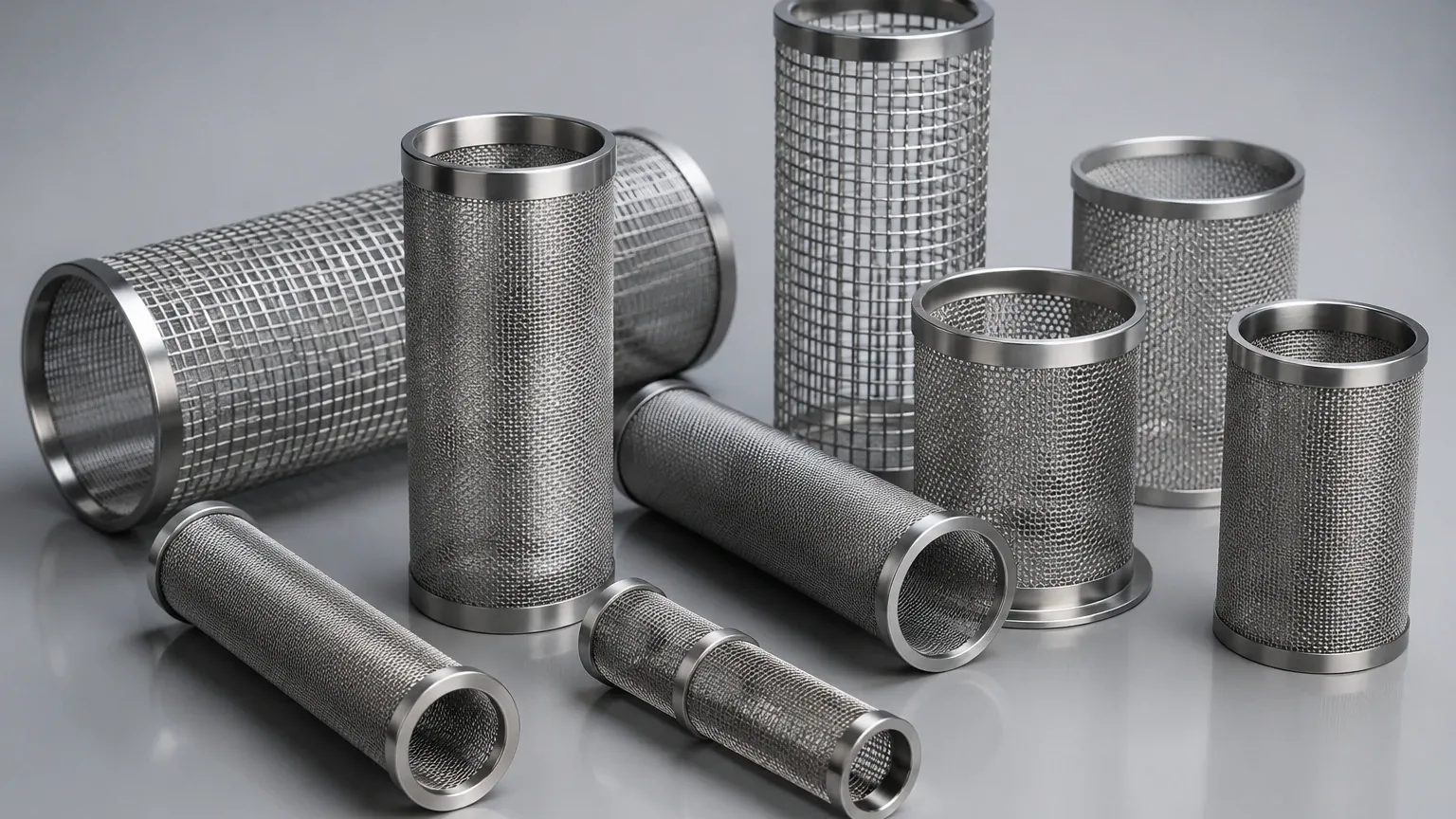
Wire mesh filter cylinders are typically constructed from woven stainless steel wire cloth. Unlike disposable paper or polymer filters, these metal components offer superior mechanical strength and the ability to withstand extreme temperatures and corrosive environments. The construction process involves precision cutting of the mesh, forming it into a cylindrical shape, and securing the seam—usually through advanced welding techniques such as TIG (Tungsten Inert Gas) or plasma welding to ensure a leak-proof join that maintains filtration integrity.
Single-Layer vs. Multi-Layer Designs
The complexity of the cylinder design depends on the operating pressure and the required filtration fineness.
* Single-Layer Cylinders: These are often used in low-pressure applications or as primary strainers. They offer high flow rates and are easy to clean, making them ideal for coarse filtration where the structural load is minimal.
* Multi-Layer (Sintered or Laminated) Cylinders: For demanding applications, multiple layers of mesh are combined. A typical configuration might include a fine filtration layer protected by coarser mesh layers on both sides for mechanical support. In high-pressure environments, these layers may be sintered together—a process of heat and pressure that fuses the wires at their contact points without changing the mesh aperture—resulting in a rigid, robust filter element.
Support Structures
To prevent the mesh from collapsing under high differential pressure, wire mesh filter cylinders are frequently integrated with internal or external support structures. Perforated metal tubes or expanded metal cores provide the necessary skeleton, allowing the fine mesh to perform its filtration function without deforming. This is particularly critical in hydraulic systems where pressure spikes are common.
Material Selection and Engineering Considerations
The choice of material is the most critical factor in determining the longevity and performance of a filter cylinder. Stainless steel is the industry standard due to its balance of cost, durability, and resistance to oxidation.
Grade 304 vs. 316L Stainless Steel
* Grade 304: Suitable for general industrial use, offering good corrosion resistance and excellent forming properties. It is commonly used in food processing and standard water treatment.
* Grade 316L: Contains molybdenum, which provides significantly higher resistance to pitting and crevice corrosion in chloride-rich environments. The "L" denotes low carbon content, which improves weldability and prevents sensitization in the heat-affected zone of welds, making it the preferred choice for chemical processing and marine applications.
Weave Types and Filtration Accuracy
The geometry of the weave determines the pore size (micron rating) and the flow characteristics of the cylinder.
1. Plain Weave: The simplest pattern where wires cross over and under each other. It provides high open areas and low pressure drops, suitable for coarse filtration.
2. Dutch Weave: This weave uses larger diameter warp wires and smaller diameter shute wires driven closely together. This creates a dense, strong mesh with very fine triangular openings, capable of achieving high filtration accuracy (down to 5-10 microns) while maintaining high mechanical strength.
3. Twill Weave: Used for heavier meshes and finer filtration, where wires pass over two and under two, allowing for a heavier wire diameter for a given mesh count.
Key Performance Metrics for Filter Selection
When evaluating wire mesh filter cylinders, engineers must look beyond simple dimensions. Performance is measured by how the filter interacts with the process fluid over time.
Micron Rating: Absolute vs. Nominal
* Nominal Rating: Refers to the ability of the filter to retain a majority of particles of a specific size. It is an approximation and does not guarantee 100% retention.
* Absolute Rating: Defines the pore size where no particle larger than the rating can pass through the mesh. For critical pharmaceutical or chemical applications, absolute ratings are essential for process validation.
Differential Pressure (ΔP)
Differential pressure is the difference in pressure between the upstream and downstream sides of the filter. A well-designed cylinder should offer a low initial pressure drop to minimize energy consumption by pumps. As the filter accumulates debris, the ΔP increases. Engineers must specify the "collapse pressure"—the point at which the structural support of the cylinder fails—to ensure the system's safety margins are never breached.
Flow Rate and Effective Filtration Area
The cylindrical shape is chosen specifically to maximize the surface area within a compact footprint. Increasing the effective filtration area reduces the velocity of the fluid passing through the mesh (flux), which lowers the pressure drop and extends the time between cleaning cycles.
Customization Options for Specific Filtration Needs
Industrial applications rarely follow a one-size-fits-all model. Customization is often necessary to integrate a filter into existing machinery or to meet unique process requirements. Manufacturers like Kaifil specialize in OEM solutions that address these specific variables.
End Cap Configurations
The method by which the cylinder seals into the filter housing is vital for preventing bypass. Custom options include:
* Threaded Fittings: For secure, high-pressure attachments.
* Flanges: For easy installation and removal in large-scale piping.
* Open or Closed Ends: Depending on whether the flow is inside-out or outside-in.
* Gaskets and Seals: Utilizing materials like Viton, EPDM, or PTFE to ensure chemical compatibility at the connection points.
Dimensional Precision
In many hydraulic and pneumatic applications, tolerances are extremely tight. Custom wire mesh filter cylinders can be manufactured with precise diameters and lengths to fit proprietary housings, ensuring that there is no bypass of unfiltered fluid around the edges of the element.
Industry-Specific Applications and Challenges
Chemical and Petrochemical Processing
In these environments, filters are exposed to aggressive solvents and high temperatures. Stainless steel cylinders are used to protect catalysts, remove carbon fines, and ensure the purity of intermediate chemical products. The primary challenge here is chemical compatibility and the prevention of stress corrosion cracking.
Food and Beverage Production
Filters in this sector must comply with stringent hygienic standards. The smooth surface of stainless steel wire mesh prevents bacterial growth and allows for Clean-in-Place (CIP) procedures. Applications include the filtration of syrups, beverages, and frying oils, where removing particulates without affecting the flavor or color of the product is paramount.
Pharmaceutical and Biotechnology
Precision is the priority in pharmaceutical manufacturing. Wire mesh cylinders are used in fluid bed dryers, powder processing, and sterile gas filtration. The ability to verify the absolute micron rating and the use of 316L stainless steel to prevent product contamination are critical requirements.
Hydraulic and Lubrication Systems
Protecting sensitive valves and pumps from wear particles is the main goal. These cylinders must handle high-viscosity fluids and significant pressure fluctuations. Often, a magnetic insert is combined with the wire mesh to capture fine ferrous particles that might otherwise pass through the mesh.
Maintenance, Cleaning, and Operational Longevity
One of the primary advantages of stainless steel wire mesh filter cylinders is their reusability. Unlike disposable cartridges, which represent a recurring cost and environmental waste, metal cylinders can be cleaned and returned to service multiple times.
Cleaning Methodologies
* Backwashing: Reversing the flow of fluid through the filter to dislodge particles trapped on the surface.
* Ultrasonic Cleaning: Using high-frequency sound waves in a cleaning solvent to remove fine particulates from deep within the mesh pores. This is the most effective method for Dutch weave and multi-layer sintered filters.
* Chemical Cleaning: Using specialized solvents or acids to dissolve organic or inorganic deposits, provided the chemical is compatible with the stainless steel grade.
Determining Replacement Cycles
While cleanable, wire mesh filters do have a finite lifespan. Repeated cleaning cycles and mechanical stress can eventually lead to "wire fatigue" or mesh blinding that cannot be reversed. Monitoring the rate at which ΔP rises after cleaning is the best way to determine when a cylinder has reached the end of its functional life.
Procurement Checklist for Engineers and Purchasing Teams
Before finalizing a specification for wire mesh filter cylinders, technical teams should confirm the following data points to ensure the component is fit for purpose:
1. Fluid Characteristics: What is the viscosity, temperature, and pH of the medium? This dictates material and weave selection.
2. Contaminant Type: Are the particles hard, soft, fibrous, or gelatinous? This affects how quickly the mesh will blind.
3. Operating Pressure: What is the normal operating pressure and the maximum potential surge pressure?
4. Flow Rate Requirements: What is the minimum and maximum required flow (GPM or L/min)?
5. Filtration Goal: Is the objective to protect downstream equipment (coarse) or to ensure final product purity (fine)?
6. Housing Compatibility: Are the dimensions, end caps, and sealing surfaces compatible with the existing filter vessel?
By addressing these factors, organizations can optimize their filtration processes, reduce downtime, and achieve a lower total cost of ownership. For specialized requirements, working with a manufacturer that offers comprehensive OEM capabilities ensures that the final product is engineered to the exact rigors of the industrial environment.
