


Wire Mesh Pipe Filters
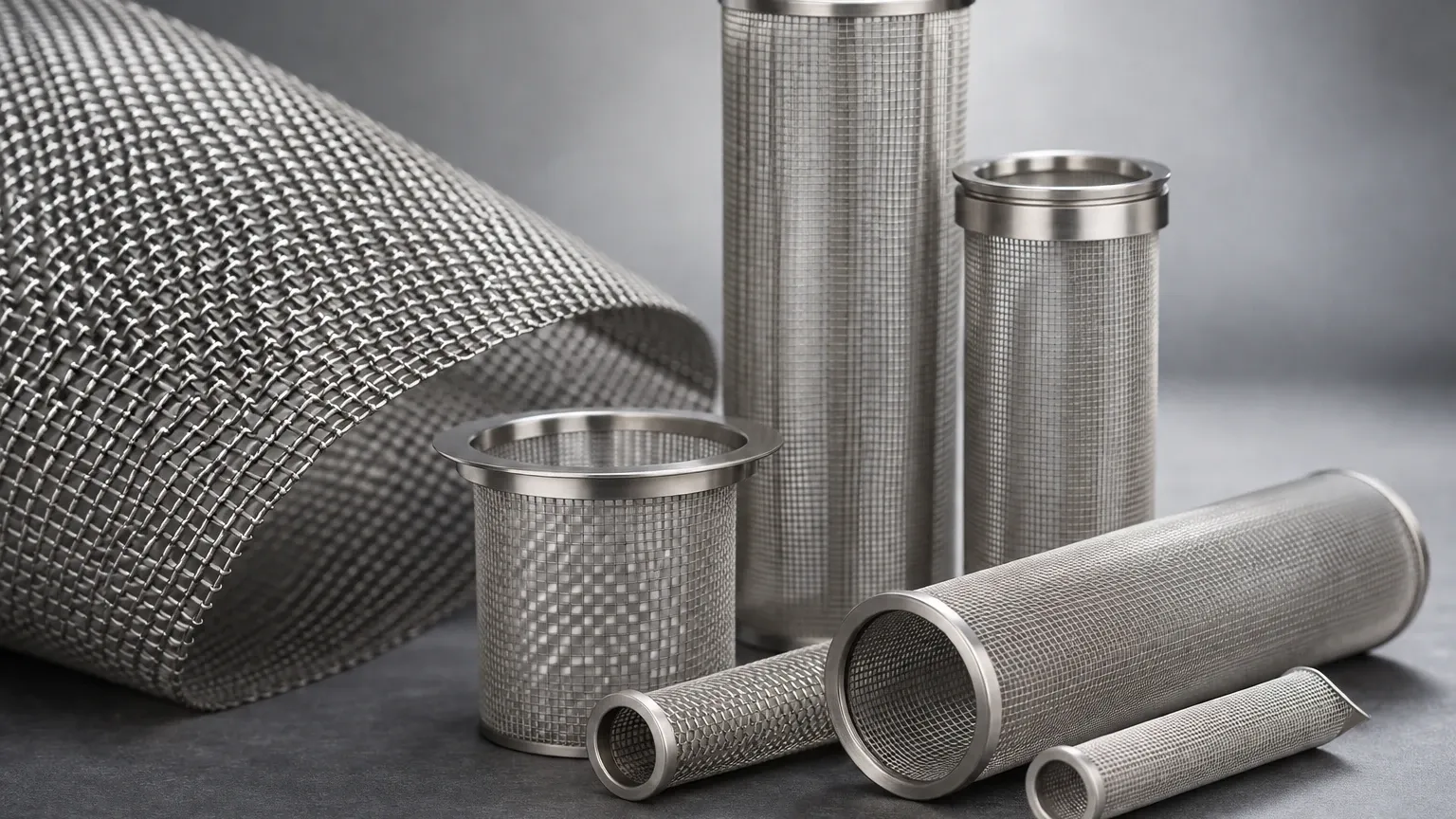
In industrial fluid processing, the integrity of a system often depends on the efficiency of its filtration components. Wire mesh pipe filters, frequently categorized as Wire Mesh Filter Cylinders & Tubes, serve as critical barriers against particulate contamination in piping systems. These components are engineered to withstand high pressure, corrosive environments, and extreme temperatures while maintaining precise filtration accuracy. For engineers and technical procurement teams, understanding the structural nuances, material properties, and performance metrics of these filters is essential for optimizing process uptime and protecting downstream equipment.
Engineering Principles of Wire Mesh Pipe Filters
Wire mesh pipe filters operate primarily on the principle of surface filtration. Unlike depth filters that trap particles within a thick medium, wire mesh captures contaminants on the surface of the weave. This characteristic allows for easier cleaning and more predictable flow dynamics.
When designing or selecting a filter cylinder, the relationship between mesh opening size and flow resistance is paramount. The "open area" percentage determines the initial pressure drop across the filter. A higher open area reduces resistance but may compromise the structural rigidity of the mesh if not supported correctly. In industrial applications, the goal is to maximize the effective filtration area (EFA) to extend the service life between cleaning cycles and minimize the frequency of system shutdowns.
Material Selection and Chemical Compatibility
The performance of wire mesh pipe filters is heavily dictated by the alloys used in their construction. Stainless steel is the industry standard due to its mechanical strength and resistance to oxidation.
* Stainless Steel 304: Suitable for general industrial use, providing good corrosion resistance in atmospheric conditions and with many organic and inorganic chemicals. It is often the cost-effective choice for water treatment and basic hydraulic systems.
* Stainless Steel 316/316L: Contains molybdenum, which significantly enhances resistance to pitting and crevice corrosion in chloride-rich environments. This is the preferred material for chemical processing, marine applications, and pharmaceutical manufacturing where strict hygiene and corrosion resistance are required.
* Specialty Alloys: For highly aggressive environments, such as those involving concentrated acids or extreme heat, materials like Monel, Inconel, or Hastelloy may be utilized to ensure the filter does not degrade or leach contaminants into the process stream.
Weave Types and Filtration Accuracy
The geometry of the wire weave determines the micron rating and the mechanical stability of the filter tube. Different weaves are selected based on the specific particle size distribution of the contaminant and the required flow rate.
1. Plain Weave: The most common and simplest weave where each warp wire crosses over and under each shute wire. It provides a high open area and is ideal for coarse filtration and high-flow applications.
2. Dutch Weave (Plain and Twilled): These weaves use a heavier warp wire and a finer shute wire, resulting in a dense, strong mesh with very small, curved openings. Dutch weaves are essential for fine filtration (down to 5-10 microns) and offer superior pressure resistance compared to plain weaves.
3. Twilled Weave: Each shute wire passes over and under two warp wires. This allows for the use of heavier wires in a given mesh count, increasing the overall strength of the filter cylinder for high-pressure hydraulic applications.
Structural Design: Single-Layer vs. Multi-Layer Construction
A common challenge in industrial filtration is balancing filtration fineness with structural integrity. While a fine mesh can capture small particles, it is often fragile. To address this, wire mesh pipe filters are often manufactured in multi-layer configurations.
Single-Layer Filters
Single-layer tubes are typically used for coarse straining or in low-pressure environments. They are lightweight and easy to clean but may deform under high differential pressure (ΔP).
Multi-Layer and Sintered Mesh
For more demanding applications, multiple layers of mesh are combined. A typical construction includes a fine filtration layer protected by coarser support layers on both sides. In many cases, these layers are sintered together—a process of diffusion bonding under high temperature and pressure—to create a monolithic structure that will not migrate or delaminate.
Perforated Metal Support
When dealing with high-viscosity fluids or high-velocity flows, the wire mesh is often wrapped around or inserted into a perforated metal core. This core provides the necessary mechanical framework to prevent the mesh from collapsing or bursting under extreme pressure loads.
Customization and OEM Integration
Industrial systems rarely follow a one-size-fits-all approach. Therefore, the ability to customize wire mesh pipe filters is a significant factor in system design. Customization options typically include:
* Dimensions: Precise control over length, outer diameter (OD), and inner diameter (ID) to fit existing housings or bespoke piping layouts.
* End Fittings: Integration of various connection types, such as threaded NPT/BSP fittings, flanges, O-ring grooves, or plain ends for welding. Proper end-cap sealing is vital to prevent "bypass," where unfiltered fluid escapes around the edges of the filter element.
* Seam Construction: High-quality filters utilize advanced welding techniques, such as plasma or TIG welding, to ensure the longitudinal seam is as strong as the base material and free of gaps that could compromise filtration integrity.
Key Performance Metrics for Evaluation
Before finalizing a purchase or design specification, engineers should evaluate several key metrics to ensure the selected filter meets the application's demands:
* Micron Rating (Absolute vs. Nominal): It is crucial to distinguish between a nominal rating (an approximate average pore size) and an absolute rating (the size of the largest particle that can pass through). For critical processes, absolute-rated mesh is required.
* Differential Pressure (ΔP): The difference in pressure between the upstream and downstream sides of the filter. A high initial ΔP indicates an undersized filter or a mesh that is too restrictive for the flow rate.
* Dirt-Holding Capacity: This refers to the amount of contaminant a filter can retain before the pressure drop reaches a critical level requiring cleaning or replacement.
* Temperature and Pressure Limits: The filter must be rated for the maximum operating temperature and pressure of the system, including potential surges.
Maintenance, Cleaning, and Replacement Cycles
One of the primary advantages of stainless steel wire mesh pipe filters is their cleanability. Unlike disposable polymer cartridges, metal filters can be refurbished multiple times, reducing the total cost of ownership (TCO) and environmental impact.
Cleaning Methods
* Backwashing: Reversing the flow of fluid through the filter to dislodge surface contaminants. This can often be automated within the system.
* Ultrasonic Cleaning: Using high-frequency sound waves in a cleaning solution to remove fine particles trapped deep within the weave of Dutch weave or sintered filters.
* Chemical Cleaning: Using specific solvents or acids to dissolve organic or inorganic scaling, provided the chemicals are compatible with the filter's alloy.
Determining Replacement
While durable, wire mesh filters are not infinite. Replacement is necessary if the mesh becomes physically damaged (e.g., punctures or wire fatigue), if the seams begin to fail, or if the filter can no longer be cleaned to an acceptable initial pressure drop. Regular inspection during maintenance intervals helps prevent catastrophic failure that could lead to downstream contamination.
Applications Across Industrial Sectors
Wire mesh pipe filters are utilized in a diverse range of sectors, each with specific requirements:
* Chemical and Petrochemical: Used for catalyst recovery, monomer filtration, and protecting high-pressure pumps from debris.
* Food and Beverage: Employed in the filtration of syrups, oils, and beverages. These filters must adhere to FDA standards and feature smooth, crevice-free welds to prevent bacterial growth.
* Hydraulics and Lubrication: Protecting sensitive valves and actuators from metal shavings and environmental dust in heavy machinery.
* Water Treatment: Serving as pre-filters for reverse osmosis (RO) membranes or as final strainers in cooling tower loops.
By focusing on the technical specifications and structural requirements of Wire Mesh Filter Cylinders & Tubes, engineering teams can ensure they select a solution that provides the necessary balance of filtration precision, mechanical durability, and long-term cost-efficiency.
