


2mm Woven Wire Mesh
In industrial processing, the precision of a filtration system is often determined by the specific geometry and material integrity of the media employed. Among the various specifications used in coarse to medium filtration, 2mm woven wire mesh serves as a critical component for high-flow applications requiring robust mechanical support and consistent particle separation. Whether utilized as a primary screen in aggregate processing or a support layer in multi-stage liquid filtration, understanding the engineering nuances of this specification is essential for optimizing system performance and longevity.
Selecting the correct 2mm woven wire mesh involves more than identifying a hole size; it requires a comprehensive evaluation of wire diameter, open area, alloy composition, and weaving architecture. This guide provides technical insights into these variables to assist engineers and procurement specialists in making informed decisions.
Defining the 2mm Specification: Aperture vs. Wire Diameter
When specifying "2mm woven wire mesh," it is vital to distinguish between the aperture (the clear opening between wires) and the center-to-center distance. In most B2B procurement contexts, a 2mm mesh refers to a clear opening of 2.0mm. However, the performance of this mesh is heavily influenced by the wire diameter chosen to create that opening.
For example, a 2mm aperture can be achieved with a 0.5mm wire or a 1.0mm wire. While both provide the same filtration threshold, their physical properties differ significantly:
* Lightweight Mesh: Using a thinner wire (e.g., 0.5mm) increases the percentage of open area, allowing for higher flow rates and lower pressure drops. However, it reduces the structural rigidity and the mesh's resistance to abrasive wear.
* Heavy-Duty Mesh: Using a thicker wire (e.g., 1.2mm) decreases the open area but provides the mechanical strength necessary for high-pressure environments or applications involving heavy vibratory loads.
Engineers must balance the required flow velocity against the mechanical stresses the mesh will encounter during operation. For those evaluating specific configurations, Plain, twill and dutch woven wire mesh in SS304/316L — rolls, cut mesh and framed panels. Send mesh count or micron target for a technical quote. provides a starting point for comparing how different wire diameters impact the functional characteristics of the final product.
Material Selection and Corrosion Resistance
The environment in which the woven wire mesh operates dictates the necessary alloy. For 2mm applications, stainless steel is the industry standard due to its balance of cost, strength, and chemical stability. The two most common grades are SS304 and SS316L.
Stainless Steel 304
SS304 is the most widely used material for general industrial applications. It offers excellent resistance to atmospheric corrosion and is suitable for most water treatment and food processing environments. However, it is susceptible to chloride pitting, making it less ideal for marine environments or highly acidic chemical processing.
Stainless Steel 316L
For more demanding environments, SS316L is the preferred choice. The addition of molybdenum provides superior resistance to pitting and crevice corrosion in chloride-rich environments. The "L" denotes low carbon content, which minimizes carbide precipitation during welding, ensuring that custom-fabricated filter cartridges or framed panels maintain their integrity at the joints.
In specialized chemical processing, other alloys such as 904L, Duplex stainless steels, or Nickel alloys may be required, though these are typically reserved for environments where standard 300-series steels would fail prematurely.
Engineering Considerations: Open Area and Flow Dynamics
The efficiency of a 2mm woven wire mesh is largely defined by its percentage of open area. This value is calculated using the formula:
Open Area % = (Aperture² / (Aperture + Wire Diameter)²) x 100
A higher open area percentage reduces the "masking" effect, where the wire itself blocks the flow of the medium. In liquid filtration, a restricted open area leads to an immediate increase in differential pressure (ΔP). If the ΔP exceeds the structural limits of the mesh, deformation or "blind-off" can occur, where particles become permanently wedged in the openings.
When designing a system around a 2mm mesh, engineers should also consider the "effective filtration area." If the mesh is supported by a perforated plate or a coarser backup mesh, the total available surface area for flow is reduced. Calculating the cumulative resistance of the entire filter stack is necessary to ensure pump requirements are met without over-stressing the components.
Weave Types and Structural Integrity
While 2mm apertures are most commonly produced using a Plain Weave, where each warp wire passes alternately over and under each weft wire, other weaving styles may be employed depending on the application's mechanical requirements.
1. Plain Weave: Offers the most consistent aperture size and is the easiest to clean. It is the standard for 2mm screening applications.
2. Intermediate Crimp: In cases where a very large aperture is paired with a relatively thin wire, intermediate crimping is used to lock the wires in place, preventing "shunting" or wire movement that could compromise the accuracy of the 2mm opening.
3. Lock Crimp: Provides maximum stability for heavy-duty screening, ensuring that the wires remain fixed even under intense vibration or high-impact loading from solid materials.
For precision filtration, the consistency of the weave is paramount. Variations in the tensioning during the weaving process can lead to irregular apertures, allowing oversized particles to pass through—a critical failure in pharmaceutical or food-grade applications.
Common Risks and Quality Evaluation
Procuring industrial-grade mesh requires a rigorous quality assurance process. Low-quality 2mm woven wire mesh often suffers from several defects that can compromise industrial processes:
* Material Substitution: The use of lower-grade alloys that lack the necessary nickel or chromium content, leading to premature rusting.
* Aperture Irregularity: Inconsistent spacing between wires, which results in a broad particle size distribution rather than a sharp cut-off.
* Surface Contamination: Residual oils or metallic dust from the weaving process can contaminate the filtrate, which is particularly hazardous in the pharmaceutical and food and beverage sectors.
* Edge Integrity: Poorly finished edges on cut-to-size mesh can lead to fraying, which may introduce metal fragments into the downstream flow.
To mitigate these risks, it is standard practice to request material test reports (MTRs) and certificates of compliance. High-precision applications may also require optical inspection to verify aperture consistency across the entire surface of the roll or panel.
Applications of 2mm Woven Wire Mesh
The versatility of the 2mm specification allows it to serve diverse roles across multiple industries:
Chemical and Petrochemical Processing
Used as catalyst support grids and intake strainers. The 2mm opening is ideal for capturing large particulates and debris before they reach sensitive downstream equipment like high-pressure pumps or fine polishing filters.
Food and Beverage Industry
In the processing of raw ingredients, 2mm screens are used for scalping—removing large foreign objects or clumps from dry powders or liquids. Stainless steel construction ensures compliance with hygiene standards and allows for high-temperature sterilization.
Water Treatment
2mm mesh serves as a pre-filtration stage in municipal and industrial water treatment plants. It protects membrane filtration systems by removing large organic matter, plastics, and grit that could cause mechanical damage to finer filter stages.
Hydraulic Systems
In large-scale hydraulic reservoirs, 2mm mesh strainers are often used on suction lines to prevent large contaminants from entering the pump, while maintaining a low enough pressure drop to prevent cavitation.
Customization and OEM Integration
For many B2B applications, standard off-the-shelf rolls of mesh are insufficient. Customization is often required to integrate the mesh into existing machinery. This includes:
* Slitting and Cutting: Precision cutting to specific widths or circular discs for extruder screens.
* Framing and Edging: Adding U-binders, welded frames, or hooked edges for vibratory separators.
* Layer Sintering: Combining the 2mm mesh with finer mesh layers through vacuum sintering to create a composite filter media that offers both high filtration accuracy and the structural strength of the coarser 2mm layer.
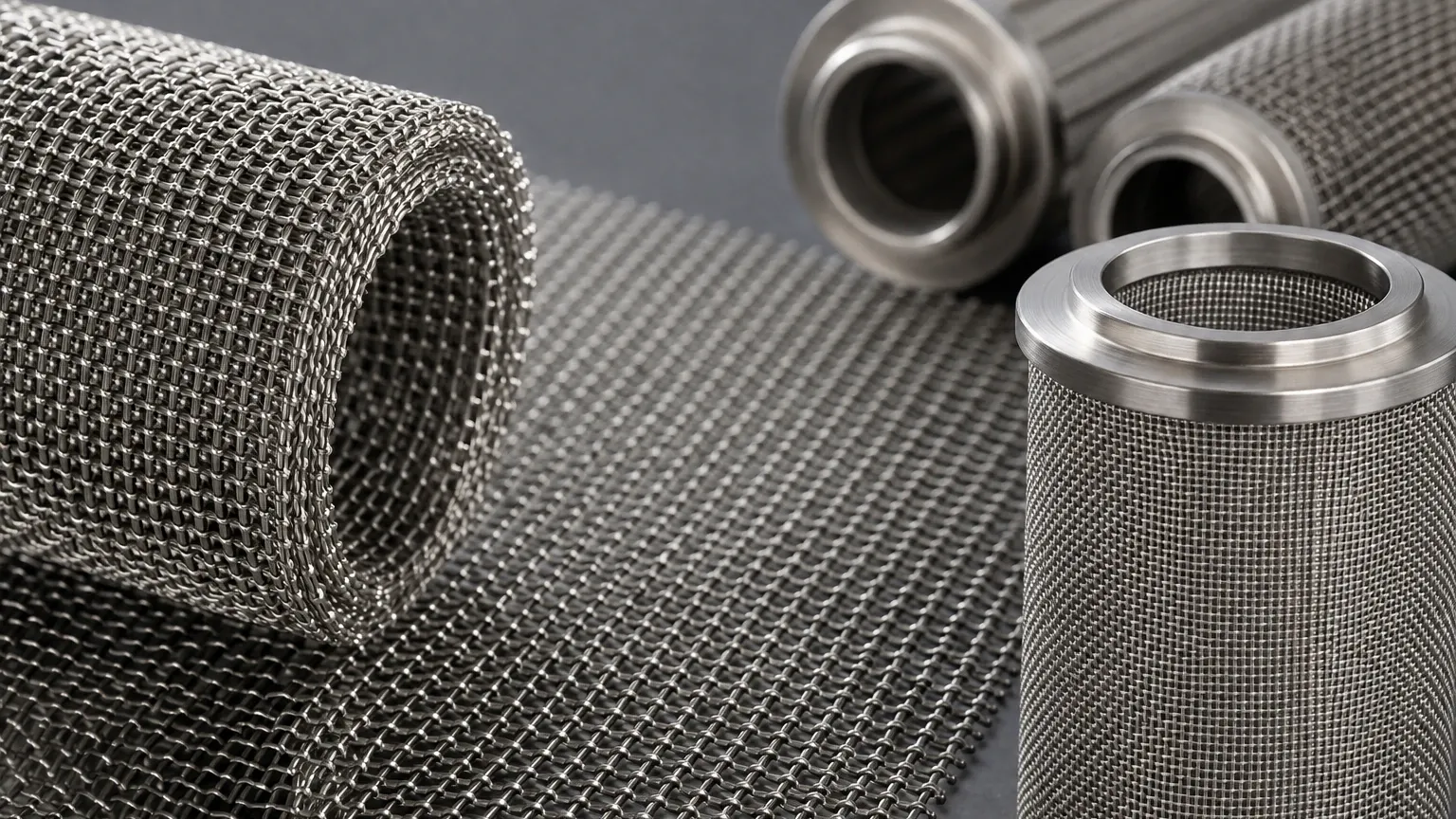
* Cylindrical Fabrication: Rolling and seam-welding the mesh into filter cartridges or baskets.
Working with a manufacturer that understands these secondary operations is crucial for ensuring that the final component fits seamlessly into the intended assembly without requiring on-site modifications.
Maintenance and Replacement Cycles
The total cost of ownership for a filtration system is heavily influenced by the lifespan of the mesh. While stainless steel woven wire mesh is durable, it is not permanent. Replacement cycles should be determined based on:
1. Pressure Drop Trends: A permanent increase in clean pressure drop indicates that the mesh is becoming "blinded" or fouled beyond the point where standard cleaning (such as backwashing or ultrasonic cleaning) is effective.
2. Mechanical Fatigue: In vibratory applications, the wires will eventually undergo work hardening and crack. Regular visual inspections for broken wires are necessary to prevent bypass.
3. Corrosion Signs: Any sign of localized pitting or discoloration should be investigated, as it may indicate a shift in the process chemistry that the current alloy cannot handle.
Conclusion
2mm woven wire mesh is a foundational component in industrial filtration, providing a robust solution for medium-coarse screening. By carefully considering the wire diameter, material grade, and weaving style, engineering teams can ensure that their filtration systems operate with maximum efficiency and minimal downtime. Whether the goal is protecting downstream equipment or ensuring the purity of a final product, the selection of high-quality, precision-manufactured mesh is a critical step in industrial process design.
