


304 Stainless Steel Woven Wire 120 Mesh: Technical Specifications and Industrial Applications
In the landscape of industrial filtration and separation, selecting the correct mesh count and material grade is a critical engineering decision that directly impacts process efficiency, product purity, and equipment longevity. Among the various specifications available, 304 stainless steel woven wire 120 mesh stands out as a versatile solution for fine filtration requirements. This specification provides a precise balance between filtration accuracy and mechanical permeability, making it a standard choice for industries ranging from chemical processing to food production.
Understanding the technical nuances of Woven Wire Mesh is essential for engineers and procurement teams who must ensure that their filtration components can withstand specific operating pressures, chemical environments, and particle load characteristics. This guide examines the engineering properties, material advantages, and application-specific considerations for 120 mesh 304 stainless steel.
Understanding the Specifications of 120 Mesh Woven Wire
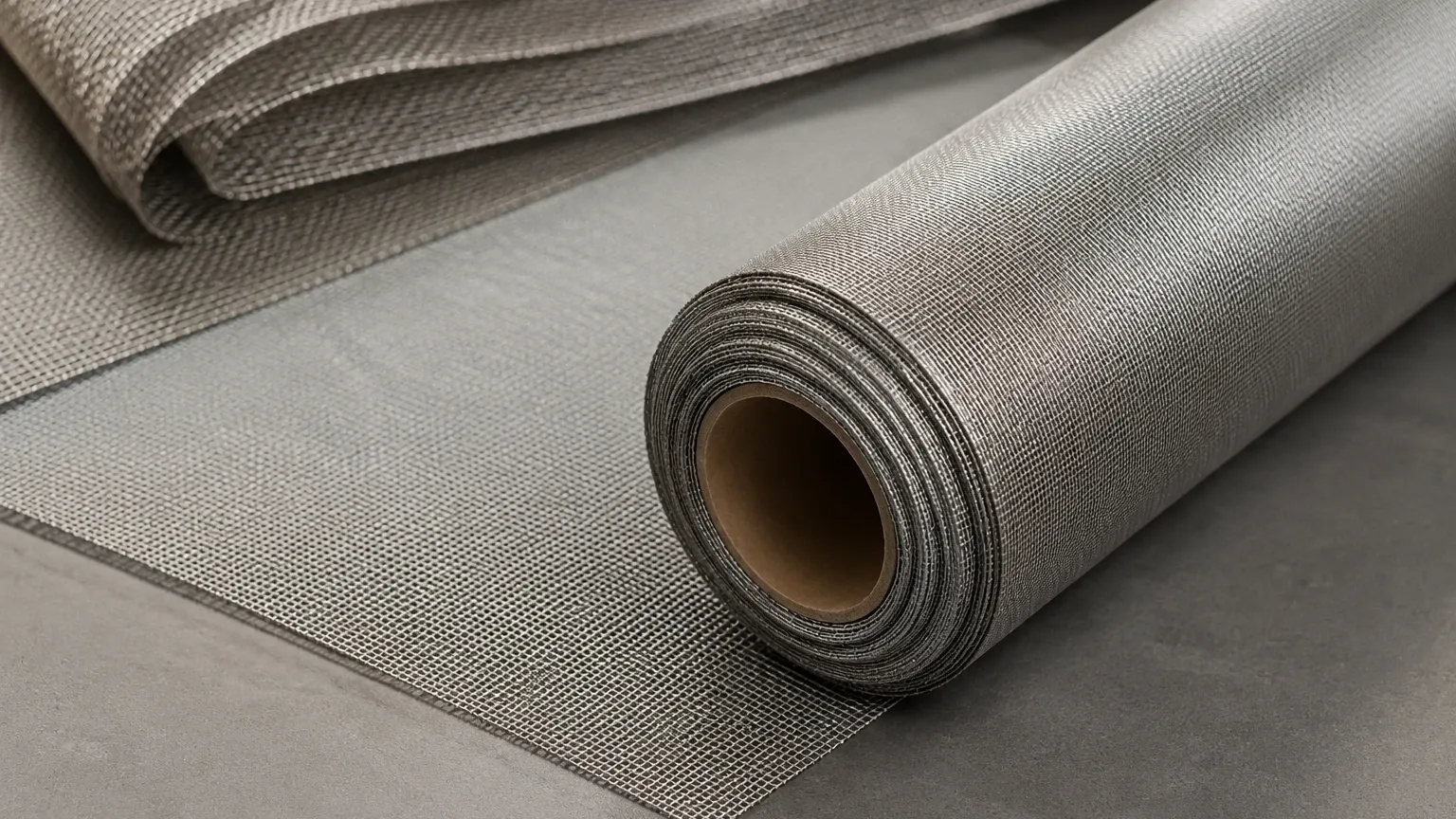
The term "mesh count" refers to the number of openings per linear inch, measured from the center of one wire to the center of the next. A 120 mesh specification indicates that there are 120 wires in every inch of the fabric. However, the mesh count alone does not fully define the filtration capability; the wire diameter and resulting aperture size are equally critical.
Aperture and Micron Rating
For a standard 120 mesh weave, the wire diameter typically ranges around 0.08mm (0.0031 inches). With 120 openings per inch, the calculated aperture—the clear distance between two parallel wires—is approximately 125 to 130 microns. This places 120 mesh in the category of fine filtration, suitable for removing suspended solids that are invisible to the naked eye but significant enough to cause downstream equipment wear or product contamination.
Open Area Percentage
The percentage of open area determines the flow capacity and pressure drop across the mesh. For 120 mesh with a 0.08mm wire diameter, the open area is generally around 36% to 40%. Engineers must calculate this value to ensure that the filter does not create an excessive bottleneck in the system. A higher open area allows for greater throughput but may reduce the structural rigidity of the mesh if not properly supported by a coarser backing layer or a perforated metal core.
Material Properties: Why 304 Stainless Steel?
While several alloys are used in the production of woven wire mesh, Type 304 stainless steel remains the most widely specified for general industrial use. As an austenitic chromium-nickel alloy, it offers a robust combination of corrosion resistance and mechanical strength.
Corrosion Resistance
304 stainless steel contains approximately 18% chromium and 8% nickel. This chemistry allows for the formation of a passive oxide layer that protects the base metal from oxidation and many organic chemicals. In most atmospheric conditions and many aqueous environments, 304 provides excellent service life. However, for applications involving high concentrations of chlorides or marine environments, engineers may need to evaluate 316L stainless steel to prevent pitting corrosion.
Thermal and Mechanical Stability
304 stainless steel maintains its mechanical integrity across a wide temperature range. It can withstand continuous operating temperatures up to approximately 800°F (427°C) without significant scaling or loss of tensile strength. This thermal stability is vital in steam filtration or high-temperature chemical reactions where synthetic polymer meshes would fail.
Fabricability and Cost-Effectiveness
Compared to high-nickel alloys or titanium, 304 stainless steel is highly cost-effective while offering superior durability over galvanized steel or brass. It is also highly weldable and formable, allowing manufacturers like Kaifil to produce custom shapes, pleats, and framed panels to fit specific industrial housings.
Key Performance Metrics for Industrial Filtration
When evaluating 304 stainless steel woven wire 120 mesh for a project, engineers must look beyond the basic dimensions and consider how the mesh will perform under dynamic load conditions.
1. Filtration Efficiency and Particle Retention
120 mesh is typically rated for "nominal" filtration. This means it will retain a high percentage of particles equal to or larger than its aperture size (approx. 125 microns). In liquid filtration, the mesh acts as a surface filter, where particles are trapped on the upstream side. Over time, a "filter cake" may form, which actually increases filtration efficiency but also increases the pressure differential.
2. Delta P (Pressure Drop)
Every filter medium introduces resistance to flow. The pressure drop across a 120 mesh screen is influenced by the fluid's viscosity, velocity, and the percentage of open area. In high-viscosity applications, such as heavy oil or polymer filtration, the pressure drop can escalate quickly. Designing the filter with sufficient surface area—often through pleating—is a common strategy to mitigate this effect.
3. Mechanical Strength and Burst Pressure
Because the wires in 120 mesh are relatively thin, the mesh itself has limited structural strength against high-pressure surges. In industrial cartridges, this mesh is often sintered to a coarser support mesh or wrapped around a heavy-duty perforated tube. This reinforcement ensures the mesh does not deform or "blow out" under high differential pressures.
Critical Applications of 120 Mesh in Industrial Processes
The 120 mesh specification is a "sweet spot" for many industrial processes that require fine screening without the extreme flow resistance of sub-50-micron meshes.
* Chemical Processing: Used in the filtration of intermediate chemical products to remove impurities before further processing. Its resistance to various solvents and acids makes 304 stainless steel ideal for this sector.
* Food and Beverage: 120 mesh is frequently used in the straining of juices, syrups, and dairy products. The smooth surface of the stainless steel wires allows for easy cleaning and sterilization, meeting stringent hygiene standards.
* Hydraulic Systems: In hydraulic and lubrication systems, 120 mesh screens serve as secondary filters to protect sensitive valves and pumps from metal shavings or other debris that could cause mechanical failure.
* Water Treatment: It is used in pre-filtration stages for reverse osmosis (RO) systems or as a final screen in industrial cooling water loops to prevent nozzle clogging.
* Pharmaceuticals: Used in fluid bed dryers and granulation equipment where precise particle size control is required for active pharmaceutical ingredients (APIs).
Engineering Considerations for Filter Design and Customization
Selecting the mesh is only the first step. For a successful implementation, the physical configuration of the mesh must be optimized for the specific equipment.
Weave Types: Plain vs. Twill
For 120 mesh, a "Plain Weave" is most common, where each shute wire passes over and under one warp wire. This provides a consistent aperture and a stable structure. However, if a thicker wire is required for increased durability at the same mesh count, a "Twill Weave" may be employed, allowing the wires to cross over two and under two, which reduces the stress on the wires during the weaving process.
Edge Treatment and Framing
Fine mesh like 120 mesh is prone to fraying at the edges. For industrial sieves or vibrating screens, the mesh must be properly tensioned and secured with a hook strip or a welded frame. In cartridge applications, the edges are typically plasma-welded or encapsulated in an end cap to ensure no bypass of unfiltered fluid occurs.
Custom OEM Solutions
Many industrial applications require non-standard dimensions or specific shapes. Working with a specialized manufacturer like Kaifil allows for the production of custom-cut discs, cylinders, or pleated elements. Customization also extends to the integration of the mesh into larger assemblies, such as basket strainers or duplex filter systems, ensuring a perfect fit with existing piping and housings.
Maintenance, Cleaning, and Service Life Optimization
One of the primary advantages of stainless steel woven wire mesh over disposable synthetic filters is its cleanability. A 120 mesh 304 stainless steel filter can be cleaned and reused multiple times, significantly reducing the total cost of ownership.
Cleaning Methods
* Backwashing: Reversing the flow of the fluid to dislodge particles trapped on the surface.
* Ultrasonic Cleaning: Using high-frequency sound waves in a cleaning solution to remove fine particles embedded within the wire intersections. This is highly effective for fine meshes like 120 mesh.
* Chemical Cleaning: Using mild acids or caustic solutions to dissolve organic or mineral buildup, provided the chemicals are compatible with 304 stainless steel.
Determining Replacement Cycles
While durable, woven wire mesh is subject to mechanical wear and fatigue. Over time, high-pressure cycles can cause "wire migration" or thinning of the wires at the crossover points. Routine inspections should look for signs of mesh blinding (permanent clogging), localized tearing, or corrosion. Establishing a baseline pressure drop for a clean filter allows operators to identify when the mesh has reached the end of its effective service life.
Conclusion: Selecting the Right Partner for Filtration Excellence
Choosing 304 stainless steel woven wire 120 mesh requires a deep understanding of both the material's limitations and its strengths. Whether you are designing a new filtration system or seeking a more durable replacement for existing components, technical precision is paramount.
Kaifil provides professional manufacturing expertise in custom stainless steel filtration, ensuring that every mesh component meets the exact requirements of your industrial application. By focusing on filtration accuracy, material integrity, and customized design, we help engineers achieve reliable performance in the most demanding environments. For detailed technical specifications or to discuss a custom filtration project, reviewing professional Woven Wire Mesh options is the first step toward optimizing your process efficiency and ensuring the long-term protection of your industrial assets.
