


304 Stainless Steel Woven Wire 200 Mesh: A Technical Guide for Industrial Filtration
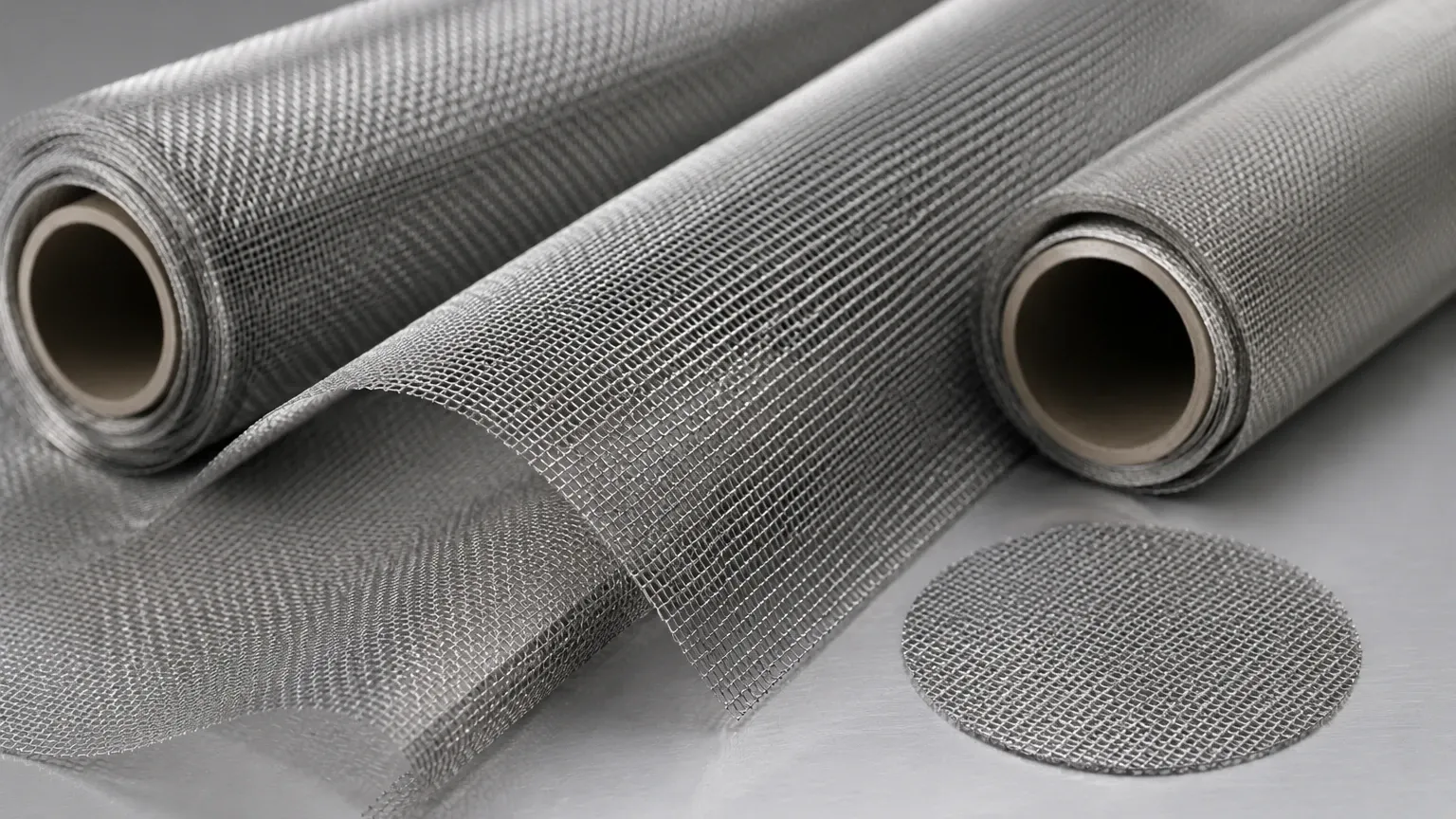
In the landscape of industrial separation and filtration, the precision of the media determines the efficiency of the entire process. Among the various specifications available, 304 stainless steel woven wire 200 mesh stands as a critical standard for fine filtration. This mesh count provides a balance between fine particle retention and structural integrity, making it a staple in chemical processing, hydraulic systems, and pharmaceutical manufacturing.
Selecting the correct Woven Wire Mesh requires more than just identifying a mesh count; it necessitates an understanding of wire diameters, aperture sizes, and the metallurgical properties of the alloy. This guide provides a technical analysis of 200 mesh 304 stainless steel to assist engineers and procurement teams in making informed application decisions.
Understanding the Technical Specifications of 200 Mesh
The term "200 mesh" refers to the number of openings per linear inch. To understand the performance of this material, one must look at the mathematical relationship between the wire diameter and the resulting aperture.
Aperture and Pitch
For a standard 304 stainless steel woven wire 200 mesh, the wire diameter is typically 0.053 mm (0.0021 inches). The pitch—the distance from the center of one wire to the center of the next—is calculated by dividing one inch (25.4 mm) by the mesh count (200), resulting in 0.127 mm.
The aperture, or the clear opening between wires, is determined by subtracting the wire diameter from the pitch:
* Pitch: 0.127 mm
* Wire Diameter: 0.053 mm
* Aperture Size: 0.074 mm (74 Microns)
Percentage of Open Area
The open area is a critical metric for calculating flow rates and pressure drops. For a standard 200 mesh screen with the dimensions above, the open area is approximately 34% to 36%. This percentage represents the ratio of the area of the openings to the total area of the mesh. A 34% open area indicates a relatively dense weave, which provides excellent particle retention but requires careful consideration of the potential for blinding (clogging) in high-solids applications.
Material Performance: Why Choose 304 Stainless Steel?
Type 304 stainless steel (UNS S30400) is the most widely used austenitic stainless steel in the filtration industry. Its popularity in the production of Woven Wire Mesh stems from its versatile chemical composition and mechanical properties.
Chemical Resistance and Composition
304 stainless steel contains approximately 18% chromium and 8% nickel. The chromium content facilitates the formation of a passive chromium oxide layer, which protects the underlying metal from atmospheric corrosion and oxidation. While it is highly resistant to many organic chemicals and inorganic fixatives, it is important to note that 304 is susceptible to chloride pitting. In environments involving high concentrations of salt or marine exposure, upgrading to 316L stainless steel is often recommended.
Thermal and Mechanical Stability
304 stainless steel maintains its mechanical strength across a wide temperature range. It can withstand continuous service temperatures up to 870°C (1600°F) in intermittent service and 925°C (1700°F) in continuous service without significant scaling. However, for filtration applications involving high-pressure differentials, the tensile strength of the fine 0.053 mm wire must be accounted for to prevent mesh deformation or "bursting."
Weave Patterns and Structural Integrity
For 200 mesh specifications, the most common weave pattern is the Plain Weave. In this configuration, each warp wire (running lengthwise) passes alternately over and under each weft wire (running crosswise).
Plain Weave Characteristics
The plain weave is preferred for 200 mesh because it offers the highest level of aperture consistency. Because the wires are crimped at every intersection, the openings remain square and stable under moderate mechanical stress.
In specialized cases where higher flow rates or different mechanical properties are required, engineers might consider:
* Twill Weave: Where wires pass over two and under two. This allows for heavier wires in a fine mesh but can result in less rigid aperture control.
* Dutch Weave: Used primarily for heavy-duty pressure filtration where the mesh count is different in the warp and weft directions, creating a tortuous path for particles.
For most standard sieving and liquid filtration tasks, the plain weave 304 stainless steel woven wire 200 mesh remains the industry benchmark for reliability.
Industrial Applications of 200 Mesh Filtration
With an aperture of approximately 74 microns, 200 mesh is utilized in processes where fine particulate matter must be removed without completely restricting fluid or gas flow.
1. Chemical and Petrochemical Processing
In chemical manufacturing, 200 mesh screens are used to filter catalysts from liquid streams and to protect sensitive downstream equipment from debris. Its resistance to a wide range of solvents makes it ideal for batch processing where different chemicals may pass through the same filtration unit.
2. Food and Beverage Industry
Stainless steel is the material of choice for food-grade applications due to its ease of cleaning and non-reactive nature. 200 mesh is frequently used in the filtration of oils, syrups, and beverages to remove fine sediments. It ensures the final product meets clarity standards while adhering to hygiene regulations.
3. Hydraulic and Lubrication Systems
Fine metal particles or environmental dust can cause catastrophic failure in high-pressure hydraulic systems. 200 mesh elements serve as secondary filters or "last chance" filters to protect valves and actuators from particles larger than 75 microns.
4. Pharmaceutical and Laboratory Testing
Precision is paramount in pharmaceutical production. 200 mesh is used in the separation of active pharmaceutical ingredients (APIs) and as a standardized sieve for particle size analysis. The uniformity of the weave ensures repeatable results in laboratory environments.
Engineering Considerations for Filter Design
When integrating 304 stainless steel woven wire 200 mesh into a custom filter component, several engineering factors must be evaluated to ensure long-term performance.
Pressure Drop (ΔP)
Because 200 mesh has a relatively low open area (approx. 34%), the initial pressure drop across the clean mesh will be higher than that of coarser meshes. Engineers must calculate the total surface area required to keep the flux (flow per unit area) within acceptable limits. If the pressure drop is too high, it can lead to pump cavitation or mesh failure.
Support and Pleating
Due to the fine wire diameter (0.053 mm), 200 mesh is physically delicate. In high-pressure applications, it is rarely used as a standalone layer. Instead, it is typically combined with a coarser support mesh (such as 20 or 40 mesh) in a multi-layer sintered or bonded construction. Pleating the mesh can also increase the effective filtration area, thereby reducing the pressure drop and extending the time between cleaning cycles.
Cleaning and Regeneration
Unlike synthetic fiber filters, stainless steel mesh is cleanable and reusable. Common methods include:
* Backwashing: Reversing the flow to dislodge particles from the mesh surface.
* Ultrasonic Cleaning: Using high-frequency sound waves in a solvent bath to remove fine particles trapped in the intersections of the weave.
* Chemical Cleaning: Using mild acids or bases to dissolve organic or mineral buildup, provided the chemicals are compatible with 304 stainless steel.
Procurement Guide: Selecting the Right Woven Wire Mesh
For purchasing teams and engineers, ensuring the quality of the raw material is the first step in avoiding system failure. When sourcing Woven Wire Mesh, it is essential to verify the following details with the manufacturer:
1. Material Certification: Request a Mill Test Report (MTR) to confirm the chemical composition of the 304 stainless steel. This ensures the nickel and chromium levels meet ASTM standards.
2. Dimensional Tolerances: Confirm the wire diameter and mesh count tolerances. Even slight variations can change the micron rating and flow characteristics.
3. Edge Treatment: For cut-to-size pieces, specify if the edges should be raw, hemmed, or welded into a frame to prevent fraying.
4. Customization Requirements: If the application requires specific shapes, cylinders, or multi-layer disks, partner with a manufacturer capable of precision fabrication.
Why Quality Control Matters in Fine Mesh Production
In the production of 304 stainless steel woven wire 200 mesh, the primary risk is "weaving defects." These can include broken wires, oversized apertures (due to inconsistent tension on the loom), or oil contamination from the manufacturing process. For critical applications in the medical or aerospace sectors, these defects can lead to bypass, where large particles pass through the filter, causing downstream damage.
Kaifil addresses these risks through advanced manufacturing capabilities and rigorous inspection protocols. By controlling the wire drawing and weaving processes, we ensure that every square inch of mesh meets the specified micron rating and structural requirements. Whether you require standard rolls or customized filtration components, our engineering team provides the technical support necessary to optimize your filtration system.
Conclusion
The 304 stainless steel woven wire 200 mesh is a versatile and high-performance material capable of meeting the rigorous demands of modern industry. By understanding the relationship between its 74-micron aperture, its 34% open area, and the mechanical properties of the 304 alloy, engineers can design more efficient and durable filtration solutions. When durability, precision, and chemical resistance are required, this specification remains a top-tier choice for fine particulate separation.
