


6×6 Woven Wire Mesh
In the landscape of industrial materials, the specification of a mesh is critical to the performance of filtration systems, protective barriers, and structural components. Among the various configurations available, 6×6 woven wire mesh stands as a versatile, medium-coarse option frequently utilized in sectors ranging from chemical processing to architectural design. Understanding the technical nuances of this specific mesh count—defined as six openings per linear inch in both the horizontal and vertical directions—is essential for engineers and procurement specialists tasked with optimizing system efficiency and durability.
As a specialized manufacturer, Kaifil provides precision-engineered Woven Wire Mesh solutions tailored to demanding industrial environments. This guide explores the engineering considerations, material selection criteria, and application-specific benefits of 6×6 mesh configurations.
Technical Geometry of 6×6 Woven Wire Mesh
The term "6×6" refers to the mesh count, which is the number of wires per linear inch. However, the mesh count alone does not fully define the performance characteristics of the material. To calculate the functional properties of the mesh, engineers must consider the relationship between mesh count, wire diameter, and aperture size.
Aperture and Open Area
The aperture (or clear opening) is the distance between two adjacent parallel wires. For a 6×6 woven wire mesh, the aperture is calculated by the formula:
* Aperture = (1 / Mesh Count) – Wire Diameter
For example, if a 6×6 mesh utilizes a wire diameter of 0.035 inches (0.89 mm), the aperture would be approximately 0.1317 inches (3.35 mm). The percentage of open area—a critical metric for flow rate and pressure drop calculations—is then determined by the ratio of the square of the aperture to the square of the center-to-center wire spacing (pitch).
In industrial filtration, a higher open area reduces resistance to fluid or gas flow, while a thicker wire diameter increases the mechanical strength and wear resistance of the mesh. Balancing these two factors is a primary engineering challenge when selecting a 6×6 configuration.
Material Selection: Alloy Performance in Industrial Environments
The longevity of 6×6 woven wire mesh depends heavily on the alloy selected for the specific operating environment. While various metals can be woven, stainless steel remains the industry standard due to its mechanical properties and corrosion resistance.
Stainless Steel 304
SS304 is the most common grade for general industrial use. It offers excellent weldability and resistance to atmospheric corrosion. In 6×6 configurations, SS304 is typically used for security screens, animal enclosures, and general-purpose sieving where extreme chemical exposure is not a primary concern.
Stainless Steel 316L
For applications involving chemical processing, pharmaceuticals, or marine environments, SS316L is the preferred choice. The addition of molybdenum provides superior resistance to pitting and crevice corrosion, particularly in chloride-rich environments. In high-performance filtration systems, 316L 6×6 mesh often serves as a robust support layer for finer filtration media.
High-Temperature and Specialty Alloys
In specialized heat-treating or petrochemical applications, alloys such as Inconel or Monel may be required. These materials maintain structural integrity at elevated temperatures and resist specific corrosive agents that would degrade standard stainless steel.
Engineering Applications of 6×6 Woven Wire Mesh
Because of its relatively large aperture and high structural stability, 6×6 mesh is rarely used for fine particle filtration on its own. Instead, it fulfills several critical roles in industrial assemblies.
1. Support and Drainage Layers
In multi-layer filter elements, such as those found in hydraulic systems or polymer filtration, the 6×6 mesh often acts as a support layer. It provides the necessary rigidity to prevent the finer, more delicate filter mesh from collapsing under high differential pressure. Its high open area ensures that it does not significantly contribute to the overall pressure drop of the system.
2. Coarse Particle Separation and Scalping
In the food and beverage and aggregate industries, 6×6 mesh is used for "scalping" or removing oversized contaminants from a process stream. The consistent aperture size ensures that only particles below the specified dimension pass through, protecting downstream equipment from damage or clogging.
3. Safety Guards and Protective Enclosures
The mechanical strength of a 6×6 woven wire mesh made with heavy-gauge wire makes it ideal for machine guards. It allows for high visibility and airflow while preventing personnel from coming into contact with moving parts. Its resistance to impact and deformation is a key safety feature in manufacturing facilities.
4. Architectural and Infills
Beyond industrial filtration, the 6×6 pattern is frequently used in architectural applications, such as balustrade infill panels and ventilated facades. The symmetry of the plain weave provides an aesthetic appeal while maintaining the durability required for outdoor exposure.
Manufacturing Standards and Weave Types
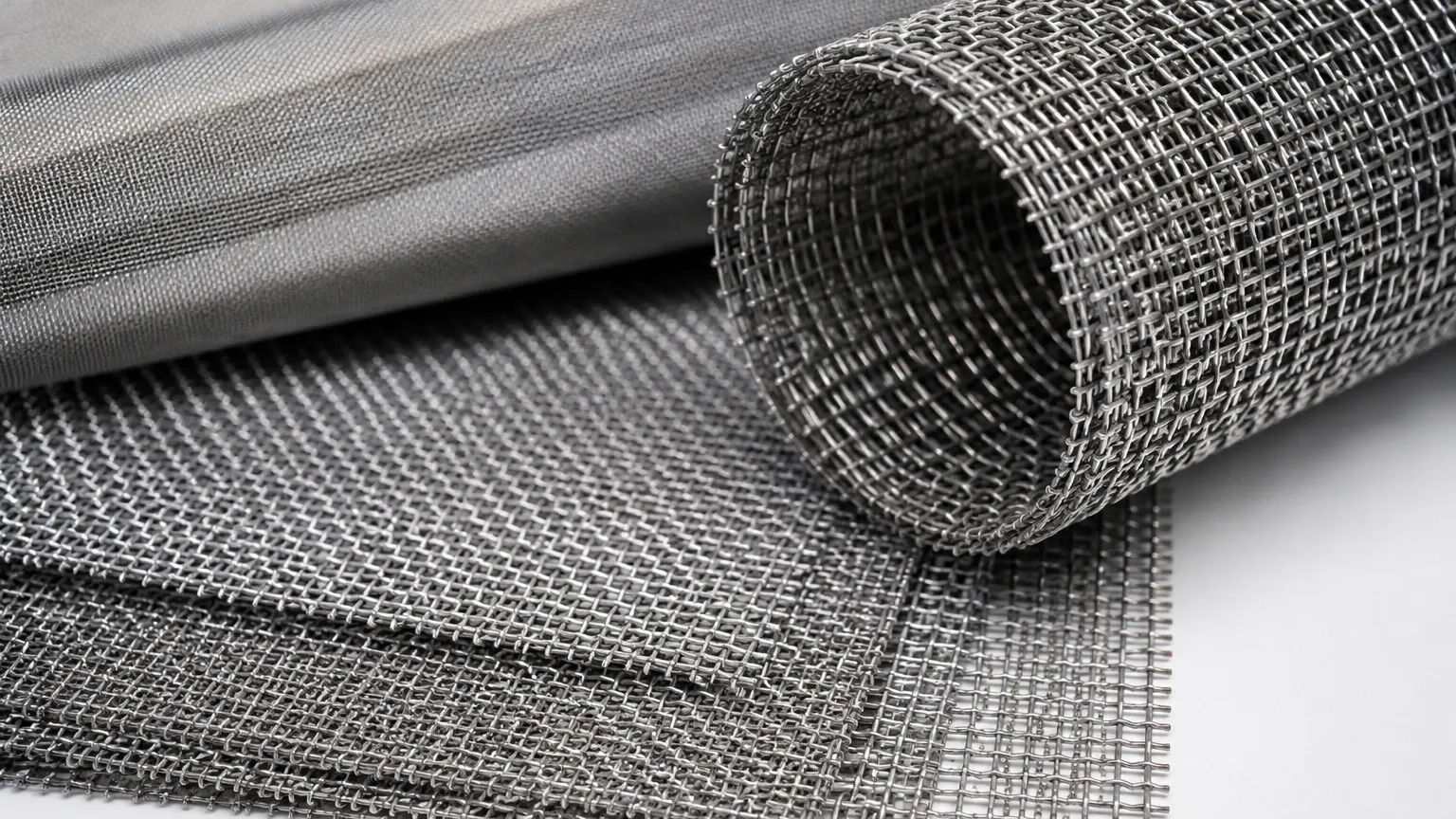
Most 6×6 mesh is produced using a Plain Weave pattern. In this construction, each warp wire (running lengthwise) passes alternately over and under each weft wire (running crosswise). This results in a stable, square-opening mesh with high dimensional accuracy.
Crimp Styles
For 6×6 configurations using heavier wire diameters, "pre-crimping" may be employed. This involves crimping the wires before they are woven together. Common styles include:
* Plain Crimp: Standard weave where wires nest in each crimp.
* Intercrimp: Extra crimps between the intersections, providing more stability for large openings with light-gauge wire.
* Lock Crimp: Provides distinct knuckles that lock the wires in place, ensuring no movement under heavy vibration or load.
Kaifil’s manufacturing process ensures that the tension and alignment of the 6×6 woven wire mesh are maintained throughout the roll, preventing "mesh migration" or aperture distortion during subsequent fabrication steps.
Critical Evaluation Criteria for Engineers
When specifying 6×6 woven wire mesh for a project, engineers should evaluate the following technical parameters to ensure the product meets the application requirements:
1. Wire Diameter Tolerance: Even minor variations in wire diameter can affect the aperture size and total open area. For precision filtration, tight tolerances are mandatory.
2. Tensile Strength: The mesh must withstand the mechanical stresses of the application, whether it is the pressure of a fluid stream or the impact of handled materials.
3. Surface Finish: In food-grade or pharmaceutical applications, the mesh may require electropolishing to remove surface impurities and improve corrosion resistance.
4. Edge Treatment: Depending on the installation, the mesh may need welded edges, hemmed edges, or to be integrated into a custom frame to prevent fraying and ensure safety.
Customization and Fabrication Capabilities
Standard rolls of Woven Wire Mesh are often just the starting point for industrial projects. Kaifil specializes in transforming raw mesh into functional components through advanced fabrication techniques:
* Precision Cutting: Utilizing CNC laser or waterjet cutting to produce complex shapes with high repeatability.
* Forming and Welding: Shaping 6×6 mesh into cylinders, cones, or pleated structures for use in filter cartridges.
* Layer Sintering: Bonding 6×6 mesh with other mesh counts to create composite materials that combine high filtration accuracy with extreme structural strength.
Total Cost of Ownership and Maintenance
While the initial purchase price of 6×6 woven wire mesh is an important factor, the total cost of ownership (TCO) is determined by its service life and maintenance requirements. Low-quality mesh may suffer from wire breakage or corrosion, leading to frequent replacements and costly system downtime.
Cleaning and Longevity
Stainless steel 6×6 mesh is generally easy to clean using backwashing, ultrasonic cleaning, or chemical solvents, depending on the contaminants involved. Because the openings are relatively large, the risk of permanent blinding (clogging) is lower than with finer meshes. Regular inspection for signs of mechanical wear or localized corrosion is recommended to prevent catastrophic failure.
Conclusion: Selecting the Right Partner
Specifying the correct 6×6 woven wire mesh requires a deep understanding of both the material science and the mechanical demands of the application. By focusing on precise aperture control, appropriate alloy selection, and robust fabrication methods, engineers can ensure their filtration and structural systems perform reliably over the long term.
Kaifil supports global industrial customers by providing high-performance Woven Wire Mesh in various grades and configurations. Whether you require standard rolls, cut-to-size panels, or fully customized filter components, our engineering team is available to assist with material selection and technical specifications to meet your project goals.
