


Woven Wire Mesh 6 Inch: Engineering Specifications and Industrial Applications
In industrial filtration and separation processes, precision is the primary determinant of system efficiency and product purity. Among the various specifications encountered by procurement teams and design engineers, the woven wire mesh 6 inch format represents a critical standard for a wide range of components, including extruder screens, basket strainers, and specialized roll widths for automated manufacturing.
Selecting the correct Woven Wire Mesh involves more than simply choosing a dimension; it requires a deep understanding of material science, weave geometry, and the mechanical stresses of the specific application. As a professional manufacturer, Kaifil provides high-performance stainless steel filtration solutions tailored to these technical requirements.
Technical Parameters of Woven Wire Mesh
When specifying woven wire mesh in a 6-inch width or diameter, engineers must evaluate three primary variables: mesh count, wire diameter, and the resulting micron rating. These factors collectively determine the filtration accuracy and the structural integrity of the mesh.
Mesh Count and Micron Rating
The mesh count refers to the number of openings per linear inch. For a 6-inch component, the uniformity of this count across the entire surface is vital for consistent flow rates. A higher mesh count typically results in a finer micron rating (the size of the smallest particle the mesh can retain). However, as the mesh count increases, the wire diameter often decreases to maintain an acceptable open area, which can impact the mechanical strength of the filter.
Wire Diameter and Open Area
The wire diameter influences the "percentage of open area," which directly correlates to the pressure drop across the filter. In a 6-inch diameter circular screen, for instance, a thicker wire provides better resistance against high-pressure differentials but reduces the total flow capacity. Engineering teams must balance the need for durability with the required throughput of the system.
Material Selection for 6-Inch Filtration Components
The environment in which the woven wire mesh 6 inch component operates dictates the choice of alloy. Stainless steel remains the industry standard due to its mechanical properties and resistance to oxidation.
* Grade 304 Stainless Steel: This is the most common choice for general industrial applications. It offers excellent strength and basic corrosion resistance, making it suitable for food processing, architectural mesh, and standard hydraulic filtration.
* Grade 316L Stainless Steel: For environments involving high salinity, acidic chemicals, or pharmaceutical processing, 316L is preferred. The addition of molybdenum provides superior resistance to pitting and crevice corrosion, particularly in the presence of chlorides.
* Specialty Alloys: In extreme cases involving high-temperature oxidation or highly aggressive chemical solvents, alloys such as Inconel or Monel may be utilized in the weaving process to ensure the longevity of the 6-inch filter element.
Weave Types and Performance Characteristics
The method by which wires are interlaced determines the mesh's behavior under load and its filtration characteristics. For 6-inch industrial components, three weave types are most prevalent:
Plain Weave
This is the simplest and most widely used weave, where each warp wire crosses alternately over and under each shute wire. It provides the highest open area and is ideal for high-flow applications where the pressure drop must be kept to a minimum. It is commonly used in 6-inch rolls for protective screening and basic particle separation.
Twill Weave
In a twill weave, each shute wire passes over and under two warp wires. This allows for a heavier wire diameter to be used for a given mesh count compared to a plain weave. Twill weave is often selected for 6-inch discs that must withstand significant mechanical stress without deforming.
Dutch Weave (Plain and Twill)
Dutch weaves utilize different diameters for warp and shute wires, resulting in a dense, firm mesh with very small, triangular openings. This weave is designed for surface filtration and is the standard for high-precision 6-inch filter cartridges used in chemical and polymer processing. It offers superior strength and the ability to be easily cleaned via backwashing.
Manufacturing and Customization of 6-Inch Mesh Products
Achieving a precise 6-inch specification requires advanced manufacturing capabilities to ensure dimensional stability and edge integrity. Kaifil specializes in several fabrication methods for these components:
1. Slitting and Roll Production: For applications requiring 6-inch wide strips, precision slitting ensures that the edges are clean and the width remains consistent throughout the roll length. This is essential for automated feeding systems in stamping or forming machines.
2. Die-Cutting and Stamping: 6-inch mesh discs are frequently used in plastic extrusion and oil filtration. Using high-precision dies ensures that every disc fits perfectly within the housing, preventing bypass—a common failure point in poorly manufactured filters.
3. Welding and Framing: For 6-inch diameter cylinders or basket strainers, the mesh must be joined using TIG, plasma, or resistance welding. Proper welding techniques ensure that the structural integrity of the woven wire mesh 6 inch component is maintained even under high-pressure pulses.
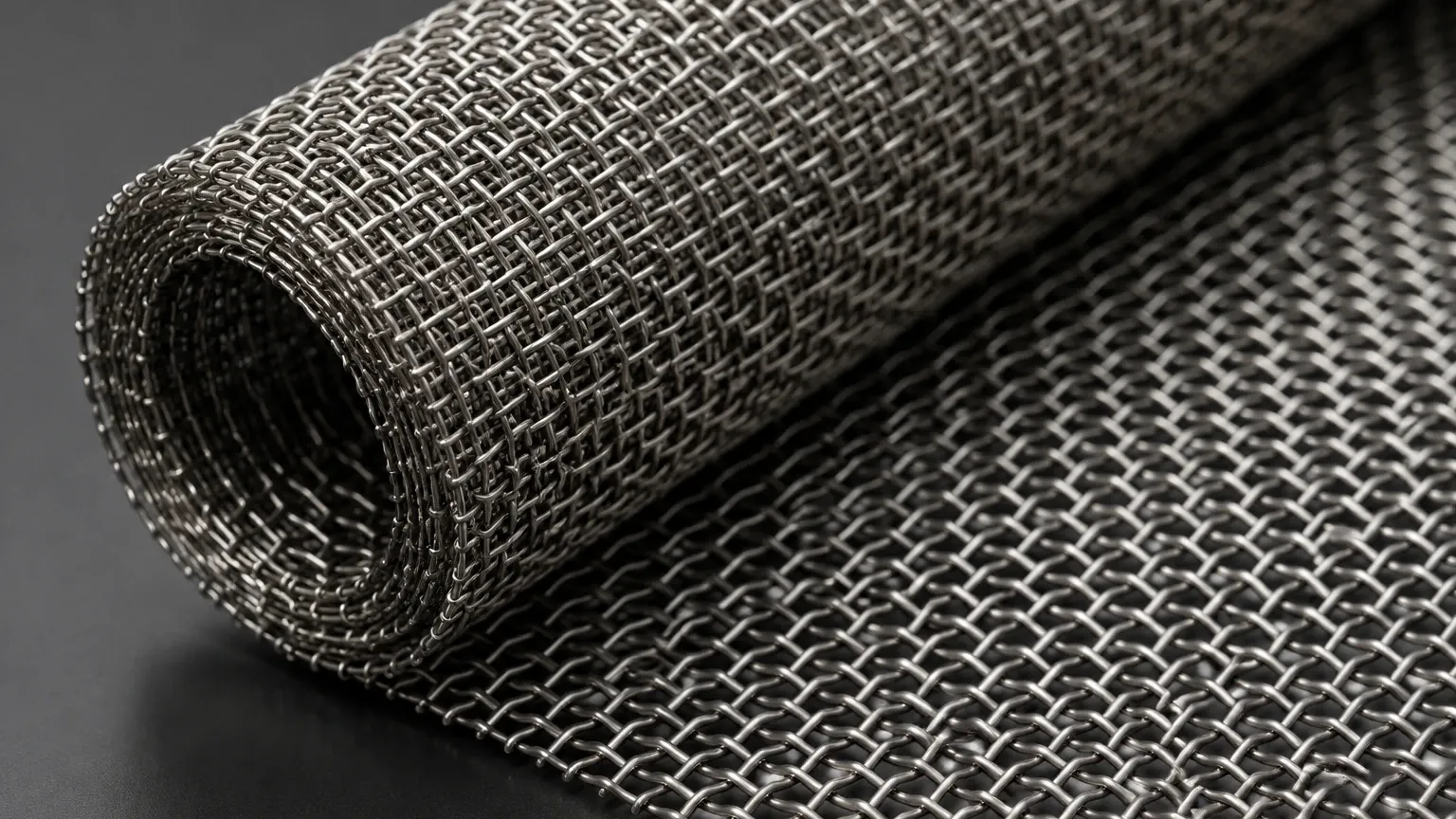
Industrial Applications for 6-Inch Mesh
The versatility of the 6-inch format allows it to serve multiple sectors, each with unique performance expectations.
Chemical and Petrochemical Processing
In these sectors, 6-inch mesh strainers are used to protect downstream equipment from particulate contamination. The mesh must resist corrosive fluids and maintain its pore geometry under fluctuating temperatures. 316L stainless steel Dutch weave is often the preferred specification here.
Food and Beverage Industry
Filtration in food production requires materials that are non-toxic and easy to sanitize. 6-inch woven wire mesh components are used in sieving equipment and liquid filtration systems. Compliance with hygiene standards is paramount, requiring smooth wire surfaces and burr-free edges to prevent bacterial growth.
Hydraulic and Lubrication Systems
High-pressure hydraulic systems utilize 6-inch mesh elements to remove wear particles from oils. These filters must handle high viscosity fluids and significant pressure differentials. The structural support of the mesh, often achieved through pleating or multi-layer sintering, is a critical engineering consideration.
Evaluating Quality and Minimizing Procurement Risks
When sourcing woven wire mesh 6 inch products, purchasing teams should confirm several technical details to avoid premature component failure or system downtime:
* Dimensional Accuracy: Ensure the width or diameter tolerances align with the equipment housing. Even a 1mm deviation can lead to fluid bypass.
* Material Certification: Request mill test reports (MTRs) to verify the chemical composition of the stainless steel, ensuring it meets the required 304 or 316L standards.
* Mesh Integrity: Inspect for weaving defects such as "shute streaks" or irregular spacing, which can create localized high-velocity zones and lead to rapid mesh erosion.
* Pressure Drop Calculations: Consult with the manufacturer to understand the expected clean pressure drop at the required flow rate. This helps in sizing pumps and determining the replacement cycle for the filter elements.
Engineering Support and Custom Solutions
At Kaifil, we understand that standard off-the-shelf solutions do not always meet the demands of complex industrial environments. Whether you require a specific woven wire mesh 6 inch width for a custom conveyor or high-precision 6-inch discs for a polymer melt filter, our engineering team provides the technical guidance necessary for optimal selection.
From selecting the appropriate weave for high-viscosity fluids to providing OEM manufacturing for specialized filter assemblies, we focus on delivering durability and precise filtration performance. By considering the total cost of ownership—including filter lifespan and cleaning intervals—we help our partners achieve more efficient and cost-effective operations.
For technical specifications, material availability, or to request a quote for your specific filtration requirements, Review product options and application support to ensure your project benefits from high-quality stainless steel wire mesh solutions.
