


7 Woven Wire Fence
In the realm of industrial infrastructure and facility management, the term "7 woven wire fence" frequently appears in specifications for perimeter security, machine guarding, and specialized containment. While the number "7" often refers to the height of the barrier in feet or the gauge of the wire, the underlying technology relies on the precision and durability of industrial-grade Woven Wire Mesh.
For engineers and procurement professionals, selecting a 7-foot woven wire barrier involves more than just choosing a height. It requires a deep understanding of material science, weave patterns, and mechanical properties to ensure the installation survives the rigors of chemical exposure, mechanical impact, and environmental degradation. This guide examines the technical nuances of woven wire systems, focusing on how high-quality stainless steel components provide the structural integrity required for demanding B2B environments.
Understanding the Technical Specifications of a 7 Woven Wire Fence
When specifying a 7 woven wire fence, the "7" typically denotes a 7-foot standard height, which is the industry benchmark for high-security industrial partitions. However, from an engineering perspective, the performance of this fence is dictated by the mesh configuration and the wire diameter.
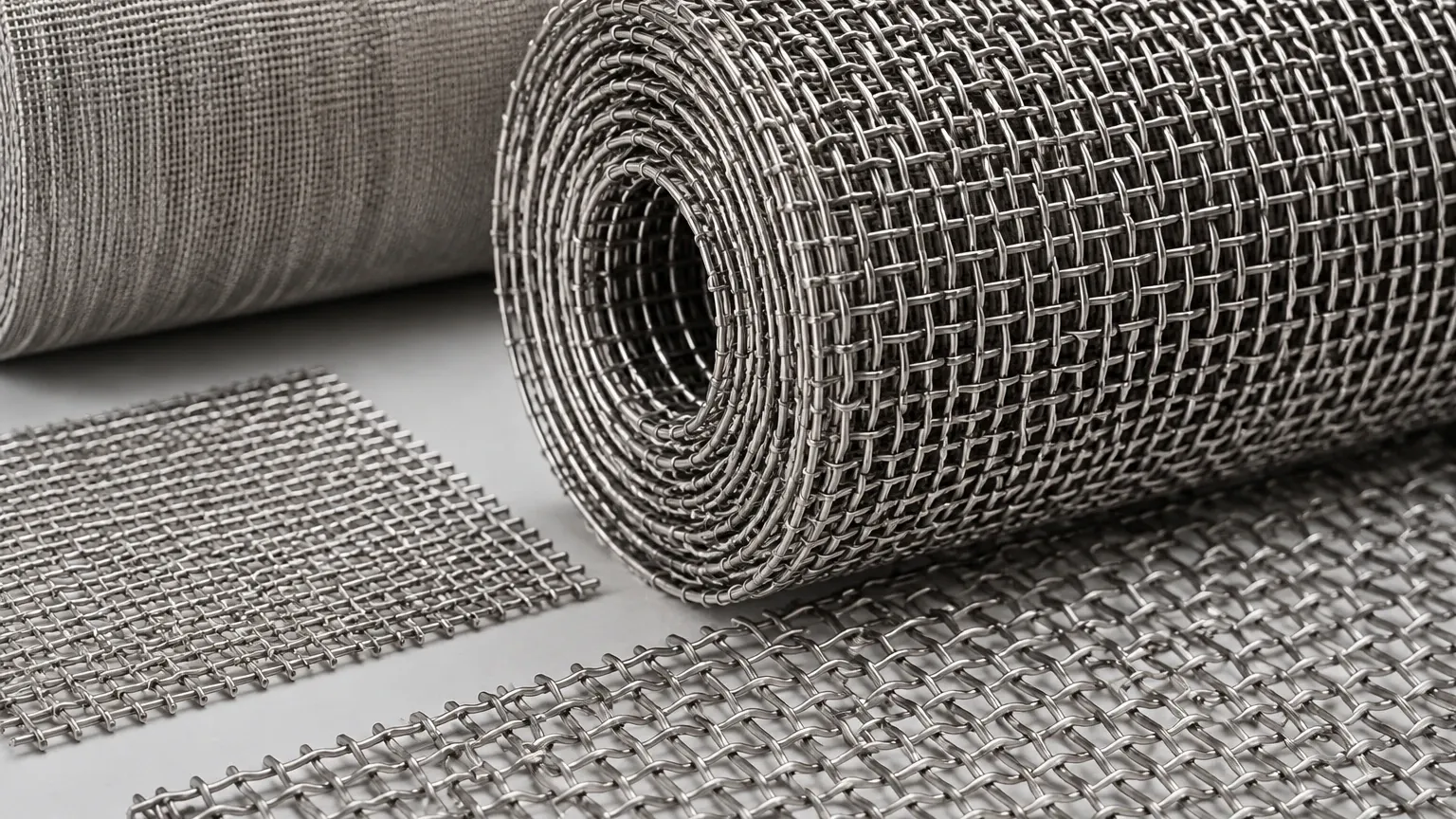
Industrial woven wire is manufactured by weaving individual metallic wires over and under each other to create a stable, consistent grid. Unlike welded wire, where the intersections are fused via heat, woven mesh relies on the mechanical tension and the "crimp" of the wires to maintain its shape. This allows for a degree of flexibility and impact resistance that is essential in heavy-duty applications.
Gauge and Wire Diameter
In the context of a 7-foot barrier, the wire gauge is a critical variable. A 7-gauge wire (approximately 4.47mm in diameter) is often used for heavy-duty security, providing significant resistance to cutting and deformation. For finer filtration or lighter guarding applications, higher gauge numbers (thinner wires) may be used, but these require closer support structures to maintain the 7-foot vertical span without sagging.
Material Selection: The Case for Stainless Steel
One of the most significant decisions an engineer must make is the choice of material. While galvanized steel is common in agricultural settings, industrial environments—especially those involving chemical processing, food production, or marine exposure—demand the superior properties of stainless steel.
SS304 vs. SS316L
* Type 304 Stainless Steel: This is the standard "18-8" stainless steel. It offers excellent corrosion resistance for most indoor industrial applications and standard outdoor environments. It is the cost-effective choice for 7-foot partitions in warehouses and dry manufacturing plants.
* Type 316L Stainless Steel: For facilities dealing with chlorides, acids, or high humidity (such as wastewater treatment or chemical synthesis), 316L is the necessary upgrade. The addition of molybdenum provides superior pitting resistance, ensuring that a 7 woven wire fence maintains its structural integrity over decades rather than years.
Engineering the Weave: Patterns and Performance
The way the wires are interlaced—the weave pattern—determines the mesh's open area, strength, and suitability for specific tasks. While a fence is primarily a physical barrier, in many industrial settings, it also serves as a ventilation screen or a coarse filter.
Plain Weave
The most common pattern where each warp wire crosses alternately over and under each shute wire. This provides the highest degree of transparency and airflow, making it ideal for 7-foot machine guards where visibility of the equipment is paramount.
Twill Weave
In a twill weave, each warp wire passes over and under two successive shute wires. This allows for the use of heavier wires in a given mesh count, increasing the tensile strength of the barrier. For a 7 woven wire fence that may be subject to high-pressure impacts or heavy vibration, a twill weave offers enhanced durability.
Dutch Weave
Primarily used in high-precision filtration, Dutch weaves utilize different diameters for warp and shute wires. While less common for standard perimeter fencing, Dutch woven mesh is utilized in 7-foot tall intake screens for water treatment facilities, where the barrier must prevent fine debris from entering the system while maintaining high flow rates.
Structural Integrity and Load Considerations
A 7-foot tall woven wire panel faces specific mechanical challenges. Because the mesh is not a solid sheet, it must be engineered to handle wind loads (if outdoors) and potential impacts (if used as a safety barrier).
1. Tensile Strength: Stainless steel woven mesh typically exhibits high tensile strength, but the "open area" percentage affects how the load is distributed across the panel. Engineers must calculate the force required to deflect the mesh and ensure the framing system can support the tension.
2. Crimp Style: The type of crimp (lock crimp, intermediate crimp, or plain crimp) determines how securely the wires are held. For a 7-foot span, a lock crimp is often preferred as it prevents the wires from shifting or "walking" under mechanical stress.
3. Aperture Consistency: In safety applications, the aperture (the clear opening between wires) must be consistent to meet OSHA or ISO safety standards. Precision manufacturing ensures that no gap exceeds the specified dimension, preventing fingers or tools from passing through the barrier.
Applications of 7-Foot Woven Wire Barriers in Industry
While the term "fence" implies a perimeter, industrial Woven Wire Mesh of this height serves several critical roles:
1. Machine Guarding and Safety Enclosures
In automated manufacturing, 7-foot panels are used to create safety cells around robotics. The woven structure allows for cooling airflow and visual monitoring while providing a robust physical shield against mechanical failure or accidental entry.
2. Chemical and Pharmaceutical Cleanrooms
Stainless steel 7-foot partitions are essential in cleanroom environments where wooden or plastic barriers would shed particles or harbor bacteria. The ability to withstand rigorous steam cleaning and chemical sterilization makes 304 or 316L woven mesh the standard for these sectors.
3. Industrial Filtration and Intake Screens
In large-scale water treatment or cooling towers, 7-foot tall woven mesh panels act as the primary defense against large particulates. These "fences" must be corrosion-resistant and easy to clean, often requiring custom-framed panels that can be slid out for maintenance.
4. High-Security Storage and Tool Cribs
For the protection of high-value inventory or hazardous materials, a 7 woven wire fence provides a tamper-evident barrier. Unlike solid walls, the mesh allows for fire suppression systems (sprinklers) to penetrate the enclosure and for security personnel to maintain a clear line of sight.
Installation and Maintenance: Maximizing ROI
The total cost of ownership for a 7-foot woven wire system is heavily influenced by the quality of installation and the choice of materials.
* Framing Systems: For industrial use, mesh panels should be securely bolted into structural steel frames. This prevents the edges of the mesh from fraying and ensures that the tension is evenly distributed.
* Corrosion Monitoring: Even stainless steel requires occasional inspection. In coastal or high-chemical environments, a simple passivating wash can remove surface contaminants and prevent the onset of localized corrosion.
* Replacement Cycles: High-quality stainless steel mesh can last 20-30 years in standard industrial conditions. When specifying a 7 woven wire fence, engineers should confirm the alloy's certification to avoid the premature failure associated with sub-standard "commodity" wire.
What Engineers Should Confirm Before Procurement
To ensure the filtration or barrier solution meets the project's technical requirements, purchasing teams should verify the following data points with their manufacturer:
* Mesh Count vs. Aperture: Clearly define whether you need a specific number of openings per inch or a specific clear opening size in millimeters or microns.
* Wire Diameter: Specify the gauge or decimal diameter. Thicker wire increases durability but reduces the open area (airflow/visibility).
* Edge Treatment: Determine if the mesh will be supplied in raw rolls, cut-to-size pieces, or pre-installed in framed panels with finished edges.
* Alloy Certification: Request Mill Test Reports (MTRs) to confirm the chemical composition of the stainless steel, particularly the Nickel and Chromium content.
* Load Requirements: If the 7-foot barrier is intended for safety guarding, provide the expected impact force to ensure the mesh and frame are engineered correctly.
Conclusion
The specification of a 7 woven wire fence in an industrial context is a task that bridges the gap between structural engineering and material science. By moving beyond generic fencing products and opting for precision-engineered Woven Wire Mesh, facilities can achieve a balance of security, visibility, and longevity. Whether the application is a high-security partition or a critical industrial intake screen, the choice of the correct stainless steel alloy and weave pattern is the foundation of a reliable, high-performance filtration and containment strategy.
