


7ft Woven Wire
In industrial filtration and screening, the dimensions of the media are as critical as the micron rating itself. When engineers specify 7ft woven wire, they are typically addressing large-scale requirements where seamless integration, structural integrity, and high-volume throughput are paramount. Whether the 7ft dimension refers to the width of a roll or a specific panel length, sourcing and implementing wide-format woven wire mesh requires a deep understanding of metallurgical properties, weave mechanics, and the physical stresses associated with large surface areas.
This guide provides a technical overview of Woven Wire Mesh in industrial contexts, focusing on the engineering considerations necessary for selecting, installing, and maintaining wide-format filtration components.
Defining the 7ft Specification in Industrial Woven Wire Mesh
In the manufacturing of industrial wire cloth, standard widths often range from 36 inches to 60 inches. A 7ft woven wire specification (84 inches) is considered a wide-format product. Producing mesh at this width requires specialized, heavy-duty looms capable of maintaining consistent tension across the entire warp (lengthwise) and weft (crosswise) wires.
Width vs. Length Considerations
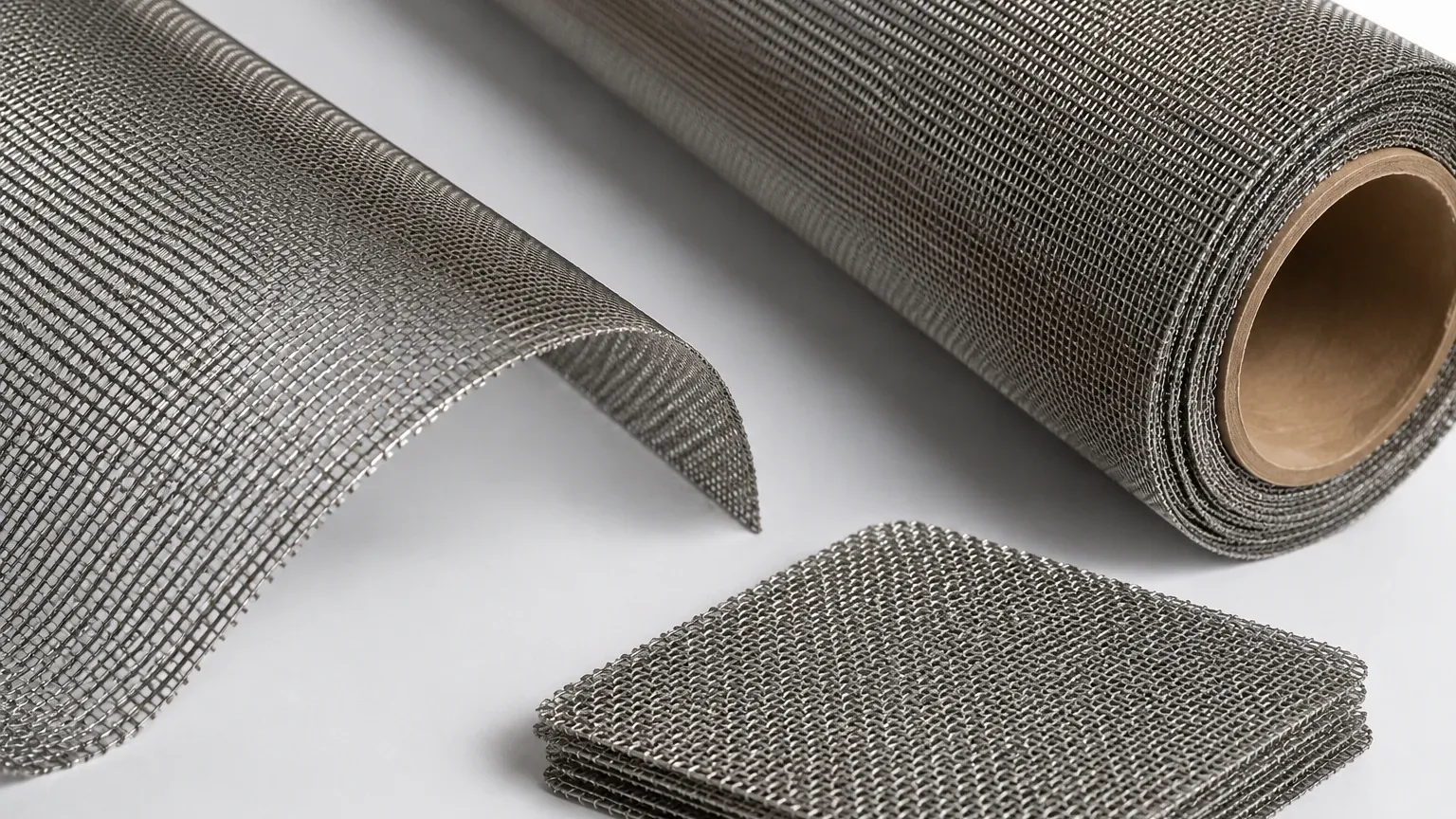
For many B2B buyers, 7ft represents the width of the roll. The primary advantage of utilizing 7ft wide mesh is the reduction of seams in large-scale equipment. In applications such as large vibrating screens, rotary drum filters, or architectural facades, seams are often the weakest point of the installation. By using a single 7ft wide span, engineers can:
* Improve Structural Integrity: Eliminate potential failure points at weld or overlap seams.
* Enhance Filtration Consistency: Ensure uniform flow rates across the entire surface area without the turbulence caused by seam obstructions.
* Reduce Installation Labor: Simplify the mounting process by handling fewer individual panels.
Material Selection: Engineering for Durability and Chemical Resistance
The performance of 7ft woven wire is heavily dependent on the alloy selected. Because wide-format mesh often supports higher loads or covers larger spans, the mechanical properties of the material are critical.
Stainless Steel 304
SS304 is the industry standard for general-purpose applications. It offers excellent weldability and good corrosion resistance for non-acidic environments. In 7ft widths, SS304 provides a cost-effective solution for food processing, architectural screening, and standard industrial filtration.
Stainless Steel 316L
For demanding chemical processing, pharmaceutical, or marine environments, SS316L is the preferred choice. The addition of molybdenum enhances resistance to pitting and crevice corrosion, particularly in chloride-rich environments. The "L" (Low Carbon) designation is vital for 7ft panels that require extensive welding, as it prevents carbide precipitation and ensures the longevity of the mesh under thermal stress.
High-Temperature and Specialty Alloys
In specialized sectors like petrochemical refining, materials such as Inconel or Monel may be required. These alloys maintain their tensile strength and oxidation resistance at temperatures far exceeding the limits of standard stainless steel, which is essential for 7ft wide mesh used in high-heat reactor internals.
Weave Types and Their Impact on Performance
The weave pattern dictates the filtration accuracy, flow capacity, and mechanical stability of the 7ft woven wire. Depending on the industrial requirement, different weaves offer varying benefits.
Plain Weave
This is the most common weave, where each weft wire passes over and under one warp wire. It provides the highest open area and is ideal for high-flow applications. However, in 7ft widths, plain weave mesh with very fine wires may lack the necessary rigidity for unsupported spans.
Twill Weave
In a twill weave, wires pass over two and under two, allowing for a heavier wire diameter relative to the mesh count. This results in a more robust mesh that can handle higher pressures. It is often used when a 7ft span must withstand significant mechanical vibration or heavy particulate loading.
Dutch Weave (Plain and Twill)
Dutch weaves utilize a larger diameter warp wire and a smaller diameter weft wire, woven tightly together to create a dense filtration media. This weave does not have straight-through openings but rather a tortuous path, making it excellent for high-pressure hydraulic and fuel filtration. In wide formats, Dutch weave mesh provides exceptional strength and precision.
Structural Considerations for Large-Scale Mesh Installations
Installing a 7ft wide section of Woven Wire Mesh presents unique engineering challenges compared to standard narrow strips. The physics of tension and sag must be carefully calculated.
Tensioning and Support
Large spans of wire mesh are prone to sagging under their own weight or under the pressure of the fluid/material being filtered. To maintain the designed aperture size and prevent premature fatigue, 7ft panels must be properly tensioned. This often involves:
* Hook Strips: Reinforced edges that allow the mesh to be pulled taut across a frame.
* Support Grids: Heavier, coarse mesh or perforated metal backing that provides a foundation for the finer 7ft filtration layer.
* Tensioning Bolts: Mechanical systems designed to apply uniform force across the 84-inch width.
Mechanical Stress and Fatigue
In vibrating screen applications, the center of a 7ft wide panel experiences different stress levels than the edges. Engineers must account for the "drumming" effect, where the mesh oscillates. If not correctly supported, this can lead to work-hardening of the wires and eventual fracture. Selecting the correct wire gauge (diameter) is essential to balance filtration efficiency with the mechanical endurance required for a wide span.
Application Profiles for Wide-Format Mesh
Where is 7ft woven wire most commonly deployed? Its utility spans several critical industrial sectors.
1. Water Treatment and Desalination
Large-scale intake screens and filtration systems for municipal water treatment often require wide-format mesh to handle massive flow volumes. The 7ft width allows for the construction of large traveling water screens that protect downstream pumps and membranes from debris.
2. Chemical and Petrochemical Processing
In large reactor vessels, woven wire is used for catalyst support and mist elimination. A 7ft wide roll allows for the fabrication of large-diameter circular internals with minimal welding, reducing the risk of chemical bypass or structural failure at the seams.
3. Food and Beverage Production
Conveyor belts and drying trays in the food industry frequently utilize wide-format mesh. In high-volume grain processing or industrial baking, a 7ft wide mesh belt ensures a continuous, uniform surface for heat transfer and moisture removal.
4. Architectural and Security Screening
Beyond filtration, 7ft wide stainless steel mesh is used in architectural applications for building facades, fall protection, and security partitions. The aesthetic value of a seamless 7ft wide panel is highly prized by architects, while the material's strength provides a functional safety barrier.
Quality Control and Technical Confirmation
When procuring 7ft woven wire, B2B buyers must confirm several technical parameters to ensure the product is fit for purpose. High-quality manufacturing at this scale requires rigorous quality control.
Mesh Count and Micron Rating
The mesh count (number of openings per linear inch) must be consistent across the entire 7ft width. Variations in wire spacing can lead to "streaking" or inconsistent filtration performance. Buyers should request a micron rating certification, especially for critical pharmaceutical or laboratory applications.
Wire Diameter and Tolerances
The diameter of the wire directly affects the open area and the strength of the mesh. For a 7ft span, even a slight deviation in wire gauge can significantly alter the weight and tensioning requirements of the panel. Standard tolerances should follow ASTM E2016 or ISO 9044 guidelines.
Edge Finish
How the 7ft wide mesh is finished is crucial for installation safety and longevity. Options include:
* Raw Edges: Wires are left as cut, suitable for further fabrication or welding into frames.
* Soldered/Welded Edges: Prevents fraying during handling.
* Hemmed/Hooked Edges: Prepared specifically for mechanical tensioning systems.
Procurement Checklist: What to Confirm Before Ordering
To ensure a successful project outcome, engineers and purchasing teams should confirm the following details with their manufacturer:
1. Exact Dimensions: Is the 7ft requirement for the width, or is it a custom-cut length? Confirm if there are any required tolerances for the final cut size.
2. Environment Compatibility: Verify the chemical composition of the process fluid to ensure SS304, SS316L, or a specialty alloy is appropriate.
3. Pressure and Load Requirements: Will the mesh be subjected to high differential pressure? This will determine if a plain weave is sufficient or if a twill/Dutch weave is necessary.
4. Certification Needs: Do you require material test reports (MTRs), certificates of conformance, or FDA compliance for food-grade applications?
5. Packaging and Shipping: 7ft wide rolls are bulky and heavy. Confirm that the manufacturer uses protective crating to prevent edge damage or deformation during transit.
Conclusion
Selecting the right 7ft woven wire involves more than just identifying a size; it requires a holistic view of the filtration system's engineering demands. By focusing on material integrity, weave selection, and proper structural support, industrial operators can maximize the service life and efficiency of their filtration media. For those managing large-scale industrial processes, the move to wide-format mesh often represents a significant step toward optimized performance and reduced maintenance overhead.
When technical precision is required for demanding environments, working with a specialized manufacturer like Kaifil ensures that every roll of Woven Wire Mesh meets the exacting standards of modern industry.
