


7×7 Wire Mesh
In the landscape of industrial filtration and material separation, the selection of an appropriate mesh count is a fundamental engineering decision. Among the various configurations of Woven Wire Mesh, the 7×7 wire mesh stands as a versatile specification often utilized for coarse filtration, structural reinforcement, and protective screening.
Understanding the technical nuances of 7×7 wire mesh—ranging from aperture calculations to material compatibility—is essential for engineers and procurement professionals aiming to optimize system performance and longevity. This guide provides a comprehensive technical overview of 7×7 woven wire mesh, focusing on its physical properties, engineering considerations, and industrial utility.
Understanding the 7×7 Mesh Specification
The term "7×7 wire mesh" (commonly referred to as 7 mesh) identifies a woven structure containing seven wires per linear inch in both the warp (lengthwise) and shute (crosswise) directions. This results in 49 openings per square inch. While the mesh count is fixed, the performance characteristics of the mesh are significantly influenced by the wire diameter chosen for the weave.
Geometric Calculations
For any industrial application, the two most critical geometric values are the aperture (clear opening) and the percentage of open area. These are calculated using the following formulas:
1. Aperture (A): The distance between two adjacent parallel wires.
* Formula: $A = (1 / Mesh Count) – Wire Diameter$
2. Open Area (OA%): The ratio of the area of the openings to the total area of the mesh.
* Formula: $OA% = (A^2 / (A + d)^2) \times 100$ (where $d$ is wire diameter)
For a standard 7×7 wire mesh with a wire diameter of 0.035 inches (0.889 mm), the aperture would be approximately 0.108 inches (2.74 mm), resulting in an open area of roughly 57%. Adjusting the wire diameter allows engineers to balance mechanical strength against flow capacity. Thicker wires increase durability and resistance to high-pressure differentials but decrease the open area, leading to higher initial pressure drops.
Material Selection for 7×7 Woven Wire Mesh
Material science plays a pivotal role in the success of a filtration component. At Kaifil, we specialize in high-performance alloys to ensure that the 7×7 wire mesh can withstand the specific chemical and thermal stresses of its environment.
Stainless Steel 304
Grade 304 is the most common material for 7×7 mesh. It offers excellent mechanical properties and basic corrosion resistance. It is suitable for most general industrial applications, including food processing (where it is widely accepted for its hygienic properties) and architectural screening. However, it is susceptible to chloride pitting in marine environments or highly acidic conditions.
Stainless Steel 316L
For more demanding environments, Stainless Steel 316L is the preferred choice. The addition of molybdenum enhances its resistance to pitting and crevice corrosion, particularly in saline or chemically aggressive media. The "L" designation signifies low carbon content, which minimizes carbide precipitation during welding, ensuring the structural integrity of the mesh when integrated into framed panels or filter cartridges.
Specialty Alloys
In specialized chemical processing or high-temperature applications, materials such as Duplex stainless steel or Monel may be required. These materials provide superior resistance to stress corrosion cracking and maintain mechanical strength at elevated temperatures where standard austenitic steels might fail.
Weave Styles and Structural Integrity
The 7×7 wire mesh is typically produced using a Plain Weave pattern. In this construction, each shute wire passes alternately over and under each warp wire. This is the simplest and most stable weave for coarse mesh counts like 7 mesh.
Stability and Crimping
To ensure the wires do not shift under mechanical load, industrial 7×7 mesh often utilizes a pre-crimping process.
* Plain Weave (No Crimp): Suitable for fine meshes, but for 7 mesh with thinner wires, the wires may shift.
* Intermediate Crimp: Extra crimps are added between the intersection points to provide greater rigidity, which is particularly useful when the aperture is large relative to the wire diameter.
* Lock Crimp: The wires are crimped at the intersections to "lock" them in place, ensuring the aperture remains consistent even under vibration or heavy material loading.
For filtration applications, maintaining a consistent aperture is critical to ensuring the reliability of the particle cut-off point. Plain, twill and dutch woven wire mesh in SS304/316L — rolls, cut mesh and framed panels. Send mesh count or micron target for a technical quote.
Key Engineering Considerations
When specifying 7×7 wire mesh for a technical project, several performance metrics must be evaluated to ensure the component meets the application's requirements.
1. Pressure Drop and Flow Rate
In liquid and gas filtration, the mesh acts as a resistance point. The pressure drop ($ΔP$) across a 7×7 mesh is a function of the fluid velocity, viscosity, and the mesh's open area. Because 7 mesh has relatively large openings, it is frequently used as a primary stage or "trash screen" to protect downstream fine filters. Engineers must calculate the clean pressure drop to ensure the system's pump or blower capacity is sufficient.
2. Mechanical Loading and Burst Strength
In hydraulic systems or high-pressure gas streams, the mesh may be subjected to significant differential pressures as it becomes loaded with contaminants. The burst strength of the 7×7 wire mesh depends on the tensile strength of the wire and the quality of the weave. If the mesh is used in a filter cartridge, it may require a perforated metal core or an external shroud for additional structural support.
3. Effective Filtration Area (EFA)
To extend the service life between cleaning or replacement cycles, maximizing the EFA is essential. While a flat 7×7 mesh panel has a fixed area, pleating the mesh can significantly increase the surface area within the same footprint. This reduces the face velocity of the fluid, leading to lower pressure drops and higher dirt-holding capacity.
Industrial Applications of 7×7 Wire Mesh
Due to its robust nature and relatively large aperture, 7×7 woven wire mesh is utilized across various sectors where coarse separation or protection is required.
Chemical and Petrochemical Processing
In chemical plants, 7 mesh is used in strainer baskets to remove large particulates from process streams. Its resistance to corrosion (when manufactured from 316L or specialty alloys) makes it ideal for handling catalysts, raw chemical feedstocks, and wastewater.
Food and Beverage Production
7×7 mesh is frequently employed in the initial stages of food processing, such as grain cleaning or fruit juice straining. The smooth surface of stainless steel wire mesh allows for easy cleaning and sterilization, complying with strict hygiene standards.
Hydraulic and Lubrication Systems
In large-scale hydraulic power units, 7×7 mesh serves as a suction strainer. It prevents large debris from entering the pump, which could cause catastrophic mechanical failure. These are often custom-fabricated as cylindrical or conical filters.
Architectural and Security Applications
Beyond filtration, the 7×7 configuration is popular in architectural design for infill panels and security screens. It provides a balance of visibility, airflow, and physical security. When used in these contexts, the aesthetic finish—such as electropolishing—becomes a key requirement.
Customization and OEM Capabilities
As a professional manufacturer, Kaifil understands that standard off-the-shelf mesh rarely meets the exact needs of complex industrial systems. Customization options for 7×7 wire mesh include:
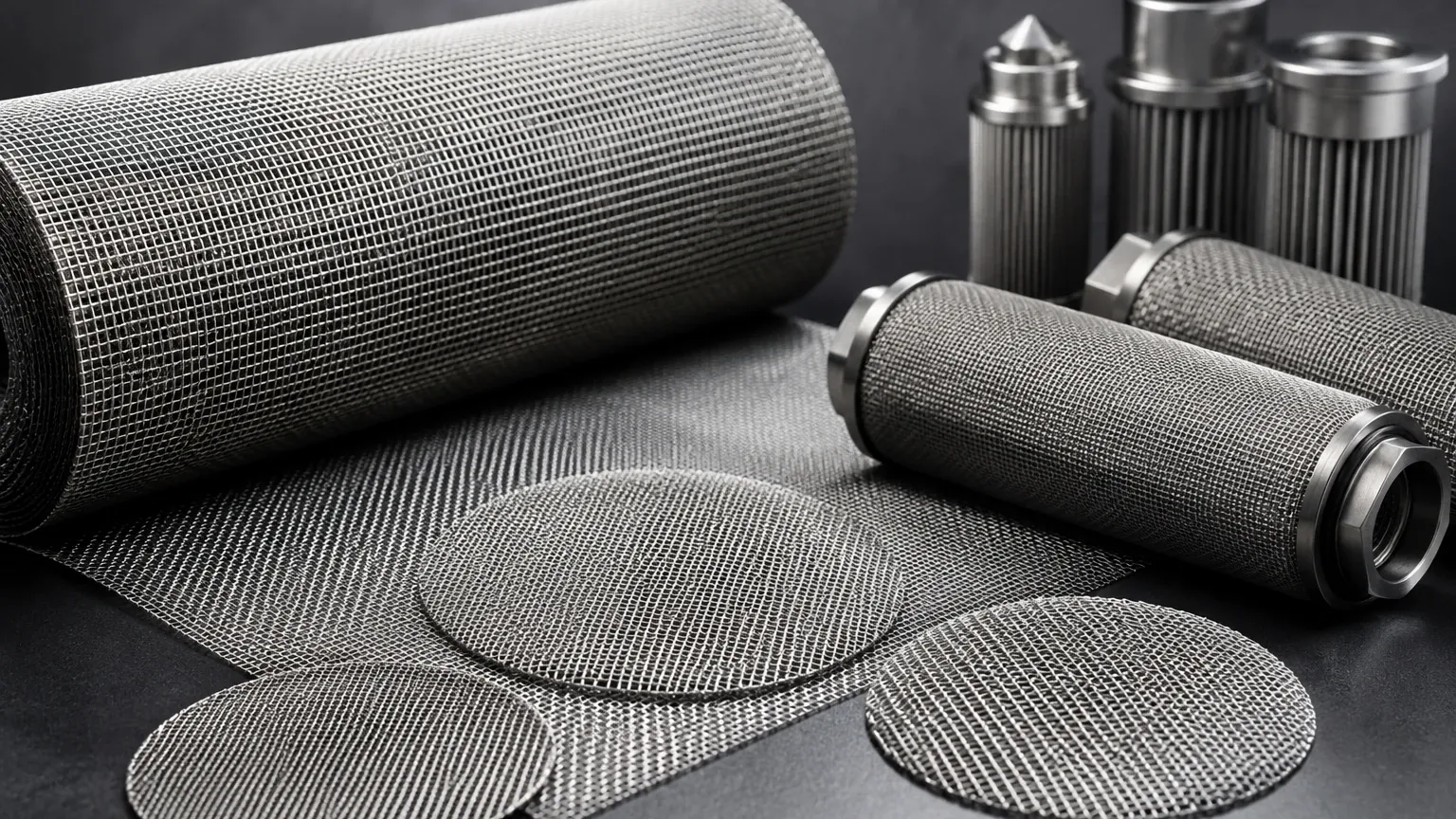
* Custom Slitting and Cutting: Providing mesh in specific widths or precision-cut shapes (circles, rectangles, or complex geometries) to fit existing equipment.
* Edge Treatment: Options include hemmed edges, welded edges, or framed panels to prevent fraying and facilitate safe handling and installation.
* Fabrication into Components: Transforming 7×7 mesh into multi-layered filter packs, pleated cartridges, or reinforced strainer baskets.
* Surface Finishing: Electropolishing for enhanced corrosion resistance and cleanliness, or passivating to remove surface contaminants after fabrication.
Procurement Checklist: What to Confirm
To ensure the delivery of a 7×7 wire mesh product that meets your engineering specifications, the following data points should be confirmed during the quoting process:
1. Material Grade: Specify SS304, SS316L, or other alloys based on the chemical environment.
2. Wire Diameter: Confirm the wire gauge required, as this dictates the aperture and strength.
3. Overall Dimensions: Provide exact width and length (for rolls) or detailed drawings (for cut pieces/fabricated parts).
4. Quantity: Industrial manufacturing often benefits from economies of scale.
5. Compliance Requirements: Note if the material requires FDA compliance, material test reports (MTRs), or specific ISO quality certifications.
6. Application Environment: Sharing details about temperature, pressure, and fluid type allows our engineering team to provide better material and design recommendations.
Conclusion
The 7×7 wire mesh is a workhorse of industrial screening and filtration. Its ability to provide reliable coarse separation while maintaining high flow rates makes it indispensable in sectors ranging from heavy manufacturing to food production. By selecting the right material and wire diameter, and by considering the mechanical stresses of the application, engineers can ensure that their filtration systems operate at peak efficiency.
Kaifil remains committed to providing high-precision Woven Wire Mesh solutions tailored to the specific needs of global industrial customers. Whether you require standard rolls of 7×7 mesh or complex, custom-engineered filtration components, our technical expertise ensures a solution that balances performance, durability, and cost-effectiveness.
