


Aluminium Woven Wire Mesh: Engineering Properties, Selection, and Industrial Applications
In the specialized field of industrial filtration and material separation, selecting the appropriate alloy is as critical as determining the required micron rating. While stainless steel is often the default choice for high-pressure or chemically aggressive environments, aluminium woven wire mesh offers a distinct set of physical and mechanical properties that make it the optimal solution for specific engineering challenges. Characterized by its exceptional strength-to-weight ratio, high thermal and electrical conductivity, and natural atmospheric corrosion resistance, aluminium mesh is a staple in aerospace, automotive, EMI shielding, and specialized filtration sectors.
As a professional manufacturer of precision filtration components, Kaifil understands that engineers must balance performance requirements with material costs and weight constraints. This guide provides a technical overview of aluminium woven wire mesh, exploring its material grades, weave structures, and the critical factors that influence its selection in B2B industrial applications.
Material Grades and Chemical Composition
Unlike generic wire products, industrial-grade aluminium woven wire mesh is produced from specific alloys tailored to performance needs. The choice of alloy dictates the mesh's ductility, tensile strength, and resistance to environmental factors. The most common alloys used in the weaving process include:
1000 Series (Commercially Pure Aluminium)
Alloy 1350 is frequently used for applications requiring maximum electrical conductivity. With a minimum aluminium content of 99.5%, it is highly ductile and offers excellent corrosion resistance, though its mechanical strength is lower than alloyed variants. It is often selected for grounding applications and specialized electrochemical filters.
5000 Series (Aluminium-Magnesium Alloys)
Alloys such as 5052 and 5056 are the industry standards for high-strength aluminium mesh. The addition of magnesium provides superior corrosion resistance, particularly in marine environments or alkaline conditions. These alloys offer excellent fatigue strength and are the preferred choice for structural filtration components and insect screens in demanding industrial settings.
6000 Series (Aluminium-Magnesium-Silicon Alloys)
Alloy 6061 is used when the mesh requires post-weaving heat treatment or when it must be integrated into rigid frames via welding. It offers a good balance of mechanical properties and corrosion resistance, making it suitable for heavy-duty industrial guards and architectural filtration panels.
Technical Specifications of Woven Wire Mesh
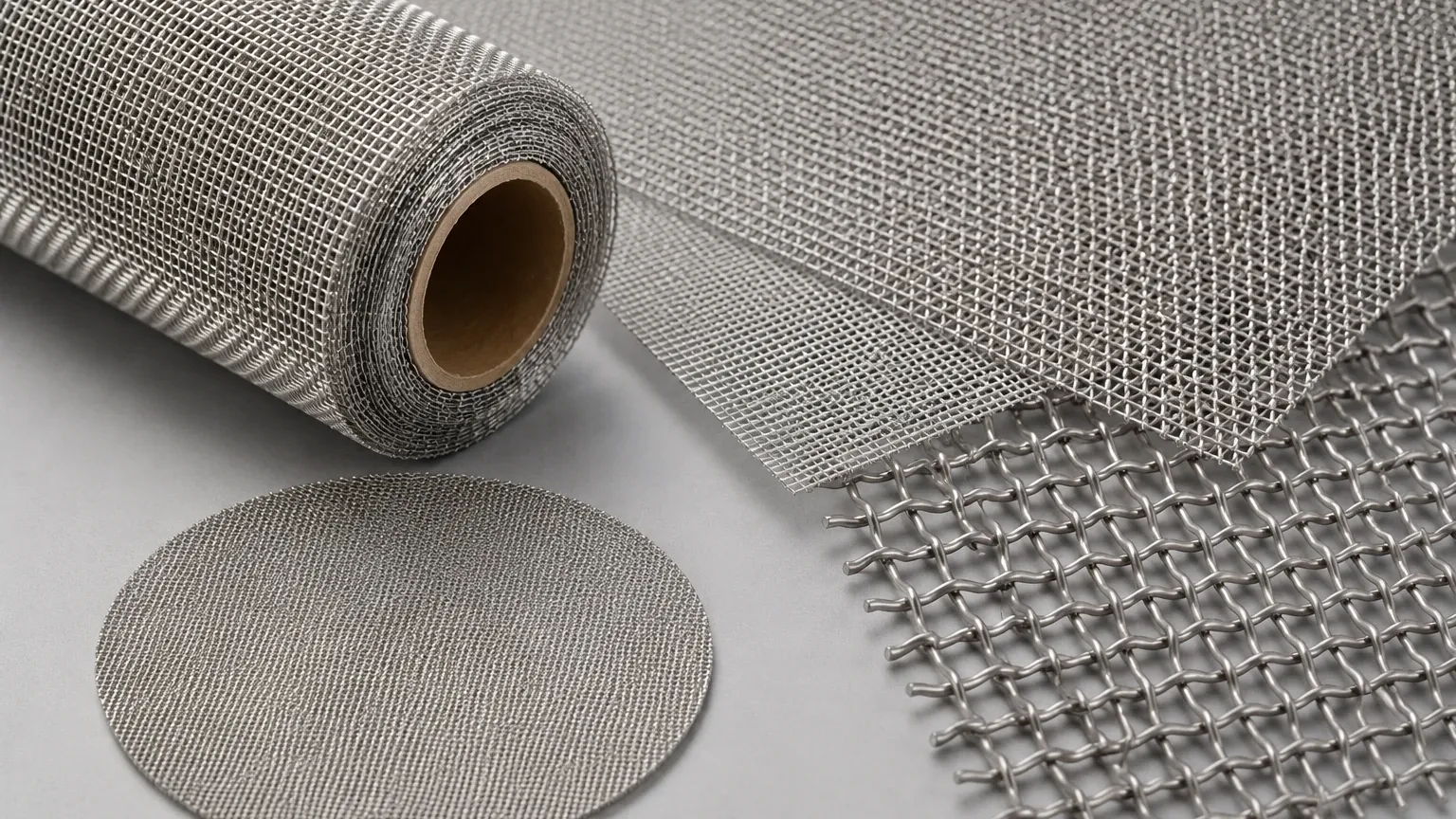
To specify the correct Woven Wire Mesh for an application, engineers must define several geometric variables. These parameters determine the mesh’s filtration efficiency, flow rate, and structural integrity.
1. Mesh Count: This refers to the number of wires per linear inch (25.4mm). A higher mesh count indicates a finer weave with smaller apertures. For aluminium, mesh counts typically range from 2×2 (coarse) to 200×200 (fine).
2. Wire Diameter: The thickness of the wire before weaving. Choosing the correct wire diameter is a trade-off between the percentage of open area and the mechanical strength of the mesh. In aluminium mesh, wire diameters are often slightly larger than those of stainless steel to compensate for the lower tensile strength of the material.
3. Aperture (Opening Size): The clear distance between two adjacent wires. This is the most critical factor for filtration applications, as it determines the particle size that will be retained. The aperture is calculated using the formula: *Aperture = (1 / Mesh Count) – Wire Diameter*.
4. Percentage of Open Area: This represents the ratio of the total area of the openings to the total area of the mesh. A higher open area results in lower pressure drops and higher flow rates, which is essential in HVAC and air filtration systems.
For a detailed look at available specifications and weave patterns, you can Plain, twill and dutch woven wire mesh in SS304/316L — rolls, cut mesh and framed panels. Send mesh count or micron target for a technical quote.
Comparison: Aluminium vs. Stainless Steel Filtration Media
When designing a filtration system, engineers often compare aluminium with stainless steel (SS304 or SS316L). While Kaifil specializes in stainless steel solutions, understanding the technical divergence is necessary for informed procurement.
| Feature | Aluminium Woven Wire Mesh | Stainless Steel Woven Wire Mesh |
| :— | :— | :— |
| Density | ~2.7 g/cm³ (Lightweight) | ~8.0 g/cm³ (Heavy) |
| Corrosion Resistance | Excellent (Atmospheric/Oxide layer) | Superior (Chemical/Acidic) |
| Strength | Moderate | High |
| Conductivity | High (Thermal & Electrical) | Low |
| Cost | Generally lower per square foot | Higher, especially for 316L |
| Weight | 1/3 the weight of steel | Standard weight |
Aluminium is chosen when weight reduction is a primary design goal, such as in aerospace components or portable filtration units. However, for high-temperature applications (above 200°C) or environments involving high-pressure pulses, stainless steel remains the preferred material due to its higher melting point and superior creep resistance.
Key Industrial Applications for Aluminium Mesh
1. EMI and RFI Shielding
Due to its high electrical conductivity, aluminium woven wire mesh is an effective medium for Electromagnetic Interference (EMI) and Radio Frequency Interference (RFI) shielding. It is used in the construction of Faraday cages, shielded rooms, and electronic enclosures to prevent signal leakage and protect sensitive components from external interference.
2. Aerospace and Automotive Filtration
In the aerospace industry, every gram of weight saved translates to fuel efficiency. Aluminium mesh is used in hydraulic fluid filters, air intake screens, and oil filtration systems where the operating temperatures and pressures are within the material's limits. In the automotive sector, it serves as a lightweight alternative for decorative grilles that also function as debris filters.
3. HVAC and Air Ventilation
Aluminium mesh is widely used in permanent air filters for HVAC systems. Its ability to withstand moisture without rusting (due to the protective aluminium oxide layer) makes it ideal for grease filters in commercial kitchens and pre-filters in industrial air handling units. These filters are often washable and reusable, providing a lower total cost of ownership compared to disposable media.
4. Architectural and Acoustic Panels
Beyond filtration, the aesthetic appeal and lightweight nature of aluminium allow it to be used in architectural facades and acoustic ceiling panels. It provides a modern industrial look while offering functional benefits like airflow and sound diffusion.
Engineering Considerations for Selection and Customization
When sourcing aluminium woven wire mesh, procurement teams should confirm several factors with the manufacturer to ensure long-term performance:
Surface Treatments
Aluminium can be treated to enhance its properties. Anodizing increases the thickness of the natural oxide layer, providing even greater corrosion resistance and the ability to add color. Epoxy coating can be applied to improve the mesh's compatibility with specific chemicals or to provide additional structural rigidity.
Weave Stability
Because aluminium is softer than steel, the stability of the weave is a concern in high-vibration environments. Engineers should consider "crimped" weaves where the wires are pre-bent before interlacing, ensuring the apertures remain consistent even under mechanical stress.
Compatibility and Galvanic Corrosion
One of the most critical risks when using aluminium mesh is galvanic corrosion. If aluminium mesh comes into contact with a more noble metal (like copper or even certain grades of stainless steel) in the presence of an electrolyte (like moisture), the aluminium will act as an anode and corrode rapidly. Engineers must ensure that the housing and fasteners used with aluminium mesh are either compatible or electrically isolated.
Why Technical Precision Matters in Mesh Procurement
Choosing the wrong mesh specification can lead to premature filter failure, bypass of contaminants, or excessive system pressure. For instance, selecting a wire diameter that is too thin for a high-velocity air stream may result in wire fatigue and eventual breakage. Conversely, choosing a mesh that is too dense can lead to rapid clogging and increased maintenance cycles.
At Kaifil, we emphasize the importance of matching the material properties to the specific environmental conditions of the application. Whether you require the lightweight benefits of aluminium or the rugged durability of stainless steel, the focus remains on filtration accuracy and component longevity.
Conclusion
Aluminium woven wire mesh is a versatile, high-performance material that fills a vital niche in industrial design. Its unique combination of low density, conductivity, and atmospheric corrosion resistance makes it a superior choice for aerospace, electronics, and air handling applications. By understanding the nuances of alloy selection and weave geometry, engineering teams can optimize their filtration systems for both performance and cost-effectiveness.
For organizations requiring high-precision metal filtration components, selecting a partner with deep manufacturing expertise is essential. For more information on technical specifications and custom filtration solutions, explore our comprehensive range of Woven Wire Mesh options to find the ideal match for your industrial requirements.
