


Aluminum Woven Wire Mesh: A Comprehensive Technical Guide for Industrial Applications
In the diverse landscape of industrial filtration and material separation, selecting the appropriate media is critical to operational efficiency and equipment longevity. While stainless steel is often the default choice for high-temperature or highly corrosive environments, aluminum woven wire mesh has emerged as a vital alternative for applications requiring a specific balance of lightweight properties, electrical conductivity, and cost-effectiveness.
As a specialized manufacturer, Kaifil provides precision-engineered filtration solutions that adhere to rigorous industrial standards. Understanding the technical nuances of aluminum alloys within a Woven Wire Mesh structure allows engineers and procurement teams to optimize their systems for performance and durability. This guide explores the material properties, weave configurations, and engineering considerations essential for selecting aluminum mesh in professional B2B contexts.
Material Science: The Properties of Aluminum in Mesh Form
The primary driver for selecting aluminum over other metallic meshes is its unique physical and chemical profile. Aluminum alloys offer several distinct advantages that make them indispensable in aerospace, automotive, and specialized chemical processing sectors.
Lightweight Performance
One of the most significant attributes of aluminum is its low density. Aluminum is approximately one-third the weight of stainless steel or copper. In applications such as aerospace filtration or portable industrial equipment, reducing the tare weight of filtration components can lead to significant energy savings and improved structural integrity. For instance, a large-scale ventilation system utilizing aluminum mesh filters requires less robust mounting hardware compared to a system using heavier steel alternatives.
Corrosion Resistance and the Oxide Layer
Aluminum naturally develops a thin, tenacious oxide layer when exposed to air. This layer is self-healing and provides excellent resistance to atmospheric corrosion. While it may not match the acid resistance of 316L stainless steel, aluminum mesh performs exceptionally well in environments exposed to moisture and certain organic chemicals. For enhanced protection, aluminum mesh can be anodized, a process that thickens the natural oxide layer and can also provide color coding for different filtration grades.
Conductivity and EMI Shielding
Aluminum is an excellent conductor of both heat and electricity. In the electronics and telecommunications industries, aluminum woven wire mesh is frequently used for Electromagnetic Interference (EMI) and Radio Frequency Interference (RFI) shielding. Its ability to provide a consistent conductive path while allowing for airflow makes it ideal for shielding enclosures and sensitive medical diagnostic equipment.
Technical Specifications and Weave Configurations
The performance of a filter or screen is determined not just by the material, but by the geometry of the weave. Aluminum can be woven into various patterns to meet specific filtration targets and mechanical requirements.
Plain Weave
The most common configuration, where each shute wire passes over and under one warp wire. This results in a square opening and is typically used for general screening, sifting, and separation tasks where a high percentage of open area is required.
Twill Weave
In a twill weave, each shute wire passes over and under two warp wires in a staggered pattern. This allows for the use of heavier wires in a given mesh count, providing increased strength and durability for high-pressure applications without sacrificing the mesh's flexibility.
Dutch Weave
For precision filtration, Dutch weaves utilize different diameters for warp and shute wires. The wires are driven closely together, creating a "tortuous path" for particles. This configuration is essential for fine micron ratings where high mechanical strength and efficient cake release are required.
For those requiring specific material grades or specialized configurations, Kaifil offers a wide range of options. You can Plain, twill and dutch woven wire mesh in SS304/316L — rolls, cut mesh and framed panels. Send mesh count or micron target for a technical quote. to see how these weave types translate into high-performance industrial components.
Critical Applications of Aluminum Woven Wire Mesh
Aluminum mesh is utilized across various sectors where its specific properties provide a competitive edge over more traditional materials.
1. Aerospace and Defense
Weight reduction is the primary concern in aerospace. Aluminum mesh is used in hydraulic system filters, fuel line strainers, and air intake screens. Its ability to withstand vibration while maintaining structural integrity makes it a preferred choice for flight-critical components.
2. HVAC and Air Filtration
In large-scale commercial and industrial HVAC systems, aluminum mesh serves as a pre-filter for grease, dust, and large particulates. Because aluminum is easy to clean and resistant to moisture, these filters can be washed and reused, lowering the total cost of ownership compared to disposable synthetic media.
3. EMI/RFI Shielding
As mentioned previously, the electrical conductivity of aluminum makes it a staple in the manufacturing of shielded rooms, electronic cabinets, and Faraday cages. The mesh structure allows for heat dissipation and ventilation while blocking unwanted electromagnetic frequencies.
4. Architectural and Decorative
Beyond filtration, the aesthetic appeal of aluminum—combined with its ability to be anodized in various colors—makes it a popular choice for architectural facades, ceiling panels, and interior partitions. It provides a modern, industrial look while remaining lightweight and easy to install.
Engineering Considerations for Selection
When specifying aluminum woven wire mesh for a project, engineers must look beyond simple mesh counts. Several technical factors influence the success of the installation.
Mesh Count vs. Aperture Size
The mesh count refers to the number of openings per linear inch. However, the aperture (the actual clear opening) is determined by both the mesh count and the wire diameter. Engineers must calculate the "Open Area Percentage" to ensure that the flow rate and pressure drop meet the system's requirements. A higher open area generally results in a lower pressure drop but may reduce the mechanical strength of the mesh.
Galvanic Corrosion Risks
One critical consideration when using aluminum is the potential for galvanic corrosion. If aluminum mesh is placed in direct contact with a more noble metal (such as copper or stainless steel) in the presence of an electrolyte (like salt water), the aluminum will act as an anode and corrode rapidly. Engineers should use non-conductive gaskets or ensure material compatibility within the housing assembly to prevent this failure mode.
Temperature Limits
Aluminum has a lower melting point than stainless steel (approximately 660°C or 1220°F). While it performs well in many industrial settings, it is not suitable for high-heat applications like furnace filtration or high-temperature exhaust systems where stainless steel or specialty alloys would be required.
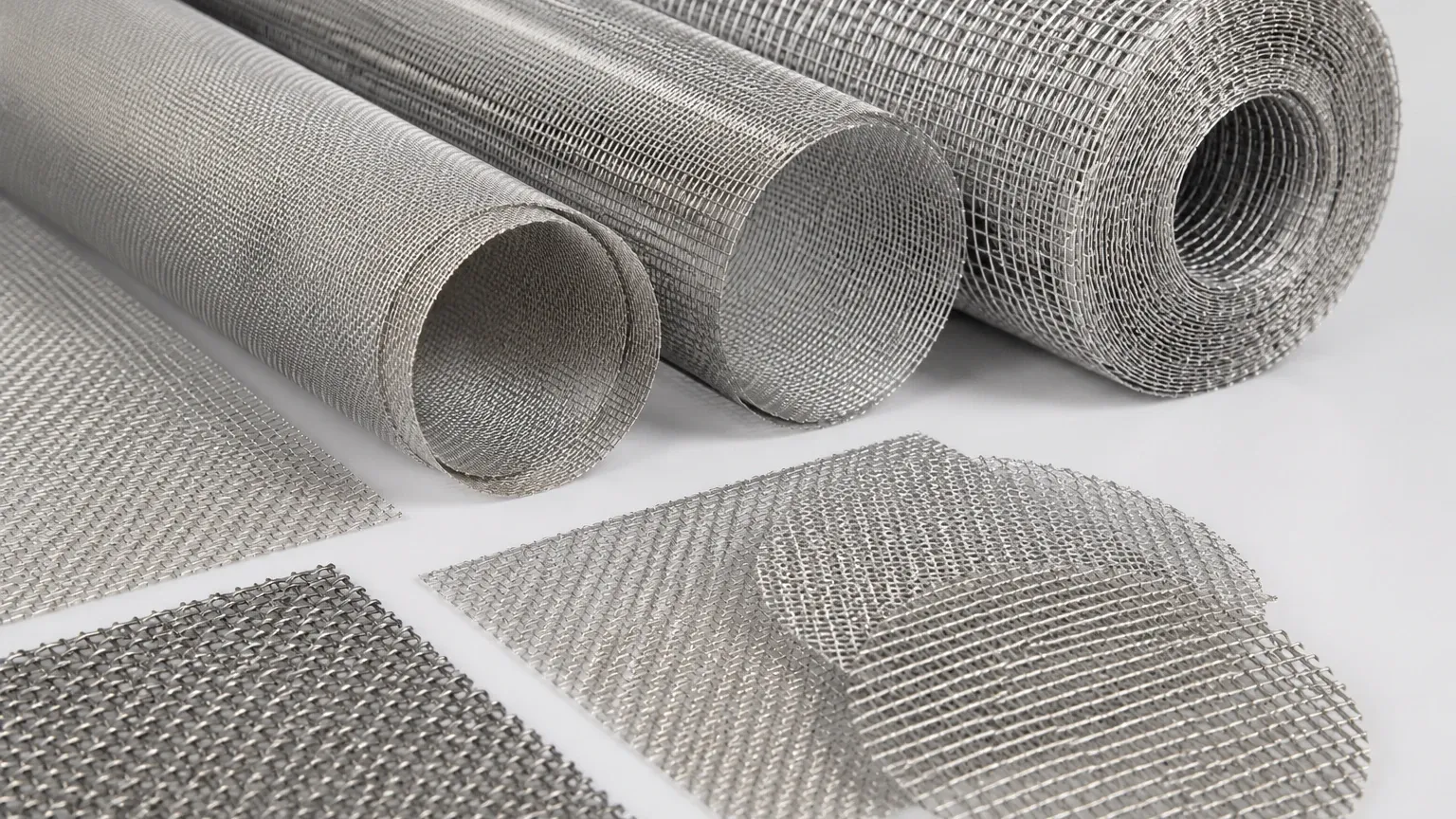
Customization and Secondary Processing
To meet the needs of complex industrial systems, aluminum mesh often requires secondary processing. Kaifil specializes in providing customized solutions that go beyond standard rolls of mesh.
* Slitting and Cutting: Mesh can be precision-slit into narrow ribbons or die-cut into specific geometric shapes (circles, donuts, or custom profiles) to fit into existing filter housings.
* Framing and Edging: To facilitate installation and prevent fraying, aluminum mesh can be framed with aluminum or stainless steel channels. This is particularly common for air filters and architectural panels.
* Multi-Layer Sintering: For high-pressure applications, multiple layers of aluminum mesh can be sintered together. This process bonds the wires at their contact points, creating a rigid, porous structure with precisely controlled filtration characteristics.
* Surface Treatments: Beyond anodizing, mesh can be powder-coated or epoxy-coated to provide additional chemical resistance or to meet specific color requirements for consumer-facing products.
Quality Control and Performance Validation
In B2B procurement, ensuring that the material meets the stated specifications is paramount. Quality control for aluminum woven wire mesh typically includes:
1. Material Certification: Verification of the specific aluminum alloy (e.g., 1350, 5052, or 6061) through chemical analysis.
2. Dimensional Inspection: Using digital microscopes to verify mesh count, wire diameter, and aperture consistency across the entire roll or batch.
3. Bubble Point Testing: For fine filtration mesh, this test determines the largest pore size and ensures the integrity of the weave.
4. Tensile Strength Testing: Ensuring the mesh can withstand the mechanical stresses of the intended application, especially in high-flow hydraulic or pneumatic systems.
Conclusion: Making an Informed Decision
Selecting the right Woven Wire Mesh involves a deep understanding of the operational environment, the required filtration accuracy, and the mechanical constraints of the system. Aluminum woven wire mesh offers a compelling combination of low weight, excellent conductivity, and natural corrosion resistance, making it a superior choice for many modern industrial challenges.
Whether you are designing a new EMI shielding enclosure, an aerospace hydraulic system, or a high-efficiency HVAC pre-filter, confirming the technical specifications with a knowledgeable manufacturer is the first step toward a successful project. By evaluating mesh geometry, alloy selection, and potential secondary processing, engineering teams can ensure long-term reliability and optimized performance.
For technical assistance in selecting the right mesh count or material for your specific industrial application, Kaifil provides the expertise and manufacturing capabilities to deliver high-precision filtration components tailored to your requirements.
