


A Technical Guide to Banker Woven Wire Mesh and Industrial Filtration Applications
In the realm of industrial filtration and architectural screening, the selection of materials dictates the efficiency, longevity, and structural integrity of a project. Among the various options available to engineers and procurement specialists, banker woven wire mesh stands out as a category often defined by its precision, aesthetic versatility, and robust mechanical properties. While the term is frequently associated with high-end architectural designs, its underlying principles—precision weaving and material durability—are fundamental to high-performance industrial filtration.
For technical professionals, understanding the nuances of Woven Wire Mesh is essential for optimizing fluid dynamics, ensuring particle retention, and maintaining system uptime. This guide explores the technical specifications, material considerations, and engineering requirements necessary to evaluate and implement woven wire mesh solutions in demanding environments.
Understanding the Fundamentals of Woven Wire Mesh
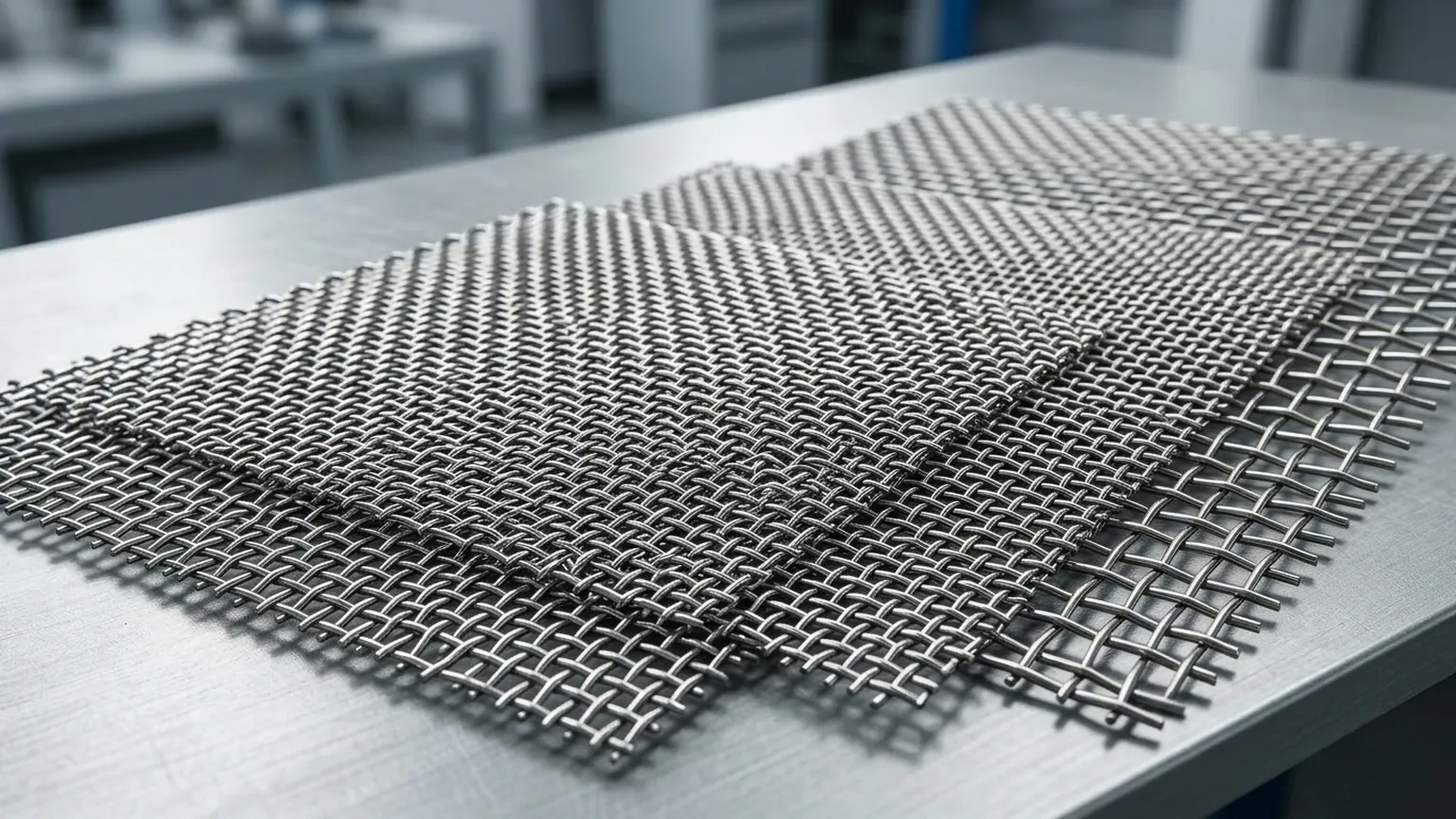
Woven wire mesh is produced by weaving individual metal wires over and under one another on industrial looms. The resulting fabric is characterized by its mesh count, wire diameter, and aperture size. In industrial B2B contexts, the consistency of these parameters is what separates standard commercial mesh from precision-engineered components.
Mesh Count and Aperture Size
The mesh count refers to the number of openings per linear inch. A higher mesh count indicates a finer weave with smaller apertures, suitable for fine filtration. Conversely, a lower mesh count utilizes thicker wires and provides larger openings, which are ideal for heavy-duty screening or structural support.
The aperture, or the clear distance between two adjacent wires, is the most critical factor for filtration. Engineers must calculate the aperture size based on the specific particle size they intend to retain. For example, in a plain weave, the aperture ($w$) can be calculated using the formula:
$$w = (1 / n) – d$$
Where:
- $n$ = mesh count (wires per inch)
- $d$ = wire diameter
Open Area Percentage
The open area is the ratio of the total area of the apertures to the total area of the mesh. This percentage directly impacts the flow rate and pressure drop across the filter. A higher open area reduces resistance to flow but may compromise the mechanical strength of the mesh. Balancing these two factors is a core challenge in filter design. Banker woven wire mesh styles, particularly those utilizing crimped wires, often offer a unique balance of high open area and exceptional rigidity.
The Role of Banker Woven Wire Mesh in Industrial Design
When engineers specify banker woven wire mesh, they are often looking for a product that transcends basic utility. These meshes are frequently characterized by complex weave patterns, such as lock crimps, intercrimps, and flat-top weaves. While these are popular in architectural facades and interior design, they offer significant advantages in industrial filtration and separation.
Structural Stability through Crimping
Unlike plain woven mesh, where wires simply overlap, crimped mesh involves pre-bending the wires before weaving. This "locks" the wires into place, preventing them from shifting under high-pressure loads or vibrating in turbulent flow environments. In industrial vibratory screens or heavy-duty hydraulic filters, this stability ensures that the aperture size remains constant throughout the service life of the component.
Surface Smoothness and Cleaning
Flat-top weaves, a common variation of banker-style mesh, provide a smooth surface on one side. This is particularly beneficial in food processing or pharmaceutical applications where material buildup must be minimized. A smooth surface facilitates easier "backwashing" or mechanical cleaning, extending the interval between maintenance cycles.
Material Selection: SS304 vs. SS316L
The performance of any woven wire mesh is heavily dependent on the alloy used. At Kaifil, the focus is primarily on stainless steel due to its superior corrosion resistance and mechanical strength.
1. Stainless Steel 304: The most common grade for industrial mesh. It offers excellent resistance to atmospheric corrosion and is suitable for most water treatment and general industrial applications. It is cost-effective for environments where high-strength acids or chlorides are not present.
2. Stainless Steel 316L: Containing molybdenum, 316L provides significantly better resistance to pitting and crevice corrosion in chloride-rich environments (such as marine applications) and chemical processing. The "L" denotes low carbon content, which improves weldability and prevents sensitization during the manufacturing of framed filter panels.
3. Specialty Alloys: For extreme environments, materials like Monel, Inconel, or Hastelloy may be used to withstand high temperatures or highly corrosive chemical reagents.
Engineering Considerations for Custom Filtration Solutions
Selecting a mesh is only the first step. For a filtration system to be effective, the mesh must be integrated into a larger assembly, such as a cartridge, basket, or framed panel. Engineers should confirm the following technical aspects before finalizing a specification:
Pressure Drop and Flow Velocity
Every filter media introduces a pressure drop ($ΔP$). If the $ΔP$ is too high, it can lead to pump cavitation or system failure. By analyzing the fluid viscosity and the desired flow rate, engineers can determine if a specific banker woven wire mesh configuration provides enough open area to keep the pressure drop within acceptable limits.
Micron Rating: Nominal vs. Absolute
In the filtration industry, it is vital to distinguish between nominal and absolute micron ratings.
- Nominal Rating: Indicates the ability of the mesh to retain the majority of particles of a specified size (usually 60-80%).
- Absolute Rating: Refers to the diameter of the largest hard spherical particle that will pass through the mesh under specified test conditions. For critical applications in the pharmaceutical or aerospace sectors, absolute ratings are mandatory.
Mechanical Loading and Support
In high-pressure hydraulic systems, the wire mesh may need to be pleated to increase the surface area or supported by a perforated metal core. The tensile strength of the wire and the integrity of the weave pattern determine how much differential pressure the mesh can withstand before deforming.
Common Risks and Quality Evaluation
Procuring industrial mesh requires a rigorous evaluation of the manufacturer’s quality control processes. Poorly manufactured mesh can lead to catastrophic system failures.
* Wire Diameter Consistency: Variations in wire diameter lead to inconsistent aperture sizes, which compromises filtration accuracy.
* Weave Defects: Look for "shiners," broken wires, or irregular spacing. These defects are often signs of poorly maintained looms or low-quality raw materials.
* Material Certification: Always request Mill Test Reports (MTRs) to verify the chemical composition of the alloy. Substituting 304 for 316L in a chemical plant can result in rapid corrosion and contamination.
Customization and OEM Capabilities
Industrial applications rarely rely on off-the-shelf solutions. Customization is often required to meet specific spatial or performance constraints. Professional manufacturers like Kaifil provide a range of value-added services for banker woven wire mesh and standard industrial weaves:
* Slitting and Cutting: Precision cutting to specific widths or shapes (circles, rectangles, or custom geometries).
* Framing and Edging: Adding U-binders, angle frames, or welded edges to facilitate installation and improve safety during handling.
* Pleating: Increasing the effective filtration area within a compact footprint.
* Calendering: Passing the mesh through heavy rollers to flatten the knuckles of the weave, creating a uniform thickness and smoother surface.
Maintenance and Replacement Cycles
To ensure the total cost of ownership remains low, a maintenance schedule should be established based on the specific application. Factors influencing the replacement cycle include:
* Contaminant Loading: High concentrations of solids will lead to faster blinding of the mesh.
* Cleaning Methods: Ultrasonic cleaning, chemical baths, or high-pressure hosing can extend the life of stainless steel mesh, but aggressive cleaning may eventually degrade the wire integrity.
* Operational Environment: Exposure to cyclic loading or thermal fluctuations can lead to metal fatigue.
Conclusion: Selecting the Right Partner
Choosing the correct Woven Wire Mesh involves more than just picking a mesh count from a table. It requires a deep understanding of material science, fluid dynamics, and mechanical engineering. Whether you are specifying a decorative banker woven wire mesh for a high-profile architectural project or a high-precision stainless steel filter for a chemical reactor, the technical requirements remain equally stringent.
By focusing on precise aperture control, material purity, and structural stability, engineers can ensure that their filtration systems operate at peak efficiency. When evaluating suppliers, prioritize those who offer comprehensive technical support, material traceability, and the ability to provide customized configurations tailored to your specific industrial challenges.
