


Black Woven Wire Mesh: A Technical Guide to Industrial Applications and Selection
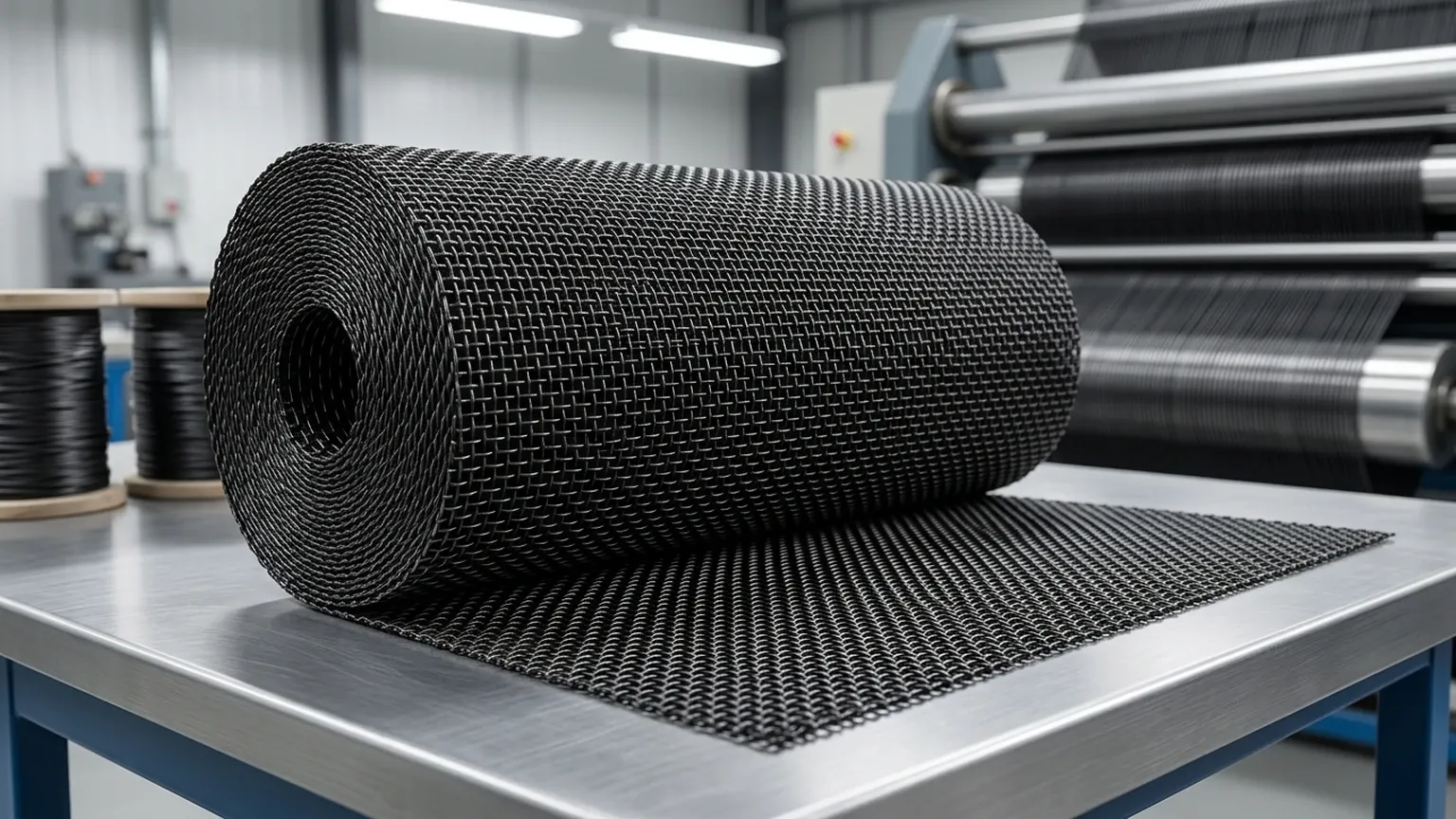
In the landscape of industrial filtration and structural components, black woven wire mesh represents a specialized category of materials designed to meet specific performance, aesthetic, and environmental requirements. While standard stainless steel mesh is often the default choice for high-corrosion environments, the introduction of black finishes—whether through material composition like black annealed steel or through protective coatings like epoxy and PVC—provides unique advantages in hydraulic systems, air filtration, and architectural engineering.
Selecting the right Woven Wire Mesh involves more than choosing a color; it requires a deep understanding of wire metallurgy, weave patterns, and the chemical compatibility of coatings. For engineers and procurement professionals, evaluating these factors is essential to ensuring long-term durability and filtration efficiency.
1. Understanding the Composition of Black Woven Wire Mesh
The term "black woven wire mesh" typically refers to three distinct types of products, each serving different industrial needs. Distinguishing between these is the first step in technical procurement.
Black Annealed Steel Mesh
Often referred to simply as "black wire mesh," this product is manufactured from low-carbon steel wire that has undergone an annealing process. The annealing occurs in a nitrogen-free environment or through specific heat treatments that result in a dark, oxidized surface.
* Characteristics: High flexibility, high tensile strength, and cost-effectiveness.
* Primary Use: Industrial sieving, construction reinforcement, and applications where the mesh will be submerged in oil or coated post-fabrication.
Epoxy-Coated Mesh
This is perhaps the most common "black" mesh used in high-end industrial filtration. A stainless steel or aluminum mesh is coated with a thermosetting epoxy resin. The black color is standard for visibility and inspection purposes in hydraulic applications.
* Characteristics: Excellent resistance to hydraulic fluids, high temperature stability, and superior pleatability.
* Primary Use: Support layers for hydraulic filter elements and air intake systems.
PVC and Powder-Coated Mesh
For architectural and environmental applications, wire mesh is often coated with Polyvinyl Chloride (PVC) or polyester powder. While available in many colors, black is the most frequent choice due to its low reflectivity and UV resistance.
* Characteristics: Exceptional corrosion resistance and aesthetic uniformity.
* Primary Use: Insect screens, security fencing, and ventilation grilles.
2. Key Weave Patterns and Their Performance Impact
The performance of black woven wire mesh is dictated by the geometry of the weave. The choice of weave affects the micron rating, pressure drop, and mechanical strength of the final component.
Plain Weave
In a plain weave, each warp wire crosses alternately over and under each shute (weft) wire. This is the most common weave for black mesh used in general screening. It provides a consistent pore size and is relatively easy to clean. For black annealed wire, plain weave offers the most straightforward manufacturing process, keeping costs low for bulk industrial use.
Twill Weave
In twill weaving, each warp wire passes over and under two successive shute wires. This allows for a heavier wire diameter to be used for a given mesh count compared to a plain weave. In black epoxy-coated variants, twill weaves are often used when the mesh needs to withstand higher pressure differentials without deforming.
Dutch Weave (Plain and Twill)
Dutch weaves utilize a larger diameter warp wire and a smaller diameter shute wire. This creates a "tortuous path" for particles, providing high-precision surface filtration. Black Dutch woven mesh is frequently found in high-pressure hydraulic filters where the black epoxy coating helps maintain the integrity of the tight weave during the pleating process.
3. Industrial Applications of Black Woven Wire Mesh
Hydraulic and Lubrication Systems
One of the most critical roles for epoxy-coated black mesh is as a support and drainage layer in hydraulic filter elements. In these systems, the mesh supports the delicate glass fiber or paper media against the force of fluid flow. The black epoxy coating prevents "wire migration"—the shedding of tiny metal fragments into the fluid stream—which could otherwise damage sensitive valves and pumps.
Air and Gas Filtration
In automotive and industrial air intake systems, black woven wire mesh serves as a pre-filter or a flame arrestor. The black finish is often preferred in engine compartments to reduce glare and provide a uniform appearance. Furthermore, the coating provides a layer of protection against moisture-induced oxidation in outdoor environments.
Architectural and Security Screening
Engineers specify black powder-coated mesh for building ventilation and security because of its optical properties. Black mesh is easier to see through from the inside (low light reflection) while providing privacy and security from the outside. The coating ensures that the underlying steel does not rust when exposed to rain and humidity.
4. Engineering Evaluation: Selection Criteria
When specifying black woven wire mesh for a project, engineers must move beyond basic dimensions and evaluate the following technical parameters:
Micron Rating vs. Open Area
The micron rating defines the size of the particles the mesh will retain. However, a high micron rating often comes at the cost of reduced open area. In filtration, a lower open area increases the pressure drop across the filter. Engineers must balance the need for fine filtration with the allowable energy loss in the system.
Chemical and Thermal Compatibility
If the mesh is coated, the coating material must be compatible with the process fluid. For example, epoxy coatings are generally resistant to synthetic oils and fuels but may degrade if exposed to certain aggressive solvents or extreme temperatures exceeding 120°C (250°F). For high-temperature applications, black annealed steel or specialized black-oxide-treated stainless steel may be required instead of polymer coatings.
Mechanical Strength and Pleatability
In the manufacturing of filter cartridges, the mesh is often pleated to increase the surface area. The mesh must be ductile enough to withstand the pleating radius without cracking the wire or the coating. Black epoxy-coated mesh is specifically engineered for this, providing a balance of stiffness (to hold the pleat shape) and flexibility (to prevent cracking).
5. Addressing Common Risks in Procurement
Procuring industrial mesh requires vigilance regarding material certification and manufacturing tolerances. Common risks include:
* Coating Uniformity: Inconsistencies in epoxy or PVC thickness can lead to "blinded" pores where the coating has filled the mesh opening, reducing flow rates.
* Wire Diameter Variation: Small deviations in wire gauge can significantly alter the mesh's burst strength and filtration accuracy.
* Corrosion Under-Cutting: In poorly coated mesh, moisture can penetrate the coating at the wire intersections, leading to internal corrosion that is not visible until the mesh fails.
To mitigate these risks, it is essential to work with manufacturers who provide material test reports (MTRs) and adhere to international standards such as ISO 9001 for quality management and ISO 4783 for industrial wire screens.
6. Customization and OEM Solutions
Every industrial environment has unique demands. Standard off-the-shelf mesh may not suffice for specialized chemical processing or high-vibration aerospace components. Customization options for black woven wire mesh include:
* Slitting and Cutting: Providing mesh in precise widths for automated filter assembly lines.
* Annealing Levels: Adjusting the heat treatment of black wire to achieve specific tensile strengths.
* Custom Coatings: Developing proprietary epoxy blends for specific chemical resistances or color-coding requirements.
* Framing and Fabrication: Supplying mesh that is already cut to shape, framed in stainless steel, or welded into cylindrical components.
7. Conclusion: Making an Informed Decision
Black woven wire mesh is a versatile and essential component in modern industry, bridging the gap between raw mechanical filtration and specialized environmental protection. Whether it is the cost-effective utility of black annealed wire or the high-performance protection of epoxy-coated stainless steel, the choice of mesh impacts the efficiency, safety, and longevity of the equipment it serves.
For engineers and technical buyers, the path to an optimized solution begins with clear specifications: define the micron requirements, the chemical environment, and the mechanical stresses involved. By understanding the nuances of weave types and coating technologies, you can select a mesh that not only meets the immediate functional needs but also contributes to a lower total cost of ownership through reduced maintenance and extended service life.
If you are currently evaluating mesh options for a new project or seeking to improve the performance of an existing filtration system, reviewing detailed product specifications is the next logical step. Plain, twill and dutch woven wire mesh in SS304/316L — rolls, cut mesh and framed panels. Send mesh count or micron target for a technical quote. to ensure your selection aligns with the rigorous demands of your specific industrial application.
