


Bronze Woven Wire Mesh: Technical Specifications and Industrial Applications
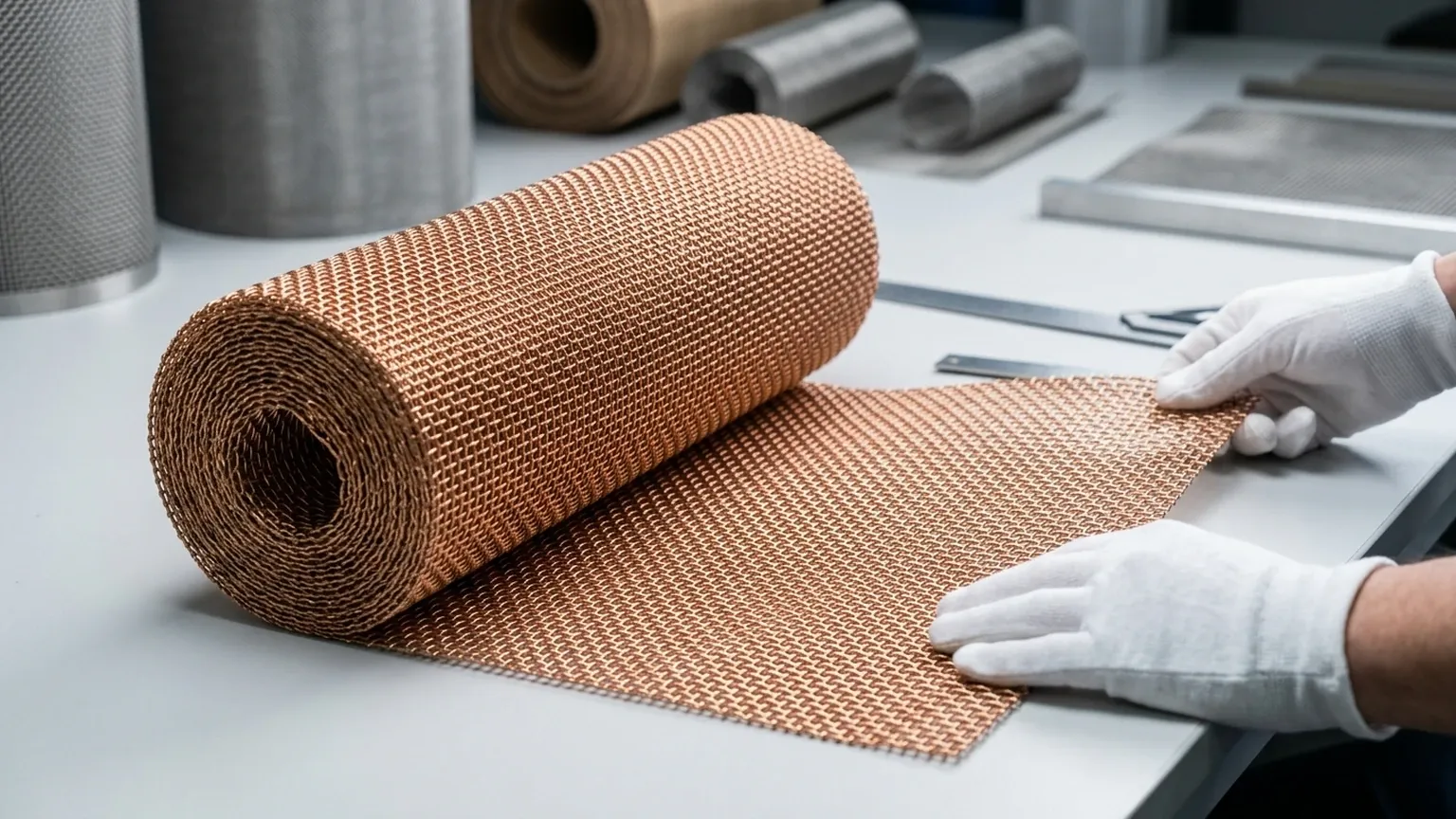
In the field of industrial filtration and separation, material selection is as critical as the geometric configuration of the mesh itself. While stainless steel remains the industry standard for general-purpose filtration, bronze woven wire mesh offers a unique set of physical and chemical properties that make it indispensable for specific high-performance environments. Primarily composed of copper and tin, often with the addition of phosphorus, bronze mesh provides a balance of corrosion resistance, electrical conductivity, and mechanical durability that other alloys cannot match.
For engineers and procurement teams, understanding the technical nuances of bronze alloys—specifically phosphor bronze—is essential for optimizing system longevity and performance. This guide examines the engineering characteristics, weave structures, and selection criteria for bronze filtration media.
Material Composition and Engineering Properties
Most industrial-grade bronze mesh is manufactured using phosphor bronze (typically Grade C510, C519, or C521). This alloy consists of approximately 88–95% copper and 5–12% tin, with a small amount of phosphorus (0.01–0.35%). The addition of phosphorus acts as a deoxidizing agent during the melting process, which significantly increases the alloy's hardness, fatigue resistance, and tensile strength compared to pure copper or standard brass.
Corrosion Resistance in Marine and Atmospheric Environments
One of the primary reasons for specifying bronze woven wire mesh is its superior resistance to corrosion. Unlike carbon steel, bronze does not rust. In marine environments, it forms a protective patina that prevents deep-seated oxidation. It is particularly resistant to seawater, brine, and various organic chemicals, making it a preferred choice for offshore filtration systems and coastal industrial facilities.
Electrical and Thermal Conductivity
Bronze maintains a high level of electrical conductivity, though lower than pure copper. This property is critical for applications involving Electromagnetic Interference (EMI) and Radio Frequency Interference (RFI) shielding. In these contexts, the mesh acts as a Faraday cage, protecting sensitive electronic components from external signals or containing internal emissions.
Non-Magnetic and Spark-Resistant Characteristics
In hazardous environments where explosive gases or dust are present, the spark-resistant nature of bronze is a vital safety feature. Bronze does not produce sparks when struck by other metals, unlike many ferrous alloys. Furthermore, its non-magnetic properties make it suitable for use in medical imaging equipment (MRI) and scientific instrumentation where magnetic interference must be eliminated.
Weave Structures in Woven Wire Mesh
The performance of a filter is determined by how the wires are interlaced. For bronze applications, several common weave patterns are utilized to achieve specific filtration goals. Plain, twill and dutch woven wire mesh in SS304/316L — rolls, cut mesh and framed panels. Send mesh count or micron target for a technical quote. while often centered on stainless steel, the same engineering principles apply to bronze to ensure precise aperture control.
1. Plain Weave
This is the most common weave for Woven Wire Mesh. Each shute (weft) wire passes alternately over and under each warp wire. Plain weave bronze mesh is typically used for coarse to medium filtration where high flow rates and structural stability are required. It provides a square opening and is relatively easy to clean.
2. Twill Weave
In a twill weave, each shute wire passes alternately over and under two warp wires. This allows for a heavier wire diameter than would be possible in a plain weave of the same mesh count. Twill weave bronze is often used for finer filtration requirements where the material needs to withstand higher mechanical loads without deforming.
3. Dutch Weave (Plain and Twill)
Dutch weaves utilize different wire diameters for the warp and shute directions. The shute wires are driven close together, creating a dense, wedge-shaped opening. This structure is designed for high-pressure filtration and the retention of very fine particles. Bronze Dutch weave is frequently found in specialized hydraulic filters and fuel systems where fine-micron precision is mandatory.
Key Industrial Applications
EMI/RFI Shielding and Electronics
Because of its high conductivity and ability to be easily soldered, bronze mesh is a staple in the electronics industry. It is used to line shielded rooms, wrap sensitive cables, and create gaskets that prevent signal leakage. The mesh count is typically selected based on the frequency range that needs to be attenuated.
Marine Filtration and Strainers
In shipboard systems, bronze mesh is used in sea chest strainers, cooling water intakes, and fuel-water separators. Its resistance to biofouling (the growth of marine organisms) is a secondary benefit provided by the copper content, which naturally inhibits the attachment of barnacles and algae.
Industrial Safety and Spark-Proofing
Refineries, chemical plants, and grain elevators utilize bronze mesh in ventilation covers and flame arrestors. If a mechanical failure occurs, any impact involving the mesh will not generate a spark, thereby reducing the risk of ignition in volatile atmospheres.
Architectural and Decorative Use
Beyond its functional utility, the aesthetic appeal of bronze—ranging from a bright gold-like finish to a deep brown patina—makes it a popular choice for architectural panels, insect screens in heritage buildings, and interior design elements. In these cases, the wire diameter and open area are often balanced for visual transparency and structural rigidity.
Selecting the Right Mesh: Technical Considerations
When specifying bronze woven wire mesh for an industrial project, engineers must evaluate several variables to ensure the component meets the application's demands.
Mesh Count vs. Micron Rating
The mesh count refers to the number of openings per linear inch. As the mesh count increases, the aperture size (micron rating) decreases. However, the wire diameter also plays a role. A higher wire diameter at the same mesh count will result in a smaller open area and a lower flow rate but higher mechanical strength.
Open Area Percentage
The percentage of open area determines the flow capacity and pressure drop across the filter. For high-flow applications, a thinner wire might be selected to maximize the open area, though this may reduce the service life if the fluid contains abrasive particles.
Mechanical Strength and Ductility
Bronze is generally more ductile than stainless steel, meaning it can be formed and shaped more easily. This is advantageous for manufacturing pleated filter cartridges or custom-shaped strainers. However, it also means that the mesh may be more prone to "blinding" or deformation under extreme pressure compared to high-tensile steel alloys.
Comparison: Bronze vs. Brass vs. Stainless Steel
| Feature | Bronze (Phosphor) | Brass | Stainless Steel (316) |
| :— | :— | :— | :— |
| Corrosion Resistance | High (Saltwater) | Moderate | Very High (Chemical) |
| Conductivity | High | High | Low |
| Strength | Moderate-High | Moderate | High |
| Spark Resistance | Excellent | Excellent | Poor |
| Magnetic Property | Non-magnetic | Non-magnetic | Slightly Magnetic (after work) |
While brass is also a copper-based alloy (copper and zinc), it is generally softer and less resistant to corrosion than phosphor bronze. Stainless steel is often the default for chemical processing due to its extreme resistance to acids and high temperatures, but it lacks the non-sparking and high-conductivity benefits of bronze.
Customization and Procurement
For B2B buyers, the total cost of ownership (TCO) for filtration components involves more than just the initial purchase price. Factors such as replacement cycles, cleaning requirements, and the risk of system downtime must be considered. Customization options for bronze mesh include:
* Slitting and Cutting: Providing rolls in specific widths or precision-cut circles and rectangles to fit existing housings.
* Forming and Welding: Shaping the mesh into cylinders, cones, or pleated elements.
* Framing: Adding stainless steel or copper borders to provide structural support and ease of installation.
Before finalizing a purchase, it is critical to confirm the specific alloy grade and provide the manufacturer with the required micron rating or mesh count, wire diameter, and environmental conditions (temperature, pressure, and chemical exposure).
Conclusion
Bronze woven wire mesh remains a specialized but vital material in the industrial landscape. Its unique combination of saltwater resistance, non-sparking properties, and electrical conductivity makes it the optimal choice for marine, electronic, and safety-critical applications. By carefully selecting the weave type and mesh specifications, engineers can achieve reliable filtration and shielding performance that meets the rigorous standards of modern industry. Whether for a high-precision hydraulic system or a large-scale EMI shielding project, the technical integrity of the mesh is the foundation of the system's success.
