


Copper Woven Wire Mesh: A Technical Guide for Industrial Filtration and Shielding
In the landscape of industrial materials, copper woven wire mesh occupies a specialized niche defined by its unique physical and chemical properties. While stainless steel is often the default choice for general filtration due to its high mechanical strength and broad corrosion resistance, copper offers distinct advantages in electrical conductivity, thermal management, and antimicrobial performance. For engineers and procurement specialists, understanding the technical nuances of copper mesh is essential for optimizing system performance in applications ranging from EMI/RFI shielding to specialized chemical processing.
As a versatile category of woven wire mesh, copper-based products are utilized across industries where standard ferrous alloys fall short. This guide examines the engineering characteristics, weave configurations, and selection criteria necessary for integrating copper mesh into industrial systems.
Understanding Copper Woven Wire Mesh in Industrial Applications
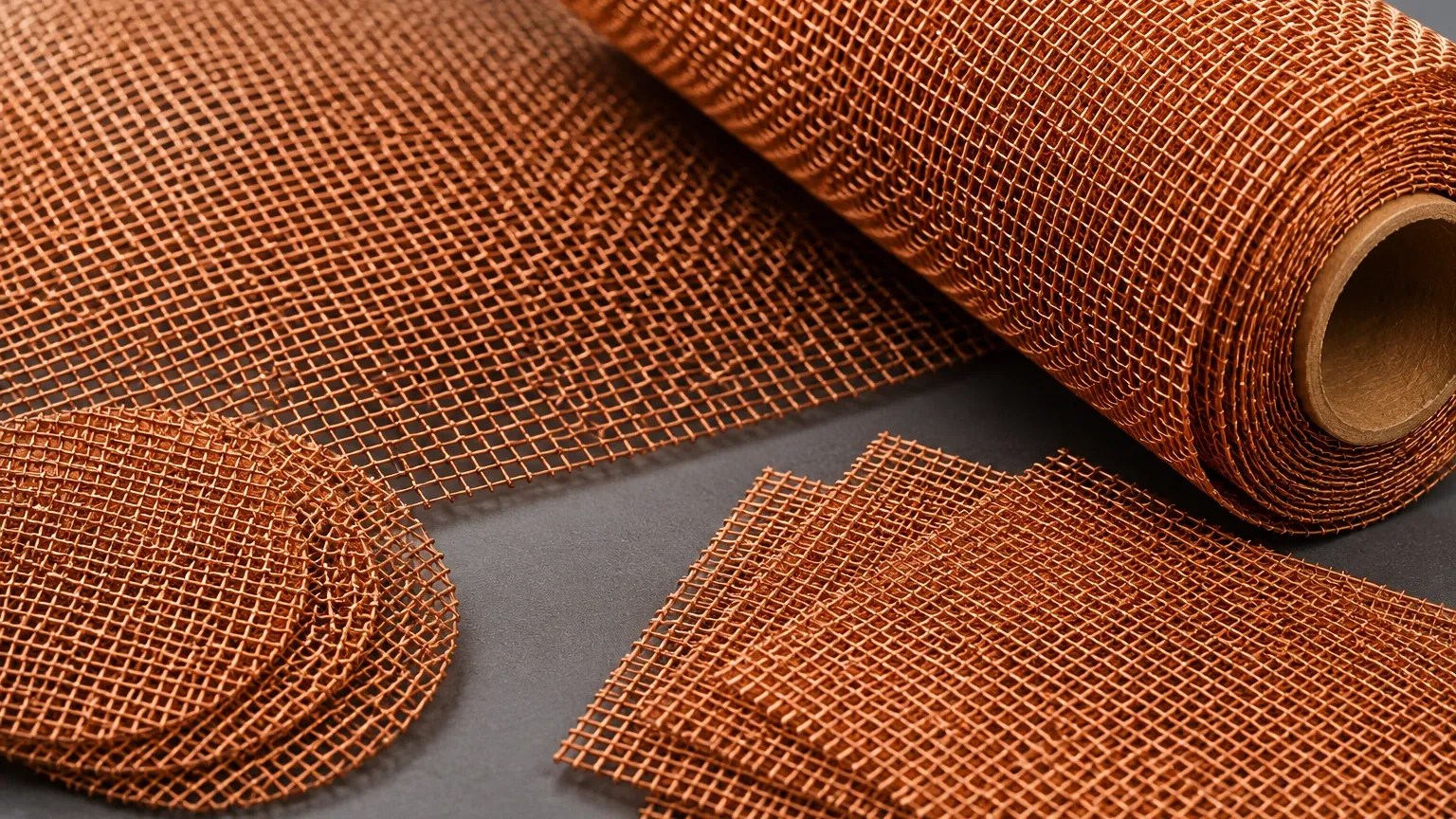
Copper woven wire mesh is produced by weaving high-purity copper wire into a variety of patterns, similar to textile production but with precision-drawn metallic filaments. The resulting material combines the inherent properties of elemental copper with the structural benefits of a porous, flexible fabric.
In industrial settings, the purity of the copper is a critical factor. Most industrial-grade copper mesh utilizes "Commercial Bronze" (which is actually a brass alloy) or high-purity ETP (Electrolytic Tough Pitch) copper. The choice between pure copper and copper alloys like brass or phosphor bronze depends on the required balance of conductivity, ductility, and corrosion resistance. When high electrical or thermal conductivity is the primary requirement, high-purity copper is the standard.
Material Properties and Engineering Advantages
The selection of copper for a filtration or shielding project is usually driven by one or more of the following technical attributes:
1. Superior Electrical and Thermal Conductivity
Copper is the gold standard for conductivity among non-precious metals. In electrical applications, it is used to create Faraday cages and EMI/RFI shielding gaskets. The mesh structure allows for air and fluid flow while maintaining a continuous conductive path that intercepts electromagnetic interference. Thermally, copper mesh is an excellent medium for heat dissipation in compact electronic enclosures or specialized heat exchangers.
2. Antimicrobial and Biocidal Properties
One of the most significant biological advantages of copper is its natural ability to kill bacteria, viruses, and fungi on contact. This oligodynamic effect makes copper mesh a strategic choice for water treatment components, HVAC filters, and food processing environments where microbial growth must be suppressed without the use of chemical additives.
3. Corrosion Resistance in Specific Environments
While copper is susceptible to oxidation (forming a green patina), it exhibits excellent resistance to corrosion in marine environments and against many organic chemicals. It is particularly effective in applications involving alkaline solutions, though it should be avoided in the presence of ammonia or strong acids.
4. Ductility and Formability
Copper is significantly softer and more malleable than stainless steel. This allows for easier shaping, pleating, and forming into complex geometries. For custom filtration components, this ductility reduces the risk of wire breakage during the manufacturing of deep-drawn filters or intricate gaskets.
Technical Specifications: Weave Types and Mesh Selection
The performance of a copper filter or shield is determined by its weave architecture. The way the wires intersect dictates the pore size, mechanical stability, and flow characteristics. For those seeking specific configurations, Plain, twill and dutch woven wire mesh in SS304/316L — rolls, cut mesh and framed panels. Send mesh count or micron target for a technical quote. provides a baseline for understanding how these patterns translate to filtration efficiency.
Plain Weave
The most common configuration where each warp wire crosses alternately over and under each shute wire. This provides a square opening and is the standard for general-purpose screening and EMI shielding.
Twill Weave
In a twill weave, each shute wire passes successively over and under two warp wires. This allows for the use of heavier wires in a given mesh count, providing greater strength and the ability to weave finer meshes that would be impossible in a plain weave.
Dutch Weave
Dutch weaves utilize different diameters for warp and shute wires. This results in a much denser mesh with smaller, triangular openings. In copper applications, Dutch weaves are used for high-precision liquid filtration where fine particle retention is required alongside the material's specific chemical properties.
Mesh Count vs. Micron Rating
Engineers must distinguish between mesh count (the number of openings per linear inch) and the micron rating (the size of the particles the mesh will retain). Because copper wire is ductile, the wire diameter can vary significantly, which in turn affects the "open area" percentage. A higher open area allows for lower pressure drops across the filter but may reduce the structural integrity of the mesh.
Industrial Use Cases: From EMI Shielding to Specialized Filtration
The application of copper woven wire mesh extends far beyond simple filtration. Its multi-functional nature allows it to solve complex engineering challenges.
EMI/RFI Shielding
In the aerospace, medical, and telecommunications sectors, electronic components must be protected from electromagnetic interference. Copper mesh is integrated into windows, enclosures, and cable shielding. The mesh allows for visibility and ventilation while providing a high level of attenuation across a wide frequency range.
Cryogenic and Laboratory Equipment
Due to its thermal properties, copper mesh is often used in cryogenic systems to help maintain temperature uniformity. In laboratory settings, it serves as a catalyst support or as a flame arrestor, where its ability to rapidly dissipate heat prevents the propagation of flames through a gas stream.
Marine Filtration
Copper’s resistance to biofouling makes it ideal for intake screens in marine environments. Unlike plastic or stainless steel, which can quickly become clogged with algae and barnacles, copper naturally inhibits the attachment of marine organisms, reducing maintenance cycles for offshore and coastal installations.
Comparative Analysis: Copper vs. Stainless Steel Woven Wire Mesh
When specifying a material, engineers often weigh copper against stainless steel. The decision usually hinges on the specific environmental stressors of the application.
| Feature | Copper Woven Mesh | Stainless Steel Mesh |
| :— | :— | :— |
| Conductivity | Extremely High | Low to Moderate |
| Strength | Moderate (Ductile) | High (Rigid) |
| Corrosion (Acid) | Poor | Excellent |
| Corrosion (Marine) | Excellent (Anti-fouling) | Good (but prone to pitting) |
| Antimicrobial | Yes (Natural) | No |
| Cost | Generally Higher | Variable (Market dependent) |
For high-pressure hydraulic systems or highly acidic chemical processing, stainless steel is typically the superior choice. However, for any application requiring electrical grounding, thermal transfer, or bio-growth inhibition, copper is the technically correct specification.
Maintenance, Oxidation, and Longevity
One common concern with copper mesh is oxidation. When exposed to the atmosphere, copper develops a tarnish layer (copper oxide), which eventually turns into a green carbonate layer (patina). In many industrial applications, this layer is actually beneficial, as it provides a protective barrier against further deep-seated corrosion.
However, in filtration applications where the mesh must remain clean, or in electrical applications where contact resistance must be minimized, oxidation can be an issue. In these cases, the mesh may be tin-plated or silver-plated to preserve conductivity and prevent the formation of the oxide layer. Cleaning copper mesh requires non-abrasive methods; mild citric acid solutions are often used to remove oxidation without damaging the wire structure.
Procurement Considerations for Custom Filtration Solutions
When sourcing copper mesh for an OEM project, providing precise data to the manufacturer ensures the final product meets performance expectations. Kaifil specializes in translating these technical requirements into durable filtration components. Before finalizing a purchase order, engineers should confirm the following parameters:
1. Chemical Compatibility: Ensure the fluid or gas being filtered does not contain ammonia, mercury, or strong oxidizing acids which can rapidly degrade copper.
2. Mechanical Stress: Determine if the mesh will be subjected to high-pressure pulses. If so, a support layer (coarse mesh) or a heavier wire diameter may be necessary.
3. Dimensional Tolerances: Specify the required precision for cut-to-size pieces or framed panels. Copper’s ductility means it can stretch during the cutting or framing process if not handled correctly.
4. Edge Treatment: For EMI shielding or fine filtration, edge fraying can be a failure point. Options include welded edges, hemmed edges, or resin-encapsulated borders.
5. Regulatory Compliance: For food and beverage or pharmaceutical applications, ensure the copper alloy meets relevant FDA or local health standards regarding metal leaching and purity.
Conclusion
Copper woven wire mesh remains a critical material in the engineer's toolkit, offering a combination of conductivity and biocidal activity that modern synthetics and ferrous alloys cannot replicate. By selecting the appropriate weave pattern and mesh count, and by understanding the environmental limitations of the metal, technical professionals can implement filtration and shielding solutions that are both efficient and long-lasting. Whether the goal is to protect sensitive electronics from interference or to prevent microbial buildup in a water system, copper mesh provides a reliable, time-tested solution for demanding industrial environments.
