


Technical Guide to Double Woven Wire Mesh in Industrial Filtration
In industrial filtration and separation, the structural integrity of the filter media is as critical as its filtration rating. For applications involving high-pressure differentials, heavy mechanical loads, or intense vibration, standard weaves may lack the necessary rigidity to maintain consistent aperture sizes. This is where specialized configurations, often categorized under the broader umbrella of Woven Wire Mesh, become essential. Specifically, the use of double woven wire mesh—frequently referred to in engineering specifications as double crimp or intermediate crimp mesh—provides the mechanical stability required for demanding industrial environments.
Selecting the correct mesh involves more than just identifying a micron rating; it requires an understanding of how the wire is manipulated during the weaving process to ensure longevity and performance. This guide examines the technical nuances of double woven structures, material considerations, and the engineering criteria necessary for informed procurement.
Understanding the Mechanics of Double Woven Wire Mesh
The term "double woven" in the context of industrial wire cloth typically refers to the crimping method applied to the wires before or during the weaving process. Unlike plain weave where wires are simply interlaced, a double woven wire mesh (double crimp) utilizes wires that have been pre-crimped with distinct indentations at the points of intersection.
The Double Crimp Process
In a double crimp weave, both the warp (longitudinal) and the shute (transverse) wires are crimped at the points of contact. This creates a "lock" or a knuckle that prevents the wires from sliding or shifting. For engineers, this stability is paramount. If wires shift during operation, the effective pore size changes, leading to bypass of contaminants or inconsistent flow rates. The double crimping process ensures that even when subjected to high-velocity fluid flow or mechanical agitation, the mesh maintains its geometric precision.
Intermediate Crimp Variations
In scenarios where the mesh count is low (large openings) relative to the wire diameter, manufacturers may use an intermediate crimp. In this variation, extra crimps are added between the intersection points. This is technically a form of double weaving that provides additional rigidity to lighter wires, ensuring that large apertures do not distort under load. This is particularly useful in heavy-duty screening and coarse filtration where the ratio of open area to wire mass must be carefully balanced.
Material Selection: SS304 vs. SS316L
The performance of a double woven wire mesh is heavily dependent on the alloy used. Since these components are often permanent or long-term installations in chemical or food processing plants, selecting the right grade of stainless steel is a primary engineering decision.
1. Stainless Steel 304: This is the standard industrial grade. It offers excellent strength and basic corrosion resistance. It is suitable for most water treatment, food processing, and general industrial applications where high concentrations of chlorides or acids are not present.
2. Stainless Steel 316L: For more aggressive environments, 316L is the preferred choice. The addition of molybdenum provides superior resistance to pitting and crevice corrosion in chloride-rich environments. The "L" denotes low carbon content, which is essential if the mesh is to be welded into frames or cartridges, as it prevents carbide precipitation and maintains corrosion resistance at the weld zones.
For specialized applications, other alloys such as Monel, Inconel, or Duplex stainless steel may be specified, particularly in high-temperature or highly acidic chemical processing stages.
Engineering Considerations for Filtration Performance
When integrating double woven wire mesh into a filtration system, engineers must evaluate several performance metrics to ensure the component meets the operational requirements of the project.
Aperture Stability and Micron Rating
The primary function of the mesh is to provide a precise barrier. In double woven structures, the "lock" provided by the crimps ensures that the aperture remains constant. This is vital for "absolute" filtration ratings. In a plain weave without crimping, the wires can "telegraph" or move, causing the micron rating to fluctuate. Engineers should confirm the tolerance of the aperture size, especially in pharmaceutical or fine chemical applications where particle size distribution is strictly controlled.
Open Area and Flow Resistance
The percentage of open area determines the flow capacity and the initial pressure drop across the filter. A double woven wire mesh often uses heavier wire diameters to take advantage of the crimped stability. However, thicker wire reduces the total open area. Engineers must calculate the balance between the structural strength needed to withstand the Delta P (differential pressure) and the required flow rate.
Mechanical Strength and Fatigue Resistance
In vibrating screens or high-pressure hydraulic filters, the mesh is subject to cyclic loading. The double crimp design distributes stress more evenly across the wire knuckles compared to non-crimped weaves. This reduces the risk of fatigue cracking at the intersection points, which is a common failure mode in industrial filtration. When specifying mesh for these environments, the tensile strength of the wire and the depth of the crimp are critical factors to review with the manufacturer.
Applications of Double Woven Structures
Due to its inherent stability, double woven wire mesh is utilized across various sectors where reliability is non-negotiable.
* Chemical Processing: Used in catalyst recovery and resin traps where the media must withstand corrosive fluids and high temperatures without losing its shape.
* Food and Beverage: Employed in large-scale sifting and filtration of ingredients. The rigidity of the double weave allows for easy cleaning and sterilization (CIP – Clean In Place) without damaging the mesh surface.
* Mining and Aggregates: Heavy-duty double crimped mesh is the standard for vibrating screens. It can handle the impact of large particulates while maintaining accurate separation sizes.
* Water Treatment: In intake screens and large-scale filtration systems, the mesh provides a durable barrier against debris, benefiting from the high tensile strength of the double-woven configuration.
Selection Criteria and Procurement Guidance
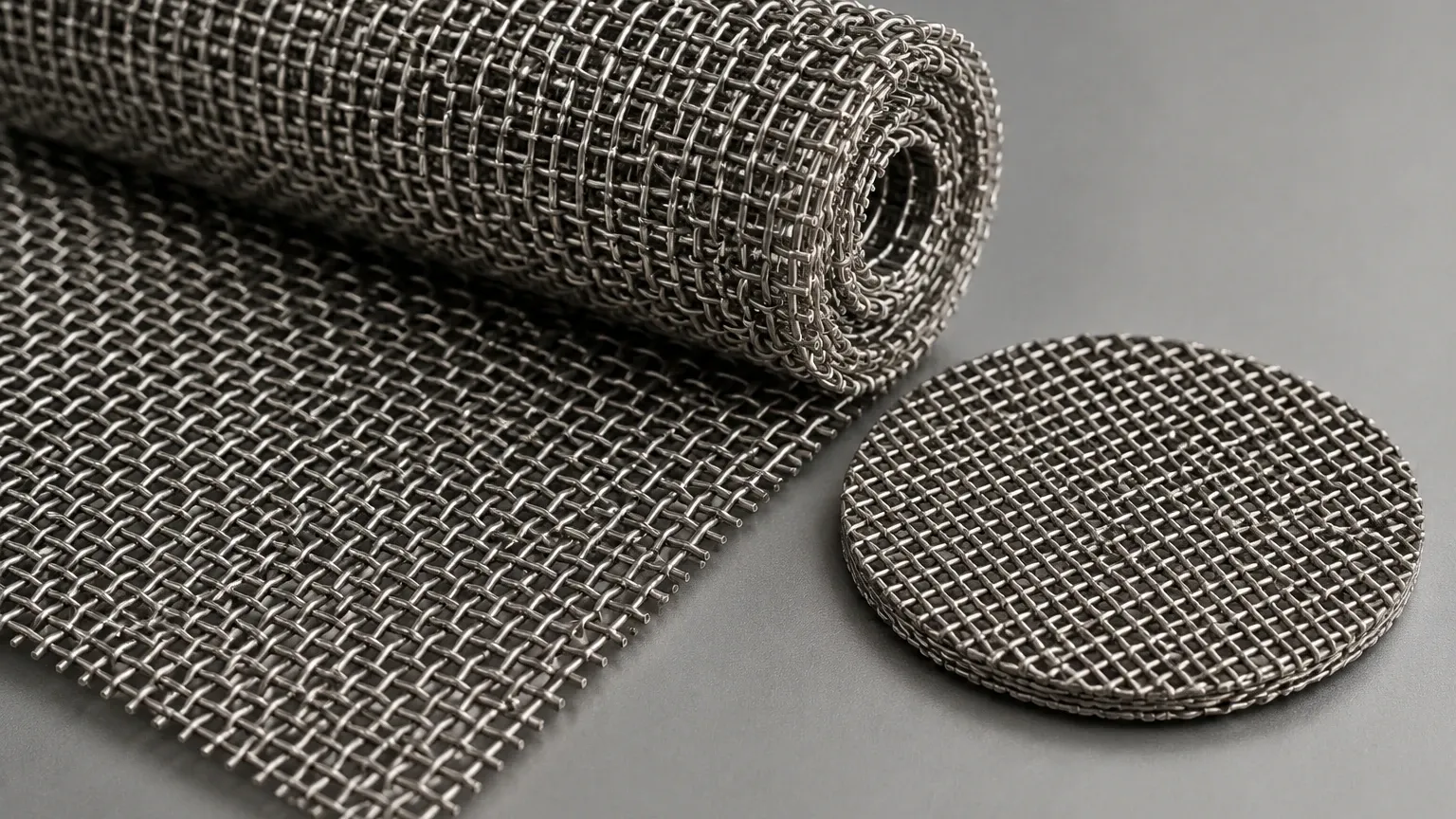
For purchasing teams and engineers, moving from a conceptual design to a physical component requires precise communication of specifications. When sourcing Plain, twill and dutch woven wire mesh in SS304/316L — rolls, cut mesh and framed panels. Send mesh count or micron target for a technical quote., it is important to provide the following data points to ensure the product meets the application's demands:
1. Mesh Count: The number of openings per linear inch. For double woven mesh, this must be considered alongside the wire diameter.
2. Wire Diameter: Usually specified in millimeters or inches. This affects both the strength and the open area.
3. Aperture (Clear Opening): The actual space between the wires. This is often more critical for engineers than the mesh count itself.
4. Weave Type: Confirm if the application requires a standard double crimp, intermediate crimp, or a specialized Dutch weave for finer filtration.
5. Surface Treatment: Depending on the application, the mesh may require ultrasonic cleaning, passivating, or electropolishing to remove manufacturing oils and improve corrosion resistance.
Evaluating Total Cost of Ownership (TCO)
While a double woven wire mesh might have a higher initial cost than a basic plain weave due to the additional crimping process and often heavier wire gauge, the TCO is frequently lower. The increased durability leads to longer service intervals and fewer emergency shutdowns caused by mesh failure. In high-output industrial environments, the cost of downtime far outweighs the initial investment in a high-quality, engineered mesh component.
Common Risks and Quality Assurance
When procuring industrial mesh, there are several risks that can compromise the performance of the final filtration system. One common issue is "wire flash" or inconsistent crimp depth, which can lead to premature wear or inconsistent aperture sizes.
To mitigate these risks, engineers should ask for:
* Material Certification: Ensuring the alloy (SS304/316L) meets ASTM or international standards.
* Dimensional Inspection Reports: Verifying that the mesh count and wire diameter are within the specified tolerances.
* Aperture Measurement: Using optical or digital microscopy to confirm the uniformity of the openings across the entire roll or panel.
Kaifil, as a professional manufacturer, emphasizes these quality control steps to ensure that every customized filtration solution provides the reliability required for demanding industrial environments. Whether the project requires a simple roll of mesh or a complex, framed filter panel, the focus remains on precise filtration performance and durability.
Conclusion: The Strategic Value of Engineered Mesh
The selection of double woven wire mesh is a strategic decision that impacts the efficiency and safety of industrial processes. By opting for a double-crimped structure, engineers ensure that their filtration media can withstand the rigors of high-pressure flow, mechanical stress, and corrosive environments.
Understanding the relationship between wire diameter, crimp style, and material grade allows technical professionals to optimize their systems for both performance and longevity. As industrial requirements become increasingly stringent, the move toward more stable and precisely manufactured Woven Wire Mesh solutions is essential for maintaining operational excellence. When planning your next filtration project, confirming the mechanical requirements of the mesh is just as important as defining the micron rating, ensuring a solution that is truly fit for purpose.
