


Galvanised Woven Wire Mesh: Engineering Specifications and Industrial Applications
In the realm of industrial filtration and structural reinforcement, selecting the appropriate material for mesh components is a critical decision that impacts both operational longevity and project economics. While high-performance alloys like stainless steel are often the standard for aggressive environments, galvanised woven wire mesh represents a versatile and cost-effective alternative for a wide range of industrial, agricultural, and commercial applications.
Understanding the technical nuances of galvanised mesh—from the method of zinc application to the mechanical properties of the underlying carbon steel—is essential for engineers and procurement teams. This guide explores the engineering considerations, performance characteristics, and selection criteria necessary for integrating galvanised woven wire mesh into industrial systems.
The Fundamentals of Woven Wire Mesh Construction
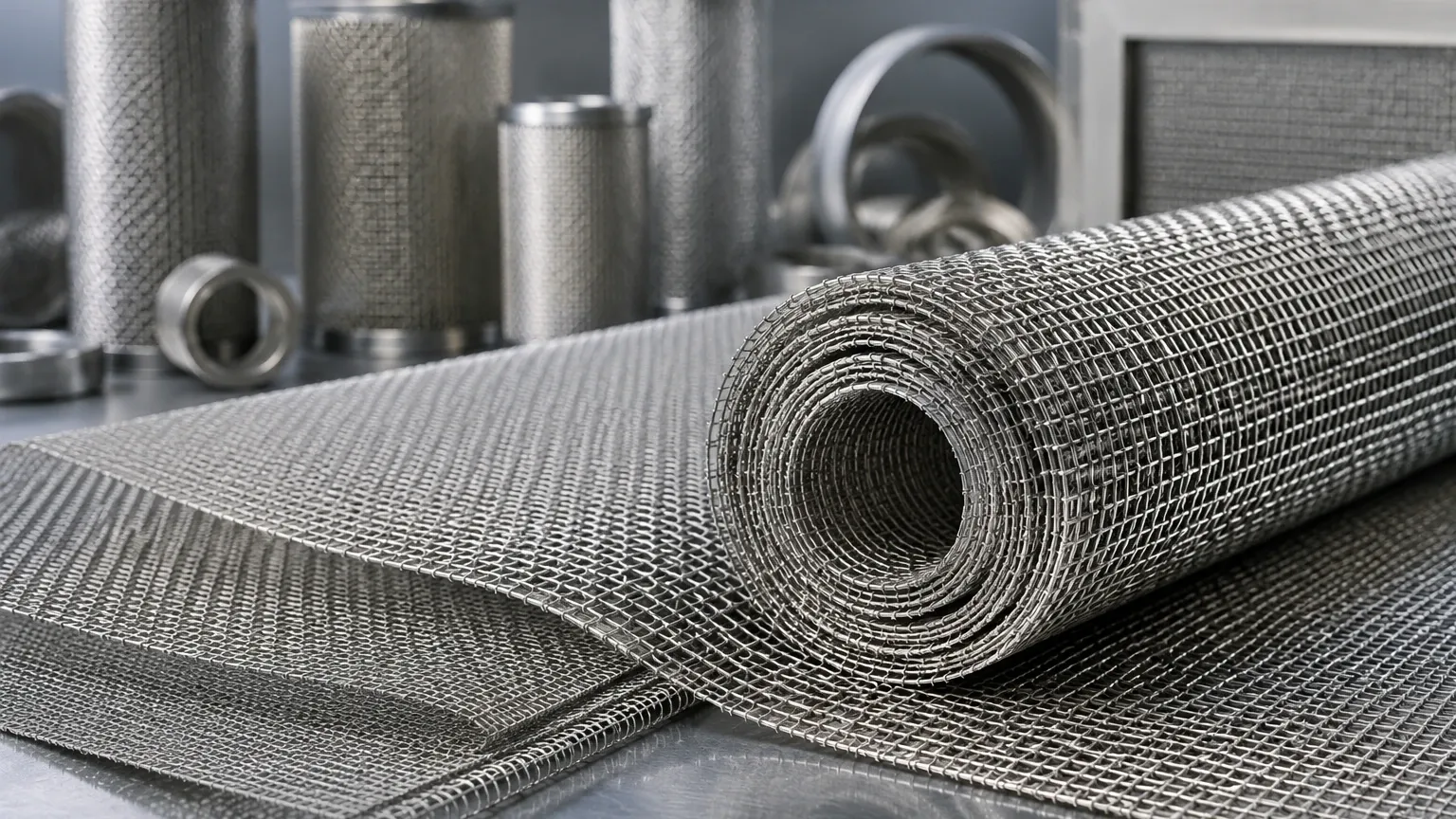
At its core, Woven Wire Mesh is produced by interlacing individual wires over and under one another on a loom, creating a stable and uniform grid. The mechanical integrity of the mesh depends on the precision of the weave and the physical properties of the wire used.
In the case of galvanised mesh, the base material is typically low-carbon steel. This provides high tensile strength and malleability, allowing the mesh to be formed or pleated without fracturing. The "woven" aspect differentiates it from welded wire mesh; because the wires are not fused at the intersections, woven mesh offers greater flexibility and a higher degree of precision in aperture sizing, which is vital for filtration and separation tasks.
Weave Patterns and Geometry
The most common weave for galvanised mesh is the Plain Weave. In this configuration, each warp wire (running lengthwise) passes alternately over and under each weft wire (running crosswise). This results in square or rectangular openings that are highly predictable. For more demanding applications requiring higher density or finer filtration, other patterns such as Twill Weave or Dutch Weave may be employed, though these are more frequently associated with stainless steel variants due to the complexity of the manufacturing process.
Understanding the Galvanisation Process
The performance of galvanised woven wire mesh is primarily defined by its zinc coating. Zinc serves as a sacrificial anode, protecting the underlying steel from oxidation (rust). There are two primary methods for applying this coating, each resulting in different performance profiles:
1. Hot-Dipped Galvanised (HDG)
In this process, the woven mesh or the individual wires are submerged in a bath of molten zinc at temperatures around 450°C (842°F). This creates a thick, robust metallurgical bond between the zinc and the steel.
* Advantages: Superior corrosion resistance, thicker coating (typically 50 to 100 microns), and excellent durability in outdoor or humid environments.
* Considerations: The coating can sometimes be uneven, and in very fine meshes, the molten zinc may partially bridge small apertures, affecting filtration precision.
2. Electro-Galvanised (Zinc Plated)
Electro-galvanisation involves the use of an electrolytic cell to deposit a thin layer of zinc onto the wire surface. This is often done to the wire before it is woven.
* Advantages: Extremely uniform coating thickness, smooth aesthetic finish, and precise dimensional control. This is ideal for applications where the mesh must maintain tight tolerances.
* Considerations: The coating is significantly thinner than hot-dipped versions (usually 5 to 10 microns), making it less suitable for long-term outdoor exposure or highly corrosive chemical environments.
Key Engineering Specifications
When specifying galvanised woven wire mesh for an industrial project, engineers must define several critical parameters to ensure the material meets the application's functional requirements.
Mesh Count and Aperture Size
The mesh count refers to the number of openings per linear inch. A higher mesh count indicates a finer mesh with smaller apertures. The aperture (or opening size) is the clear distance between two adjacent wires. For filtration tasks, the aperture size determines the largest particle that can pass through the mesh. It is calculated using the formula:
*Aperture = (1 / Mesh Count) – Wire Diameter*
Wire Diameter and Open Area
The diameter of the wire used in the weave affects the mesh's strength, weight, and percentage of open area. The open area is the ratio of the total area of the openings to the total area of the mesh. A higher open area allows for greater flow rates and lower pressure drops in filtration systems but may compromise the structural rigidity of the mesh.
Tensile Strength and Ductility
Low-carbon steel used in galvanised mesh typically offers a tensile strength ranging from 350 to 550 MPa. This allows the mesh to withstand mechanical stresses, such as those found in vibrating screens or high-pressure fluid filtration. Its ductility ensures that the mesh can be cut, bent, or framed without the zinc coating flaking off, provided the galvanisation process was performed correctly.
Industrial Applications for Galvanised Woven Wire Mesh
While Plain, twill and dutch woven wire mesh in SS304/316L — rolls, cut mesh and framed panels. Send mesh count or micron target for a technical quote. remains the gold standard for high-purity or highly acidic environments, galvanised mesh is the preferred choice in many other sectors due to its balance of cost and performance.
1. HVAC and Air Filtration
Galvanised mesh is widely used as a pre-filter or support layer in HVAC systems. Its resistance to atmospheric moisture makes it ideal for capturing large particulates and protecting more delicate secondary filter media. Its rigidity allows it to maintain its shape under the force of high-velocity airflow.
2. Guarding and Safety Enclosures
In manufacturing facilities, galvanised woven mesh serves as an effective barrier for machine guards. It provides visibility and ventilation while preventing personnel from coming into contact with moving parts. The zinc coating ensures the guards remain rust-free even in non-climate-controlled factory environments.
3. Agricultural and Geotechnical Uses
From grain sifting to soil stabilization, the durability of hot-dipped galvanised mesh is essential for agricultural operations. It is often used in the construction of cages, partitions, and sieves where exposure to soil, moisture, and organic waste would quickly degrade untreated steel.
4. Coarse Fluid Filtration
In water treatment and hydraulic systems where the fluid is non-corrosive, galvanised mesh can be used for coarse straining. It effectively removes debris, scale, and large contaminants before the fluid reaches precision components or fine filtration stages.
Comparative Analysis: Galvanised vs. Stainless Steel
For purchasing teams, the decision between galvanised and stainless steel often comes down to the Total Cost of Ownership (TCO).
| Feature | Galvanised Woven Mesh | Stainless Steel (304/316) |
| :— | :— | :— |
| Initial Cost | Low to Moderate | High |
| Corrosion Resistance | Good (Atmospheric/Moisture) | Excellent (Chemicals/Acids) |
| Longevity | Medium (Depends on coating) | Very High |
| Temperature Limit | Up to 200°C (Zinc melting point concern) | Up to 800°C+ |
| Food Grade | No (Generally) | Yes |
Engineers should opt for stainless steel when the application involves food processing, pharmaceutical manufacturing, or exposure to harsh chemicals like chlorides or sulfuric acid. However, for structural support, general-purpose filtration, or indoor industrial guarding, galvanised mesh provides a significantly lower capital expenditure while still meeting service life requirements.
Selection and Procurement Guidelines
To ensure the successful procurement of galvanised woven wire mesh, technical professionals should confirm the following details with their manufacturer:
1. Galvanisation Standard: Specify whether the application requires Hot-Dipped (for maximum protection) or Electro-Galvanised (for precision and aesthetics).
2. Environmental Conditions: Define the pH levels, humidity, and temperature of the operating environment. If the pH is below 6 or above 12, the zinc coating will degrade rapidly.
3. Dimensional Tolerances: For integration into automated machinery or custom frames, specify the allowable variance in mesh count and wire diameter.
4. Forming Requirements: If the mesh needs to be pleated or deep-drawn, ensure the wire temper and coating adhesion are suitable for secondary processing.
Conclusion
Galvanised woven wire mesh remains a staple in industrial engineering due to its versatility and cost-efficiency. By understanding the differences between galvanisation methods and accurately specifying mesh geometry, engineers can optimize their filtration and structural systems for both performance and budget.
For applications requiring the highest levels of precision and chemical resistance, exploring specialized stainless steel options is often necessary. Kaifil provides a comprehensive range of solutions, including Plain, twill and dutch woven wire mesh in SS304/316L — rolls, cut mesh and framed panels. Send mesh count or micron target for a technical quote., ensuring that every industrial filtration challenge is met with the appropriate material and engineering expertise.
