


H125 Woven Wire Mesh
In industrial filtration and separation, the selection of the correct media is a critical engineering decision that impacts process efficiency, equipment longevity, and product purity. Among the various specifications available to engineers, the H125 designation—often associated with high-performance nickel-based alloys or specific heavy-duty weave configurations—represents a specialized category of Woven Wire Mesh.
This guide provides a technical overview of H125 woven wire mesh, exploring its material properties, weave structures, and the engineering considerations necessary for successful implementation in demanding B2B environments such as chemical processing, pharmaceuticals, and oil and gas.
Understanding the Fundamentals of H125 Woven Wire Mesh
Woven wire mesh is produced by weaving individual wires over and under each other in a precise, repeatable pattern. The "H125" specification typically indicates a high-specification material or a specific mesh density designed for high-stress environments. Whether the requirement involves high-temperature resistance or extreme corrosion protection, understanding the underlying structure is the first step in selection.
Material Composition and Alloy Selection
While standard industrial applications often utilize SS304 or SS316L, H125 specifications frequently point toward high-nickel alloys like Hastelloy C-276 or specific grades of stainless steel that offer enhanced resistance to localized corrosion, such as pitting and crevice corrosion. In chemical processing, where the mesh is exposed to aggressive acids or chlorides, the choice of alloy determines whether the filter will last for months or fail within days.
Weave Types and Their Functions
The performance of H125 woven wire mesh is heavily influenced by its weave type. The three most common configurations include:
1. Plain Weave: The simplest pattern where each shute wire passes over and under one warp wire. This provides consistent pore sizes and is ideal for general-purpose filtration and screening.
2. Twill Weave: Each shute wire passes over and under two warp wires. This allows for the use of heavier wires in a given mesh count, increasing the mechanical strength and durability of the mesh without significantly sacrificing open area.
3. Dutch Weave (Plain and Twilled): These weaves use different diameters for warp and shute wires. The result is a dense, strong mesh with very fine filtration ratings (often down to the micron level). Dutch weaves are the standard for high-pressure hydraulic and fuel filtration systems.
Key Evaluation Criteria for Industrial Engineers
When specifying H125 woven wire mesh for a project, engineers must look beyond simple dimensions. Several technical parameters dictate the performance of the mesh under operational loads.
Filtration Accuracy and Micron Rating
The primary function of the mesh is to remove particles of a specific size. Engineers must distinguish between absolute and nominal filtration ratings. Absolute ratings indicate the size of the largest spherical particle that can pass through the mesh, while nominal ratings refer to a percentage of particles retained. For precision applications, such as pharmaceutical manufacturing, absolute ratings are mandatory to ensure process integrity.
Mechanical Strength and Pressure Differential
Industrial filters are often subjected to high-pressure differentials ($ΔP$). The H125 specification must be evaluated for its ability to withstand these forces without deforming. Wire diameter plays a crucial role here; a thicker wire increases strength but reduces the percentage of open area, which in turn increases the initial pressure drop across the filter. Finding the "sweet spot" between structural integrity and flow efficiency is a core engineering challenge.
Chemical and Thermal Compatibility
Operating temperatures and the chemical nature of the filtrate are perhaps the most significant factors in mesh failure. Stainless steel 316L is excellent for general corrosion resistance, but if the process involves temperatures exceeding 800°F (427°C) or exposure to highly concentrated sulfuric acid, higher-grade alloys associated with H125 specifications become necessary to prevent oxidation and stress corrosion cracking.
Common Risks and Mitigation Strategies
Implementing woven wire mesh in a production line involves risks that can lead to costly downtime if not addressed during the design phase.
Mesh Blinding and Clogging
Blinding occurs when particles become trapped in the mesh openings, reducing flow and increasing pressure. This is particularly common with sticky or irregularly shaped particles. To mitigate this, engineers should consider specialized surface treatments or choose a Dutch weave pattern that facilitates easier backwashing or ultrasonic cleaning.
Fatigue and Mechanical Failure
In applications involving vibrating screens or pulsating flows (such as hydraulic systems), the mesh is subject to cyclic loading. Over time, this can lead to wire fatigue and eventual breakage. Selecting a twill weave or a mesh with a higher wire-to-opening ratio can extend the fatigue life of the component.
Improper Installation and Sealing
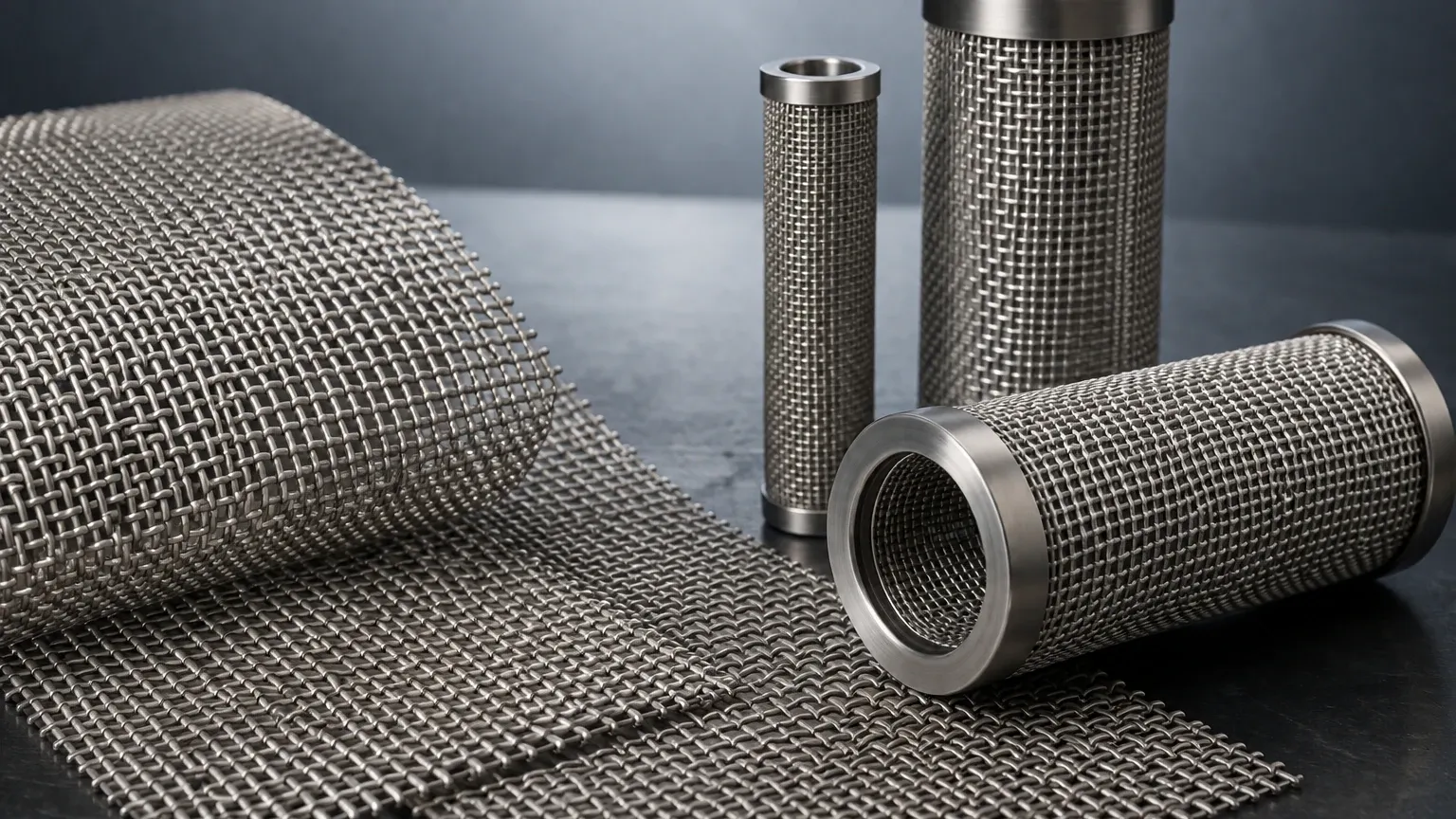
Even the highest quality H125 woven wire mesh will fail if the bypass occurs at the seals. Ensuring that the mesh is properly framed or integrated into a filter cartridge is vital. Kaifil specializes in providing Plain, twill and dutch woven wire mesh in SS304/316L — rolls, cut mesh and framed panels. Send mesh count or micron target for a technical quote. to ensure that the final component meets the exact tolerances required for a leak-proof fit.
Customization and OEM Capabilities
Standard off-the-shelf mesh rarely meets the specific needs of specialized industrial equipment. Customization is often required to optimize performance.
Tailored Mesh Counts and Wire Diameters
By adjusting the number of wires per inch (mesh count) and the diameter of those wires, manufacturers can fine-tune the filtration efficiency and the physical weight of the mesh. For OEM applications, this allows for the creation of proprietary filtration components that are optimized for a specific machine's flow characteristics.
Edge Treatments and Framing
To prevent fraying and to simplify installation, woven wire mesh can be supplied with various edge treatments. These include welded edges, folded edges, or mesh integrated into stainless steel frames. Framed panels are particularly useful in large-scale air intake or water treatment systems where the mesh must be easily removable for cleaning or replacement.
Multi-Layer Sintered Mesh
For the most demanding H125 applications, multiple layers of woven wire mesh can be sintered together. This process uses heat and pressure to fuse the wires at their contact points without melting them. The result is a porous metal plate that combines the fine filtration of a thin mesh with the mechanical strength of a thick plate, making it ideal for fluidized beds and high-pressure polymer filtration.
Total Cost of Ownership (TCO) Considerations
While the initial purchase price of high-specification H125 mesh may be higher than standard grades, the Total Cost of Ownership often tells a different story. Engineers should evaluate the following when calculating the long-term value:
* Replacement Frequency: How often does the mesh need to be replaced due to wear or irreversible clogging?
* Cleaning Costs: Is the mesh durable enough to withstand aggressive chemical cleaning or ultrasonic baths?
* Process Downtime: What is the hourly cost of a production halt caused by a filter failure?
* Energy Consumption: A mesh with a higher open area reduces the energy required to pump fluids through the system, leading to significant utility savings over the life of the filter.
Investing in a higher-quality material or a more precise weave often pays for itself within the first few months of operation through reduced maintenance and improved product yield.
Engineering Checklist Before Procurement
Before finalizing an order for H125 woven wire mesh, technical teams should confirm the following details to ensure the product is fit for purpose:
1. Micron Target: Define the exact particle size that must be retained.
2. Flow Rate and Pressure Drop: Ensure the mesh area and open percentage can handle the required volume without exceeding the system's pressure limits.
3. Operating Environment: Document the maximum temperature and the full chemical profile of the fluid, including trace elements.
4. Mechanical Interface: Determine if the mesh needs to be supplied as a roll, a cut-to-size piece, or a framed panel.
5. Compliance Standards: Verify if the material needs to meet specific industry standards, such as FDA requirements for food and beverage or ISO standards for aerospace applications.
Conclusion
H125 woven wire mesh is a versatile and robust solution for complex industrial filtration challenges. By focusing on the technical nuances of weave patterns, material science, and mechanical design, engineers can significantly improve the reliability of their filtration systems. Whether you are designing a new chemical reactor or optimizing a hydraulic system, selecting the right Woven Wire Mesh is a foundational step toward operational excellence.
For those requiring specific technical data or custom-engineered filtration components, consulting with a manufacturer that understands the rigors of industrial applications is essential. Professional guidance ensures that the selected mesh not only meets the immediate filtration needs but also contributes to the long-term efficiency and safety of the entire industrial process.
