


High Tensile Woven Wire Steel Mesh with a Fixed Knot: Engineering and Application Guide
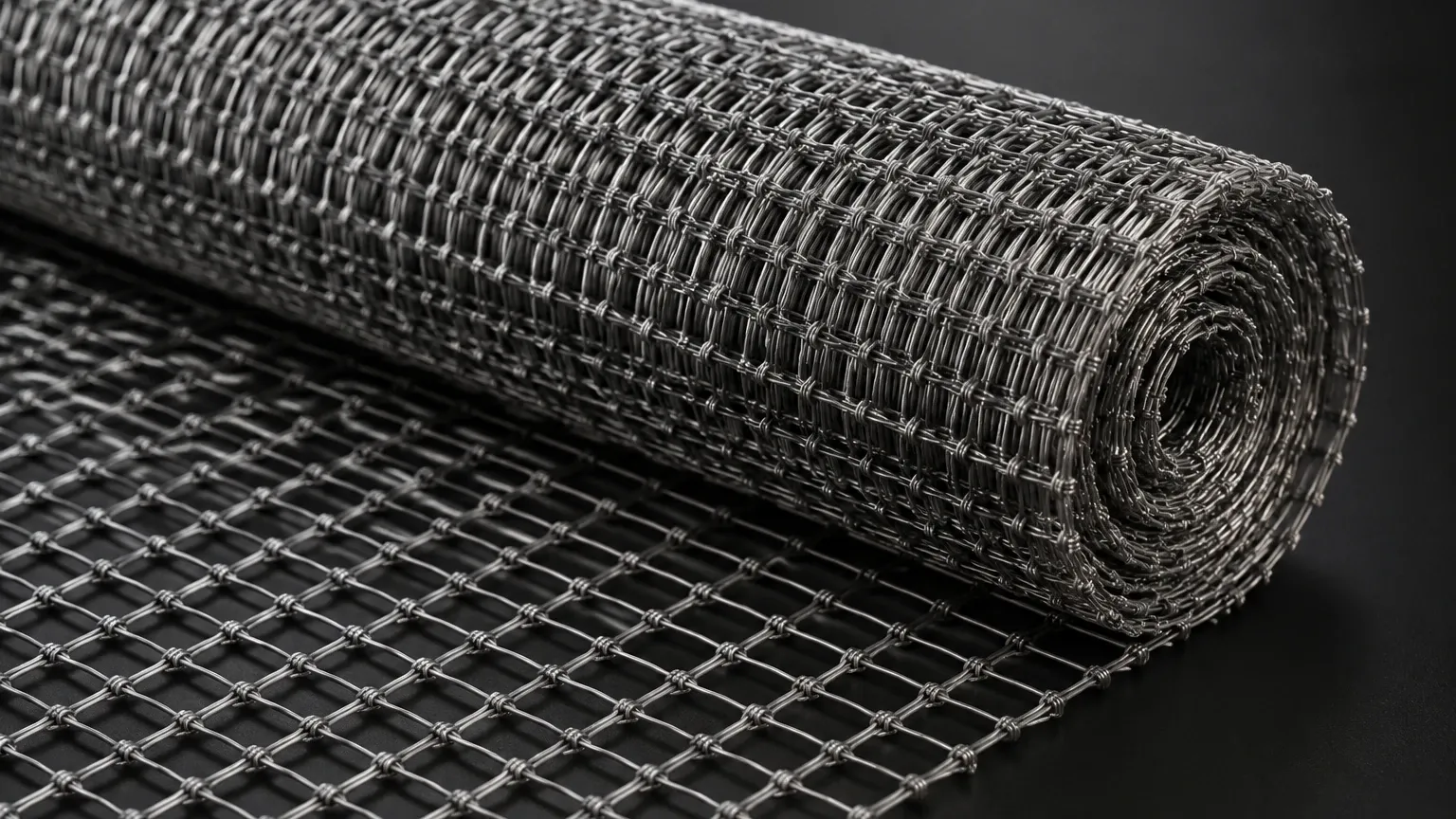
In industrial environments where structural integrity and impact resistance are non-negotiable, the choice of mesh construction determines the longevity and safety of the installation. High tensile woven wire steel mesh with a fixed knot represents one of the most robust configurations available in the wire products market. Unlike standard weaves or hinge-joint designs, the fixed knot utilizes a separate piece of wire to securely lock the vertical stay wires and horizontal line wires together. This engineering approach ensures that the mesh maintains its shape even under extreme mechanical stress or heavy localized impact.
For engineers and procurement professionals, understanding the technical nuances of this mesh type is essential for selecting the right material for filtration support, perimeter security, or industrial containment. This guide examines the mechanical properties, material selection, and performance advantages of high tensile fixed knot mesh within professional B2B applications.
The Mechanics of Fixed Knot Woven Wire Mesh
The defining characteristic of high tensile woven wire steel mesh with a fixed knot is its structural rigidity. In a standard Woven Wire Mesh, the wires are typically interlaced over and under one another. While effective for many filtration and screening tasks, standard weaves can experience "wire migration" when subjected to high pressure or physical impact.
The fixed knot design solves this by introducing a third wire that acts as a mechanical binder. This knot is wrapped tightly around the intersection of the horizontal and vertical wires. Because the knot is a separate component, it provides a superior grip compared to a hinge joint (where the vertical wire is simply wrapped around the horizontal wire). The result is a mesh that does not slide, bunch, or deform, even when a portion of the mesh is breached or subjected to high-velocity impacts.
High Tensile vs. Low Carbon Steel
The use of high tensile steel wire is what allows this mesh to outperform traditional mild steel alternatives. High tensile wire has a significantly higher carbon content and undergoes specialized drawing processes to increase its yield strength. In practical terms, this means:
* Higher Breaking Strain: The mesh can withstand much higher loads before failure.
* Reduced Elasticity: High tensile mesh does not stretch as much as low carbon steel, meaning it requires less frequent re-tensioning over its service life.
* Weight Efficiency: Because the wire is stronger, engineers can often specify a thinner gauge wire to achieve the same strength as a thicker, heavier mild steel wire, reducing the overall weight of the system.
Material Science and Corrosion Resistance
While the mechanical design of the knot provides structural strength, the material composition dictates the mesh’s performance in specific environments. Kaifil specializes in stainless steel solutions, which are often required when high tensile strength must be paired with chemical or thermal resistance.
Stainless Steel (SS304 and SS316L)
In industrial filtration and chemical processing, stainless steel is the standard. SS304 provides excellent strength and basic corrosion resistance, while SS316L (low carbon with molybdenum) is preferred for marine environments or applications involving corrosive chemicals. When high tensile woven wire steel mesh with a fixed knot is manufactured from stainless steel, it offers a unique combination of mechanical rigidity and immunity to oxidation, making it ideal for long-term outdoor or submerged use.
Galvanized High Tensile Steel
For applications where chemical resistance is less critical than cost-effectiveness—such as large-scale industrial fencing or erosion control—heavy galvanized high tensile steel is common. The zinc coating (Class 3 or higher) provides sacrificial protection against rust, though it lacks the absolute longevity of stainless steel in acidic or high-salinity environments.
Structural Performance: Why Fixed Knots Outperform Standard Weaves
When evaluating mesh for industrial use, engineers must consider the "total cost of ownership," which includes installation labor and maintenance. The fixed knot design offers several performance advantages that lower these long-term costs:
1. Increased Post Spacing: Because the high tensile wires do not stretch or sag, support posts can be placed further apart compared to standard woven mesh. This significantly reduces the material and labor costs of the supporting infrastructure.
2. Impact Absorption: The fixed knot distributes energy across the entire mesh panel. If a specific area is hit by a heavy object, the force is transferred through the knots to the surrounding wires, preventing the mesh from "zippering" or tearing open.
3. Vertical Rigidity: The solid vertical stay wires combined with the fixed knot allow the mesh to stand upright during installation. This makes it much easier to handle in large rolls and ensures the finished surface remains taught and professional in appearance.
Industrial Applications: Beyond Perimeter Fencing
While high tensile fixed knot mesh is famously used in high-pressure agricultural and wildlife management, its industrial utility extends into specialized engineering sectors.
Filtration Support and Caging
In high-pressure industrial filtration, fine mesh media often lacks the structural strength to withstand the differential pressure of the fluid flow. High tensile woven wire mesh with a fixed knot can be used as a robust outer support cage. It protects the delicate internal filter elements from mechanical damage while maintaining a high open area for flow efficiency.
Safety and Containment Screens
In manufacturing facilities, fixed knot mesh is used for machine guarding and debris containment. If a mechanical failure occurs, the mesh must be strong enough to stop high-velocity fragments. The high tensile strength and non-slip knots ensure that the guard remains a solid barrier under extreme conditions.
Infrastructure and Erosion Control
In civil engineering, this mesh is utilized for rockfall protection and soil stabilization. The ability of the fixed knot to maintain its aperture size under the weight of shifting earth or falling stone is critical for the safety of roads and tunnels.
Engineering Selection: Key Specifications to Confirm
Before ordering high tensile woven wire steel mesh with a fixed knot, technical teams should confirm several key parameters to ensure the product meets the application’s requirements:
* Wire Diameter (Gauge): Typically ranging from 2.0mm to 4.0mm for high tensile applications. Thicker wires offer more strength but less flexibility.
* Aperture Size: The spacing between the horizontal and vertical wires. For containment, smaller apertures are necessary; for filtration support, larger apertures may be preferred to minimize pressure drop.
* Tensile Strength (MPa): High tensile wire usually exceeds 1,100 MPa. Confirming the exact breaking strain is vital for structural load calculations.
* Knot Type: Ensure the "fixed knot" is a separate wire wrap and not a simple twist or weld, as these have different performance profiles under stress.
* Coating/Finish: Determine if the environment requires SS304, SS316L, or a specific galvanized coating thickness.
Customization and Manufacturing Precision
At Kaifil, we understand that standard off-the-shelf mesh rarely meets the precise needs of specialized industrial equipment. Customization is often required to integrate high tensile mesh into existing filtration systems or structural frames.
Our manufacturing process focuses on precision and durability. Whether you require Plain, twill and dutch woven wire mesh in SS304/316L — rolls, cut mesh and framed panels. Send mesh count or micron target for a technical quote. or heavy-duty fixed knot components, we work closely with your engineering team to define the exact specifications. This includes selecting the correct alloy for chemical compatibility and ensuring the mesh dimensions are cut to tight tolerances for seamless integration into your assemblies.
Total Cost Considerations
While high tensile fixed knot mesh may have a higher initial purchase price than standard low-carbon mesh, the reduction in maintenance and the extended replacement cycle usually result in a lower total cost. In industrial filtration, for example, a support mesh that resists deformation prevents the premature failure of the expensive internal filter media, saving thousands of dollars in downtime and replacement parts.
Conclusion
High tensile woven wire steel mesh with a fixed knot is an essential component for demanding industrial applications that require a combination of extreme strength, structural stability, and longevity. By choosing a fixed knot construction, engineers ensure that their systems can withstand impacts and pressures that would cause standard mesh to fail.
When selecting a supplier, it is important to partner with a manufacturer that understands the technical demands of industrial filtration and structural engineering. Kaifil provides the expertise needed to navigate material selection and customization, ensuring that your filtration or containment solution performs reliably in the most challenging environments. For technical specifications or to discuss a custom mesh design, reviewing the available material grades and construction options is the first step toward an optimized industrial solution.
Download High Tensile Woven Wire Steel Mesh with a Fixed Knot as a PDF
