


Locker Group Woven Wire Mesh: A Technical Guide to Industrial Filtration Standards
In the landscape of industrial separation and filtration, the precision of the media determines the efficiency of the entire process. Engineers and procurement specialists often look toward established industry benchmarks, such as locker group woven wire mesh, when seeking reliable, high-performance solutions for architectural, screening, and filtration applications. Understanding the technical nuances of woven wire mesh is essential for selecting a product that can withstand the rigorous demands of chemical processing, food production, and pharmaceutical manufacturing.
At its core, industrial woven wire mesh is a highly engineered material. It is not merely a screen but a precise mechanical component designed to provide specific flow rates, particle retention, and structural integrity under pressure. This guide explores the engineering considerations behind high-quality mesh, the importance of material selection, and how custom manufacturing solutions provide the necessary performance for modern industrial environments.
Understanding the Mechanics of Woven Wire Mesh
Woven wire mesh is produced by weaving individual wires over and under each other on industrial looms. The resulting structure is defined by the weave pattern, the wire diameter, and the mesh count (the number of openings per linear inch). For technical applications, the consistency of these openings is paramount.
Common Weave Patterns
1. Plain Weave: This is the most common and straightforward weave. Each warp wire (running lengthwise) passes alternately over and under each weft wire (running crosswise). It provides a stable structure with high precision in aperture size, making it ideal for general screening and filtration.
2. Twill Weave: In a twill weave, each warp wire passes over two and under two weft wires. This allows for the use of heavier wires in a given mesh count, providing greater strength and durability. It is often used when the mesh must support significant mechanical loads or when a finer mesh is required than what is possible with a plain weave.
3. Dutch Weave (Plain and Twill): Dutch weaves utilize different diameters for the warp and weft wires. The result is a dense, strong mesh with very fine filtration capabilities. Unlike plain or twill weaves, which have square openings, Dutch weaves create triangular openings that are measured in microns rather than mesh count. This pattern is essential for high-pressure hydraulic filtration and fine chemical processing.
When evaluating options like Plain, twill and dutch woven wire mesh in SS304/316L — rolls, cut mesh and framed panels. Send mesh count or micron target for a technical quote., engineers must determine which weave pattern offers the optimal balance between flow resistance and particle capture.
Material Integrity: The Role of Stainless Steel Alloys
The environment in which the Woven Wire Mesh operates dictates the material requirements. In industrial filtration, stainless steel is the gold standard due to its corrosion resistance, mechanical strength, and ability to withstand extreme temperatures.
SS304 vs. SS316L
* Stainless Steel 304: This is the most widely used alloy for industrial mesh. It offers excellent resistance to atmospheric corrosion and is suitable for most food-grade applications. However, it can be susceptible to pitting in high-chloride environments.
* Stainless Steel 316L: For more demanding applications, such as marine environments or chemical processing involving acids and salts, SS316L is preferred. The addition of molybdenum enhances its resistance to localized corrosion and pitting. The "L" indicates a low carbon content, which improves weldability and prevents intergranular corrosion in the heat-affected zones of welded components.
In specialized sectors like pharmaceutical manufacturing, the surface finish and material purity of the mesh are critical to prevent contamination. High-quality manufacturers ensure that the wire used in the weaving process meets stringent ASTM or ISO standards to guarantee long-term performance.
Evaluating Performance: The Benchmark of Locker Group Woven Wire Mesh
The term locker group woven wire mesh is frequently associated with high-quality standards in the Australian and international markets. Known for both architectural and industrial applications, this benchmark represents a commitment to precision and durability. When engineers specify mesh of this caliber, they are looking for specific performance metrics:
* Aperture Consistency: Ensuring that every opening across a large roll of mesh is identical to prevent "bypass," where oversized particles pass through a localized defect.
* Mechanical Stability: The ability of the mesh to maintain its shape and aperture size under high differential pressure or mechanical vibration.
* Surface Quality: A smooth, burr-free surface that facilitates easy cleaning (CIP/SIP) and reduces the risk of material buildup.
For many B2B purchasers, sourcing mesh that meets these high benchmarks requires working with manufacturers who offer transparent material certifications (MTRs) and rigorous quality control protocols. Whether the application is a large-scale architectural facade or a precision oil filter, the reliability of the weave is non-negotiable.
Engineering Selection: From Micron Rating to Pressure Drop
Selecting the right mesh involves more than just picking a material and a mesh count. Engineers must calculate the total cost of ownership, which includes performance efficiency and replacement frequency.
Micron Rating and Filtration Accuracy
The micron rating defines the size of the particles the mesh is intended to remove. In industrial filtration, we distinguish between nominal and absolute ratings. A nominal rating indicates the mesh will stop a percentage of particles of a certain size, while an absolute rating (often achieved with Dutch weaves) guarantees that no particle larger than the specified size will pass through.
Open Area and Flow Rate
The "Open Area" percentage is a critical calculation. It is the ratio of the area of the openings to the total area of the mesh. A higher open area results in a lower pressure drop across the filter, which reduces energy consumption for pumps and increases the time between cleaning cycles. However, increasing the open area often requires using thinner wires, which can compromise the structural integrity of the mesh. Finding the "sweet spot" between flow rate and strength is a core engineering challenge.
Custom OEM Solutions and Fabrication
While standard rolls of mesh are suitable for many applications, many industrial processes require customized filtration components. This is where the expertise of a specialized manufacturer like Kaifil becomes invaluable.
Customization options include:
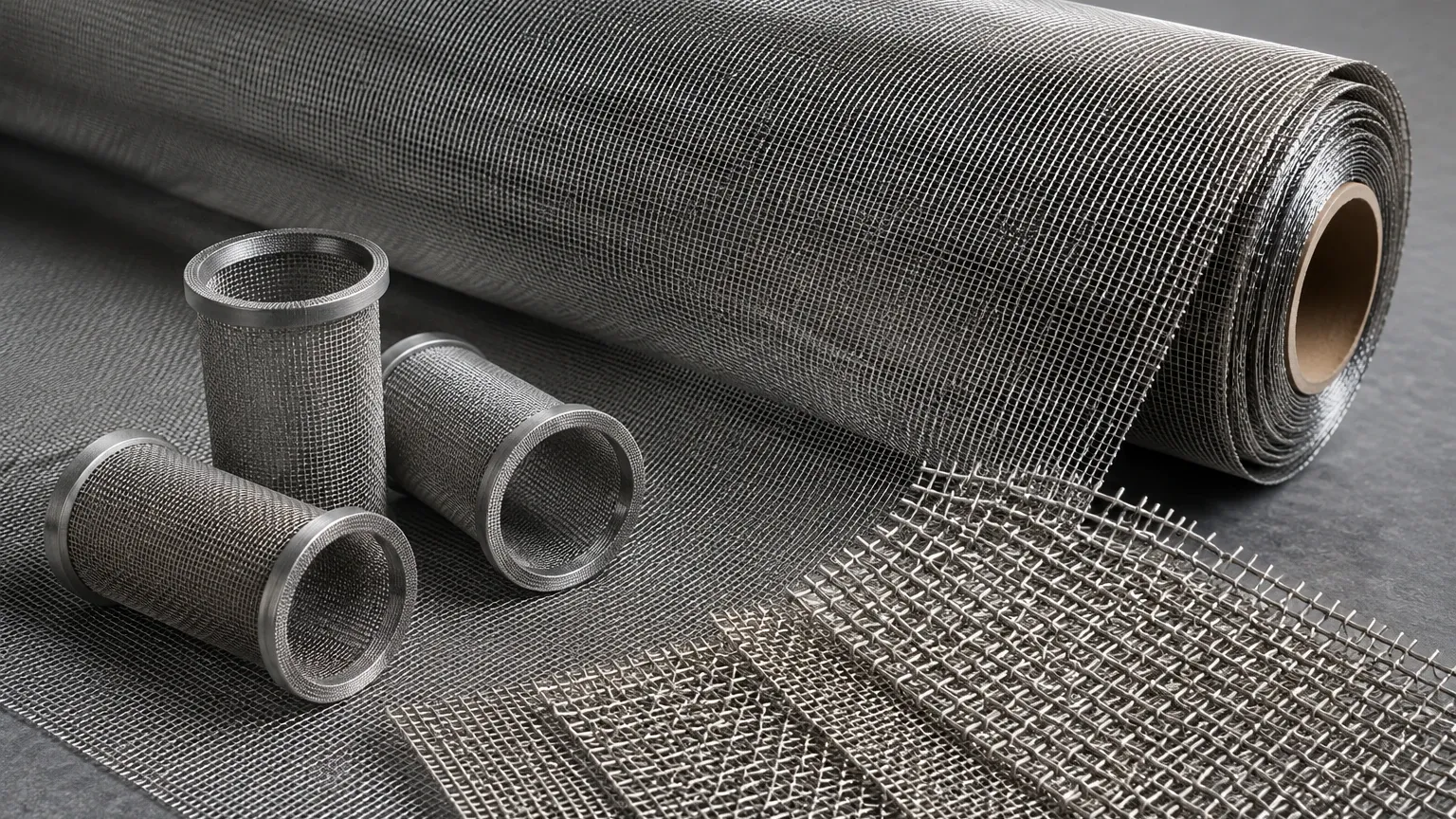
* Cut-to-Size Pieces: Precision-cut mesh discs or rectangles for integration into existing machinery.
* Framed Panels: Mesh tensioned and welded into stainless steel frames for use in vibrating screens or architectural panels.
* Multi-Layer Sintered Mesh: Combining multiple layers of woven wire mesh through a heat-treatment process to create a single, incredibly strong filtration plate that combines fine filtration with high mechanical support.
* Cylindrical and Conical Filters: Fabricating the mesh into complex shapes for use in strainers, basket filters, and cartridge housings.
By working with an OEM partner, engineering teams can ensure that the mesh is not only of the highest quality but also perfectly integrated into their specific equipment design, reducing the risk of installation errors and operational downtime.
Lifecycle Management and Maintenance Strategies
The longevity of Woven Wire Mesh depends heavily on proper maintenance and the operational environment. In many B2B applications, the goal is to maximize the interval between filter replacements.
Cleaning Protocols
Stainless steel mesh is prized for its cleanability. Common methods include:
* Backwashing: Reversing the flow of fluid to dislodge particles trapped on the surface.
* Ultrasonic Cleaning: Using high-frequency sound waves in a cleaning solution to remove fine particles from deep within the weave (especially effective for Dutch weaves).
* Chemical Cleaning: Using specialized solvents to dissolve organic or mineral buildup, provided the chemicals are compatible with the stainless steel grade (e.g., 316L).
Identifying Wear and Failure
Engineers should monitor for signs of "blinding" (permanent clogging) and mechanical fatigue. In high-vibration environments, wire breakage can occur, leading to a loss of filtration integrity. Regular inspections and pressure drop monitoring are the most effective ways to determine the optimal replacement cycle, ensuring that the process remains within specification without incurring the costs of premature replacement.
Conclusion: Making Informed Sourcing Decisions
Sourcing high-performance filtration media requires a deep understanding of both the material science and the mechanical requirements of the application. Whether you are looking for the specific characteristics of locker group woven wire mesh or require a bespoke solution for a unique industrial challenge, the focus must remain on precision, material certification, and engineering support.
By evaluating the weave pattern, alloy grade, and fabrication requirements, purchasing teams can secure filtration components that offer superior durability and efficiency. For those requiring technical guidance or specific product configurations, consulting with a manufacturer that specializes in custom stainless steel solutions is the most reliable path to optimizing industrial performance. Selecting the right mesh is not just a procurement task; it is a critical step in ensuring the reliability and safety of the entire production line.
