


Ms Woven Wire Mesh
In the landscape of industrial separation and filtration, selecting the appropriate media is a balance between mechanical performance, chemical compatibility, and economic viability. While stainless steel often dominates discussions regarding high-precision filtration, ms woven wire mesh (mild steel woven wire mesh) remains a critical component for numerous industrial applications where cost-efficiency and specific mechanical properties are prioritized.
Understanding the technical nuances of low-carbon steel mesh allows engineers and procurement teams to optimize their filtration systems without over-specifying materials. This guide examines the engineering characteristics, selection criteria, and industrial applications of mild steel wire mesh, providing a factual framework for technical decision-making.
Understanding MS Woven Wire Mesh in Industrial Contexts
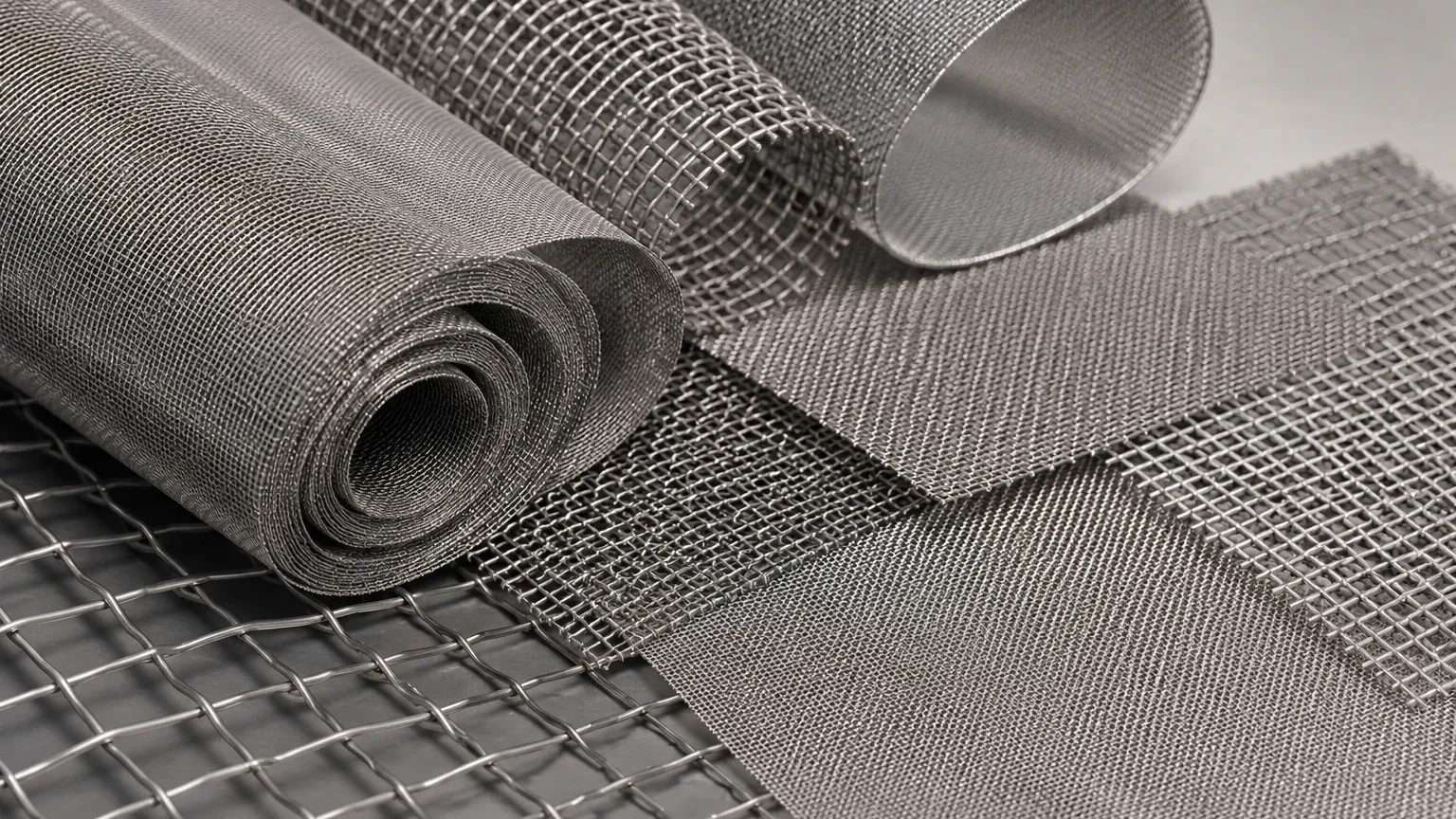
Woven wire mesh is manufactured by weaving individual wires over and under one another in a precise geometric pattern. When produced using mild steel—typically low-carbon steel grades like C1008 or C1010—the resulting mesh offers a unique set of characteristics. Mild steel contains a relatively low percentage of carbon (usually less than 0.30%), which imparts high ductility and malleability compared to higher carbon steels or certain stainless alloys.
From a manufacturing perspective, the ductility of mild steel allows for precise weaving of fine wires into complex patterns. This material is particularly favored in applications where the mesh must be formed, pleated, or welded into specific shapes, such as cylindrical filter cartridges or conical strainers. Unlike some high-strength alloys that may become brittle during the weaving or forming process, mild steel maintains its structural integrity under significant deformation.
However, the primary technical consideration for any engineer selecting mild steel is its susceptibility to oxidation. Unlike stainless steel, which forms a passive chromium oxide layer, mild steel will rust if exposed to moisture or corrosive chemicals. Therefore, its use is typically confined to environments involving oils, non-corrosive gases, or applications where the mesh is treated with protective coatings such as galvanization or epoxy resins.
Key Technical Specifications and Mesh Geometry
When specifying ms woven wire mesh, engineers must define several geometric and mechanical parameters to ensure the media meets the application's filtration requirements.
Mesh Count and Aperture Size
The mesh count refers to the number of openings per linear inch. This figure is inversely proportional to the aperture size (the clear distance between two adjacent wires). For industrial filtration, the aperture size determines the "cut point" or the size of particles that will be retained by the mesh. In mild steel variants, mesh counts can range from coarse (1×1 mesh) to relatively fine (up to 100×100 mesh or higher in specialized weaves).
Wire Diameter and Structural Integrity
The diameter of the wire used in the weave significantly impacts the mesh's strength and the "open area" percentage. A thicker wire increases the mechanical durability and pressure resistance of the filter but reduces the open area, which can lead to higher pressure drops across the media. Engineers must calculate the required burst strength of the filter element against the desired flow rate to find the optimal wire gauge.
Percentage of Open Area
The open area is the ratio of the area of the openings to the total area of the mesh, expressed as a percentage. This is a critical metric for calculating flow velocity and throughput. A higher open area minimizes resistance to flow, which is essential in gravity-fed systems or low-pressure hydraulic circuits.
Comparative Analysis: Mild Steel vs. Stainless Steel Filtration
The choice between mild steel and stainless steel is rarely about filtration efficiency alone, as both can be woven to similar micron ratings. Instead, the decision hinges on the operating environment and the total cost of ownership.
Stainless steel (SS304, SS316L) is the industry standard for corrosive environments, food-grade applications, and high-temperature processes. It offers superior longevity and resistance to pitting. However, for applications involving lubrication oils, hydraulic fluids, or dry sifting of non-abrasive materials, mild steel provides a significantly lower initial capital expenditure.
For projects requiring higher corrosion resistance or specific material certifications, engineers often transition to stainless steel solutions. Plain, twill and dutch woven wire mesh in SS304/316L — rolls, cut mesh and framed panels. Send mesh count or micron target for a technical quote. provides a robust alternative when mild steel's limitations in oxidation resistance are a concern.
| Feature | MS Woven Wire Mesh | Stainless Steel Mesh (304/316) |
| :— | :— | :— |
| Corrosion Resistance | Low (Requires coating/oil immersion) | High (Self-passivating) |
| Cost | Economical | Premium |
| Ductility | Very High | High to Moderate |
| Magnetic Properties | Strongly Magnetic | Non-magnetic to Weakly Magnetic |
| Common Use | Oil filters, support mesh, sifting | Chemical, Food, Pharma, Marine |
Engineering Considerations for Material Selection
When integrating ms woven wire mesh into an industrial system, several engineering factors must be addressed beyond simple filtration accuracy.
Formability and Welding
Mild steel is exceptionally easy to work with. It can be spot-welded, TIG welded, or soldered with high reliability. This makes it an ideal material for custom-fabricated filter components where complex geometries are required. In many OEM applications, a mild steel mesh is used as a support layer for finer, more delicate filter media, providing the necessary rigid structure to withstand high differential pressures.
Surface Treatments
To extend the service life of mild steel in semi-exposed environments, various surface treatments are applied.
1. Galvanization: Coating the wire with zinc provides sacrificial protection against rust.
2. Epoxy Coating: Often seen in hydraulic filters, green or black epoxy coatings provide a physical barrier against moisture and improve the mesh's compatibility with synthetic fluids.
3. Tin Plating: Used in specific electronics or light industrial applications to improve solderability and provide mild corrosion resistance.
Magnetic Separation
One unique technical advantage of mild steel is its ferromagnetic property. In certain recycling or machinery lubrication applications, the magnetic nature of the mesh can help capture fine ferrous particles that might be smaller than the actual mesh aperture, providing an additional layer of protection for downstream components.
Common Industrial Applications and Use Cases
Despite the rise of synthetic and stainless media, ms woven wire mesh remains a staple in several key sectors due to its specific mechanical advantages.
Hydraulic and Lubrication Systems
In closed-loop oil systems, the risk of oxidation is minimal because the mesh is constantly submerged in oil. Mild steel is frequently used in suction strainers and return-line filters for hydraulic power units. Its ability to be pleated allows for a large filtration surface area within a compact cartridge housing.
Automotive and Heavy Equipment
From oil breather caps to fuel strainers, mild steel mesh is a standard component in the automotive supply chain. The material's cost-effectiveness is a major factor in high-volume OEM production, provided the operating environment does not involve water or corrosive combustion byproducts.
Support and Pleat Spacing
In many high-efficiency air or liquid filters, the primary filtration media (such as fiberglass or melt-blown polymer) lacks structural rigidity. A coarse mild steel woven wire mesh is often used as a "scrim" or support backing. It holds the pleats of the primary media in place, preventing them from collapsing under the force of the fluid flow.
Sifting and Grading
In the processing of dry aggregates, powders, and grains, mild steel mesh is used for vibrating screens and sifting panels. While it may wear faster than high-carbon spring steel in abrasive applications, its lower cost makes it a viable option for temporary setups or non-abrasive material grading.
Maintenance, Durability, and Replacement Cycles
The service life of a mild steel filter is heavily dependent on the fluid chemistry and the presence of contaminants. Unlike stainless steel, which can often be cleaned and reused multiple times through ultrasonic baths or chemical cleaning, mild steel filters are frequently treated as semi-disposable or limited-use components.
Signs of Failure
Engineers should monitor for two primary failure modes in MS mesh:
1. Oxidation (Rust): If the protective coating or oil film is breached, rust can weaken the wire, leading to media migration—where fragments of the mesh break off and enter the downstream flow.
2. Blinding: This occurs when particles become permanently lodged in the mesh apertures. While backwashing can clear some debris, mild steel is more prone to surface roughness over time, which can accelerate blinding compared to the smoother surface of drawn stainless steel wire.
Replacement Strategy
For critical systems, a scheduled replacement cycle is recommended over a "run-to-failure" approach. Monitoring the pressure differential ($\\Delta P$) across the filter is the most effective way to determine when the mesh is reaching the end of its functional life. Once the pressure drop exceeds a pre-defined threshold, the integrity of the mesh may be compromised, or the flow rate may become insufficient for the process requirements.
Customization and OEM Capabilities
For technical teams and purchasing departments, sourcing the right mesh involves more than just selecting a part number. Professional manufacturers like Kaifil provide customized solutions tailored to specific industrial needs. This includes selecting the optimal weave type—such as plain weave for standard filtration or Dutch weave for high-pressure, fine-micron applications.
When requesting a quote for ms woven wire mesh, it is essential to confirm the following data points:
* Material Grade: Ensure the carbon content meets your welding or forming requirements.
* Mesh Count/Micron Rating: Define the particle retention size needed.
* Wire Diameter: Specify based on the expected mechanical load.
* Finish: Indicate if the mesh requires plain steel, galvanized, or epoxy-coated finishes.
* Dimensions: Specify rolls, cut-to-size pieces, or framed panels for immediate installation.
By focusing on these factual engineering requirements, procurement teams can ensure they receive a product that balances performance with cost-efficiency. While mild steel may not fit every application, its role as a versatile, formable, and economical filtration medium remains undisputed in modern industry.
